Executive Overview
The global beauty landscape has long looked to the runway and high-fashion ateliers for inspiration, but few aesthetic crossovers have proved as durable, tactile, and continuously reinvented as fabric-inspired manicures. For years, the intersection of textiles and nail artistry has yielded iconic trends: the cozy, light-absorbing plushness of velvet nails during the autumn-winter transition; the romantic, intricate delicate patterns of lace that have transitioned from bridal runways to everyday streetwear via trendsetters like Iris Law; and the moodier, edgier iterations of lingerie nails rendered in blacks and deep burgundies.
Yet, as the pendulum swings away from matte finishes—such as the suede-textured surfaces that dominated past seasons—the beauty industry finds itself fixated on an entirely new zenith of luminosity: silk nails.
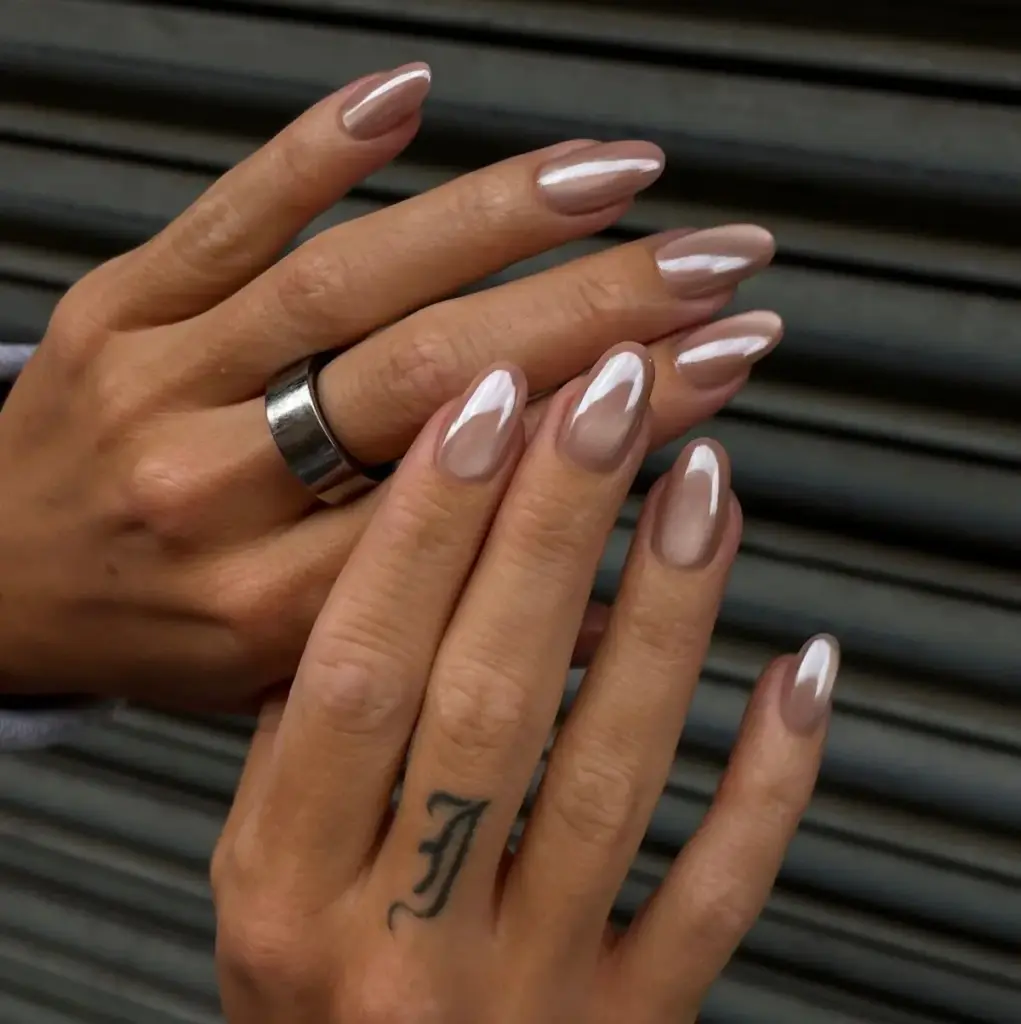
Representing the natural evolution of the glazed-donut manicures that defined the early 2020s, silk nails take high-shine gloss to a hyper-dimensional, glass-like extreme. Rather than relying on a flat, reflective sheen, silk nails mimic the fluid, undulating drape and soft-yet-brilliant luster of genuine silk fabric. By synthesizing advanced professional techniques—chiefly, the hybrid layering of magnetic cat-eye gels and clear chrome powders—manicurists are creating multi-dimensional "sandwiched" designs that shift, shimmer, and catch the light with every subtle movement of the hand.
This comprehensive report investigates the cultural, chemical, and technical factors driving the silk nail trend. We explore the anatomy of the look, speak with leading industry innovators, analyze the salon-level execution required to achieve this glass-like finish, and forecast how tactile textures will continue to dictate the future of luxury nail design.
Detailed Chronology: The Evolution of Fabric-Inspired Manicures
To understand the sudden, meteoric rise of silk nails, one must trace the historical lineage of fabric-inspired nail artistry over the past decade. The convergence of textile design and cosmetic formulation did not happen overnight; rather, it represents a systematic refinement of light manipulation on curved nail surfaces.
Phase 1: The Foundation of Lace and Velour (Pre-2020)
Long before chrome powders and magnetic gels democratized multi-dimensional nail art, fabric trends were largely literal or matte-leaning. Lace manicures existed almost exclusively in the bridal sector, painstakingly hand-painted or applied via stamping plates and water decals. Meanwhile, velvet textures were mimicked using flocking powder—a messy, short-lived technique that gave nails an actual fuzzy, fabric-like nap. While innovative, these early iterations lacked mainstream durability, often failing to survive everyday wear and tear.
Phase 2: The Glazed Revolution and the Rise of Gloss (2022–2023)
The modern era of hyper-reflective manicures was undeniably jumpstarted by the "glazed donut" nail trend, popularized globally by celebrities like Hailey Bieber. Utilizing ultra-fine chrome powders buffed over milky or sheer neutral bases, this movement proved that consumers craved dimension and iridescence over flat cream polishes. However, glazed nails were fundamentally monochromatic and uniform in their reflectivity. They lacked the liquid, shifting depth inherent in woven textiles.
Phase 3: The Diversification of Textures (2023–2024)
As consumers grew fatigued by uniform gloss, the beauty market splintered into a fascinating dichotomy of textures. On one side, autumn-winter seasons continually welcomed velvet nails—created using magnetic cat-eye polishes that concentrate metallic particles into a soft, glowing stripe reminiscent of plush velvet. Simultaneously, matte suede nails gained traction for those seeking a muted, luxurious tactile experience, while lingerie nails pushed lace into darker, sexier territories with rich burgundies and charcoals.
Phase 4: The Birth of the Silk Standard (Late 2024–Present)
The current silk nail trend represents the ultimate synthesis of these preceding eras. By combining the plush, moving light of cat-eye gels with the crystal-clear reflectivity of modern chrome powders, nail artists have effectively "solved" how to translate the fluid physics of silk onto a hard, curved nail plate. No longer a novelty, silk nails have established themselves as the premier high-end aesthetic for clients seeking an immaculate balance of understated elegance and eye-catching modern engineering.
Supporting Context & Metrics: The Anatomy of a Silk Manicure
Achieving the silk effect is not merely a matter of applying a glossy topcoat; it requires an understanding of light physics, chemical compatibility, and precise application techniques.
What Makes a Nail Look "Silky"?
Real silk possesses a unique triangular prism-like fiber structure that refracts light in multiple directions simultaneously, creating a soft glow rather than a harsh, direct glare. To replicate this on a micro-scale, modern manicurists manipulate light using a multi-step layering process.
The Anatomy of the "Chrome x Cat-Eye Sandwich"
We spoke with Manchester-based nail artist Courtney-Lea Shaw, renowned for her masterclasses in modern dimensional nail art (@paintedbycourtney), to break down the mechanics of the look.
"I like to call them my cat eye x chrome sandwich nails," Shaw explains. "It essentially involves layering a clear chrome on top of a magnetic cat-eye gel. The combination creates so much more depth than you’d think."
- The Foundation (The Magnetic Base): The process begins with a specialized magnetic gel. Unlike standard glitter polishes, magnetic gels contain microscopic metallic shards suspended in a translucent base. When a rare-earth magnet is hovered over the uncured gel, these particles migrate, creating a concentrated band of light that appears to float beneath the surface.
- The Intermediary Seal: Once the cat-eye effect is magnetized and cured, a non-wipe topcoat is applied and cured to create a smooth, receptive canvas for the next phase.
- The Glass Finish (The Chrome Layer): Rather than using a colored or opaque metallic chrome powder—which would obscure the underlying cat-eye depth—artists apply an ultra-fine, transparent glass or clear chrome pigment. This powder imparts an uncompromised, mirror-like gloss that seals the dimensional light play within.
- The Final Encapsulation: A thick, ultra-glossy glass topcoat seals the "sandwich," locking in both the magnetic movement and the chrome shine while providing structural integrity.
Color Theory: Beyond Milky Pink
While classic bridal aesthetics might immediately point toward sheer white or pale pinks, the silk nail trend derives much of its sophisticated edge from unexpected, rich neutral palettes.
- Taupy-Oyster Bases: According to Shaw, a neutral taupe or oyster base paired with a clear chrome top layer offers an effortlessly expensive, understated aesthetic.
- Silky Chocolate Browns and Champagnes: Perfect for transitional weather, deep liquid browns and sparkling champagnes mimic heavy silk charmeuse and satin, offering warmth without sacrificing luminosity.
- Expensive Pinks and Caramels: These warmer undertones cater to skin tones that might get washed out by stark pearlescent whites, ensuring the silk finish flatters the hand dynamically.
Official Statements & Expert Insights
The shift toward hyper-tactile, light-responsive manicures marks a broader psychological turn in consumer spending and personal care. Industry insiders point out that as digital screens dominate our daily lives, physical interactions with touch-driven, light-catching textures provide a grounding, sensory form of self-expression.
The Professional Consensus on Salon Execution
While DIY beauty culture thrives on social media platforms like TikTok and Instagram, top-tier nail technicians emphasize that true silk nails are firmly in the realm of professional artistry. The products required—ranging from high-grade Korean magnetic gels (such as DGel Korea) to specialized glass chrome pigments (such as Jelli.eu Superchrome)—often demand precise curing times, specific viscosity management, and professional-grade LED lamps to prevent wrinkling or premature chipping.
Furthermore, the skill required to manipulate the magnetic particles into a soft, fluid wave rather than a harsh line separates amateur attempts from salon masterpieces.
"It’s about subtlety and movement," notes a leading London-based session manicurist. "Silk doesn’t scream; it whispers. If the cat-eye is too sharp, it looks like a sci-fi galaxy nail. If the chrome is too heavy, it looks like standard tinfoil chrome. The magic lives in the delicate intersection of the two."
Future Outlook: Where Are Nail Trends Headed Next?
As we look toward the future of nail fashion, the success of the silk nail trend offers clear indicators of where research, product development, and consumer demand will converge.
1. The Intersection of Smart Chemistry and Cosmetics
The technology behind magnetic cat-eye gels and glass chromes is advancing rapidly. We anticipate the introduction of multi-chromatic magnetic particles that shift color temperature as they catch light, allowing a single silk manicure to transition from champagne to rose-gold depending on ambient lighting conditions.
2. Sustainable Luxury and Durability
With consumers increasingly prioritizing longevity to reduce salon frequency, multi-layered techniques like the silk sandwich offer superior chip resistance. Because the light-reflecting elements are encapsulated between durable gel layers rather than sitting unprotected on the surface, silk manicures boast remarkable longevity—often maintaining their pristine, glass-like finish for three to four weeks.
3. The Expansion of Tactile Narratives
Just as velvet, lace, satin, and silk have successfully migrated from the fashion runway to the fingertips, future nail trends will likely explore heavier or more avant-garde textiles. Industry forecasters predict explorations into tweed-textured matte finishes with metallic thread inclusions, embossed leather-effect matte gels, and organza-inspired sheer layering techniques.
Conclusion
The silk nail trend is far more than a fleeting social media fad; it is a masterclass in modern cosmetic engineering. By marrying the soft, hypnotic depth of magnetic cat-eye formulations with the crystal-clear brilliance of glass chrome powders, nail artists have successfully captured the tactile fluidity of silk. Whether worn in understated oyster tones, rich chocolates, or classic milky pinks, silk nails prove that when fashion, technology, and art intersect, the results are nothing short of brilliant.