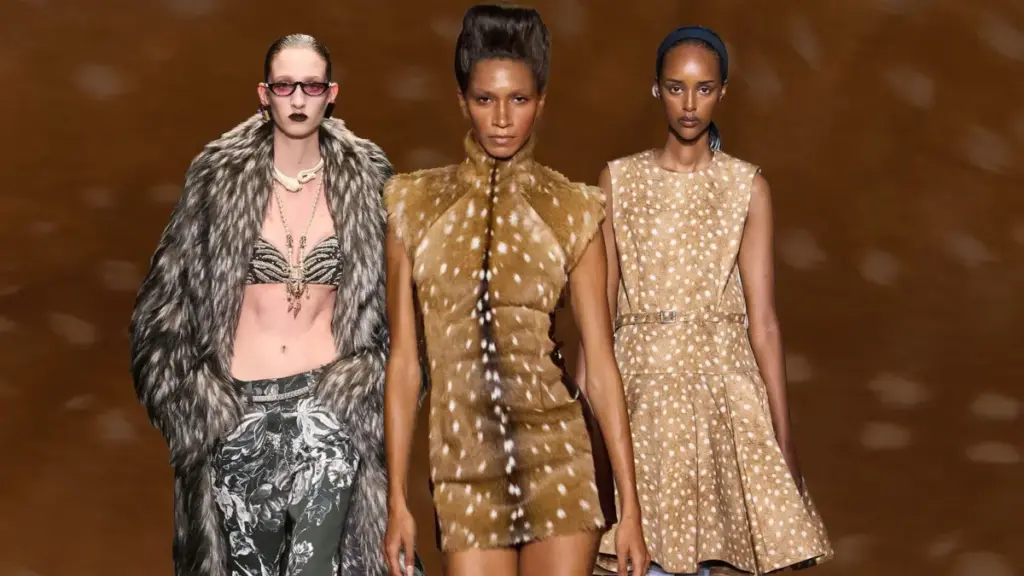
For decades, the animal print hierarchy has remained largely unchallenged. While fleeting sub-trends have occasionally disrupted the landscape, the pantheon of fierce style staples has been dominated by a reliable trinity: leopard, zebra, and tiger. These patterns have continuously ebbed and flowed through fashion’s cyclical tides, cementing themselves as timeless neutrals in the wardrobes of style icons from Jackie Kennedy to Kate Moss. However, the autumn/winter and spring/summer seasons mark a seismic shift in contemporary style. A new contender has emerged from the forest to challenge the reign of the big cats: Bambi print.
Characterized by its whimsical, dappled fawn spots and soft, earthen tones of caramel, cream, and deep chocolate, deer print has transcended its historical novelty to become the definitive "It-pattern" of the season. Far from a childish novelty or a kitschy throwback, this refined motif is being championed by luxury powerhouses and contemporary high-street labels alike. From structured outerwear and tailored trousers to tactile accessories and evening wear, the fashion ecosystem is undergoing a mass migration toward woodland-inspired elegance.
This in-depth investigation explores the origins of the deer-print renaissance, tracing its trajectory from elite runways to mainstream retail dominance. By analyzing insights from leading designers, vintage purveyors, and cultural historians, we unpack why this gentle motif has captured the global fashion imagination—and whether it has the staying power to permanently dethrone leopard as the ultimate animal print neutral.
Detailed Chronology: From Runway to Reality
The ascent of the deer-print trend did not happen overnight; rather, it was carefully orchestrated by a vanguard of visionary designers who recognized an appetite for a softer, more romantic approach to textural dressing.
The Runway Genesis: Autumn/Winter and Beyond
The spark that ignited the current deer-print craze can be traced directly to the autumn/winter runways of last year. Renowned American designer Tory Burch introduced the fawn motif into her collection with characteristic sophistication. The pattern manifested across a versatile array of silhouettes, from sharply tailored structured jackets to fluid, long-sleeve midi dresses that immediately caught the attention of fashion editors and celebrity stylists alike. It wasn’t long before style arbiters like Katie Holmes were spotted wearing the pieces on city streets, granting the trend an invaluable stamp of effortless, real-world cool.
Simultaneously, designer Brandon Maxwell proved he was well ahead of the curve by sending a striking black-and-white deer-print maxi dress down his runway. Featuring a high neckline and a body-hugging silhouette, the gown redefined evening wear, positioning the fawn motif as an unexpected yet sophisticated contender for holiday party attire.
The Snowball Effect: From High Fashion to Contemporary Labels
As the momentum built, the trend quickly expanded across international fashion weeks. Roberto Cavalli—a house historically synonymous with aggressive, predatory prints like leopard and tiger—surprised critics by integrating subtle fawn motifs into its collections, proving that even the wildest maximalist brands were softening their stance. Similar adaptations were showcased on the runways of LaQuan Smith and Baum und Pferdgarten, bridging the gap between autumn/winter layering and spring/summer lightness.
The commercial validation of the trend arrived when entrepreneur and style icon Sofia Richie Grainge launched her highly anticipated lifestyle label, SRG, in October. By prominently featuring a fawn-print jacket and a sleek, sleeveless maxi dress in its inaugural collection, Richie Grainge signaled to the mass market that deer print was no longer a speculative runway experiment, but a foundational pillar of modern minimalist style.

High-street giants and contemporary accessories brands quickly followed suit. Retailers such as Mango, River Island, Topshop, and ASOS flooded their autumn lines with deer-print iterations—ranging from fluffy knitted jumpers and frosted faux-fur coats to tailored wide-leg trousers—ensuring accessibility for consumers at every price point.
Supporting Context & Metrics: Why Fawn Print is Capturing the Market
To understand the sudden omnipresence of deer print, one must examine the psychological and economic shifts currently influencing consumer behavior in the fashion sector.
The Fatigue of Traditional Animal Prints
Fashion fatigue is a powerful market driver. For over thirty years, leopard print has been marketed as the ultimate "neutral," worn to project confidence, rebellion, and timeless glamour. However, market saturation has taken its toll. Consumers are increasingly searching for ways to stand out without resorting to tired tropes.
Deer print offers a brilliant compromise. It retains the organic, textural depth of animal markings while subverting expectations. Where leopard is loud and assertive, Bambi print is gentle, introspective, and undeniably fresh. It provides the visual interest of a print without the aggressive connotations of big-cat motifs, appealing to a consumer base that is pivoting toward understated luxury, quiet quirkiness, and romanticism.
The Rise of Tactile Textures
Another crucial metric driving the trend is the booming consumer demand for tactile, sensory fabrics. The modern deer-print trend relies heavily on "hair-on" leather, brushed wools, and plush faux furs. In an era dominated by digital screens and hyper-polished aesthetics, consumers are actively craving physical comfort and sensory richness in their wardrobes. A plush deer-print jacket or a calf-hair mule loafer engages multiple senses, turning an outfit into an experience.
Historical Precedents: The Audrey Hepburn Connection
While the current wave feels thoroughly modern, the fascination with integrating woodland fauna into high style has historical roots. In 1958, cinematic icon Audrey Hepburn famously adopted a fawn named Pippin after working with the animal on the set of the film Green Mansions. Hepburn’s frequent public appearances with the deer cemented a cultural association between deer and effortless, aristocratic elegance. While today’s fashion enthusiasts may not be adopting live fawns as accessories, they are channeling that same mid-century appreciation for natural grace through their sartorial choices.
Official Statements and Industry Insights
To gauge the longevity and philosophical underpinnings of the trend, we turned to the creative minds driving the movement.
Maj-La Pizzelli on "The Newness Factor"
Maj-La Pizzelli, co-founder and creative director of the luxury accessories brand ATP Atelier—which recently incorporated deer-print loafers and handbags into its collection—notes that the shift was driven by an industry-wide desire for reinvention.

"Animal print has always had a strong pull, but the usual suspects have been in rotation for so long," Pizzelli explains. "With Bambi, there was suddenly something that felt new. It bridges the gap between wildness and gentleness in a way we haven’t explored before."
Lucia Zolea on Emotional Resonance
Vintage dealer and archival fashion specialist Lucia Zolea points to the emotional connection consumers form with the pattern. For Zolea, the appeal goes far beyond surface-level aesthetics.
"Deer themselves bring a sense of calm, wonder, and beauty, and I think people feel that when they see the print," says Zolea, a noted Bambi-print fanatic. "It introduces a touch of whimsy that fashion often forgets to include. I recently sourced a vintage deer coat, and upon inspecting it, I discovered there was a matching hat tucked into the interior pocket. When I shared it with my audience, the response was overwhelming. People are hungry for pieces with narrative and charm."
Future Outlook: How to Wear the Trend Now
As the deer-print trend solidifies its place in the modern fashion lexicon, industry analysts predict it will transition seamlessly from an autumn/winter novelty into a cross-seasonal staple. Much like leopard print before it, Bambi print is proving versatile enough to be styled as a neutral rather than a loud statement piece.
1. The Outerwear Investment
For those looking to make an immediate impact, an autumn jacket or a statement duster coat—such as those offered by Topshop and River Island—serves as the ultimate entry point. A deer-print coat acts as an anchor for neutral wardrobes, pairing effortlessly with minimalist black trousers, cream knits, and even coordinating fawn-print manicures.
2. Subtlety Through Accessories
Consumers hesitant about fully committing to a head-to-toe animal print can easily test the waters with accessories. Hair-on leather mule loafers, structured tote bags (like ATP Atelier’s Ormelle), and pillbox hats offer a subtle nod to the trend without overwhelming an outfit. These foundational accessories possess a timeless quality, ensuring they can be integrated into everyday wear year-round.
3. Evening Wear and Tailoring
For high-impact style, fashion editors recommend exploring fawn-print dresses and wide-leg trousers. A structured deer-print midi dress paired with minimalist red heels and a swipe of classic crimson lipstick creates an unforgettable evening look that subverts traditional party-season tropes. Similarly, tailored wide-leg trousers paired with a simple black turtleneck offer an avant-garde approach to office dressing.
Conclusion
The rise of Bambi print is more than just a passing seasonal whim; it is a calculated evolution in how we consume and style animal motifs. By trading the heavy, aggressive energy of traditional big-cat prints for the soft, enchanting appeal of the fawn, the fashion world has unlocked a fresh avenue for self-expression. As luxury houses and high-street retailers continue to expand their offerings, one thing is certain: deer print has successfully graduated from the forest floor to the pinnacle of global style, proving that sometimes, the quietest animals make the loudest statements.