Executive Overview
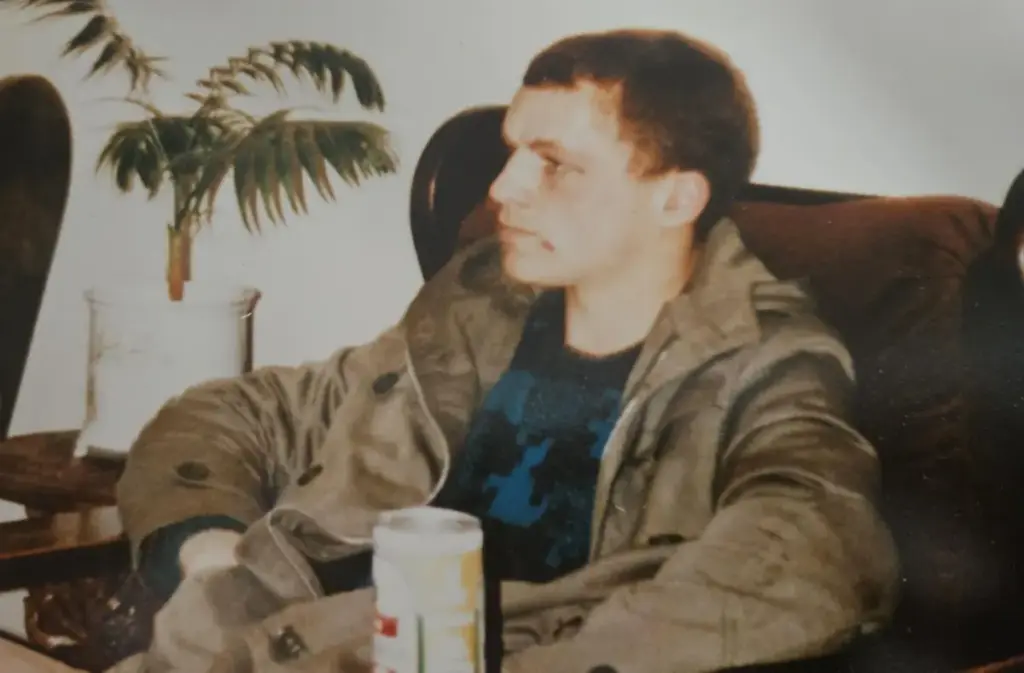
For more than thirty years, the brutal murder of 26-year-old Michael McDermott remained an open wound in the collective memory of Greater Manchester’s law enforcement, and an unending tragedy for a grieving family. In the autumn of 1994, McDermott’s life was violently extinguished inside a residential property in Moston, cut short by a masked gang wielding deadly weapons. For decades, the trail went cold. The physical evidence faded, witness memories blurred, and the perpetrators seemingly vanished into the shadows of history.
However, justice in the British legal system occasionally arrives from an unexpected direction. In a stunning reversal of fate that underscores the lingering weight of a guilty conscience, 53-year-old Robert Lloyd walked voluntarily into a Greater Manchester police station. He offered a full, unprompted confession detailing his direct participation in the targeted assassination of McDermott three decades prior.
Lloyd’s subsequent guilty plea to murder resulted in a life sentence at Manchester Crown Court, handed down with a mandatory minimum term of 17 years behind bars. While the sentencing marks a monumental milestone in a long-dormant inquiry, it also serves as the opening salvo in a renewed manhunt. Greater Manchester Police (GMP) have confirmed that their Major Investigation Team is actively hunting the remaining accomplices who joined Lloyd on that fateful November night in 1994. With legal reporting restrictions recently lifted by a presiding judge, the full, harrowing narrative of this cold-case breakthrough can now be told.
Detailed Chronology: The Night That Shocked Moston
To understand the magnitude of Robert Lloyd’s confession, investigators and legal analysts must look backward to the chilling events of late 1994—a period when Greater Manchester was grappling with escalating waves of localized gang violence and organized criminality.
The Ambush on Ashville Terrace
The calendar read Wednesday, November 9, 1994. The time was approximately 10:30 PM. Michael McDermott, aged 26, was visiting a relative’s home located on Ashville Terrace in the Moston district of Manchester. In an era before ubiquitous home CCTV networks, Ring doorbells, and high-definition mobile surveillance, domestic dwellings were far more vulnerable to sudden, targeted incursions.
Without warning, the domestic peace of the household was shattered. A group of masked men—their identities obscured by hoods and makeshift face coverings—violently breached the front door of the Ashville Terrace property. Armed with an array of lethal and semi-lethal implements, including heavy baseball bats and sharp-bladed knives, the gang moved with terrifying coordination and speed.
McDermott was resting on a sofa in the living room when the intruders descended upon him. Given the speed and ferocity of the attack, he had virtually no time to mount a defense or flee.

The Fatal Assault and Escape Route
The assault was short, chaotic, and relentlessly brutal. As family members inside the home looked on in sheer terror, McDermott was subjected to a coordinated beating and stabbing. Medical reports from the time and subsequent reviews by the Major Investigation Team confirmed that the victim sustained numerous traumatic injuries, most critically multiple deep stab wounds that proved rapidly fatal.
Having executed their violent mission, the gang wasted no time. Abandoning the blood-soaked scene, the masked assailants fled the property through the front entrance. They crossed the street directly into a narrow alleyway, sprinting toward Oakville Terrace. There, a getaway vehicle—likely driven by an additional accomplice—lay idling, ready to whisk the hit squad away into the Manchester night. Within minutes, the street was quiet again, save for the sirens of emergency services responding to frantic 999 calls. By the time medical personnel arrived, however, McDermott had succumbed to his catastrophic injuries.
The Decades-Long Stagnation
In the weeks and months following the murder, GMP detectives launched a comprehensive homicide inquiry. House-to-house inquiries were conducted, local informants were squeezed, and forensic evidence was gathered from the Ashville Terrace living room.
Yet, the wall of silence surrounding Moston’s criminal underworld proved impenetrable. Witnesses were fearful of reprisals, the masked nature of the attackers shielded their faces from identification, and physical forensic technology in 1994 lacked the sophisticated DNA profiling and familial database capabilities available to modern cold-case units. Slowly, leads dried up. The file on Michael McDermott was placed into the archives, transforming from an active hunt into an unsolved cold case—one of many haunting British police forces transitioning into the new millennium.
Supporting Context & Metrics: The Mechanics of Cold-Case Resolution
The unravelling of Robert Lloyd’s secret after 32 years highlights a fascinating intersection of criminal psychology, technological advancement, and modern policing strategies within the United Kingdom.
The Burden of a Thirty-Year Secret
Criminologists and forensic psychologists frequently study the phenomenon of older offenders walking into police stations to confess to historical crimes. Often referred to as "expiation confessions," these admissions are driven by a combination of advancing age, failing health, shifting life circumstances, and the psychological corrosion of harboring a capital offense over decades.
For Robert Lloyd, the passage of 31 years—from November 1994 to late 2025—evidently accumulated an insurmountable psychological toll. Whether prompted by a spiritual reckoning, a desire to clear his conscience before the twilight of his life, or personal crises, Lloyd made the definitive choice to walk through the doors of a Greater Manchester police precinct in October 2025.

The Reopening of Operation Ashville
When Lloyd stepped forward, he did not simply offer a vague expression of remorse; he provided specific, corroborating details regarding the 1994 murder of Michael McDermott—details that matched archival police logs, autopsy reports, and crime scene photographs from the original 1994 investigation.
Seizing upon this unexpected break, GMP’s elite Major Investigation Team formally reopened the case file in October 2025 under log reference 1118 of 29/10/2025. Detectives immediately cross-referenced Lloyd’s confessions with preserved physical evidence, historical witness statements, and contemporaneous intelligence files.
Judicial Proceedings and Reporting Restrictions
The legal gears turned swiftly following Lloyd’s confession and subsequent arrest.
- The Guilty Plea: Recognizing the weight of the evidence and his own voluntary admission, Lloyd formally pleaded guilty to the murder of Michael McDermott.
- The Sentencing Hearing: In March 2026, Lloyd stood before a judge at Manchester Crown Court. He was sentenced to life imprisonment, with the judge setting a strict minimum tariff of 17 years before he can even be considered for parole. Given his current age of 53, this sentence effectively guarantees that Lloyd will spend a significant portion, if not all, of his remaining natural life behind bars.
- The Lifting of Reporting Restrictions: Uniquely, the wheels of justice temporarily operated behind closed curtains. To protect the integrity of the ongoing, wider investigation into Lloyd’s accomplices, a judge imposed temporary reporting restrictions under the Contempt of Court Act. These restrictions prohibited the media from publishing details of Lloyd’s conviction. However, with investigative steps advanced, the presiding judge officially lifted these orders, enabling public transparency and the widespread dissemination of the case details.
Official Statements: Law Enforcement Speaks
The gravity of the breakthrough and the ongoing pursuit of justice were underscored by the senior investigating officers leading the charge.
Detective Inspector Rachel Smith of Greater Manchester Police’s Major Investigation Team released a poignant public statement addressing both the historic nature of the crime and the resolute determination of the current police force.
"Michael’s death 30 years ago was devastating for his loved ones and has left unanswered questions ever since," Inspector Smith stated, acknowledging the generational trauma inflicted upon the McDermott family.
Emphasizing that the closure of Lloyd’s specific prosecution is merely one chapter in a broader book, Smith issued a direct appeal to the community regarding the other members of the masked gang:

"Whilst our investigation into this attack continues, it is my hope that Michael’s family feels a sense of reassurance and peace after this sentencing. Our investigation into the circumstances of Michael’s tragic death are very much active and I urge anyone with information to please come forward. I can assure you, it’s not too late."
The police have established direct lines of communication for anyone possessing historical or contemporary knowledge of the 1994 incident. Informants can reach the GMP Major Investigation Team directly at 0161 856 4814, referencing log 1118 of 29/10/2025. Alternatively, secure digital submissions can be made via the official Greater Manchester Police web portal. For individuals wishing to maintain absolute anonymity, independent charity Crimestoppers remains available at 0800 555 111.
Future Outlook: The Hunt for the Remaining Conspirators
While Robert Lloyd begins serving his life sentence at Her Majesty’s pleasure, the legal and investigative closure for the murder of Michael McDermott remains incomplete.
Dismantling a 1994 Hit Squad
Investigators have made it abundantly clear that Lloyd did not act in a vacuum. On the night of November 9, 1994, multiple individuals coordinated their movements:
- The Planners: Who orchestrated the targeted hit on Ashville Terrace? Was the attack motivated by local drug disputes, personal vendettas, or organized gang rivalries?
- The Accomplices: Who were the other masked men wielding baseball bats and knives alongside Lloyd?
- The Getaway Driver: Who piloted the vehicle waiting on Oakville Terrace, facilitating the swift escape of the assassination squad?
As forensic techniques advance—including potential DNA re-testing of decades-old exhibits using modern touch-DNA sensitivities—detectives are applying contemporary investigative intelligence to old clues. Furthermore, the conviction of Lloyd may exert psychological pressure on his former associates. Criminal loyalties forged in the 1990s often fray when one participant breaks ranks and accepts a life sentence, raising fears among remaining conspirators that they, too, could be named at any moment.
A Message to the Underworld
The case of Robert Lloyd sends an unmistakable message to perpetrators of historical unsolved homicides across the United Kingdom: time does not grant immunity from murder. Cold case units across British constabularies are increasingly utilizing advanced data analytics, familial DNA tracking, and public appeals to breathe new life into files gathering dust in archive rooms.
For the family of Michael McDermott, the road to total justice is still ongoing. Yet, the events of this past year have proven that even after 32 years of silence, the truth can still claw its way to the surface—transforming a forgotten cold case into a chilling reminder that accountability has no expiration date.