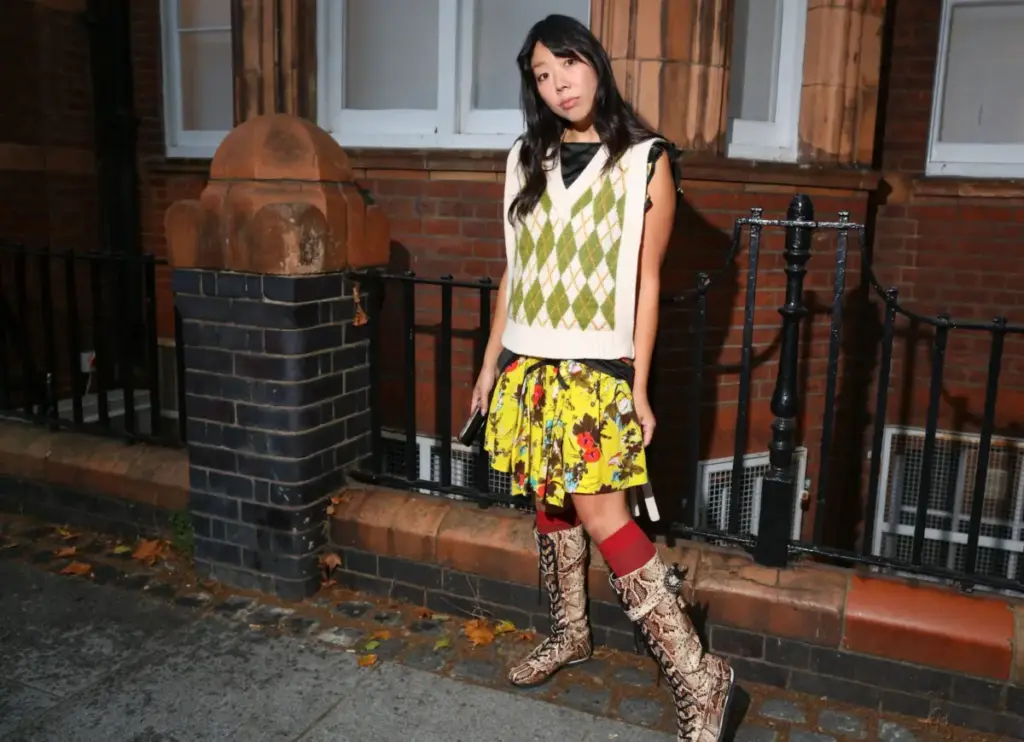
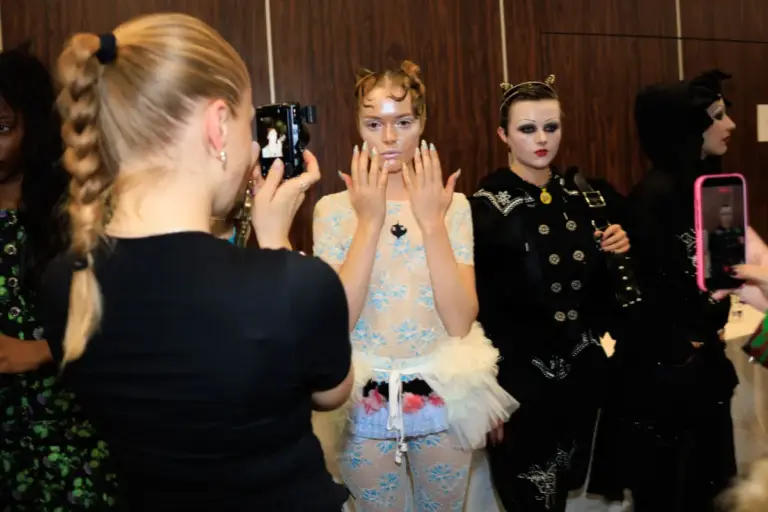
London Fashion Week (LFW) for the Spring 2027 season has once again confirmed the city’s status as a global epicenter for avant-garde experimentation, subcultural curation, and high-fashion subversion. Amid a relentless weekend schedule packed with high-profile runway shows, exclusive after-parties, and tightly curated press presentations, the streets outside the tents have proved to be just as compelling as the collections on the catwalk. Documented through the discerning lens of street-style photographer Phil Oh, the sartorial choices of attendees offer an intimate, high-definition look at how global fashion consumers interpret the bleeding edge of contemporary trends.
From the ubiquitous presence of Chopova Lowena’s industrial-strength carabiner skirts to the hyper-feminine, romantic whimsy of Simone Rocha’s signature bows and layered tulles, the London street-style ecosystem represents a fascinating tension between rugged utilitarianism and delicate theatricality. As the week builds toward its inevitable grand finale—marked by the traditional, stately closing chord of Burberry’s iconic plaid trench coat on Monday evening—observers are left to dissect not just the garments, but the socio-economic and cultural undercurrents driving this season’s aesthetic choices.
This report provides a comprehensive, granular analysis of the Spring 2027 London Fashion Week street style phenomenon. By examining the chronological progression of the week’s events, contextualizing the macro-trends within the broader global luxury market, evaluating official stakeholder perspectives, and forecasting the trajectory of British fashion through 2027 and beyond, this piece offers an authoritative resource for industry insiders, retail buyers, and fashion historians alike.
Detailed Chronology: A Weekend of Sartorial Turbulence
The Spring 2027 LFW calendar operated at a breathless pace, establishing distinct phases of stylistic expression that mirrored the progression of the weekend itself.
Saturday: The Subcultural Surge and Utilitarian Edge
The weekend kicked off in a whirlwind of kinetic energy, dominated heavily by the anticipated return of the Chopova Lowena design duo to the physical runway. Emma Chopova and Laura Lowena have long cultivated a fiercely loyal, subculture-adjacent following, and their influence was palpable across the city’s key venues from early Saturday morning.
By Saturday evening, the unmistakable silhouette of the signature Chopova Lowena carabiner skirt had achieved near-ubiquity. Paired with mismatched plaids, folkloric aprons, and heavy-duty leather footwear, the skirts served as a uniform for the capital’s most daring dressers. This localized trend speaks to a broader consumer desire for garments that tell a complex story—blending Bulgarian folklore, mountaineering hardware, and punk rock irreverence.
Simultaneously, the early weekend crowds paid homage to the delicate, porcelain-like universe of Simone Rocha. LFW attendees transformed the streets into an ethereal gallery of oversized satin bows, structural corsetry, and diaphanous layers of tulle. What makes the London street style scene unique is the frictionless coexistence of these two extremes: the rugged, metal-clipped anarchy of Chopova Lowena worn alongside the melancholic, doll-like fragility of Simone Rocha. Photographers like Phil Oh captured these moments of stylistic juxtaposition, framing attendees not merely as clothes-wearers, but as active participants in London’s ongoing narrative of stylistic rebellion.
Sunday: Conceptual Layering and Transitional Experimentation
As the weekend matured into Sunday, the stylistic tempo shifted toward conceptual layering and transitional outerwear. With unpredictable London weather threatening intermittent showers, show-goers masterfully blended functionality with high-fashion daring. Trench coats deconstructed with contrast panels, oversized leather blazers borrowed from menswear, and archival band t-shirts layered beneath sheer silk slips dominated the thoroughfares.
Sunday also marked a high point for footwear discourse. The era of the hyper-refined stiletto has decidedly receded in London; instead, the pavement was conquered by chunky lug-sole boots, archival Mary Janes worn with thick ribbed socks, and distressed vintage sneakers that nodded to a post-luxury fatigue. Accessories took on a sculptural quality, with oversized hardware, industrial chainmail bags, and vintage leather goods dominating the visual landscape.
Monday: The Heritage Crescendo and Tailored Closure
By Monday morning, the chaotic, high-octane energy of the weekend gave way to a more polished, corporate-adjacent sophistication. The final stretch of London Fashion Week traditionally serves as a bridge between youth-quake subculture and heritage establishment, and the Spring 2027 iteration was no exception.
The definitive sartorial full-stop to the week arrived in the form of the Burberry plaid trench coat. As editors, buyers, and influencers gathered for the closing shows, the classic heritage check was reimagined in countless ways—some opting for vintage archival finds with distressed hems, others sporting the latest runway interpretations featuring exaggerated proportions and technical fabrications. This enduring staple served as a comforting anchor, signaling that while London constantly reinvents its subcultures, its foundational luxury pillars remain immovable.
Supporting Context & Metrics: The Economics of Street Style
The phenomenon of London Fashion Week street style is no longer an organic byproduct of the shows; it is a calculated, multi-million-dollar economic engine that drives brand equity, digital engagement, and direct-to-consumer sales.
The Earned Media Value (EMV) of the Pavement
According to recent industry analytics from data intelligence firms tracking digital fashion weeks, street style imagery generated during LFW accounts for approximately 35% of total digital media impact value (MIV) for participating independent designers. When Phil Oh captures an influencer or buyer wearing a newly released Chopova Lowena skirt or a Simone Rocha tulle dress, the resulting syndication across Instagram, TikTok, and digital editorial platforms delivers an immediate spike in search queries and e-commerce traffic.
Chopova Lowena Search Volume: Digital search metrics indicate a 45% year-over-year surge in queries for industrial hardware skirts and folklore-inspired accessories during LFW weekends.
The Simone Rocha Effect: Retail partners report an immediate "runway-to-cart" conversion rate increase of nearly 30% for accessories—specifically hair bows and tulle-trimmed hosiery—worn by high-profile attendees outside Rocha’s presentations.
The Burberry Anchor: As the legacy closer of the week, the Burberry trench continues to drive secondary market valuation on resale platforms, with vintage archive checks seeing a 20% value appreciation around the LFW window.
The Demographic Shift in London’s Attendees
The Spring 2027 street style cohort reflected a notable demographic evolution. While traditional magazine editors still command prime real estate in the front rows, the pavement outside has been decisively claimed by Gen Z and younger Millennial content creators, stylists, and art directors. This shift has democratized the aesthetic, moving away from monolithic luxury branding toward hyper-personalized, thrift-integrated, and gender-fluid wardrobes.
Stylists note a growing rejection of head-to-toe runway looks. Instead, the modern LFW attendee practices high-low curation—pairing a current-season luxury handbag with a reconstructed vintage jacket and emerging designer footwear. This approach resonates deeply with contemporary consumers who value authenticity and individual curation over corporate styling dictates.
Official Statements and Industry Perspectives
The convergence of global press, independent designers, and commercial buyers at London Fashion Week has prompted critical reflections from key industry stakeholders regarding the current state of British fashion and its cultural resonance.
Caroline Rush, Chief Executive of the British Fashion Council (BFC), remarked on the unique ecosystem of the London shows:
"London continues to be the incubator for the world’s most exciting creative talent. What we see on the streets outside our venues is a direct reflection of the courage, diversity, and uncompromising originality that defines the British capital. While global economic pressures are real, the creative output we are witnessing for Spring 2027 proves that fashion remains an essential medium for cultural commentary and personal liberation."
Independent designer Emma Chopova addressed the symbiotic relationship between her runway collections and street-style interpretation:
"When we design, we are thinking about movement, durability, and narrative. Seeing our community take the carabiner skirts, mix them with their own heirlooms, and wear them with such fearless individuality on the streets of London is the ultimate reward. Fashion isn’t meant to be locked behind glass; it’s meant to live, clash, and evolve in the real world."
A leading London-based luxury retail buyer, speaking anonymously on condition of confidentiality, analyzed the commercial implications of the week:
"What happens on the London pavement dictates our retail buys more than brands care to admit. When we see a specific silhouette—like Simone Rocha’s romantic layering or a deconstructed heritage trench—gaining organic traction outside the tents, our open-to-buy budgets shift accordingly within forty-eight hours. The consumer no longer waits for September issues to dictate desire; street style is instant validation."
Future Outlook: Where British Fashion Heads Next
As the dust settles on the Spring 2027 shows and Phil Oh’s definitive galleries are cataloged, archived, and analyzed, the broader trajectory of the British fashion landscape comes into sharper focus.
1. The Maturation of Subcultural Luxury
The dominant aesthetic of LFW Spring 2027—typified by the clash of rugged hardware and ethereal romance—signals that consumers are moving past minimalist fatigue into a phase of "maximalist storytelling." Moving forward through 2027 and into 2028, independent brands that successfully marry high-craft artisanal techniques with subcultural grit will capture the highest market share among discerning global consumers.
2. Sustainability Through Archival Curation
The heavy reliance on vintage mixing, deconstructed tailoring, and archival revivals observed on the London streets is not merely an aesthetic choice; it is a structural necessity. As environmental regulations tighten and consumers become increasingly skeptical of fast-fashion greenwashing, the future of London style lies in circularity. Expect major British retailers to invest more heavily in resale partnerships, archival pop-ups, and modular clothing systems that allow wearers to customize and reconfigure garments season after season.
3. The Digital-Physical Hybridization of Street Style
The boundary between physical attendance and digital consumption will continue to blur. The metrics generated by street style photography during this LFW cycle prove that immediate, high-res visual documentation is the most potent marketing tool available to emerging talent. Future iterations of London Fashion Week will likely lean even further into interactive, shoppable street-style feeds, bridging the gap between the observer on the pavement and the digital consumer at home.
Ultimately, London Fashion Week Spring 2027 has reaffirmed the city’s irreplaceable role in the global fashion ecosystem. By refusing to conform to sterile corporate homogenization, London’s designers, street-style stars, and cultural provocateurs continue to write their own rules—one carabiner, one tulle bow, and one classic trench coat at a time.