Executive Overview
As the whirlwind international style circuit descends upon the English capital for the Spring/Summer 2027 Fashion Month, London has once again proven why it remains the global epicenter for avant-garde experimentation balanced with storied heritage. Following a high-octane opening stop in New York, the industry traded coffee runs for Oyster cards, packing wellies alongside tailored suiting for a brisk, high-impact four-day showcase across the city.
The schedule is an intoxicating blend of industry heavyweights and rebellious newcomers. Anchored by pillars of British design like Simone Rocha, Erdem, and Burberry, the week is equally electrified by boundary-pushing independent talents such as Aaron Esh, Di Petsa, and Steve O. Smith. Yet, the undeniable seismic shift of the season belongs to Alexander McQueen. Under the creative direction of Seán McGirr, the iconic house is making a triumphant return to its native roots with a highly anticipated evening presentation on September 20th—an event drawing international tastemakers and star-studded front rows in droves.
Simultaneously, London continues to foster the next generation of creative visionaries. This season marks vital runway debuts for R&M Leathers, alongside inaugural calendar appearances by emerging labels A-Letter and Geordie Campbell. Commercial powerhouses are also making waves, most notably H&M, which delivered an immersive, star-studded runway presentation that effectively bridged the gap between high street accessibility and front-row exclusivity. From enduring British style icons like Alexa Chung to breakout global stars like Myha’la, London Fashion Week SS27 is operating at the absolute peak of its cultural relevance, offering a masterclass in how historic legacy and radical modernity can coexist on the runway and the streets alike.
Detailed Chronology: The Four-Day Whirlwind of SS27
Day One: Setting the Tone and the Early Debuts
The energy on the ground in London was palpable from the moment editors and buyers touched down. Eschewing the sprawling layout of other fashion capitals, London’s tight-knit geography makes for an intense, hyper-focused sprint. Day one immediately established a dynamic tension between established craftsmanship and raw, unfiltered youth culture.
The early hours set a brisk pace with presentations from independent designers who utilize London’s gritty, multicultural landscape as their primary mood board. Aaron Esh and Steve O. Smith drew critical acclaim for collections that dissected contemporary British masculinity and fluid tailoring. However, the afternoon belonged to the fresh faces breaking onto the official schedule. R&M Leathers staged its inaugural runway show, captivating an audience that included indie-music royalty like Rhian Teasdale of Wet Leg. The debut signaled a maturation for the brand, translating its cult following into a polished, commercially viable runway statement.
As evening fell, the focus shifted toward atmospheric presentations. Mithridate drew a dedicated crowd of actors and musicians, with Fellow Travelers star Hunter Doohan turning heads in the front row. The atmosphere was intimate yet charged, setting a high bar for the days to follow.
Day Two: The H&M Phenomenon and Commercial Spectacle
If day one was about underground discovery, day two was an exercise in pure cultural dominance. High-street titan H&M commandeered the conversation with an immersive, theatrical runway presentation that blurred the lines between attainable fashion and elite front-row glamour.
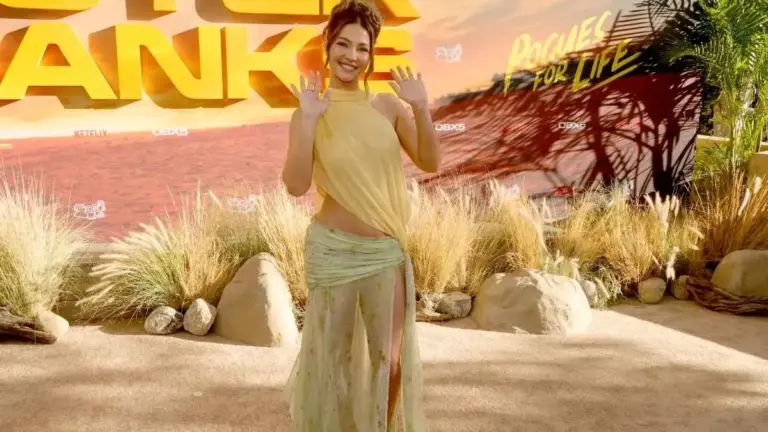
The star wattage at the H&M venue rivaled any major luxury house in Paris or Milan. The arrivals carpet resembled a Who’s Who of global entertainment and music. Myha’la made a triumphant return to the fashion month circuit, looking effortlessly chic, while pop icon Kim Petras, Grammy-winning singer Tems, and rising songstress Audrey Nuna brought palpable electricity to the venue.
The front row read like a masterclass in modern casting: actor Manu Ríos, style fixture Laura Harrier, musician Cruz Beckham, and breakout internet personalities Madeline Argy and Ruby Lyn mingled with actors Jackson White and Grace Van Patten. Artists like Rachel Chinouriri, Rose Gray, Kai Schreiber, Izzi Allain, and Sierra Rena rounded out a crowd that underscored H&M’s profound cultural cachet. The collection itself was a triumph of texture and trend-forecasting, proving that fast-fashion giants can execute high-concept runway storytelling without losing their commercial edge.
Day Three: The Heavyweights Hold Court
Midway through the four-day sprint, the focus pivoted back to London’s foundational pillars—designers who have defined the emotional and aesthetic landscape of British luxury for decades.
Simone Rocha delivered another breathtaking exercise in romantic melancholy. Staged in a historic London venue, Rocha’s collection played with themes of fragility and armor, pairing gossamer tulle and ribbons with structured leather and hardware. The front row reflected the designer’s cult-like devotion, filled with actors and artists who embody Rocha’s ethereal yet subversive worldview.
Erdem followed with a masterclass in narrative-driven tailoring. Known for his deep historical homages and botanical prints, Erdem Moralıoğlu focused his SS27 collection on forgotten literary heroines, translating archival silhouettes into modern, wearable art. The precision of the cut and the richness of the textiles served as a poignant reminder of London’s unrivaled prowess in traditional garment construction.
Day Four: The Grand Finale and the McQueen Homecoming
The final stretch of London Fashion Week always carries a bittersweet energy, but the SS27 season is engineered to end on an earth-shattering crescendo: the return of Alexander McQueen.
Under the visionary guidance of Creative Director Seán McGirr, the house’s decision to stage an evening show on September 20th has dominated industry discourse for weeks. Bringing McQueen back to its spiritual home in London is more than a logistical choice; it is a symbolic reclamation of the city’s dark, romantic, and theatrical soul. Industry insiders are anticipating a collection that honors the late Lee Alexander McQueen’s legacy of radical tailoring and shock-and-awe presentation, while firmly establishing McGirr’s forward-looking era for the brand.
As the final looks hit the runway and the fashion caravan packs its bags for Milan, London will have once again proven that its chaotic, fiercely independent spirit is its greatest asset.
Supporting Context & Metrics: The Business of London Fashion
While the glamour of the front row commands the flashbulbs, the underlying metrics of London Fashion Week SS27 tell a story of strategic resilience, digital innovation, and shifting economic models within the UK creative sector.
Economic Impact and Tourism
According to preliminary data released by the British Fashion Council (BFC), London Fashion Week continues to be a vital economic engine for the capital. The bi-annual event generates upwards of £100 million in direct economic impact, with hospitality, transport, and retail experiencing a significant seasonal boom. Despite global macroeconomic headwinds, luxury and accessible-luxury brands have reported steady international buyer attendance, particularly from North American and Asian markets, eager to secure early access to the British market’s distinct point of view.
The Rise of the Emerging Designer
This season’s calendar highlights a deliberate structural shift by the BFC to incubate and protect emerging talent. With high operational costs threatening independent designers globally, London has leaned into collective showcases, digital-physical hybrid presentations, and strategic brand partnerships.
- R&M Leathers: Successfully transitioned from a cult-status accessories and outerwear label to a full-fledged runway contender.
- A-Letter & Geordie Campbell: Both chosen as key entities in the "Future of Fashion" initiative, these brands represent a pivot toward sustainable production, upcycled materials, and hyper-local manufacturing—values increasingly demanded by the modern consumer.
Digital Reach and Earned Media Value (EMV)
The integration of high-profile front-row guests—exemplified by H&M’s star-studded turnout featuring Myha’la, Tems, Kim Petras, and Manu Ríos—demonstrates the calculated mechanics of modern Earned Media Value (EMV). In an era where digital impressions translate directly to bottom-line sales, brands are no longer just selling clothes; they are producing cinematic moments designed for instant social media consumption. Livestreams, TikTok partnerships, and real-time photo diaries have turned LFW into an omni-channel global broadcast, reaching millions of viewers who consume the shows digitally seconds after they hit the physical runway.
Official Statements and Industry Perspectives
The convergence of heritage houses, rebellious startups, and commercial giants has yielded profound insights from the creative minds driving the industry forward.
Reflecting on the emotional resonance of the season, a leading British Fashion Council spokesperson noted:
"London has always thrived on contradiction. We are a city that fiercely protects its heritage while tearing up the rulebook season after season. The SS27 schedule captures this duality perfectly—from the monumental homecoming of Alexander McQueen to the fearless innovations of our emerging tier. London is not just a stop on the fashion calendar; it is where the emotional temperature of global style is taken."
Discussing the commercial strategy behind immersive high-street spectacles, an H&M brand representative shared:
"Fashion should be a shared cultural experience, not an exclusive club. By bringing together incredible talent from film, music, and art—artists like Tems, Kim Petras, and Myha’la—alongside an immersive runway presentation, we are aiming to democratize the thrill of fashion month. London provides the exact right energy for this kind of bold, democratic storytelling."
Designers showing on the independent schedule have similarly emphasized the unique creative liberty afforded by the British capital:
"There is a raw permission slip you get when you design and show in London," remarked one emerging menswear talent ahead of their presentation. "Buyers and editors here aren’t looking for safe, homogenized perfection. They want soul, they want subversion, and they want a story. That gives us the courage to push boundaries that might not fly anywhere else."
Future Outlook: What Lies Ahead for British Fashion
As the curtains close on London Fashion Week SS27 and the style pack boards Eurostar trains and red-eye flights toward Milan, Paris, and beyond, the overarching trajectory of British fashion points toward a fascinating horizon.
1. The Institutionalization of Sustainability
The pressures facing young designers are forcing structural changes in how collections are conceived and produced. The success of emerging names utilizing deadstock, local sourcing, and circular design principles suggests that sustainability is no longer a marketing buzzword in London—it is a baseline survival metric. Future seasons will likely see even tighter integration of circular economy frameworks mandated by governing bodies.
2. The Evolution of the Runway Experience
The boundary-shattering formats seen this season—from H&M’s theatrical populist spectacle to Alexander McQueen’s deeply emotional homecoming—signal the end of the traditional, passive runway show. Audiences now expect narrative immersion, cultural crossover, and instant digital interactivity. Brands that fail to turn their presentations into cultural moments risk losing mindshare in an increasingly saturated global market.
3. Nurturing the Pipeline
The true test for London Fashion Week moving forward will be its ability to financially sustain the emerging talent it so brilliantly champions. While initiatives like the BFC Foundation provide crucial grants and mentorship, structural support from private equity and strategic retail partnerships will be vital to ensure that London’s next generation of creative rebels can scale their businesses globally without losing their subversive edge.
For now, as the London fog rolls in over the Thames, the city can rest easy knowing it has once again delivered a fashion week defined by uncompromising creativity, unforgettable style moments, and a cultural heartbeat that refuses to slow down.