Executive Overview
The romantic saga of Jamie and Claire may have reached its poignant conclusion with the flagship Outlander series finale earlier this year, but the sprawling, time-bending historical universe shows no signs of slowing down. Starz’s prequel spin-off, Outlander: Blood of My Blood, has officially returned for its highly anticipated second season. Picking up right where the turbulent Season 1 finale left off, the series continues to chronicle the epic and perilous romances of its central couples: Ellen MacKenzie and Brian Fraser, alongside Julia Moriston and Henry Beauchamp.
Just like their time-traveling and history-shaping children before them, Ellen, Brian, Julia, and Henry find themselves navigating a treacherous landscape of shifting geopolitical alliances, familial betrayal, supernatural mysteries, and the brutal dawn of the Jacobite uprising. Season 2 wastes no time thrusting its characters into deep psychological and physical jeopardy. From 20th-century psychiatric wards to the muddy, blood-soaked grounds of 18th-century Scotland, the narrative expansiveness of the franchise is on full display.
This comprehensive review delves deep into the premiere events of Blood of My Blood Season 2, breaking down the complex mechanics of time travel gone wrong, the insidious political machinations at Castle Leoch and Castle Leathers, the devastating psychological toll inflicted upon Henry Beauchamp, and the subtle Easter eggs that tie this prequel directly back to the beloved original series.
Detailed Chronology: Unraveling the Premiere’s Complex Timelines
The 20th-Century Nightmare: Henry Beauchamp’s Disorienting Return
Season 1 of Blood of My Blood concluded with Henry Beauchamp desperately trying to send Julia back through the mystical stones at Craigh na Dun. However, the narrative tables are violently turned as Season 2 opens in the 20th century under grim, disquieting circumstances. Henry wakes up disoriented, bruised, and trapped inside a straitjacket at the Inverness Lunatic Asylum.
Having been discovered on the misty Scottish moors with a severe head wound and a shoulder laceration, Henry is deeply confused. To protect himself and maintain the secrecy of his chronological displacement, he provides the attending physician, Dr. Perryman, with an 18th-century alias: Henry Grant.
The revamped credits give way immediately to an episode aptly titled "Remembrance Day," which sheds light on the disastrous events at the stone circle. Henry’s initial plan to push Julia through the stones failed—presumably due to the lack of gemstones, an established prerequisite for successful temporal transit in the Outlander television universe. This fatal oversight bought just enough time for Arch Bug to launch a vicious surprise attack. Slamming Henry’s head against the ancient stones and driving a jewel-encrusted knife deep into his shoulder, Arch sought vengeance. In a desperate, agonizing moment, Henry leaned against the active stones with the blade still embedded in his flesh, causing him to unintentionally time-travel back to the 20th century while leaving Julia and their infant son, William, stranded in the past.
Displaying remarkable quick-thinking, Julia deflected Arch’s suspicions by claiming that Henry was a deranged stranger who had delusionally mistaken her for his wife. While the ruse successfully preserved her safety, it carried a devastating personal cost: Julia was forced to return to the clutches of her cruel 18th-century husband, Lord Lovat.
The Honeymoon Interrupted: Brian and Ellen’s Heartbreaking Farewell
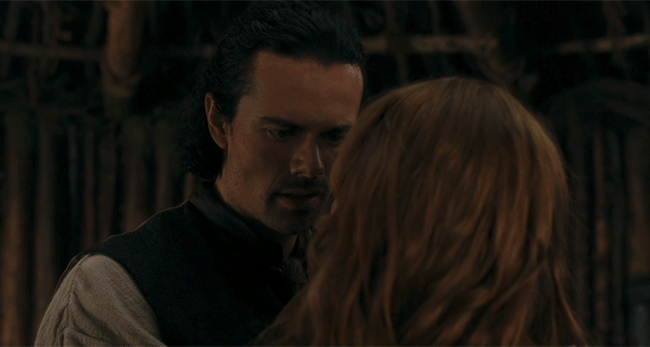
Meanwhile, in 18th-century Scotland, Brian Fraser and Ellen MacKenzie are enjoying a fleeting moment of stolen bliss in their secluded honeymoon hideout. Their idyllic bubble is abruptly popped by the ominous sight of fiery crosses illuminating the night sky—a chilling harbinger announcing that the Jacobites are officially marching to war against the English crown.
Sharing an intimate moment, the couple dares to dream of a simple, peaceful future together once the fighting subsides, envisioning a modest plot of land and a family. (A moment that prompts knowing nods and quiet gratitude from longtime Outlander fans anticipating the birth of their legendary son, Jamie).
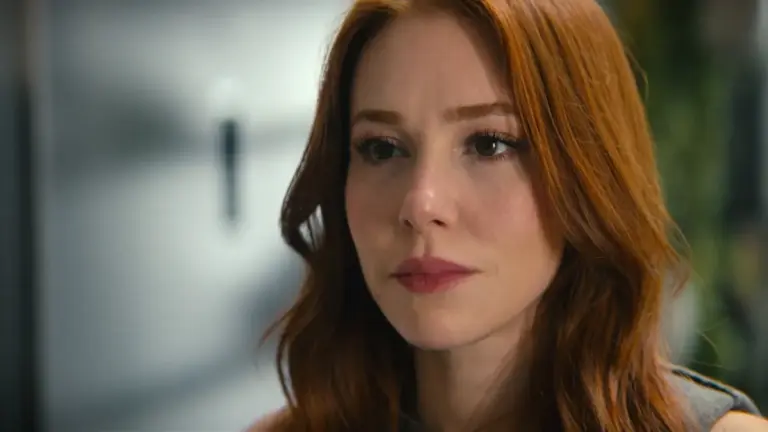
However, peace is never long for this world. The perpetual "third wheel," Murtagh, spots a fresh and immediate threat on the horizon: a search party of MacKenzies hunting for Ellen. True to her dramatic spirit, Ellen had pulled off a historical equivalent of Julia Roberts running out on her wedding to Malcolm Grant during the previous season. To protect Brian and Murtagh from almost certain execution, Ellen makes the ultimate sacrifice, convincing Brian to let her surrender herself to her estranged clan. Before parting ways, Brian offers a poignant, legally grounded reminder: under the strict rules of Scottish handfasting, there is "less than a year and a day before we must marry." Whether they can actually save the date amid a raging Jacobite civil war remains highly questionable.
Castle Leoch Politics and the Tragedy of Malcolm Grant
Back at Castle Leoch, Uncle Mac grapples with the fallout of Malcolm Grant’s violent demise, conferring with Colum, Dougal, and Ned Gowan. With zero eyewitnesses to the incident, the pragmatic Ned Gowan attempts to spin a convenient legal narrative: that a heavily intoxicated Malcolm tragically tripped and fell on his own dirk after being publicly jilted by Ellen.
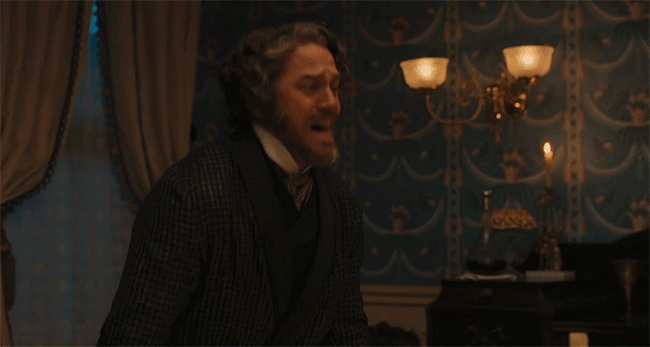
Uncle Mac is entirely unconvinced by the transparent fabrication. Nevertheless, with a catastrophic war looming on the doorstep, he pragmatically decides to play nice with the MacKenzies—at least for the time being. Once he is left alone with his newlywed niece Maura (who recently married Dougal), Uncle Mac drops the diplomatic facade, vowing that the MacKenzies will ultimately pay in blood for Malcolm’s death. Furthermore, he urgently needs to locate the clan’s traditional bladier to solidify a seamless, unquestioned appointment to laird.
Unfortunately for Uncle Mac’s political ambitions, his modern-day counterpart, Henry, is currently far too preoccupied in the 20th century. Henry struggles hopelessly to convince Dr. Perryman that his wife and infant son are trapped hundreds of years in the past, and that his profound distress stems from temporal displacement rather than World War I shell shock.
Castle Leathers: Lord Lovat’s Vile Maneuvers and Davina’s Revelations
Julia and baby William safely return to Castle Leathers, where they are greeted by a mixed bag of family dynamics: a warm reunion with Brian’s mother, Davina, contrasted by the slimy presence of Brian’s cruel father, Simon (Lord Lovat). A visibly intoxicated Lord Lovat checks in on the infant—whom he insists on calling baby Simon—before immediately making unwanted, predatory advances toward a grieving Julia, motivated by his repulsive belief that Henry had sexually assaulted her.
Desperate to deflect his predatory advances, Julia employs psychological warfare, reminding Lovat that the impending war draws them closer to the grand prophecy predicting their son will be king, thereby demanding his immediate focus on military preparation.
While brewing a cup of tea for Lovat—discreetly dosed with chaste berries to dampen his libido—Julia confides in Davina about the reality of what transpired at the stone circle. In response, Davina utters a delightful new colloquialism, exclaiming, "By God’s bodikins!" before offering her hypothesis: she genuinely believes Julia might be a faerie. When Julia confesses the absolute truth—that she is a temporal traveler from the future—Davina surprisingly accepts the revelation with open arms. Even with an unexpected confidante by her side, Julia is crushed by the realization that she will miss her daughter Claire’s upcoming sixth birthday on October 20, desperately praying that Henry has somehow managed to reach Claire safely.
The 20th Century: Electroconvulsive Therapy and Memory Erasure
Julia’s maternal prayers unfortunately go unanswered. In the 20th-century timeline, Dr. Perryman decides to escalate Henry’s psychiatric care by administering electroconvulsive therapy (ECT). As electrical currents course through Henry’s brain, he experiences a traumatic series of fractured flashbacks, alternating between brutal trench warfare memories from WWI and cherished domestic moments of bliss celebrating Remembrance Day with Julia, baby Claire, and Claire’s beloved stuffed rabbit, Floppy.
Subsequent rounds of psychiatric "treatment" have a devastating, invasive effect, systematically wiping memories of Claire and her current guardian—Henry’s brother, Lamb—from his consciousness. While psychiatric historians will note that modern ECT protocols were not widely utilized in institutional settings until the 1930s, this narrative device cleverly cements a tragic continuity: this targeted neurological trauma is precisely why adult Claire will grow up firmly believing that her parents perished in a mundane vehicular accident.
Political Chessboards and Mystical Seekers
As the episode progresses, Brian and Ellen return to their respective familial strongholds. At Castle Leathers, Brian is shocked to discover that his father is officially pledging his allegiance to the Jacobite cause. Lord Lovat commands Brian to aggressively recruit troops for the Fraser campaign, while Julia actively encourages Simon to march alongside his illegitimate son to set a proper leadership example.
Meanwhile, at Castle Leoch, Colum dispenses harsh physical punishment, slapping Ellen across the face for her scandalous desertion after she had sworn sacred vows to marry Malcolm. Colum orders her locked away indefinitely inside the castle chapel, though Ellen proves she is far too cunning to remain caged for long, darkly hinting at an elaborate counter-plot to secure autonomy for the MacKenzie family.
In the 20th-century asylum, Henry receives a pivotal visitor: Reverend Wakefield, a character instantly recognizable to longtime fans as Roger MacKenzie’s adoptive father. Utilizing the St. Anthony necklace that Julia gifted to Henry prior to their separation, the Reverend helps jumpstart Henry’s dormant neurological pathways, reviving fragmented memories of his sweet-heart letters to Julia. Sadly, his recollections of Claire are reduced to little more than the solitary letter "C" and the ominous, recurring date of October 20.
The Reverend discusses Henry’s bizarre case with his sharp-witted housekeeper, Mrs. Graham—another iconic original-series figure who famously read Claire’s tea leaves in the very first episode of Outlander. As someone well-versed in local folklore regarding faeries and mysticism, Mrs. Graham becomes utterly fascinated by Henry’s unbelievable tale and resolves to visit him personally. Simultaneously in the 18th century, Julia finds herself inspired to seek out a kindred spirit deeply versed in the supernatural: the prophetic seer Maisri. Readers will recall that Maisri accurately predicted in Season 1 that Claire’s baby brother is destined to become a king. Julia hopes the seer might hold vital clues regarding the mechanics of time travel.
Supporting Context & Metrics: The Scale of the Outlander Universe
The enduring success of the Outlander franchise is a testament to the rich world-building established by author Diana Gabaldon and expanded brilliantly by television showrunners. Blood of My Blood operates on a massive logistical scale, blending meticulous period-accurate historical drama with high-concept sci-fi lore.
- Chronological Spanning: The narrative simultaneously juggles early 18th-century Scotland (circa 1715–1745) and mid-20th-century post-WWI Britain, requiring two entirely distinct design, costume, and linguistic palettes.
- The Mythology of the Stones: Craigh na Dun remains the narrative anchor of the entire franchise. The premiere explicitly reiterates franchise lore: transit through the stones is strictly governed by physical catalysts (gemstones) and bodily vulnerability, establishing why Henry’s jump was accidental and incomplete compared to historical precedent.
- Character Lineage Integration: By anchoring the prequel around the parents of Jamie Fraser and Claire Beauchamp, the series efficiently bridges generational gaps, satisfying fan desires for lore continuity while forging an entirely independent dramatic identity.
Future Outlook: What Lies Ahead for Blood of My Blood Season 2?
As Season 2 gathers narrative momentum, the trajectory for our displaced protagonists looks perilous. While it remains to be seen whether the seer Maisri can offer Julia any practical assistance in navigating the temporal rift, the broader narrative chess pieces are firmly in motion.
It appears increasingly certain that Mrs. Graham will play a pivotal role in engineering Henry’s escape from the psychiatric asylum, paving the way for his eventual reunion with Julia across the centuries. However, the emotional cost will be immense: Henry’s erased memories suggest that if he successfully returns to the 18th century, he will do so permanently severed from his daughter, leaving young Claire behind in the 20th century to fulfill her predestined, extraordinary destiny.
As the Jacobite rebellion draws closer to outright war, alliances will fracture, blood will be spilled, and the resilience of the Fraser and MacKenzie bloodlines will be tested to their absolute limits. Outlander: Blood of My Blood proves that the past, present, and future are inextricably linked by a tapestry of love, sacrifice, and unyielding defiance.