The intersection of modern digital entertainment, public policy, and corporate self-preservation has once again sparked a fierce international debate. At the heart of this conflict is Epic Games CEO Tim Sweeney, who has fiercely condemned a reported European Union legislative proposal aimed at heavily restricting or outright banning online gaming access for minors under the age of 15. Sweeney’s vocal opposition—characterizing the apps and games of today as the "paintbrushes and tree forts of yesterday"—brings to light a much broader philosophical and economic struggle over the digital upbringing of the next generation.
While governments across the globe grapple with escalating concerns regarding child safety, privacy, and online predatory behaviors, major industry figures are pushing back against heavy-handed regulatory frameworks. However, the timing and fervor of Sweeney’s arguments are impossible to divorce from the commercial reality facing Epic Games. With Fortnite experiencing declining profit margins, recent workforce reductions, and shifting player demographics, the stakes for maintaining unrestricted access to younger audiences have never been higher. This report examines the geopolitical push for online restrictions, the validity of Sweeney’s cultural arguments, and the complex socioeconomic pressures weighing down on contemporary live-service gaming giants.
Detailed Chronology: The Road to the EU Ban Proposals
The momentum behind stricter regulations for minors in digital spaces did not materialize overnight. It is the culmination of years of mounting political pressure, safety concerns, and high-profile platform controversies.
Early 2026: The Global Wave of Youth Digital Restrictions
Throughout the opening months of 2026, international lawmakers zeroed in on the digital consumption habits of adolescents and children. In the United Kingdom, legislative momentum gathered around comprehensive social media bans for teenagers under the age of 16, accompanied by strict proposals to limit voice chat capabilities in interactive online multiplayer titles like Fortnite and Roblox.
These local initiatives foreshadowed a broader, more sweeping continental movement. In mid-September 2026, reports surfaced via Reuters detailing a planned European Union legislative proposal. According to the leaks, the EU intends to impose stringent access barriers across social media platforms, AI chatbots, and online video game ecosystems for anyone under the age of 15.
The Framework of the Proposed EU Regulations
Under the leaked European Union framework, the regulatory approach is tiered based on age brackets:
- Ages 13 to 14: Minors would theoretically be permitted to establish "introductory accounts," though these profiles would feature heavily restricted functionality and necessitate explicit parental consent for operation.
- Ages 3 to 12: Children within this foundational developmental window would be barred from standard accounts altogether. Instead, they would be restricted exclusively to services deemed explicitly child-friendly, with every facet of the account fully locked down and managed by parents or legal guardians.
While these measures are still in the preliminary drafting phase and have yet to be formally enacted into law, the mere prospect of their implementation sent shockwaves through the video game industry.
Tim Sweeney’s Public Backlash
Reacting swiftly to the news on social media platform X (formerly Twitter) on September 16, 2026, Tim Sweeney delivered a blistering critique of the rumored legislation. Labeling the potential ban as "terrible for the next generation of humanity," Sweeney elevated video game platforms to critical engines of modern human development. He argued that tools like Fortnite Creative Mode and Roblox Studio democratize digital creation, putting the power of invention into the hands of ordinary youth—a capability he claims politicians are unjustly attempting to strip away.

Supporting Context & Metrics: Creativity vs. Corporate Reality
Sweeney’s defense of Fortnite relies heavily on the premise that modern video games serve as essential modern workshops for youthful expression. However, this artistic framing exists in tension with well-documented systemic issues plaguing modern live-service ecosystems.
The Double-Edged Sword of Sandbox Platforms
Sweeney’s comparison of video games to "paintbrushes and tree forts" has drawn substantial skepticism from cultural critics and child advocacy groups alike. While platforms like Fortnite Creative and Roblox undoubtedly foster technical literacy, coding skills, and collaborative design, they are fundamentally commercial ecosystems engineered for continuous monetization.
Unlike physical paintbrushes, which operate entirely independently of corporate oversight, digital creation platforms tie their users directly into walled gardens. These environments have repeatedly struggled to police their own boundaries:
- Monetization Pressures: Fortnite has faced intense regulatory scrutiny in the past, including significant financial penalties—such as a $245 million settlement with the FTC in late 2022 and subsequent European consumer complaints—regarding aggressive marketing tactics and dark patterns designed to encourage microtransaction spending among minors. Incidents involving children running up hundreds or thousands of dollars in unauthorized charges for cosmetic skins highlight the financial hazards baked into frictionless digital storefronts.
- Content Moderation Failures: The integration of generative artificial intelligence and user-generated content has also introduced severe safety vulnerabilities. Last year, Epic Games faced severe public backlash when users managed to manipulate a Fortnite Darth Vader AI chatbot into generating hate speech and inappropriate slurs. Similarly, Roblox has faced continuous legal challenges, class-action lawsuits, and petitions over allegations of hosting inappropriate content, ultimately forcing the platform to overhaul its safety protocols and institute rigorous age-verification mandates.
Economic Strain at Epic Games
Sweeney’s urgency in defending youth access is underscored by the precarious financial health of Epic Games. Recent corporate disclosures indicate that Fortnite has faced a noticeable cooling in sustained user engagement and profitability.
To offset declining revenues, Epic Games was forced to enact sweeping structural changes earlier in 2026, including the layoff of approximately 1,000 staff members. These downsizing efforts were paired with inflationary pricing adjustments on V-Bucks—the game’s in-game currency—designed to stabilize corporate overhead. Because live-service business models rely on massive, active player bases to sustain their multi-year update cycles, any systemic barrier preventing younger demographics—who naturally possess significantly more discretionary leisure time than adults—from accessing the game represents an existential threat to Epic’s bottom line.
Official Statements and Industry Response
The discourse surrounding the EU’s proposed restrictions highlights a fundamental philosophical divide between regulatory bodies and tech executives.
Proponents of the EU framework argue that self-regulation by technology companies has historically failed to protect vulnerable demographics from predatory monetization, screen addiction, and online exploitation. Lawmakers maintain that standard digital safeguards are insufficient in the face of sophisticated psychological engagement loops engineered by multi-billion-dollar corporations.
Conversely, industry defenders—exemplified by Sweeney’s public statements—argue that blanket prohibitions represent a lazy, reactionary approach to complex societal challenges. By framing online ecosystems as indispensable digital infrastructure, industry leaders attempt to shift the narrative from one of corporate liability to one of civic necessity.

Independent digital safety experts have noted that while Sweeney’s defense of digital creativity holds a grain of truth, it conveniently overlooks the industry’s historical reluctance to implement robust, friction-free parental controls voluntarily. The debate ultimately centers on whether digital citizenship can be safely fostered within profit-driven corporate ecosystems or if external legislative intervention is required to safeguard developing minds.
Future Outlook: Nostalgia, Crossovers, and the Battle for the Audience
As Epic Games navigates this turbulent regulatory landscape, the company is concurrently executing a high-stakes strategy to revitalize Fortnite’s cultural footprint and stabilize its economic foundation.
Capitalizing on Retro Nostalgia
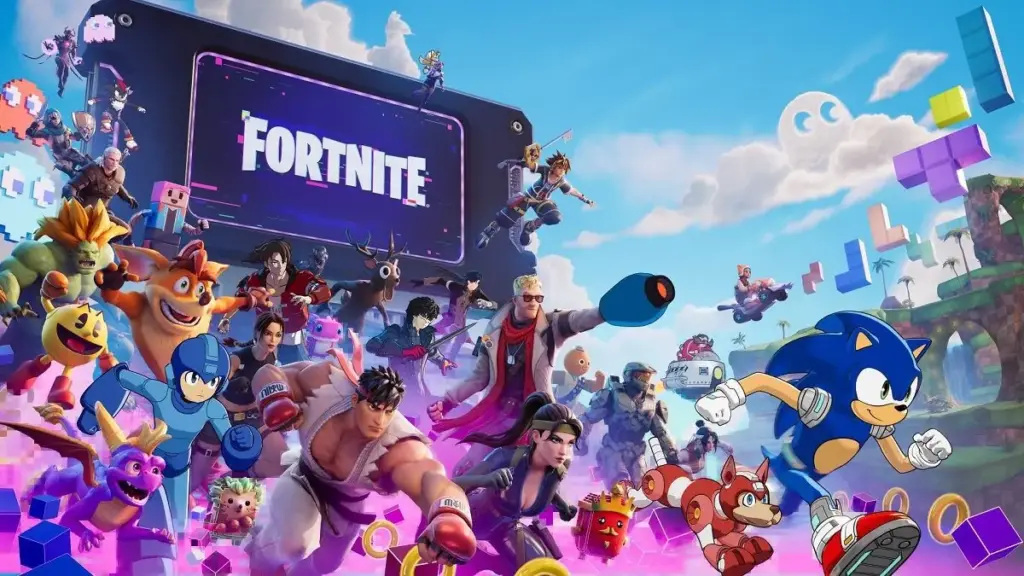
In an ironic twist, the current season of Fortnite feels less tailored to the digitally native children Sweeney champions and more directly aimed at capturing the wallets of nostalgic adults. Epic Games has launched a massive, multi-franchise crossover event celebrating classic gaming icons.
The game has integrated traditional, family-friendly characters who historically do not rely on firearms, including:
- Sonic the Hedgehog
- Crash Bandicoot
- Pac-Man
Furthermore, Epic announced a major collaborative partnership with Square Enix’s Kingdom Hearts franchise. Players can now purchase character skins for Sora, Riku, Kairi, and Roxas across both the traditional Battle Royale mode and Lego Fortnite. To drive immediate engagement, Epic introduced limited-time "Kingdom Hearts Power Hours," granting active players temporary access to iconic in-game items like the Keyblade and Sea Salt Ice Cream healing consumables.
What Lies Ahead
The juxtaposition of a retro-focused, all-ages nostalgia season against the grim backdrop of EU regulatory threats and internal corporate downsizing paints a complex picture for Fortnite’s future.
Whether the European Union ultimately follows through with its sweeping online bans remains to be seen. However, the intensity of Tim Sweeney’s public resistance demonstrates that the battle lines between state oversight and digital platform autonomy have officially been drawn. As lawmakers continue to scrutinize the safety and ethics of virtual worlds, companies like Epic Games will be forced to adapt not only their marketing strategies and safety compliance protocols, but also their fundamental arguments for why they deserve a place in the lives of the next generation.