

Executive Overview
For beauty enthusiasts, the hunt for the holy-grail foundation is an expensive, often exhausting endeavor. While consumers routinely celebrate budget-friendly swaps in categories like mascara or lip gloss—where high-street alternatives frequently rival luxury counterparts—base makeup has historically remained a territory reserved for significant financial investment. Finding a liquid or cream base that marries immaculate shade matching, skin-nourishing formulations, longevity, and a skin-like finish under the £15 threshold is a notoriously tall order.
Enter the Max Factor Facefinity Lasting Blur Foundation. Retailing at a remarkably accessible £9.99, this high-street launch has quietly disrupted the cosmetics landscape, challenging the hegemony of luxury prestige brands. Promising a medium-to-full buildable coverage, a soft-focus blurring effect, and a radiant yet velvety finish, the product has recently landed on beauty desks and sent ripples through the industry.
This comprehensive report investigates the formulation, performance, market positioning, and broader consumer implications of Max Factor’s latest budget-friendly innovation. By examining its performance across diverse skin types—specifically addressing the historical pitfalls of oxidisation and mismatched undertones in budget ranges—we explore whether the Facefinity Lasting Blur Foundation genuinely heralds a new era of democratized, high-performance luxury cosmetics.
Detailed Chronology: The Evolution of High-Street Base Makeup
To understand the industry significance of the Max Factor Facefinity Lasting Blur Foundation, one must examine the chronological trajectory of drugstore cosmetics over the past decade.
The Era of Chalky Finishes (Early 2010s)
Historically, budget foundations were plagued by formulation limitations. Common grievances included chalky, mask-like finishes, highly restricted shade ranges that catered almost exclusively to light-to-medium skin tones, and a notorious tendency to oxidise—shifting from a neutral or cool tone to an unflattering orange after minutes of air exposure. Consumers with sensitive, dry, or combination skin were left with few viable options outside of department store counters.
The Rise of Skinification (Late 2010s to 2020s)
As the beauty market shifted toward "skin-first" philosophies popularized by the clean beauty movement and the K-beauty boom, drugstore laboratories began incorporating skincare hybrids into budget formulas. Hyaluronic acid, niacinamide, and glycerin slowly trickled down from luxury serums into mass-market base formulations. However, these additions often compromised longevity or coverage, resulting in products that felt comfortable but melted off the skin by midday.
The Launch of Facefinity Lasting Blur (Present Day)
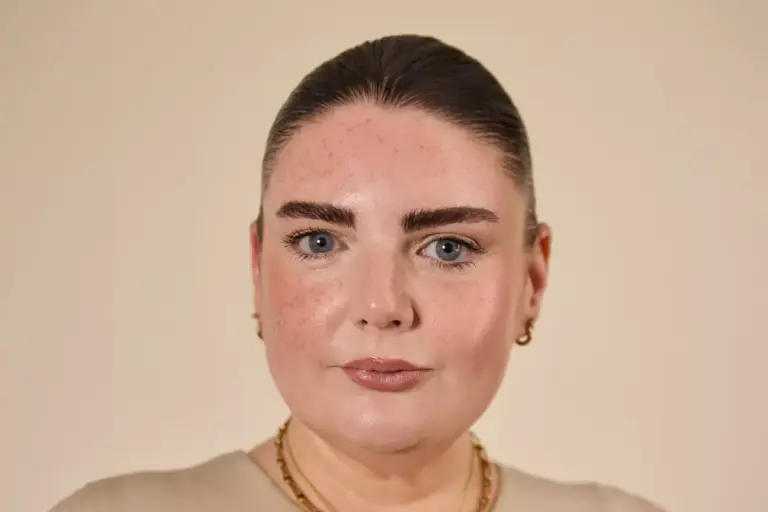
Max Factor’s latest iteration marks a critical convergence: the pairing of high-end optical blurring technology with long-wear polymers, packaged in a travel-friendly squeezy tube and priced under ten pounds. Upon its recent arrival on beauty desks, testers immediately noted its atypical performance metrics. Unlike its predecessors, which required extensive setting powders or mixing pigments to achieve a customized match, the Facefinity Lasting Blur range—particularly within its 18-shade spectrum—offered immediate, true-to-tone results for historically underserved complexions, such as ultra-pale or cool-undertoned skin.
Supporting Context & Metrics: Breaking Down the Formula and Performance
Evaluating a foundation requires looking past marketing claims and analyzing how the product interacts with real skin under rigorous daily conditions.
Texture, Application, and Coverage
The Max Factor Facefinity Lasting Blur Foundation defies traditional categorizations of matte versus dewy. While matte foundations often lean chalky and flat, and dewy formulas risk slipping off combination or oily zones, this formula adopts a "soft-focus" approach.
- Weightlessness: Testers reported a remarkably lightweight feel upon application, defying the heavy, mask-like sensations typically associated with medium-to-full coverage formulations.
- Application Efficiency: The formula demonstrates high compatibility with various application tools. When paired with a dense, domed foundation brush—such as the Morphe M104 Domed Foundation Brush—the product melts seamlessly into the skin, avoiding streaking or product pooling.
- Targeted Blurring: Optical blurring agents within the formula successfully diffuse light around high-texture areas, such as the sides of the nose and the cheeks, minimizing the appearance of enlarged pores and surface redness without requiring heavy silicone primers.
Shade Range Inclusivity and Undertone Precision
One of the most persistent hurdles for high-street brands has been undertone calibration. Many budget foundations default to overly pink or aggressively yellow/orange spectrums to cut manufacturing costs.

Max Factor countered this by releasing an 18-shade matrix for the Facefinity Lasting Blur line. Crucially, lighter shades like N95 Ivory have been praised by consumers with fair, sensitive skin for successfully avoiding the dreaded mid-wear oxidisation phase. This precision ensures that the color applied at 8:00 AM remains identical by 5:00 PM, a metric usually reserved for foundations triple its price.
Skin Type Compatibility
| Skin Type | Performance Observations | Expert Recommendation |
|---|---|---|
| Combination/Normal | Exceptional balance of velvet-matte finish and subtle internal glow. Resists cracking around dynamic facial areas like smile lines. | Ideal as-is; minimal touch-ups required throughout the day. |
| Dry / Dehydrated | Surprising hydration retention. Does not cling to dry patches despite its long-wear, blurring matrix. | Pair with a hydrating serum or facial mist underneath for an ultra-dewy finish. |
| Oily | Controls excess sebum effectively on central facial zones, though severe oiliness may require targeted powder setting. | Spot-powder the T-zone for maximum all-day wear without dulling the overall radiance. |
Official Statements and Industry Perspectives
Beauty editors and formulation scientists have increasingly turned their attention toward the economics of modern cosmetics. Industry analysts note that consumers are navigating a cost-of-living squeeze, leading to a profound behavioral shift known in retail economics as the "lipstick effect"—where buyers pull back on major luxury purchases but continue to invest in small, morale-boosting treats.
A senior product developer at a prominent European cosmetics laboratory (speaking anonymously regarding industry standards) noted:
"The divide between luxury and drugstore manufacturing has narrowed exponentially. The raw materials—specifically micro-fine pigments, volatile silicones for weightless slip, and optical diffusing powders—are now globally accessible to mass-market giants. What you are paying for in a luxury bottle is largely branding, glass weight, and packaging design, rather than superior chemical architecture."
Beauty journalists reviewing the Max Factor launch have similarly highlighted the psychological shift in consumer expectations. Reviewers point out that spending £9.99—less than the cost of a standard lunch in a metropolitan business district—on a high-performance base removes the financial anxiety traditionally associated with testing new cosmetics. If a £50 luxury foundation fails to match or breaks out sensitive skin, the financial loss is acute. At under ten pounds, experimentation becomes frictionless.
Future Outlook: The Democratization of Complexion Products
The success of accessible, high-performance base products like the Max Factor Facefinity Lasting Blur Foundation signals a broader structural shift within the global beauty industry.
1. The Death of the "Luxury Tax" on Performance
As consumers become increasingly ingredient-literate—thanks to independent skincare databases and social media review platforms—they are growing less forgiving of inflated price tags that fail to deliver functional superiority. Brands that rely solely on heritage prestige without advancing their formulations face mounting pressure from agile high-street competitors.
2. Sustainable, Travel-Friendly Packaging Innovations
Luxury beauty has long favored heavy glass bottles and ornate pump mechanisms. However, the modern consumer increasingly values utility, travel-friendliness, and sustainability. The pragmatic, squeezy-tube packaging utilized by Max Factor not only reduces shipping weight and carbon footprints during transit but ensures that 100% of the product can be extracted, eliminating the product waste common in rigid glass packaging.
3. Inclusive Formulation as a Baseline Expectation
Looking forward, the industry standard for shade ranges and undertone accuracy is shifting permanently. As budget formulas prove capable of delivering 18 to 40+ thoughtfully calibrated shades without oxidising, consumer tolerance for exclusionary mass-market lines will plummet.
Conclusion
The Max Factor Facefinity Lasting Blur Foundation is more than just a viral budget recommendation; it is a clinical demonstration that quality, comfort, and longevity do not require a luxury price tag. For consumers navigating sensitive skin, complex undertones, and tightening budgets, it represents a refreshing calibration of value and performance—proving definitively that sometimes, the best item in your makeup bag is the one that leaves your bank account entirely unbothered.