Executive Overview
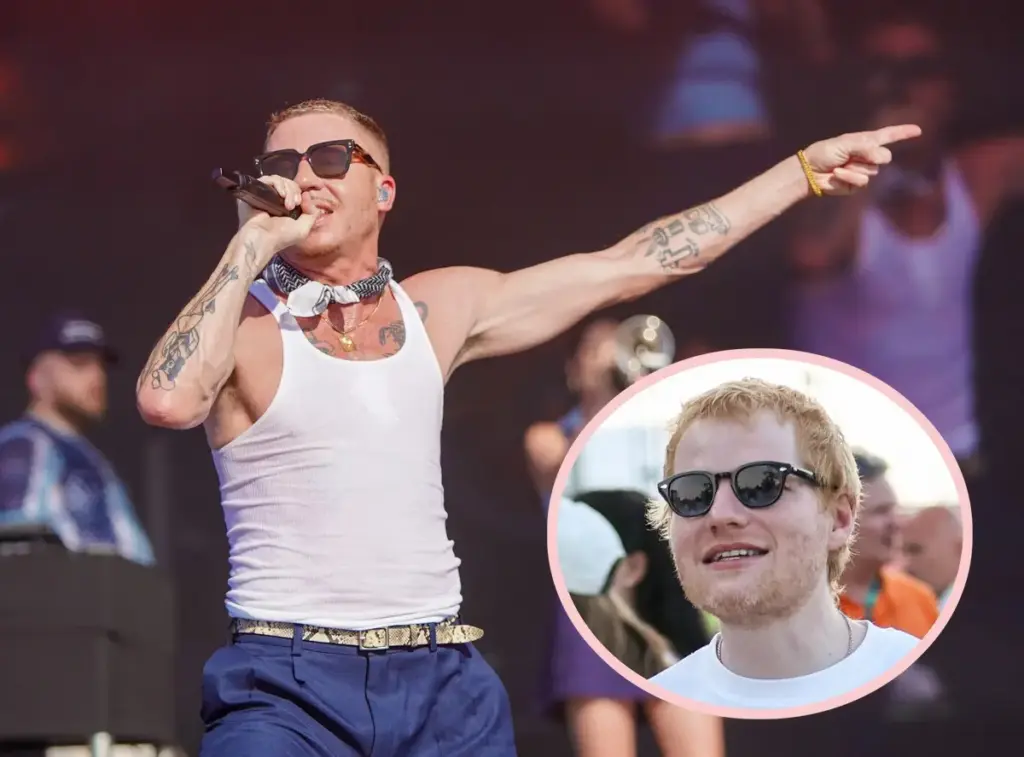
What began as an onstage political statement during a stadium concert has erupted into a high-stakes clash involving major pop stars, corporate stadium titans, and the contentious discourse surrounding the Israel-Hamas war. Rapper Macklemore has been officially dropped as the opening act from Ed Sheeran’s high-profile Loop Tour following a sequence of public disputes, venue ultimatums, and mounting pressure from prominent figures in entertainment and sports.
The rupture was precipitated by Macklemore’s September 4 performance at MetLife Stadium in New Jersey, where he utilized his stage time to broadcast pro-Palestinian messaging and perform his controversial track Hind’s Hall. The display triggered a public reprimand from pop icon Pink, who raised concerns over antisemitism and audience safety.
The situation escalated when billionaire sports executive Robert Kraft—owner of the New England Patriots and Gillette Stadium—led a coalition of venue operators in presenting Sheeran with an ultimatum: drop Macklemore from the lineup or forfeit the ability to perform at key North American venues.
This comprehensive report details the timeline of events, analyzes the perspectives of the key figures involved, and examines the broader implications for free speech, venue governance, and political expression within the live music industry.
Detailed Chronology of Events
+-----------------------------------------------------------------------------------+
| CHRONOLOGY OF EVENTS                                                              |
+-----------------------------------------------------------------------------------+
| Sept 4: Macklemore performs "Hind's Hall" & pro-Palestinian speech at MetLife.    |
| Sept 11: Pink releases extensive statement detailing concerns over antisemitism. |
| Sept 14: Macklemore removed from "Loop Tour"; alleges Robert Kraft stadium ban.   |
| Sept 14: Robert Kraft issues official press response confirming stadium veto.     |
+-----------------------------------------------------------------------------------+
1. The MetLife Stadium Incident (September 4)
During a sold-out performance opening for Ed Sheeran at MetLife Stadium in East Rutherford, New Jersey, Macklemore (real name Ben Haggerty) dedicated a portion of his set to the humanitarian crisis in Gaza. Large visual displays depicting war zones were projected on stadium screens as the rapper delivered a speech declaring that the people of Palestine "hadn’t been forgotten."
Macklemore concluded the segment by performing Hind’s Hall, a protest song released earlier in the year that references the occupation of Hamilton Hall at Columbia University by pro-Palestinian student activists. The song was written following the death of six-year-old Hind Rajab in Gaza. During the set, Macklemore also addressed the audience regarding the broader geopolitical situation, a gesture that produced immediate polarized reactions across social media and within the industry.
2. Social Media Backlash and Pink’s Response (September 11)
In the days following the MetLife performance, criticism grew within industry circles. Pop superstar Pink initially shared a third-party social media post criticizing Macklemore’s set. After facing significant online backlash, she replaced her initial repost with a detailed, personal statement on September 11 clarifying her position.
Pink, who identified herself as a Jewish mother and long-standing activist, articulated that her reaction was rooted in concern for Jewish audience members and a pattern of behavior she perceived as harmful:
"Social media makes all of us cheap and fast… I’d rather be disagreed with for what I actually said than hated for what anybody else wrote… What I need is to be able to say, as a Jewish mom, ‘that scared me, and it scared people I love,’ without being told our fear is just propaganda, and without being told I’m somehow cool with genocide because I noticed."
In her statement, Pink recalled a 2014 incident in which Macklemore wore a costume featuring a exaggerated hooked nose and dark beard during a performance in Seattle—an image widely criticized as an antisemitic caricature. While Macklemore apologized at the time, claiming the costume was composed of random items, Pink noted that his recent stadium performance reopened old wounds for many Jewish fans who felt alienated in a space meant for shared musical entertainment.
3. The Tour Removal and Kraft Ultimatum (September 14)
On Monday, September 14, news broke that Macklemore had been formally dropped from the remaining dates of Ed Sheeran’s Loop Tour. Hours later, Macklemore published a statement on Instagram confirming his removal and alleging that the decision was driven by venue operators, specifically billionaire businessman Robert Kraft.
According to Macklemore, Kraft—whose company owns Gillette Stadium in Foxborough, Massachusetts—contacted Sheeran directly to state that Macklemore would not be permitted on his stage. Kraft reportedly organized a coalition of stadium owners who informed Sheeran that keeping Macklemore on the bill would jeopardize his access to their facilities.
Supporting Context & Cultural Metrics
To understand the severity of the industry fallout, one must look at the historical context, key figures, and logistical scope of the parties involved.
+-----------------------------------------------------------------------------------------+
| KEY STAKEHOLDERS AND ROLES                                                              |
+-----------------------------------------------------------------------------------------+
| Macklemore     | Artist / Activist     | Championing Gaza awareness via stage performance. |
| Pink           | Pop Artist / Activist | Raising concerns on Jewish safety & antisemitism. |
| Ed Sheeran     | Tour Headliner        | Navigating touring neutrality & commercial scale. |
| Robert Kraft   | Stadium Owner / Exec  | Enforcing venue policies against perceived hate. |
+-----------------------------------------------------------------------------------------+
Historical Precedents and Past Controversies
The friction between Macklemore and elements of the Jewish community is not unprecedented:
- The 2014 Costume Incident: Four months after performing his marriage-equality anthem Same Love at the Grammy Awards, Macklemore appeared at a Seattle museum event wearing a disguise consisting of a prosthetic hooked nose, black beard, and bowl-cut wig. The outfit drew swift condemnation from civil rights organizations for resembling classic antisemitic caricatures. Macklemore subsequently issued a public apology, stating he did not intend to portray a Jewish stereotype.
- Protest Track "Hind’s Hall": Released independently, the track explicitly critiques the U.S. government, the music industry’s silence, and university administrations. While praised by pro-Palestinian organizers, critics argue that performing the track at broad-audience stadium shows creates a hostile environment for supporters of Israel or Jewish fans.
Venue Ownership Dynamics
Stadium-level touring operates on intricate corporate relationships. Facilities like Gillette Stadium are privately owned assets managed by entities like the Kraft Group. Venue operators retain contractual authority regarding safety, decorum, and venue standards. When venue owners unite regarding artist conduct, a headlining act faces significant logistical risks, including the potential cancellation of multi-million-dollar stadium dates.
Official Statements and Stakeholder Positions
Macklemore’s Defense
In his public address following his removal from the tour, Macklemore emphasized that he did not view himself or his fellow artists as victims, redirecting attention to the crisis in Gaza:
"I am not a victim. Ed Sheeran is not a victim. Pink is not a victim. We have careers, money, opportunities, safety and audiences around the world… The victims are the Palestinian people. The men, women and children who have been killed, starved, displaced and forced to live through unimaginable violence."
Macklemore also detailed his personal conversations with Ed Sheeran, acknowledging the operational pressure placed on his longtime friend while challenging the concept of artistic neutrality during humanitarian crises:
"Ed was in a fucked up position. He knew it. His typical apolitical stance was being challenged in a way it never had been before… But he couldn’t get past his public facing, ‘I don’t take sides.’ And I get why people don’t. Taking a side can cost you… But refusing to take a side doesn’t leave you in the middle."
Pink’s Position on Safety and Activism
Pink’s formal statement sought to draw a firm line between legitimate advocacy for Palestinian civilians and actions that cause fear among Jewish concertgoers:
"Palestinians deserve a future that honors their humanity and their aspirations. Protecting innocent life comes first, everywhere… I’ve spent a decade as a UNICEF ambassador for kids who didn’t choose the country or the war they were born into… But you don’t have to agree with one thing Israel’s government does to not want the Jewish family two rows down from you to be scared or targeted at a concert."
She defended her record of political involvement—pointing to her 2006 anti-war single Dear Mr. President and her long-standing support for LGBTQ+ rights—while asserting that standing up against antisemitism should not carry a social penalty.
Robert Kraft’s Executive Response
Following Macklemore’s statement implicating him in the tour removal, Robert Kraft issued an official corporate press statement confirming that Gillette Stadium had barred the rapper from performing on its stage:
"Gillette Stadium has a longstanding commitment to providing a welcoming environment for all guests and ensuring that events held at our venue do not provide a platform for hate speech. Based on Macklemore’s recent actions… and a broader history of antisemitic rhetoric and imagery… we determined that his participation in the September 25th and 26th concerts at Gillette Stadium would cross that line."
Kraft maintained that the decision was not aimed at suppressing advocacy for Palestinians, pointing to his own history of supporting cross-cultural philanthropic initiatives:
"This decision is not about diminishing the suffering of innocent Palestinians or denying anyone the right to advocate on their behalf… Standing with the Palestinian people and standing against Hamas, antisemitism and hate should not be mutually exclusive."
+-------------------------------------------------------------------------------------------+
| COMPARATIVE ANALYSIS OF STAKEHOLDER POSITIONS                                            |
+-------------------------------------------------------------------------------------------+
| STAKEHOLDER | PRIMARY FOCUS               | CORE ARGUMENT                                 |
+-------------+-----------------------------+-----------------------------------------------+
| Macklemore  | Humanitarian crisis in Gaza | Urgent moral obligation overrides neutrality. |
| Pink        | Jewish community safety     | Advocacy must not cross into antisemitism.    |
| R. Kraft    | Venue governance & safety   | Venues must block platforming hate speech.     |
+-------------------------------------------------------------------------------------------+
Industry Impact and Future Outlook
The removal of Macklemore from Ed Sheeran’s Loop Tour marks a pivotal moment in the governance of live music events during times of geopolitical tension. The incident highlights several evolving dynamics within the entertainment industry:
- The Limits of Artistic Platforming at the Stadium Level: While arena and stadium tours have historically hosted political advocacy, venue owners are increasingly asserting contractual rights to vet or restrict supporting acts whose messaging might alienate portions of the audience or clash with corporate venue policies.
- The Challenge of Mainstream Neutrality: Pop acts operating at the global stadium tier—such as Ed Sheeran—often seek broad appeal by remaining politically neutral. However, as political tensions rise, maintaining neutrality becomes increasingly difficult when supporting acts bring polarized messaging to the stage.
- Amplified Risk for Touring Artists: Macklemore’s ouster demonstrates that political commentary on stage can carry direct commercial consequences, including lost tour revenue and venue bans.
As public debates surrounding the Middle East continue to influence cultural institutions, the live entertainment industry faces a delicate balancing act between protecting free expression, ensuring audience safety, and managing commercial venue operations.