Executive Overview
In an era dominated by micro-trends, algorithmic feeds, and the relentless churn of fast fashion, a quieter, deeply emotional sartorial movement is taking root. People are no longer just looking backward for stylistic inspiration; they are using clothing as a literal and figurative time machine to reconnect with their formative years.
This phenomenon transcends the superficial "Y2K aesthetic" or generalized vintage shopping. It is an intentional, psychologically charged practice of dressing the "inner child." As adults navigate unprecedented levels of global anxiety, grief, and the exhausting performance of modern professionalism, a growing demographic is turning to childhood garments—pink, off-the-shoulder sweaters, butterfly-print tank tops, and faux-fur-trimmed cardigans—not as costumes, but as emotional anchors.
Fashion psychology experts refer to this as a form of applied identity work. Far from being a mere regression, integrating childhood elements into an adult wardrobe serves as a powerful somatic tool for trauma recovery, emotional regulation, and self-reclamation. By bridging the gap between who we once were and who we have become, we unlock a unique therapeutic modality that proves style can do more than make us look good—it can help us heal.
Detailed Chronology: From Personal Grief to Sartorial Awakening
To understand the mechanics of this movement, one must examine how it manifests in the lived experiences of individuals seeking solace through textiles. For many, the journey back to childhood style does not begin in a fashion magazine; it begins at a profound emotional crossroads.
The Catalyst of Loss
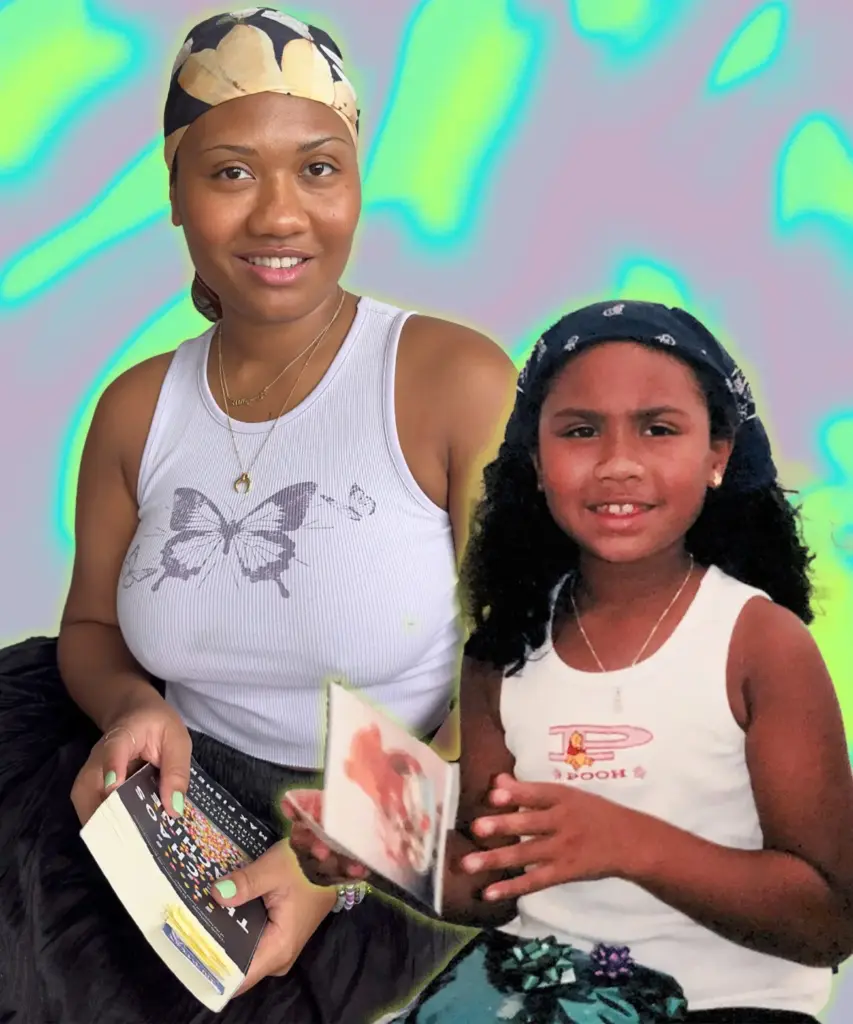
Consider the experience of a 28-year-old London-based professional who found herself at an existential low point following the sudden death of her brother. Grief has a way of stripping away the protective layers of adult identity, leaving individuals suspended in a state where familiar coping mechanisms fail. During hours of mindless late-night scrolling through online retail platforms—a modern digital search for anything to feel—she bypassed the muted, minimalist palettes typically marketed to her demographic. Instead, her cursor hovered over a short, lilac butterfly-print tank top.
To an outside observer, the garment might have registered as overly kitschy, a relic of early-2000s mall culture best left in the past. But to her, it was a tactile bridge to a simpler time. It was an echo of the tops she had adored as an 11-year-old growing up in a Canadian suburb—an era defined by the ambient hum of a bedside radio, the scent of coconut shampoo, and a complete absence of smartphone notifications or corporate obligations.
The Unboxing of Memory
Months later, this initial impulse buying evolved into a deliberate sartorial philosophy. The turning point arrived with the delivery of a pink, off-the-shoulder sweater explicitly marketed online as "vintage" and "cottagecore."
The moment the synthetic, fluffy fibers left their packaging, the psychological shift was instantaneous. Transported across nearly two decades and an ocean, she was no longer a grieving adult in a cramped London flat, but an 11-year-old child slipping into her favorite sweater for a school photograph. Peering into the mirror, the sensory hallucination was absolute: she could smell her long, coconut-scented hair and vividly recall the untamed curiosity in her wide eyes.
Crucially, this was not escapism; it was integration. By pulling that childhood silhouette over her head, she realized that the little girl she once was had not vanished—she was simply waiting to be acknowledged. For the first time in her life, her clothes were telling her who she was, rather than her selecting garments based on external expectations of what an "adult woman" ought to wear.
Supporting Context & Metrics: The Science of Wardrobe Ethnography
While the emotional weight of clothing is intuitively understood by many, the academic and psychological frameworks supporting it validate these deeply personal experiences. Modepsychology (fashion psychology) offers rigorous terminology for what occurs when we dress our inner children.
Wardrobe Ethnography Explained
Shakaila Forbes-Bell, a prominent fashion psychologist and author, has extensively studied the intersection of mental health and personal presentation. She points to a foundational concept in the field known as "wardrobe ethnography."
"In fashion psychology, there is a concept called ‘wardrobe ethnography.’ It describes your wardrobe as a mirror of all the choices you’ve made up to this point in your life," Forbes-Bell explains. "These choices say something about who you were at a specific time—what you were influenced by, what you saw in yourself, what lifestyle you led back then. I think it can be very liberating to wear clothes that remind you of your childhood."
This framework suggests that our closets are living archives. Every garment we collect represents a historical data point of our psychological development. When adults consciously reintroduce items reminiscent of their youth, they are actively curating their internal narratives, retrieving parts of themselves that may have been prematurely abandoned in the pursuit of professional maturity.
The Cyclical Nature of Fashion and the Nostalgia Economy
Nostalgia is undeniably big business. The fashion industry has long capitalized on the cyclical nature of trends, recycling aesthetics every two decades. Gen Z and Millennials routinely embrace 1990s and 2000s throwbacks, often wearing styles from an era in which they were toddlers or not yet born.
However, psychological nostalgia differs fundamentally from commercial trend-following. Commercial nostalgia is mass-produced and generalized; personal nostalgia is intimate and idiosyncratic. While a fast-fashion retailer sells the idea of the 2000s, an individual choosing a specific faux-fur-trimmed cardigan because it mirrors their fifth-birthday outfit is engaging in a self-soothing ritual.
Research in cognitive psychology indicates that nostalgia acts as a psychological resource. It counters loneliness, boredom, and anxiety, while increasing perceived social support and self-regard. When wearableized, these nostalgic triggers provide a tangible, armor-like shield against the friction of adult life.
Official Statements & Therapeutic Integration: Inner Child Work
The practice of dressing for the inner child intersects directly with established psychotherapeutic modalities, most notably "inner child work." This technique, utilized widely in trauma recovery and somatic therapy, invites patients to confront and heal unaddressed wounds from their formative years.
Beyond Aesthetics: The Somatic Value of Play
Childhood, theoretically, is characterized by a distinct lack of existential dread and an abundance of unbridled play. Even for individuals whose childhoods were marked by difficulty, instability, or trauma—realities that make romanticizing the past complicated—the idea of childhood clothing represents freedom, bright colors, playful patterns, and unapologetic self-expression.
Integrating these elements into an adult wardrobe does not magically erase complex trauma or substitute for professional psychotherapy. Rather, mental health professionals view it as a valuable, somatic adjunct to traditional talk therapy.
- Regulating the Nervous System: Textures, weights, and colors send immediate signals to the autonomic nervous system. Soft fabrics and familiar silhouettes can lower cortisol levels by signaling safety to the brain.
- Reclaiming Agency: Traumatic or stressful upbringings often strip children of control over their bodies and environments. Choosing whimsical, unapologetically joyful garments as an adult is an act of reclamation and self-soothing.
- Bridging the Generational Gap: As referenced in cinematic touchstones—such as the iconic scene in 13 Going on 30 where Jenna Rink defiantly rejects drab corporate wear in favor of vibrant, whimsical party clothes—adults often yearn for a reminder of their untainted core identities.
As Forbes-Bell notes, dressing is never a passive act:
"It’s not just a rudimentary action, getting dressed every day. It’s a decision—and every decision has a reaction," Forbes-Bell states. "The language of clothing and knowing what they mean and how they make you feel can give you the power to send the right message with your clothes that truly corresponds to you."
Future Outlook: The Evolution of Mindful Dressing
As we look toward the future of fashion and personal well-being, the intersection of mental health and sartorial choices is poised to deepen. Several key trajectories are emerging as consumers reject rigid dress codes in favor of emotional authenticity.
1. The Demise of the "Appropriate" Adult Wardrobe
The rigid societal boundaries dictating how adults—particularly women—should dress as they age are rapidly dissolving. The anxiety of looking "too young" or "unprofessional" is being supplanted by a desire for emotional congruence. The future of style is fluid, driven less by seasonal dictates and more by internal emotional audits.
2. Integration of Mindfulness into Daily Styling
Consumers are increasingly viewing their closets through a therapeutic lens. Practices such as "wardrobe journaling" and intentional outfit curation are becoming mainstream wellness tools. People are asking themselves not just "Does this fit?" or "Is this trendy?", but rather, "How does this fabric make my nervous system feel?" and "Which version of myself am I honoring today?"
3. Fashion as a Tool for Ongoing Self-Actualization
Ultimately, wearing a pink childhood sweater or a butterfly clip in one’s late twenties or thirties is not about refusing to grow up. It is about refusing to leave parts of oneself behind.
Whether stepping into a boardroom in a meticulously tailored power suit that commands authority, or walking out to dinner in a faux-fur collar that whispers of a fifth birthday party, the modern adult is learning to hold both realities. By consciously employing the language of clothing, we send a definitive message to the world—and to ourselves: we are complex, multifaceted, and entirely in charge of our own healing narratives.