Executive Overview
As Vogue World prepares to stage its monumental 2026 edition in the historic heart of Milan, the global fashion ecosystem stands at an unprecedented ideological crossroads. Previous iterations of the high-octane cultural event have mapped fashion’s symbiotic relationships across major global hubs: London examined fashion’s deep-seated ties to the performing arts; Paris explored the industry’s passionate romance with elite athletics; and Los Angeles centered its lens on the indispensable dialogue between cinematic narrative and personal style. For Milan—the undisputed global epicenter of sartorial heritage—Vogue World 2026 will pivot toward a profound exploration of craftsmanship.
However, this is not merely a nostalgic retrospective of Italian handiwork. Instead, the upcoming showcase intends to interrogate how the traditional, time-honored practices of garment-making have evolved from purely manual artisan toil through industrial mechanization, and finally into the hyper-accelerated era of artificial intelligence and digital fabrication.
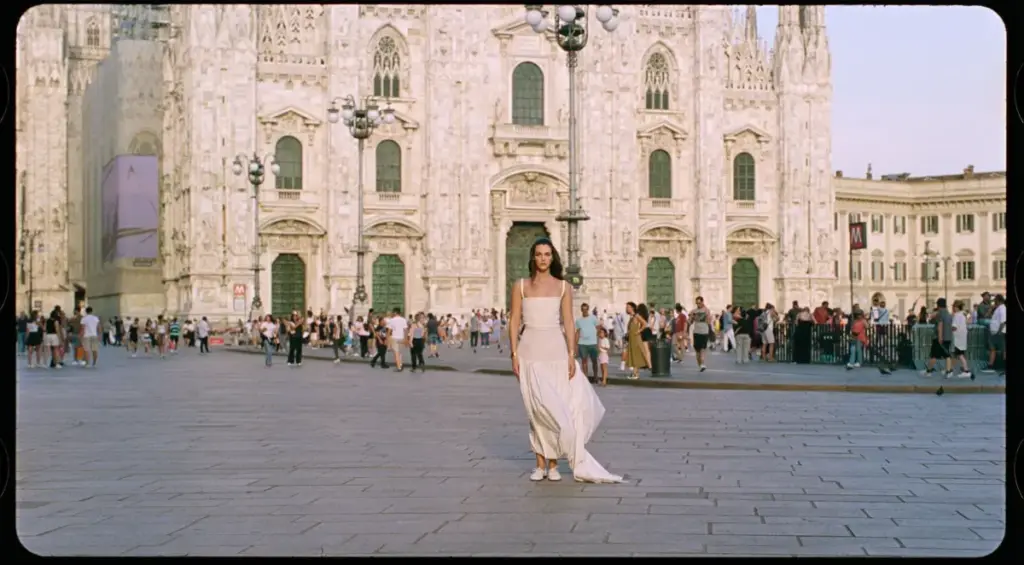
To articulate this paradigm shift, Vogue has launched an ambitious, six-part conceptual video series directed by visionary filmmaker Bardia Zeinali. Starring Italian supermodel Vittoria Ceretti as a sleek, futuristic avatar designated as "Vittoria.ai," the project serves as a cinematic thesis statement. It weighs the staggering capabilities of modern technology against the irreplaceable soul of human intuition. Featuring insights from top-tier creative minds—including VFX innovators Hunter Hornof and editorial elites from Modern Post—this sprawling campaign seeks to reassure the industry. It posits a comforting, authoritative conclusion: while algorithms and digital pipelines can simulate execution, the ineffable spark of true human artistry remains entirely unreplicable.
Detailed Chronology: The Evolution of Vogue World and the Road to Milan 2026
To understand the weight of the upcoming Milan presentation, one must chart the rapid, calculated evolution of the Vogue World franchise since its inception.
The Global Trajectory
- London (2023): Blending the worlds of high fashion and the West End stage, the British capital’s iteration established Vogue World not merely as a runway show, but as an immersive theatrical experience. It married British heritage tailoring with contemporary choreography, setting a high bar for multidisciplinary storytelling.
- Paris (2024): Coinciding with the Olympic buildup, the French edition explored the century-long marriage between haute couture and sports. From equestrian gear to cycling jerseys re-imagined by historic Parisian houses, Paris showcased how function and form collide under the pressure of physical performance.
- Los Angeles (2025): Moving across the Atlantic, the West Coast event zeroed in on the silver screen. By exploring how costume design informs character psychology and cinematic milestones, the LA edition proved that style and storytelling are fundamentally inseparable.
- Milan (2026): Now, as the event lands in Lombardy, the focus shifts inward to the mechanics of creation itself. Milan represents the physical workshops—the atelier, the tannery, the loom—where ideas take material form. Yet, by framing this through the lens of digital tools, Vogue World 2026 tracks how the hands that stitch have begun interacting with the server racks that compute.
The Genesis of the Zeinali-Ceretti Collaboration
The precursor to the live Milan event is Zeinali’s six-part video anthology. Commissioned to explore invention, taste, emotion, and ambition, the director embarked on a rigorous philosophical inquiry. He consulted with artisans, technicians, and theorists to determine where human craftsmanship ends and machine generation begins.
Casting Vittoria Ceretti as "Vittoria.ai"—a concept heavily inspired by dystopian and philosophical cinematic touchstones like Simone and Ex Machina—Zeinali plunged the supermodel into surreal, hyper-stylized vignettes. In one scene, Ceretti gazes impassively as a malfunctioning robotic figure belts out operatic arias from a wrought-iron balcony. In another, an Ancient Roman-style artisan dramatically unveils a primitive wooden wheel, juxtaposed against the blueprints of a modern luxury automobile.
Through these satirical yet deeply reverent tableaus, the project traces a clear chronological line: from the sweat of ancient laborers to the hum of automated production lines, culminating in the silent, invisible calculations of generative AI.
Supporting Context & Metrics: The Human Element in an Automated Age
The anxiety surrounding artificial intelligence in the creative industries is no longer speculative; it is a daily operational reality. According to recent global design and retail metrics, over 65% of major fashion houses are currently experimenting with AI-driven trend forecasting, virtual fitting rooms, or digital sample generation to reduce waste and accelerate time-to-market. Yet, this digital pivot has triggered acute existential debates regarding authenticity, labor displacement, and the devaluation of artisanal skill.
The Economics of Speed vs. Intention
Industry analysts point out that while generative tools can draft hundreds of pattern iterations in seconds, the physical bottleneck of luxury fashion remains the human hand. The delicate embroidery of a haute couture gown, the bespoke fitting of a Savile Row suit, or the hand-finishing of a Florentine leather handbag rely on tactile feedback, muscle memory, and generational knowledge that cannot be transcribed into a binary dataset.
Will Town, founder of Modern Post and lead editor of the video series, underscores this friction:
"I think, for better or worse, technology has reduced the friction between idea and execution. It allows us to explore and realize ideas much more quickly than before. The challenge is making sure that speed doesn’t substitute intention."
Town’s observation highlights a crucial metric for the future: efficiency is skyrocketing, but the risk of creative homogenization is real. When every brand has access to the same foundational AI models, the competitive edge shifts away from mere execution and back toward radical, deeply human curation.
The Democratization of Access
Conversely, digital technology has fundamentally restructured the socio-economic barriers of the fashion industry. Vittoria Ceretti notes that platforms like TikTok and Instagram—often criticized for fueling fast-fashion consumption—have simultaneously served as powerful egalitarian tools for emerging talent.
"They allow people in our industry to build personal brands, find opportunities, and communicate on a global scale," Ceretti explains. "The ability to reach a larger audience and create a professional identity based on your own style and interests has made the modeling industry more accessible and created opportunities for people who may not have had them in the past."
Thus, the digital landscape presents a duality: while AI threatens traditional craft labor, digital networking tools empower marginalized human voices to bypass traditional gatekeepers.
Official Statements and Industry Insights
The discourse surrounding Vogue World 2026 has galvanized some of the sharpest minds in film, fashion technology, and visual effects. Their reflections offer a nuanced roadmap for how the creative class is adapting to the technological wave.
Bardia Zeinali on the "Otherworldly" Source of Art
Director Bardia Zeinali approaches the AI debate not with technophobia, but with a profound faith in human uniqueness. Discussing his collaborative process, he acknowledges that while his team utilized cutting-edge digital effects, the core inspiration remained stubbornly organic:
"This may sound woo-woo, but being creative, a creator, an artist, there’s something otherworldly that comes to you, or that you pull from. It’s a source that is so deeply human that it cannot be emulated, achieved, or reached with any kind of technology."
Zeinali views technology as a collage medium—much like how the advent of photography transformed painting without rendering it obsolete. Cinema still cherishes celluloid film; musicians still press vinyl records. For Zeinali, AI is simply the newest brush in an ever-expanding box.
Vittoria Ceretti on Lived Experience vs. Generated Output
As the face and conceptual avatar of the project, Vittoria Ceretti bridges the gap between high-fashion modeling and philosophical critique. She emphasizes that art requires a biography—a physical, emotional journey through the world that algorithms simply do not possess:
"While technology can generate ideas and imitate styles, people bring their own experiences and emotion to art and that will forever be irreplaceable. Today, creativity is about knowing how to lead with human imagination and judgment while knowing that powerful digital tools could potentially assist the process in positive ways."
Hunter Hornof on the Mechanics of AI Direction
Bringing Zeinali’s surreal visions to life required advanced visual effects and AI integration, spearheaded by the creative duo Hunter Hornof. Alex Hunter reflects on the transition from traditional luxury houses—such as his tenure at Balenciaga—to experimental digital spaces:
"There’s still something extraordinary about seeing something that existed in your head come alive in front of you. And there’s so many ways to bring ideas alive. During my time at Balenciaga, we tried almost every technology out there. So what has changed is how we can develop those ideas."
Yet, his partner, Frederick Hornof, provides a sobering metaphor that encapsulates the limitations of automated creation:
"Directing with AI is like directing an actor who has seen everything and lived nothing."
This single sentence defines the philosophical boundary of the current technological revolution: an AI model can analyze every fashion show, painting, and photograph ever digitized, yet it possesses zero subjective memory of heartbreak, joy, cultural struggle, or physical sensation.
Future Outlook: What Vogue World 2026 Means for Milan and Beyond
As the fashion calendar ticks closer to the Milan showcase, the implications of this dialogue extend far beyond a single runway event. Vogue World 2026 is positioning itself as a cultural anchor, offering reassurance to an industry rattled by rapid automation.
1. The Renaissance of the Artisan
Far from spelling the doom of Italian craftsmanship, the rise of AI is expected to drive a massive counter-movement celebrating hyper-authenticity. Consumers increasingly crave provenance—knowing exactly who wove a fabric, where a material was sustainably sourced, and which artisan’s hands shaped a garment. Milan’s historic ateliers are likely to see a renewed appreciation, positioning hand-crafted luxury as the ultimate status symbol in a world saturated by synthetic abundance.
2. A Collaborative, Hybrid Future
Rather than a zero-sum game between humans and machines, the future of fashion points toward a symbiotic hybrid model. Designers will utilize AI for rapid prototyping, logistical optimization, and surrealist visual exploration (as seen in Zeinali’s films), but the final editorial curation, emotional resonance, and ethical responsibility will remain firmly anchored in human hands.
3. A Message of Reassurance
Ultimately, Bardia Zeinali’s overarching goal for the project is psychological as much as it is aesthetic. In an era marked by deep anxiety over job security, algorithmic bias, and the erosion of reality, Vogue World 2026 aims to restore confidence in the human spirit:
"I think I really wanted to make a piece that gave people a little bit of reassurance about what’s happening, where we’re headed, and to feel confidence and security in their humanity. Let’s all proceed with caution, but let’s also have confidence in what we are and who we are and what we have to offer that can’t really be emulated or replicated or generated."
As Milan opens its gates to the world in 2026, the message will be clear: while the tools of creation will continue to evolve at breakneck speed, the heartbeat of fashion remains—and will always remain—defiantly, beautifully human.