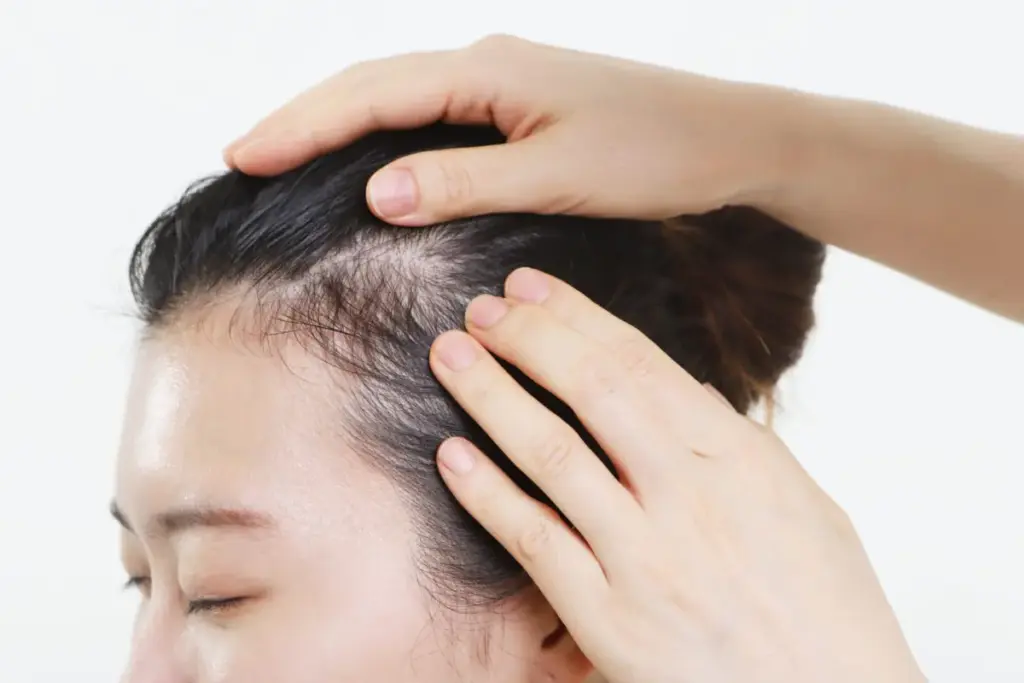
Executive Overview
For decades, cultural narratives framed hair thinning and pattern baldness as milestones of aging—troubles to be confronted well past middle age. Yet, a quiet shift is occurring across digital spaces and dermatological clinics alike. A demographic once thought immune to the frustrations of receding hairlines and widening parts is now mobilizing online: women in their 20s.
Recent deep-dives into social media algorithms reveal a surge in young women commiserating over unexpected hair shedding, brittle strands, and premature thinning. Far from being an isolated anomaly, clinical specialists confirm that hair loss before the age of 30 is significantly more common than public perception suggests.
Driving this phenomenon is a complex intersection of modern stressors. From the relentless pressures of Gen Z burn-out and volatile economic anxieties to ubiquitous aesthetic trends favoring ultra-slicked hairstyles, young women are inadvertently compromising their follicular health. Compounding these lifestyle factors are nutritional gaps, hormonal shifts brought on by modern contraceptive choices, and underlying genetic predispositions.
However, medical experts emphasize that early-onset hair thinning is not a foregone conclusion. Armed with a deeper understanding of the hair growth cycle, targeted dermatological interventions, and foundational lifestyle modifications, young adults can effectively halt, manage, and in many cases reverse premature hair loss.
Detailed Chronology: How the Modern Youth Hair Crisis Unfolded
Understanding why hair loss has become a prominent conversation among twenty-somethings requires looking at how lifestyle trajectories have evolved over the last decade. The timeline of modern hair thinning is not defined by a single sudden event, but rather by cumulative stressors that disrupt the delicate biological choreography of hair production.
Phase 1: The Post-Pubescent Genetic Awakening
While genetic hair loss (such as androgenetic alopecia) often manifests visibly later in life, the biological mechanisms can initiate much earlier. Clinical trichologists note that genetic predispositions can unlock anytime following puberty. In previous generations, subtle early-stage thinning during a person’s early twenties was frequently dismissed as a temporary phase or overlooked entirely. Today, however, heightened aesthetic scrutiny, high-definition video calls, and macro-lens smartphone cameras mean that young people are spotting microscopic shifts in their hair density years earlier than their parents did.
Phase 2: The Pandemia and Chronic Macro-Stressors
The dawn of the 2020s introduced unprecedented socio-economic instability, academic shifts, and professional uncertainty, disproportionately impacting Gen Z and younger millennials. Chronic psychological strain directly alters physiological states. When an individual experiences prolonged stress, the body prioritizes survival mechanisms, pumping out cortisol and shifting vital resources away from non-essential energy sinks—like hair follicles—and toward critical organs like the heart, lungs, and brain.
Phase 3: Aesthetic Trends Meet Follicular Realities
Concurrently, social media platforms popularized high-tension hairstyles: ultra-sleek, shellacked ponytails, tightly wound buns, and heavy hair extensions designed to mimic the voluminous manes seen on digital influencers. Over months and years, the constant mechanical traction exerted on the scalp begins to take a silent toll, weakening hair shafts and inducing gradual, localized follicular damage.
Phase 4: Nutritional Deficiencies in the Age of Restriction
Dietary trends among young adults have also experienced radical shifts. The rise of restrictive eating patterns, intermittent fasting without professional guidance, and diets low in essential proteins and bioavailable iron have left many young bodies starved of the raw building blocks required to sustain high-energy tissue growth like hair. Because hair is structurally composed of dense protein (keratin), any systemic nutrient restriction immediately signals the body to shutter non-essential growth phases.

Supporting Context & Metrics: Decoding the Science of Shedding
To combat hair thinning effectively, one must first demystify the biology of the scalp. Hair does not grow continuously in a linear fashion; rather, it operates in a rhythmic, four-part life cycle known as the hair growth cycle:
- Anagen (Growth Phase): Lasting anywhere from two to seven years, this is the active phase where cells in the root of the hair divide rapidly, adding to the hair shaft. At any given time, roughly 85% to 90% of a healthy scalp’s hair is in this phase.
- Catagen (Transition Phase): A short, transitional phase lasting about two weeks, where the hair follicle shrinks and detaches from the dermal papilla.
- Telogen (Resting Phase): Lasting roughly three months, the hair rests while a new hair begins to form underneath it.
- Exogen (Shedding Phase): The final stage where old hairs are actively released from the scalp, resulting in the normal daily shedding of strands.
Shedding vs. Thinning: Knowing the Difference
A common source of panic among young adults is distinguishing normal physiological shedding from pathological thinning.
- Normal Baseline: Clinical experts note that losing between 50 to 100 hairs per day is entirely normal—representing a tiny fraction (roughly 0.001%) of an average head of hair.
- The Red Flag Threshold: When daily hair fall doubles or triples, or when individuals notice their ponytails feeling significantly less bulky, parts widening noticeably, or scalps reflecting light under harsh indoor fixtures, it indicates that the hair cycle has been artificially shortened. This premature pushing of hairs from the anagen phase directly into the telogen phase is clinically termed telogen effluvium.
The Three-Month Lag Effect
One of the most frustrating aspects of addressing hair loss in your 20s is the biological latency period. Hair does not fall out the exact day you experience a severe stress event, change your birth control, or adopt a crash diet. Because hair must transition through its resting phase before shedding, the visible consequences of a physiological trigger typically do not manifest until three months after the event occurred. This delay frequently misleads individuals, making it difficult to pinpoint the actual root cause without professional guidance.
Official Statements & Expert Insights
Navigating the landscape of modern hair loss requires separating marketing hype from clinically validated science. Leading dermatologists and trichologists weigh in on the primary drivers and viable solutions for twenty-somethings facing thinning tresses.
"Genetic hair loss can begin any time after puberty, while temporary shedding may occur following hormonal changes, illness, or significant stress."
— Emily DeNard, Clinical Trichologist
DeNard emphasizes that while genetic thinning is progressive and lacks a permanent cure, early intervention can successfully stabilize density.
"If you’re restricting your body of nutrients, it will shift energy away from your hair and divert it to your vital organs, like your heart, lungs, or brain. Hair isn’t essential for survival, but it’s very energy intensive."
— Dominic Burg, Chief Scientist and Trichologist
Burg highlights the metabolic cost of hair growth, noting that even minor caloric or protein deficits can halt follicular production as the body triages systemic energy resources.
On the mechanical front, dermatologists point directly to styling habits.

"Tight hairstyles can cause hair breakage and lead to hair loss over time. Our recommendation is to swap your slick stick for dry shampoo a few times a week to give your hairline a much-needed break."
— Danny Guo, MD, Dermatologist
Furthermore, hormonal fluctuations—whether triggered by switching oral contraceptive formulations or navigating postpartum recovery—play a dramatic role.
"The high levels of estrogen and progesterone during pregnancy can make your hair grow faster and feel silkier. But when the baby is born, these levels drop dramatically, and you’ll typically see some hair fall three months later."
— Dominic Burg
Future Outlook: Treatment, Recovery, and the Road Ahead
Discovering hair thinning in your twenties can feel emotionally devastating, but contemporary medicine and scalp science offer more advanced, accessible solutions than ever before. Reversing or halting premature hair loss requires a systematic, multi-pronged approach:
1. Professional Diagnosis
The indispensable first step is consulting a board-certified dermatologist or certified trichologist. Self-diagnosing and experimenting indiscriminately with over-the-counter supplements can delay genuine progress. A professional will conduct a comprehensive scalp assessment, review blood panels to check iron, ferritin, and thyroid markers, and identify whether the loss is driven by hormones, stress, genetics, or traction.
2. Targeted Medical and Technological Interventions
Depending on the diagnosis, clinicians may recommend proven topical treatments such as minoxidil, which prolongs the growth phase of hair follicles. Additionally, clinical-grade LED light therapy helmets have gained significant traction within dermatological spaces. Supported by a growing body of clinical evidence, daily low-level laser therapy safely stimulates cellular activity within dormant follicles, yielding measurable improvements in density within 12 weeks of consistent use.
3. Foundational Scalp and Lifestyle Care
Long-term hair vitality is inextricably linked to overall wellness. Experts recommend the following foundational practices:
- Calibrated Cleansing: Wash your scalp according to its specific biological needs. Oily scalps benefit from more frequent, gentle cleansing to prevent sebum and micro-debris accumulation around the follicular opening.
- Nutritional Adequacy: Ensure daily dietary intake includes sufficient lean proteins, complex micronutrients, healthy fatty acids, and iron.
- Mechanical Relief: Ditch chronically tight ponytails, minimize high-heat styling, and reduce chemical processing to preserve the structural integrity of the hair shaft.
- Targeted Topicals: Incorporate supportive scalp serums—such as peptide-infused treatments designed to nourish the dermal environment—to optimize conditions for healthy hair generation.
The Bottom Line
Hair thinning in your twenties is undeniably frustrating, but it does not signal an inevitable lifetime of sparse hair. By taking stock of lifestyle factors, addressing nutritional and stress triggers early, and seeking expert medical guidance, young adults can regain control over their follicular health. As dermatological science continues to advance, the solutions available today are safer, more targeted, and more effective than at any point in history—proving that twenty-something hair loss is a challenge that can be successfully met with knowledge, consistency, and care.