Executive Overview
For decades, cultural tropes have associated weight rooms and dumbbells exclusively with youth culture, bodybuilding aesthetics, and athletic performance. However, a seismic shift is underway in the fields of gerontology, physical therapy, and preventive medicine. The scientific consensus is now unequivocal: strength training is not merely a hobby for the young; it is a non-negotiable prescription for aging well.

As physical therapist and certified strength and conditioning specialist Abby Bales, founder of Reform Physical Therapy, famously notes, “Weight training is the fountain of youth.”

From safeguarding bone mineral density against the silent threat of osteoporosis to regulating blood sugar, enhancing balance, and preserving cognitive function, resistance training is the ultimate tool for "future-proofing" the body. Far from being a dangerous endeavor for older populations, lifting weights in your 60s, 70s, and beyond acts as a vital buffer against the natural declines associated with aging—most notably sarcopenia (age-related muscle loss) and hormonal shifts post-menopause.

This comprehensive guide explores the profound physiological benefits of senior weight lifting, outlines a blueprint of fundamental exercises designed for safety and efficacy, highlights which movements to approach with caution, and provides a framework for building a sustainable, lifelong routine.

Detailed Chronology: Understanding the Biological Timeline of Aging and Muscle Loss
To understand why weight lifting is so transformative later in life, we must first examine the biological timeline of the human body. Aging is an inevitability, but the rate and impact of physical decline are largely modifiable through intentional lifestyle interventions.

The Decades of Silent Decline (Ages 30 to 50)
The process of muscle degradation begins much earlier than most realize. Around the age of 30, both men and women naturally begin to lose muscle mass and function—a process known as sarcopenia. Initially, this decline is gradual, occurring at a rate of roughly 3% to 8% per decade. Without a stimulus like resistance training to signal the body to maintain or build muscle tissue, sedentary individuals slowly surrender their functional reserve.

The Menopausal Acceleration (Ages 50+)
For women, this trajectory undergoes a sharp acceleration during and after menopause. Dramatic drops in estrogen levels profoundly impact both skeletal muscle and bone mineral density. According to data highlighted by the International Osteoporosis Foundation and published medical literature, postmenopausal women experience an expedited loss of bone density, vastly elevating their risk of osteopenia, osteoporosis, and debilitating fragility fractures.

The Functional Crisis (Ages 60 and Beyond)
By the time individuals reach their 60s, the cumulative effects of untreated sarcopenia and osteopenia manifest as everyday functional struggles: difficulty getting up from a deep chair, trouble climbing a flight of stairs without losing breath or stability, an inability to lift heavy groceries, and an increased risk of falls.

Crucially, this timeline is not absolute. Introducing resistance training into a daily or weekly routine acts as a biological reset button. Clinical studies show that even nonagenarians (people in their 90s) can successfully build muscle mass, increase strength, and dramatically improve their functional independence through progressive resistance training. It is never too late to reverse the clock.

Supporting Context & Metrics: The Science of Strength After 60
The benefits of lifting weights in your later years extend far beyond aesthetic improvements or basic physical strength. Modern research highlights a multi-systemic cascade of health benefits that protect the body and mind.

1. Bone Density and Fracture Prevention
Bones are living, dynamic tissues that respond to mechanical stress through a process called remodeling. When you lift weights, the muscles pull on the bones, and the impact of the weight stimulates osteoblasts (bone-forming cells) to lay down new bone matrix. This mechanism is vital for maintaining or increasing bone mineral density, directly countering the bone-thinning effects of osteoporosis and drastically lowering the risk of life-altering fractures from accidental falls.

2. Metabolic Health and Blood Sugar Regulation
Skeletal muscle is not just for movement; it is a primary metabolic organ. Muscle tissue is responsible for clearing the vast majority of glucose from the bloodstream. By increasing and preserving muscle mass through weight training, older adults enhance their insulin sensitivity, making it easier to manage or prevent type 2 diabetes and regulate systemic metabolism.

3. Neurological Protection and Brain Health
The benefits of resistance training reach all the way to the brain. A landmark 2023 study published in Frontiers in Neuroscience revealed compelling evidence that resistance training can play a significant role in staving off neurodegenerative conditions such as Alzheimer’s disease and other forms of dementia. Exercise stimulates the release of neurotrophic factors—proteins that support the survival, growth, and plasticity of neurons.

4. Balance, Coordination, and Fall Prevention
Falls are one of the leading causes of injury, loss of independence, and mortality among older adults. Weight lifting improves neuromuscular coordination, ensuring that the brain and muscles communicate rapidly and efficiently. Coupled with exercises that challenge stability, strength training drastically reduces the frequency, severity, and likelihood of falls.

Official Recommendations: The 12 Best Weight-Bearing Exercises for Seniors
Designing a workout routine for adults over 60 requires a focus on functional movements—exercises that mimic the physical demands of daily life. According to Abby Bales, PT, DPT, CSCS, older women should prioritize movements that build strength, improve posture, and enhance balance.

How to Structure Your Routine:
- Frequency: Begin by doing the routine once a week if you are entirely new to strength training, gradually working your way up to two or three times per week.
- Selection: Choose 6 to 7 exercises total: 2 to 3 upper-body movements, 2 to 3 lower-body movements, and 1 to 2 core exercises.
- Volume: Perform 2 to 3 sets of 10 repetitions per exercise.
- Intensity: Select a weight that feels heavy enough to make the final 2 to 3 repetitions of each set challenging, yet entirely achievable with pristine form.
- Duration: 15–20 minutes per session.
- Equipment: Dumbbells, kettlebells, resistance bands, and a stable step-up platform or chair.
Upper Body Exercises
1. Overhead Shoulder Press
- Why it rocks: Builds shoulder strength and joint mobility, allowing you to easily reach items in high cabinets or put on garments overhead.
- How to do it: Sit or stand holding a pair of dumbbells at shoulder height with palms facing forward. Press the weights straight up overhead until your arms are fully extended. Slowly lower them back to the starting position.
- Pro tip: If weights are initially too challenging, practice without them or perform the movement seated for added spinal support. Focus on slow, controlled pacing.
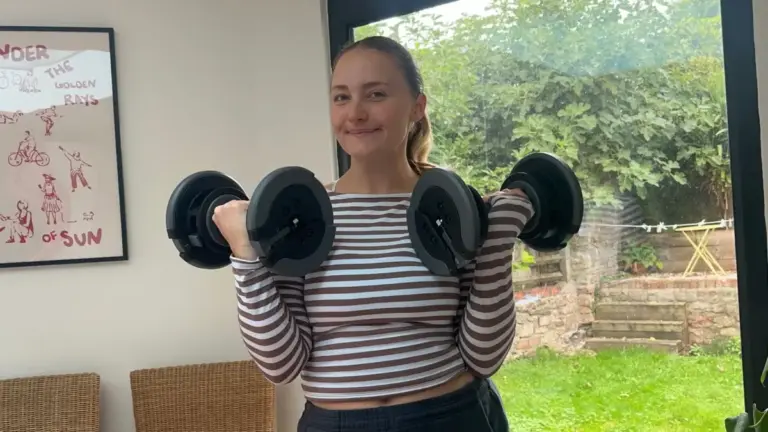
2. Seated Biceps Curl
- Why it rocks: Strengthens the biceps, making everyday tasks like carrying laundry baskets, lifting cookware, and hauling bags effortless.
- How to do it: Sit tall on a chair with a dumbbell in each hand, arms extended by your sides, palms facing forward. Bend your elbows and curl the weights up toward your shoulders, then lower them slowly.
- Pro tip: If moving both arms simultaneously compromises your form, alternate arms. As you build confidence, transition to a standing curl.
3. Bent-Over Row
- Why it rocks: Targets the upper back, shoulders, and biceps, countering the rounded-shoulder posture associated with aging and protecting against spinal stress fractures.
- How to do it: Hinge forward slightly from the hips with a flat back, holding a pair of dumbbells with arms extended toward the floor. Pull the weights up toward your ribcage, squeezing your shoulder blades together, then lower with control.
- Pro tip: Adjust your torso angle to fit your comfort level. A more upright torso reduces the intensity on the lower back.
4. Incline Pushup
- Why it rocks: A joint-friendly variation of the classic pushup that builds chest, shoulder, and arm strength without putting excessive pressure on the wrists.
- How to do it: Place your hands shoulder-width apart on an elevated, stable surface (such as a sturdy countertop, kitchen table, or even a wall). Lower your chest toward the surface by bending your elbows, then press back up to the starting position.
- Pro tip: Start with a high incline (like a wall) to minimize difficulty, and gradually lower the surface height as your upper body strength improves.
5. Triceps Kickback
- Why it rocks: Strengthens the back of the arms (triceps), which are essential for pushing yourself up from a seated position or supporting your body weight.
- How to do it: Hinge forward slightly with one hand resting on a chair for support and a light dumbbell in the other hand. Keep your upper arm locked by your side as you extend your forearm straight back behind you, then return to 90 degrees.
- Pro tip: Because the triceps are a smaller muscle group, start with light weights or body weight alone. Perform the movement using a single arm at a time to maintain focus on form.
Lower Body Exercises
6. Air Squat
- Why it rocks: Mimics the fundamental mechanics of standing up from a chair, getting off a toilet seat, and bending down to pick something up. Essential for maintaining long-term independence.
- How to do it: Stand with feet shoulder-width apart. Push your hips back and bend your knees as if sitting down into an imaginary chair, keeping your chest proud and heels flat on the floor. Return to standing.
- Pro tip: Place a chair or couch behind you. At the bottom of the squat, lightly tap your glutes to the seat before rising back up to ensure proper depth and security.
7. Step-Up
- Why it rocks: Replicates navigating stairs, stepping over curbs, and walking on uneven outdoor terrain, significantly improving single-leg stability and reducing trip hazards.
- How to do it: Stand facing a low, sturdy step or platform. Place your right foot fully onto the step, press through your heel to lift your body up, and bring your left foot up to meet it. Step back down safely.
- Pro tip: Position yourself near a handrail or wall for initial balance support. Start with a low platform (6 inches or less) and increase the height over time.
8. Alternating Reverse Lunge
- Why it rocks: Develops lower-body strength in the glutes, hamstrings, and quadriceps while aggressively improving unilateral balance.
- How to do it: Stand tall with feet together. Take a controlled step backward with your right foot, lowering your hips until both knees form roughly 90-degree angles. Push off your front foot to return to the starting position, then switch legs.
- Pro tip: Balance can make this movement tricky at first. Perform the exercise while lightly holding onto a stable countertop or the back of a heavy chair.
9. Sumo Squat
- Why it rocks: A wide-stance variation of the traditional squat that shifts emphasis to target the inner thighs, glutes, and quads from a fresh angle.
- How to do it: Take a wider-than-shoulder-width stance with your toes pointed slightly outward. Lower your hips straight down into a deep squat, keeping your torso upright, then push back up to standing.
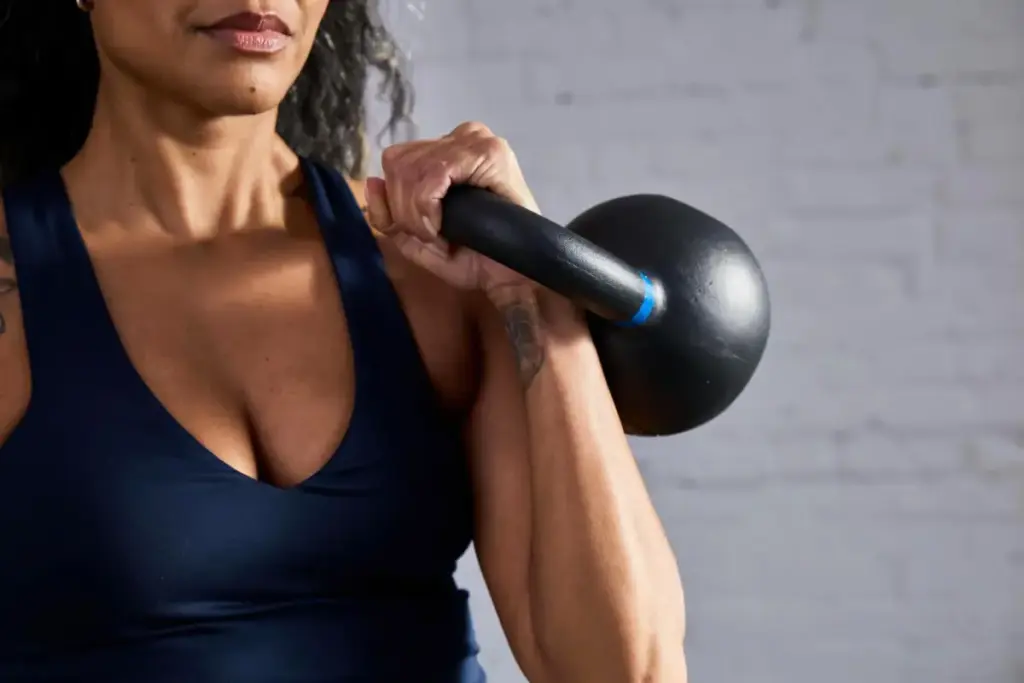
- Pro tip: Master the movement using your body weight alone before introducing a dumbbell or kettlebell held vertically at your chest.
Core & Functional Exercises
10. Half Turkish Get-Up
- Why it rocks: A sophisticated, multi-planar movement that integrates core stability, shoulder mobility, and total-body coordination to safely transition from floor to standing.
- How to do it: Lie on your back with your right knee bent and right arm extended toward the ceiling. Roll onto your left forearm, pressing up onto your left hand while keeping your gaze fixed upward. Reverse the motion slowly to return to the floor.
- Pro tip: Break this complex movement down into individual components. Practice without any added weight until the sequence feels second nature.
11. Farmer’s Carry
- Why it rocks: Builds phenomenal grip strength, shoulder stability, and core endurance by forcing the abdominal wall to resist rotation while carrying loads by your sides.
- How to do it: Hold a pair of moderately heavy dumbbells or kettlebells in your hands by your sides. Stand tall with shoulders back and walk forward in a slow, controlled, and deliberate manner for a set distance or time.
- Pro tip: Keep your core braced as if someone is about to tickle you, and take small, steady steps to maintain optimal posture.
12. Standing March
- Why it rocks: Engages the deep core stabilizers and hip flexors to maintain dynamic balance and upright posture.
- How to do it: Stand tall with feet hip-width apart. Slowly lift one knee up toward your chest while balancing on the opposite leg, pause briefly, and lower it down. Alternate legs in a marching rhythm.
- Pro tip: Loop a light resistance band around your feet or ankles to introduce an extra challenge for your lower body and core stabilizers.
Future Outlook: Safety Guidelines and Building a Sustainable Routine
Embarking on a strength training journey later in life requires a balanced mindset: enthusiasm paired with rigorous caution. According to physical therapist Abby Bales, there are virtually no exercises that are completely off-limits—provided you feel comfortable and pain-free. If a movement induces sharp pain, skip it. If an exercise feels overly complex, modify it to suit your unique mobility level.

Key Safety Principles for Lifters Over 60:
- Approach High-Impact Moves with Care: High-impact exercises like box jumps or jump squats can enhance bone mineral density, but they also place intense shear stress on aging joints. If you suffer from osteoarthritis or joint pain, opt for low-impact alternatives.
- Modify Single-Leg Work: Unilateral (single-side) exercises are stellar for balance, but always execute them near a stable wall, railing, or secure countertop to prevent accidental falls.
- Limit Extreme Spinal Twisting: Rotational exercises improve core mobility, but individuals with advanced osteoporosis should avoid aggressive twisting under heavy loads to minimize the risk of spinal compression fractures.
- Prioritize Form Over Load: Never sacrifice pristine biomechanics for heavier weights. Consistent, slow, and controlled resistance execution yields superior results with zero unnecessary injury risk.
- Consult a Professional: When in doubt, seek out a physical therapist or certified strength coach for a comprehensive physical assessment to tailor a bespoke program aligned with your individual medical history and longevity goals.
The Bottom Line
Building a strength routine does not require an intimidating commercial gym environment or hours of exhaustive daily labor. As Bales emphasizes, the secret to longevity boils down to a simple directive: “Move as much as possible, start small, build gradually, and stick with it.”

Visible physiological progress takes time—typically showing noticeable improvements in muscle tone, functional strength, and vitality within six to eight weeks of consistent effort. By picking up those dumbbells and embracing the science of senior resistance training, you aren’t just building muscle; you are investing in an active, vibrant, and fiercely independent future.