Executive Overview
Australia’s premier indie music institution, St Jerome’s Laneway Festival, has officially unveiled the structural framework and touring schedule for its highly anticipated 2027 edition. Marking a significant departure from its historical routing model, the four-date run will introduce a restructured format designed to alleviate the crushing logistical demands traditionally placed on touring crews, support staff, and participating artists. Most notably, Sydney’s Centennial Park will serve as the opening leg of the festival for the first time in its more than two-decade history, signaling a broader geographical consolidation that sees long-standing fixtures Adelaide and Perth omitted from the calendar.
This strategic recalibration follows weeks of industry speculation surrounding the operational viability of mega-scale touring circuits in the post-pandemic economic landscape. By trimming its footprint to focus exclusively on Sydney, Brisbane, Melbourne, and Auckland, Laneway’s leadership team is making a calculated pivot toward sustainability over expansion. As the festival industry grapples with inflated freight costs, supply chain bottlenecks, and a saturated live-entertainment market, Laneway’s 2027 blueprint offers a fascinating case study in corporate self-preservation. This comprehensive report explores the operational realities behind the downsizing, the historical weight of the scheduling changes, the ripple effects of leadership transitions, and what this pivotal moment means for the future of independent touring festivals across Australasia.
Detailed Chronology: The Road to the 2027 Realignment
To fully understand the weight of Laneway’s 2027 announcement, one must trace the timeline of events that forced festival organizers to re-evaluate their operational model. The process of scaling back did not happen overnight; rather, it was the culmination of mounting pressures, post-pandemic market corrections, and logistical bottlenecks that reached a tipping point following the festival’s milestone 21st-anniversary celebrations.
The 2026 Milestone and the Highs of a Landmark Year
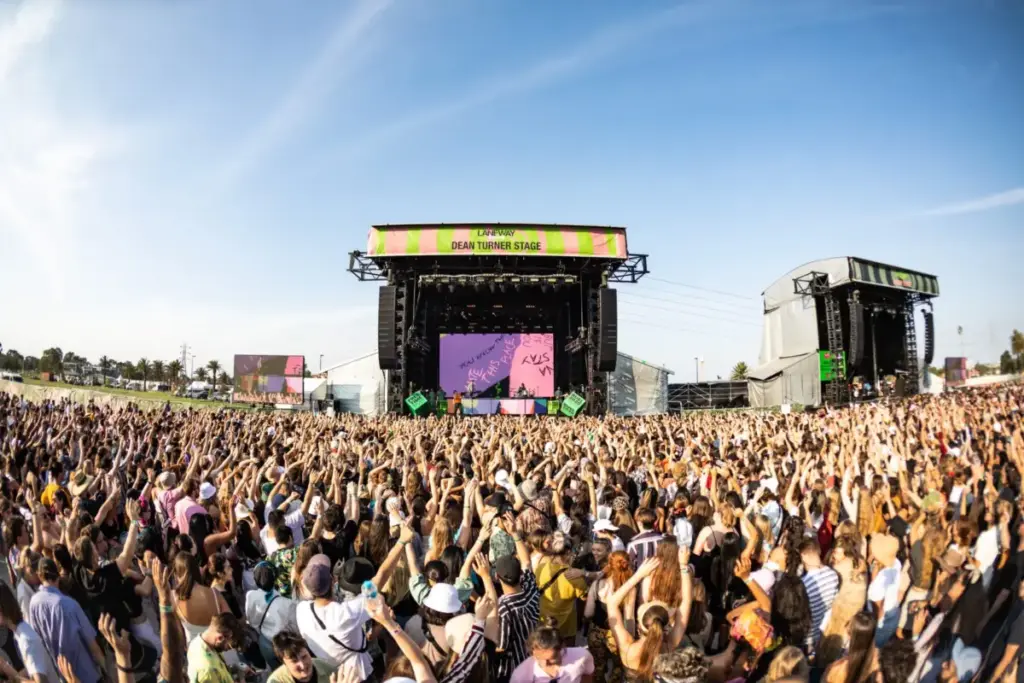
Earlier in the year, Laneway Festival celebrated its 21st anniversary with a high-profile, critically acclaimed run. Anchored by a powerhouse lineup featuring Gen-Z pop phenomenon Chappell Roan, alongside indie heavyweights Wolf Alice, Role Model, Wet Leg, PinkPantheress, and Geese, the 2026 edition appeared to demonstrate that the festival was operating at the peak of its powers.
However, beneath the surface of sold-out dates and enthusiastic crowds, the machinery required to move hundreds of crew members, tons of audio-visual equipment, and dozens of international artists across vast oceanic distances was facing unprecedented strain. For instance, the 2026 Queensland leg temporarily relocated from its traditional home at the Brisbane Showgrounds to Southport Sharks on the Gold Coast—a move that hinted at venue availability struggles and the ongoing real estate challenges facing inner-city festival organizers.
The Leadership Shift
Adding to a transitional period for the brand, the weeks immediately preceding the 2027 date announcement brought news of a seismic shift at the top. Festival director Jessie Parker announced her departure from the organization, stepping down after an influential 16-year tenure that helped shape Laneway into a globally respected cultural export. Parker’s exit left institutional knowledge and strategic leadership up for grabs just as the festival was forced to make hard choices regarding its future viability.
The Adelaide and Perth Omissions
The first major shoe dropped earlier in the month when organizers confirmed that Adelaide and Perth would be entirely left off the 2027 itinerary. The announcement sent shockwaves through the local music communities in Western Australia and South Australia, both of which have historically relied on national festival circuits to bring international acts to their regional markets.
Festivals of Laneway’s scale rely on a delicate financial ecosystem where ticket sales, corporate sponsorships, and government tourism grants must offset astronomical overheads. By cutting the two westernmost stops, organizers avoided the immense expenses associated with cross-continent freight logistics, specialized charter logistics, and duplicated site builds.
The Finalized 2027 Schedule Unveiled
The cascading effects of these decisions culminated in the official release of the 2027 dates, cementing a leaner, four-city circuit:
- Friday, February 12, 2027: Sydney – Centennial Park (Opening Leg)
- Saturday, February 13, 2027: Brisbane – Brisbane Showgrounds (Returning to its historic venue)
- Friday, February 19, 2027: Melbourne – Flemington Park (Traditional Victorian home)
- Sunday, February 21, 2027: Auckland – Western Springs (Trans-Tasman finale)
Supporting Context & Metrics: The Economics of Modern Music Festivals
The decision by St Jerome’s Laneway Festival to scale back its operations is not an isolated incident; rather, it reflects a broader macroeconomic reality gripping the global live entertainment sector. Understanding the metrics and pressures driving this shift requires an examination of the current state of touring economics.
The Logistics and Overhead Crisis
Staging a multi-city festival across Australia and New Zealand is widely regarded by industry insiders as one of the most complex logistical feats in the global entertainment industry. The tyranny of distance means that moving a touring festival requires massive investments in air and freight transport. In the wake of global inflation, fuel price volatility, and supply chain disruptions, the cost of moving stage infrastructure, backline equipment, and personnel has skyrocketed.
Furthermore, insurance premiums for outdoor events have escalated dramatically over the past five years, driven by climate-related weather risks and post-pandemic risk-assessment models. When these operational costs are compounded by a tight labor market—where experienced stagehands, production managers, and security personnel are in high demand—running consecutive shows across tight windows places an unsustainable financial and physical burden on promoters.
Patron Fatigue and the Cost-of-Living Squeeze
On the consumer side, discretionary spending has tightened significantly. High inflation and cost-of-living pressures have forced music fans to be more selective with their entertainment dollars. While major blockbuster acts like Taylor Swift or Chappell Roan can still command massive ticket sales, mid-tier music festivals have faced softer advance ticket sales as consumers delay purchases until closer to the event date.

By reducing the number of events, Laneway is artificially tightening supply and concentrating consumer demand into fewer, higher-impact markets. This strategy minimizes the risk of under-performing dates in smaller regional hubs like Adelaide and Perth, ensuring that the remaining shows boast maximum attendance and robust economic returns.
Official Statements and Industry Reactions
The strategic repositioning of Laneway Festival has elicited measured responses from its organizers, who have sought to balance transparency with reassurance for their dedicated fan base.
The Organizers’ Perspective
In statements released following the announcement of the Perth and Adelaide omissions, festival organizers were candid about the physical and logistical toll exacted by the traditional touring model.
"Running so many shows, so close together, across so much ground is a logistical feat we’re proud of, but it also asks a lot of our lineup and crew," organizers stated.
Crucially, the leadership team emphasized that the decision to scale back was designed to safeguard the long-term health of the festival, rather than signal a permanent retreat from regional markets. They framed the 2027 pause as an intentional recalibration period intended "to focus on making the festival the best it can be."
Artist, Crew, and Community Impact
Behind the marketing copy lies a human element that industry advocates have frequently highlighted: burnout. Touring musicians and technical crews have increasingly spoken out about the unsustainable pace of modern tour schedules. By creating breathing room between the Brisbane and Melbourne legs—introducing a six-day gap—Laneway is actively addressing crew welfare concerns.
However, reactions from local music communities in South Australia and Western Australia have been deeply critical. State tourism bodies and local promoters have expressed disappointment, noting that the absence of major national festivals diminishes the touring pipeline for emerging local acts who rely on festival slots to build national audiences. Local venue operators in Perth and Adelaide now face the challenge of filling the cultural void left by the festival’s departure.
Future Outlook: What Next for Independent Touring Festivals?
As St Jerome’s Laneway Festival enters this new chapter, its trajectory will likely serve as a bellwether for the rest of the Australasian live music market. The era of unchecked expansion for indie music festivals appears to have reached its limits, replaced by a disciplined era of strategic consolidation.
Will Adelaide and Perth Return?
While festival organizers have left the door open for a potential return to Adelaide and Perth in future iterations, the likelihood of a reinstatement depends heavily on two critical factors: economic stabilization and municipal support. For regional capitals to win back major festivals, local state governments may need to step up with more aggressive tourism subsidies, underwriting packages, and venue fee waivers to absorb the financial risks borne by private promoters.
The Rise of the Boutique and Concentrated Model
Laneway’s pivot suggests that the future of multi-city festivals lies in high-density, high-impact urban hubs. By planting roots in premier locations like Sydney’s Centennial Park and Melbourne’s Flemington Park, the festival is leaning into its urban identity—an ethos that dates back to its origins in a Melbourne alleyway in 2005.
As the festival prepares to drop its first artist announcement in late September 2027, all eyes will be on the caliber of the lineup. If organizers can deliver a roster that matches or exceeds the cultural currency of the 2026 Chappell Roan-led bill, fans will likely travel across state lines to experience the condensed, premium version of the event.
Ultimately, Laneway’s 2027 realigning proves that even the most venerable institutions must evolve to survive. By choosing sustainability over scope, the festival is betting its future on the idea that doing less, but doing it better, is the only path forward in a rapidly changing musical landscape.