Executive Overview
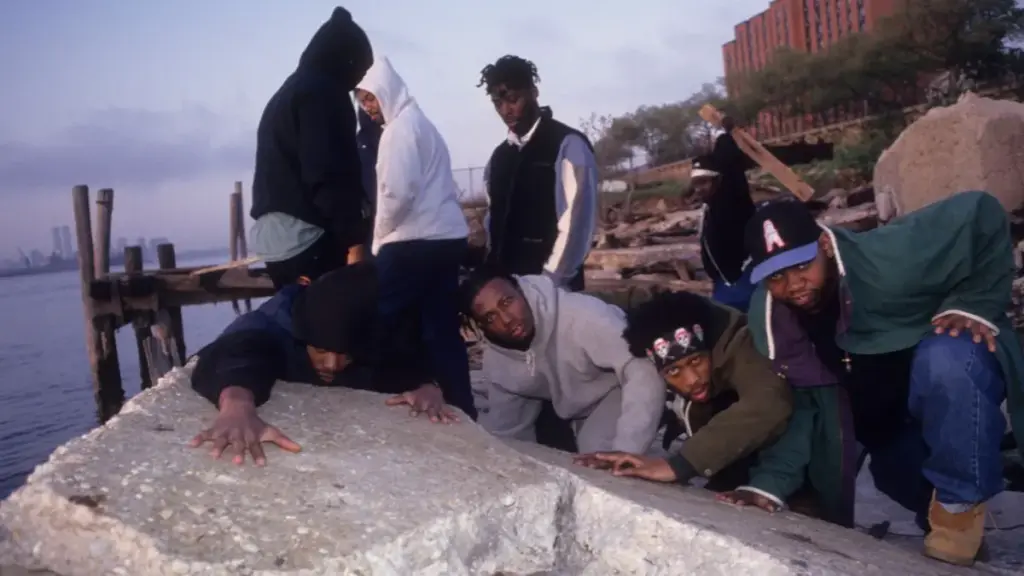
For devoted hip-hop historians and longtime disciples of the Wu-Tang Clan, the foundational mythology of the Staten Island-born collective is a matter of sacred text. Yet, for the uninitiated, the origins of rap music’s most enduring empire remain deeply intertwined with a cinematic and philosophical universe that transcends traditional music industry tropes. At the core of the Wu-Tang Clan’s iconography is a profound synthesis of traditional Chinese martial arts, Eastern philosophy, and gritty inner-city survival.
This cultural alchemy was masterminded primarily by de facto leader and principal producer Robert Diggs, universally known as the RZA. Long before the group altered the trajectory of modern popular music with their 1993 masterpiece, Enter the Wu-Tang (36 Chambers), the RZA had begun meticulously constructing a worldview that married the bleak realities of 1990s New York City with the codes, aesthetics, and esoteric philosophies of historical kung fu cinema and Chan Buddhism.
This comprehensive investigation explores the deep-seated connections between the Wu-Tang Clan and Chinese martial arts culture. By examining the pivotal moments—from gritty Manhattan grindhouse screenings to the sacred halls of the USA Shaolin Temple—we uncover how an unlikely cross-cultural bridge was built between gritty urban America and ancient Chinese tradition. Through rare historical accounts, direct testimony from foundational figures like Shaolin Monk Shi Yan Ming, and an analysis of the group’s timeless discography, this report details how the RZA cultivated a personal discipline that permanently reshaped the global musical landscape.
Detailed Chronology: From Grindhouse Cinema to the 36 Chambers
1992: The Grindhouse Genesis and the Birth of a Name
The mythology of the Wu-Tang Clan officially took root in the subterranean movie theaters of New York City during a pivotal era for independent American cinema and street culture. In 1992, a young Robert Diggs alongside his cousin and fellow future Wu-Tang founding member Russell Jones—better known by his stage name, the late Ol’ Dirty Bastard—frequented local grindhouse theaters that specialized in imported, low-budget Hong Kong martial arts films.
It was during one of these excursions that the pair encountered the 1983 martial arts classic Shaolin vs. Wu-Tang. Directed by and starring Gordon Liu, the film presented a riveting narrative centered around rival kung fu masters: one representing the disciplined, orthodox Shaolin school, and the other hailing from the enigmatic, unorthodox Wu-Tang school.
To the RZA, the cinematic portrayal of these rival styles served as an immediate metaphor for the competitive, highly skilled lyricists emerging from the housing projects of Staten Island (which the group playfully rebranded as "Shaolin") and Brooklyn. The film’s dramatic English-dubbed dialogue, intricate choreography, and distinct philosophical underpinnings struck a chord with the young musicians. The name "Wu-Tang" was immediately adopted, serving as an umbrella moniker that would soon house an ensemble of distinct, formidable MCs, each possessing a lyrical "style" as unique as any martial arts discipline displayed on the silver screen.
1995: The Convergence of Hip-Hop and the USA Shaolin Temple
While the RZA’s initial exposure to Chinese martial arts arrived via celluloid, his immersion quickly graduated from passive fandom to active participation. In 1995, a critical cultural collision occurred in New York City: the RZA was introduced to Shi Yan Ming, a 34th-generation Shaolin fighting monk who had recently established the first USA Shaolin Temple in Manhattan.
Shi Yan Ming’s journey to the United States was itself a cinematic narrative. In 1992, while serving as a cultural ambassador representing the historic Henan Shaolin Temple at a martial arts exhibition in San Francisco, Shi executed a daring defection. Slipping away from his hotel in the middle of the night, he sought political asylum, eventually making his way to New York City. Operating with little more than his traditional robes and an encyclopedic mastery of Chan Buddhism and martial arts, Shi began teaching authentic Shaolin kung fu to a small circle of dedicated students.
Through a mutual friend within the city’s burgeoning artistic underground, the RZA and Shi Yan Ming crossed paths. What began as a meeting of curious minds quickly evolved into a profound, lifelong bond of mutual respect.
Supporting Context & Metrics: Philosophy, Discipline, and Cultural Exchange
The Synthesis of Chan Buddhism and Urban Realism
When Shi Yan Ming first encountered the mastermind behind the Wu-Tang sound, he was immediately struck by the rapper’s intellectual depth. Contrary to popular stereotypes surrounding 1990s hip-hop culture, the RZA was an avid reader who had spent years self-educating on Eastern theology, martial arts history, and obscure philosophical texts.
Shi noted that the RZA’s library contained an extensive collection of martial arts films alongside serious theological literature. Rather than treating kung fu merely as an aesthetic gimmick or a collection of cool action sequences, the RZA grasped the spiritual core of the discipline.
+-----------------------------------------------------------------+
                 THE WU-TANG PHILOSOPHICAL TRIAD
+-----------------------------------------------------------------+
 |                                                                 |
 |  [Chan Buddhism] -----------> Inner Peace & Mental Focus        |
 |  [Shaolin Kung Fu] ---------> Physical Discipline & Defense     |
 |  [Urban Realism] -----------> Survival & Lyrical Expression    |
 |                                                                 |
+-----------------------------------------------------------------+
This holistic approach resonated deeply with the Shaolin monk. In a joint 1999 interview published in Kung Fu Tai Chi Magazine, Shi Yan Ming reflected on the rapper’s open-minded theological framework:
"To him, he is just learning the philosophy. Wherever you come from, he respects. He respects all: Christian, Buddhist, Taoist — all the different religions."
The Rigors of Shaolin Training
For the RZA, theoretical knowledge was insufficient; true mastery required physical embodiment. Shortly after their initial meeting, the producer formally enrolled as a student under Sifu Shi Yan Ming at the Manhattan temple.
Reflecting on his transition from an academic observer to an active practitioner, the RZA admitted to his lack of formal athletic training in traditional martial arts:
"I had no actual martial background besides a lot of reading of the philosophies."
Despite starting his physical training later in life compared to traditional disciples, the RZA demonstrated an exceptional level of dedication. By 1999, after nearly four years of rigorous, sweat-soaked training sessions that tested his physical endurance and mental fortitude, Shi Yan Ming publicly commended his student. The monk described the hip-hop auteur not as a celebrity seeking photo opportunities, but as a humble, tireless worker willing to endure the same punishing stances, conditioning exercises, and meditative drills demanded of any traditional novice.
Official Statements and Archival Insights
To fully appreciate the impact of this cross-cultural exchange, one must examine the direct testimonies preserved in martial arts and music archives. The integration of Shaolin philosophy into the RZA’s daily routine fundamentally altered how the Wu-Tang Clan operated as a business entity and creative collective.
In archival statements from the late 1990s, the RZA detailed how the principles of kung fu—specifically patience, strategic positioning, and mental clarity—allowed him to manage a volatile group of nine distinct, fiercely independent personalities. The structured hierarchy and mutual accountability found within traditional temple life provided a blueprint for the "Wu-Tang-era" business model, which famously allowed individual members to sign solo recording contracts with competing major labels while remaining united under the core collective.
Furthermore, musicologists and cultural historians examining the group’s landmark debut album, Enter the Wu-Tang (36 Chambers), have cataloged the precise cinematic samples that built the album’s sonic architecture. The project stands as a masterclass in intertextuality, drawing simultaneously from three distinct pillars of martial arts cinema:
- Shaolin vs. Wu-Tang (1983): Provided the foundational ideological split, direct naming conventions, and memorable English-dubbed vocal samples that peppered the album’s interludes and tracks.
- Enter the Dragon (1973): Starring the legendary Bruce Lee, this cinematic milestone leant its iconic title structure to the rap group’s debut, cementing a lineage of elite combat translated into lyrical form.
- The 36th Chamber of Shaolin (1978): Directed by Lau Kar-leung and starring Gordon Liu, this classic tale of arduous physical and mental ascension directly inspired the numeric designation in the album’s parenthetical subtitle, symbolizing the exhaustive trials an artist must endure to achieve mastery.
Future Outlook: The Enduring Legacy of Wu-Tang’s Shaolin Philosophy
Decades after the release of their debut album, the intersection of hip-hop and martial arts established by the Wu-Tang Clan remains a defining milestone in modern popular culture. What began as an underground fascination shared between two cousins in a New York grindhouse has evolved into a global cultural institution.
The ongoing legacy of this partnership is visible across multiple modern domains:
- Generational Influence: Contemporary rap artists continue to utilize martial arts metaphors, cinematic samples, and Eastern philosophies, following the path blazed by the RZA in the 1990s.
- Cultural Diplomacy: The enduring relationship between the RZA, Shi Yan Ming, and the USA Shaolin Temple has fostered decades of mutual appreciation between African-American urban culture and traditional Chinese martial arts, proving that art and philosophy can successfully bridge vast geographical and cultural divides.
- Educational Outreach: The philosophies of mindfulness, discipline, and self-mastery championed by the RZA and his Sifu continue to inspire new generations of youth through community martial arts programs and creative workshops worldwide.
Ultimately, the story of the Wu-Tang Clan and their embrace of Shaolin kung fu is much more than a clever marketing gimmick or a collection of nostalgic movie samples. It is a testament to the power of cross-cultural synthesis—a living demonstration of how ancient wisdom, when filtered through the lens of inner-city survival and artistic genius, can give birth to a timeless cultural dynasty that will continue to echo through the chambers of history for generations to come.