Executive Overview
As the global population ages, the intersection of eldercare and personal well-being has emerged as one of the most pressing health challenges of our time. Millions of families find themselves navigating the delicate and exhausting balance of supporting aging relatives while trying to maintain their own physical and mental health.
Nowhere is this strain more acute than among informal caregivers—spouses, adult children, and partners who shoulder the daily burdens of chronic disease management. Consider the case of a 73-year-old man who, despite a lifelong commitment to physical activity, found his own robust health routines systematically eroded by the demands of caring for his wife, who lives with Parkinson’s disease. With little time left for self-care, his structured strength-training regimens fell by the wayside, replaced by the relentless, unprogrammed physical labor of caregiving: transfers, patient maneuvering, and household management.
This scenario highlights an urgent public health reality: as we age, natural physiological declines in muscle mass (sarcopenia), joint flexibility, and grip strength accelerate if left unchecked. For older adults who are also caregivers, the stakes are doubly high. They cannot afford to become frail, yet their caregiving duties deny them the traditional avenues of leisure and fitness.
Stepping in with a professional background in personal training, a targeted intervention was designed to break this cycle. By equipping him with a compact set of light-to-medium dumbbells, re-establishing fundamental biomechanical awareness, and distilling a full-body routine into just three functional movements—the dumbbell goblet squat, the single-arm dumbbell row, and the dumbbell overhead press—this personalized initiative restored his functional mobility, fortified his skeletal system, and provided a sustainable blueprint for longevity.
This article explores the physiological imperative of strength training in later life, breaks down the anatomy and execution of the core movements utilized in this program, and offers an authoritative, science-backed roadmap for older adults and their caregivers to reclaim their vitality.
Detailed Chronology: The Intervention and Progressive Implementation
The intervention was born out of necessity. Observing the subtle physical decline of a lifelong active individual who had been sidelined by chronic caregiving duties prompted a structured, empathetic, and scientifically rigorous response. The rehabilitation and strengthening process was executed in distinct, carefully managed phases.
Phase 1: Assessment and Biomechanical Foundation
The first step was identifying the gaps created by years of neglect. While the subject remained active through walking and household chores, he had completely abandoned progressive resistance training. Muscle atrophy, a subtle stiffening of the thoracic spine, and a decline in explosive power had begun to manifest.

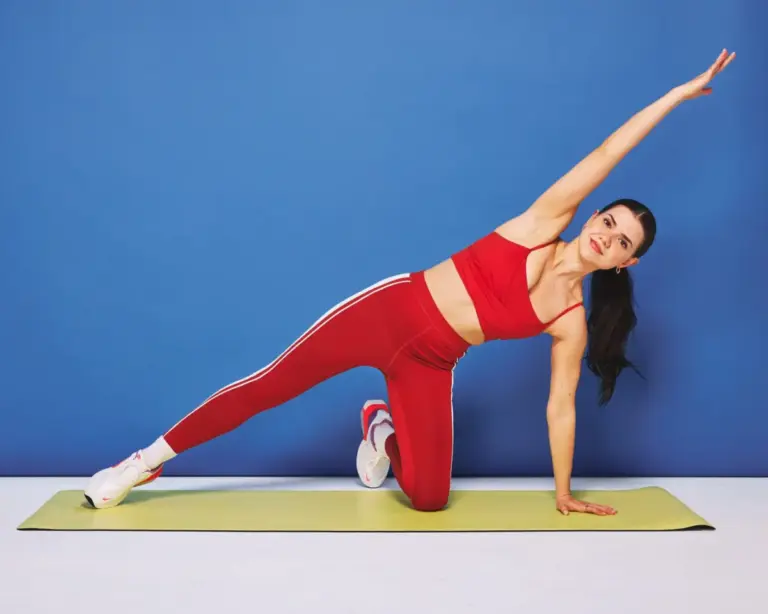
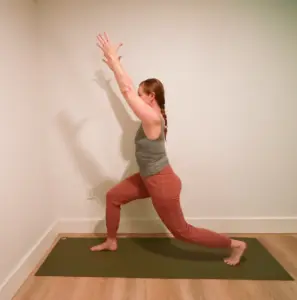
Before introducing external loads, the intervention returned to basics. For several weeks, the focus was exclusively on bodyweight movements to re-educate the nervous system and ensure pristine movement mechanics. We drilled the four fundamental movement patterns:
- The Squat: Emphasizing hip-knee synchronization and heel pressure.
- The Hip Hinge: Teaching proper posterior chain activation to protect the lumbar spine.
- The Lunge: Enhancing unilateral stability and dynamic balance.
- Pushing Movements: Restoring horizontal and vertical upper-body capacity.
Proper form education was paramount. The subject was retrained on core bracing techniques, maintaining an upright spinal posture under load, and visualizing movement pathways to minimize shear stress on the joints.
Phase 2: Introduction of Minimalist Equipment
Recognizing that time is the ultimate luxury for a primary caregiver, long workouts at a commercial gym were entirely impractical. The solution required a home-based, highly efficient protocol. A rack of adjustable light-to-medium dumbbells was acquired, transforming a corner of the home into a functional micro-gym.
The program was deliberately stripped down to three high-yield, multi-joint movements. Rather than isolating muscles with single-joint exercises (such as bicep curls or leg extensions), the program leveraged compound exercises that mirror the physical demands of daily living. This ensured that every minute invested yielded maximum functional return.
Phase 3: Integration and Progression
Once the three core exercises—the dumbbell goblet squat, the single-arm dumbbell row, and the dumbbell overhead press—were mastered with bodyweight and light weights, they were integrated into a consistent routine targeting 3 sets of 8 to 12 repetitions. Adjustments were made to accommodate the subject’s fluctuating energy levels, incorporating regressions (such as seated variations or kneeling rows) on days when caregiving fatigue was exceptionally high. Over a period of months, this systematic approach yielded noticeable improvements in posture, ease of movement, and overall physical resilience.
Supporting Context & Metrics: The Science of Aging and Strength
To understand why this targeted intervention was so effective, one must examine the physiological changes that accompany aging, particularly in individuals who carry the compounded stress of caregiving.
+-------------------------------------------------------------------------+
                    PHYSIOLOGICAL DECLINES WITH AGING
+-------------------------------------------------------------------------+

  Age 30+ ──────────────> Natural muscle mass decline (Sarcopenia)
                          • Loss of Type II fast-twitch muscle fibers
                          • Reduced metabolic rate & power output

  Joints & Connective ──> Decreased synovial fluid production
  Tissues                 • Increased joint stiffness
                          • Reduced range of motion

  Neuromuscular ────────> Diminished proprioception & balance
                          • Impaired grip strength
                          • Elevated fall & fracture risk
+-------------------------------------------------------------------------+
Sarcopenia and Dynapenia
Beginning around the fourth decade of life, humans experience a natural, progressive loss of muscle mass and function—a condition known as sarcopenia. Alongside this is dynapenia, the age-related loss of muscle strength. Left unaddressed, older adults can lose up to 3% to 5% of their muscle mass per decade after age 30. This decline preferentially affects Type II (fast-twitch) muscle fibers, which are responsible for explosive power, balance recovery, and rapid force production. When a fall threatens an older adult, it is these fast-twitch fibers that fire to catch them. Without resistance training, the reflex loop slows down, dramatically increasing injury risks.
Bone Mineral Density and Osteoporosis
Resistance training is not merely about muscles; it is a primary driver of skeletal health. Bones are dynamic living tissues that remodel in response to mechanical stress. Through the process of mechanotransduction, weight-bearing exercise and muscular contractions place tension on the skeleton, signaling osteoblasts (bone-building cells) to lay down new bone matrix. For a 73-year-old man—and indeed, for aging adults everywhere—maintaining bone mineral density through loaded movements is a critical defense against osteoporosis and debilitating fractures.
Functional Independence and the Activities of Daily Living (ADLs)
For caregivers, physical resilience is a prerequisite for safety—both for themselves and the person they care for. Assisting a partner with Parkinson’s disease requires navigating unpredictable shifts in weight, performing frequent postural transfers, and lifting medical equipment or groceries. Functional fitness ensures that these tasks can be executed without compromising the caregiver’s lumbar spine, shoulders, or knees.
The Core Blueprint: Three Essential Exercises
The minimalist strength routine implemented for our subject relies on three fundamental compound movements. Each exercise is designed to map directly onto real-world biomechanical demands.
+-------------------------------------------------------------------------+
                       THE 3-STEP FUNCTIONAL ROUTINE
+-------------------------------------------------------------------------+

  1. Dumbbell Goblet Squat
     • Target: Glutes, quads, core, lower back
     • Real-World Benefit: Getting out of chairs, bending down, lifting

  2. Single-Arm Dumbbell Row
     • Target: Lats, rhomboids, rear deltoids, grip strength
     • Real-World Benefit: Carrying grocery bags, counteracting forward posture

  3. Dumbbell Overhead Press
     • Target: Shoulders, triceps, core stability
     • Real-World Benefit: Reaching for high shelves, dressing, lifting objects
+-------------------------------------------------------------------------+
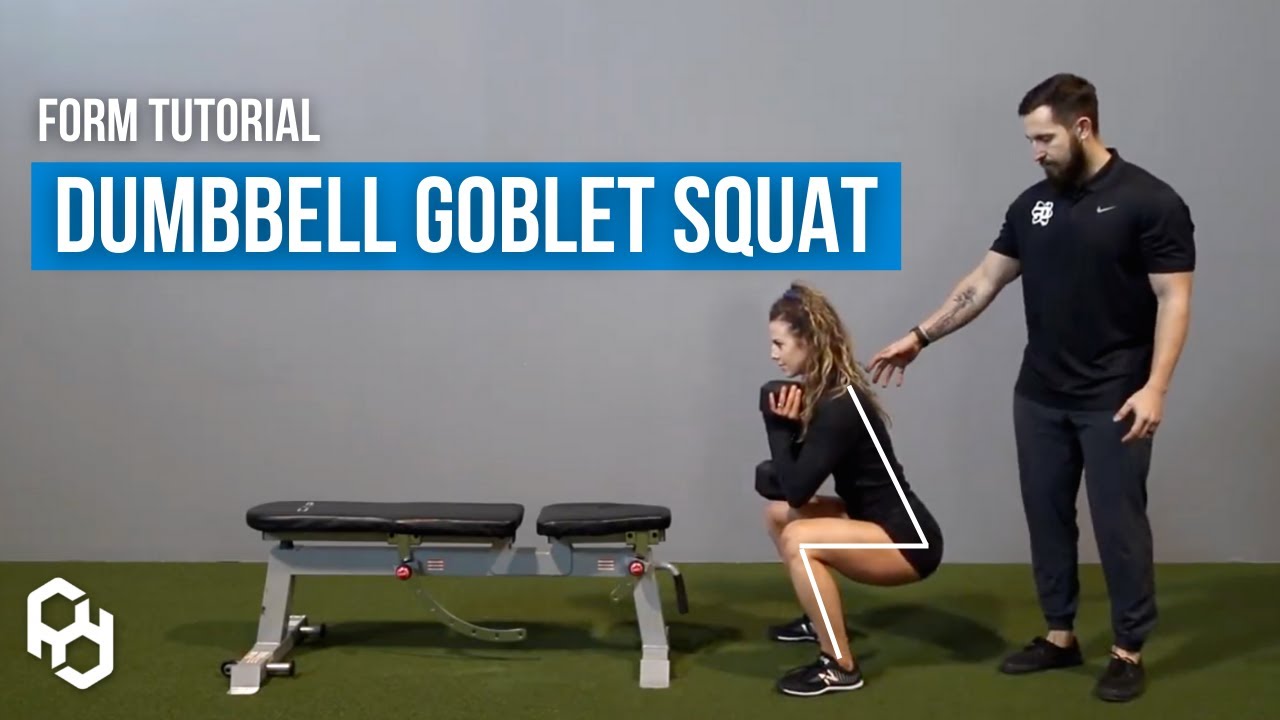
1. Dumbbell Goblet Squat
Why It’s Important
The dumbbell goblet squat is the quintessential functional exercise. It mimics movements that every human performs multiple times a day: standing up from a dining chair, rising from a deep sofa, getting off the toilet, or bending down to retrieve an object from the floor. Holding the dumbbell vertically against the chest shifts the body’s center of gravity forward, naturally encouraging an upright torso and engaging the core musculature. This movement builds profound lower-body strength in the quadriceps, hamstrings, and glutes while simultaneously challenging balance and joint stability.
How to Perform It
- Setup: Stand with feet slightly wider than shoulder-width apart, toes pointed slightly outward. Hold a single dumbbell vertically against your chest, cupping the top end with both hands like a goblet. Keep your elbows tucked in close to your ribcage.
- The Descent: Inhale, brace your core, and initiate the movement by pushing your hips back and bending your knees simultaneously. Keep your chest proud, your back flat, and your weight distributed evenly across your entire foot (heels and midfoot firmly planted).
- The Bottom Position: Lower your hips until your thighs are roughly parallel to the floor (or to a comfortable depth dictated by your hip mobility). Ensure your knees track in line with your toes.
- The Ascent: Exhale and drive firmly through your heels, extending your hips and knees simultaneously to return to the starting, upright position. Squeeze your glutes at the top.
- Prescription: 3 sets of 8 to 12 repetitions.
- Regression (Make It Easier): Perform a pure bodyweight squat or utilize a sturdy chair for a supported "sit-to-stand" exercise, gradually building the lower-body strength required to introduce external weight.
2. Single-Arm Dumbbell Row
Why It’s Important
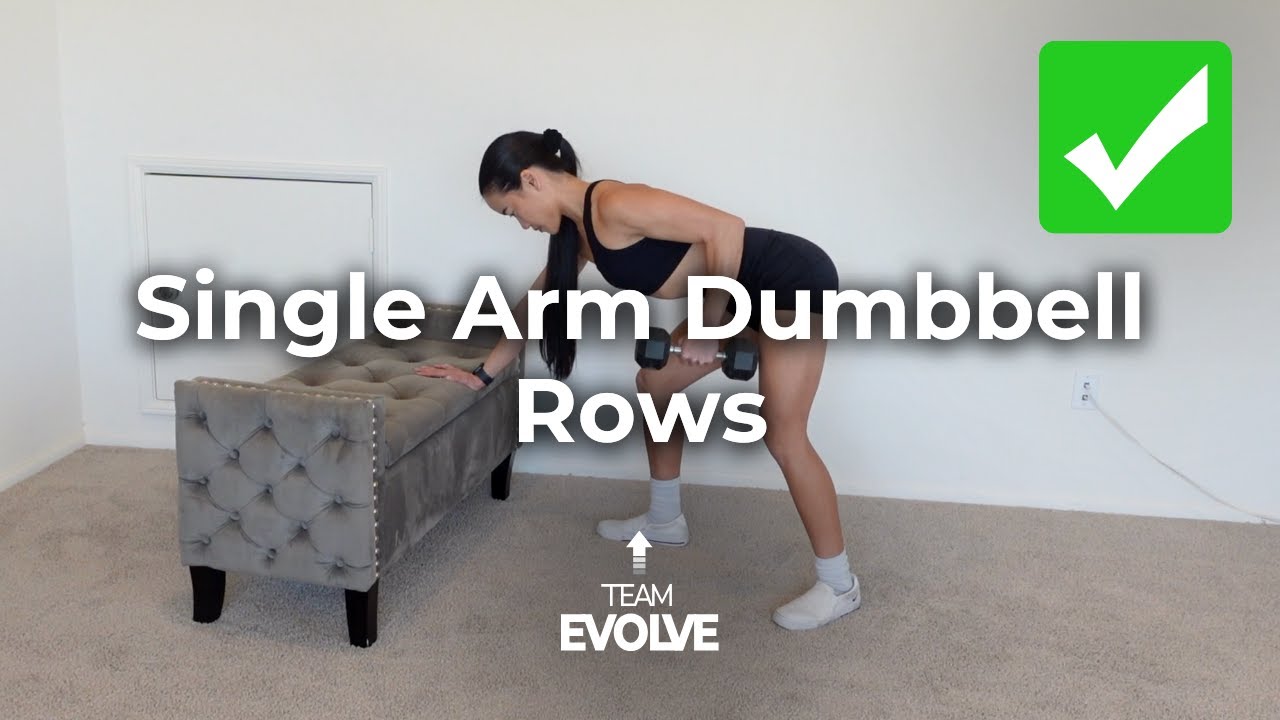
Modern life—and aging in particular—tends to pull the human body into a perpetual state of forward flexion. Hunching over kitchen counters, looking down at phones or caregiving charts, and driving all contribute to rounded shoulders and upper-back weakness. The single-arm dumbbell row directly counteracts this postural collapse. By targeting the large muscles of the upper and middle back (latissimus dorsi, rhomboids, and trapezius) along with the posterior deltoids and biceps, this exercise builds the pulling strength essential for carrying grocery bags, lifting luggage, and stabilizing the shoulder girdle. Furthermore, performing the movement unilaterally challenges anti-rotational core stability.
How to Perform It
- Setup: Place your left knee and your left hand firmly on a flat bench or the sturdy seat of a chair, keeping your spine neutral and parallel to the floor. Your right foot should be planted firmly on the floor a few feet back, with your right arm hanging straight down holding a dumbbell.
- The Pull: Brace your core, keep your shoulders level, and pull the dumbbell upward toward your hip bone. Imagine driving your elbow toward the ceiling rather than just pulling with your hand.
- The Squeeze: Pause for a brief second at the top of the movement, squeezing your shoulder blades together.
- The Lowering Phase: Inhale as you slowly and deliberately lower the dumbbell back to the fully extended starting position, maintaining control throughout the negative phase. Complete all reps on one side before switching to the other.
- Prescription: 3 sets of 8 to 12 repetitions per arm.
- Regression (Make It Easier): If supporting your body weight in a bent-over position is fatiguing, perform the movement while kneeling on one knee with upper body support, or use a higher incline bench to reduce lumbar strain.
3. Dumbbell Overhead Press
Why It’s Important
Upper-body pushing strength, particularly overhead, is vital for maintaining functional independence. Reaching up to access high kitchen cabinets, changing a lightbulb, lifting luggage into an overhead compartment, or even putting on a coat all require robust shoulder and scapular mobility. The dumbbell overhead press strengthens the deltoids, triceps, and upper pectorals while placing high demands on core stability, as the lifter must resist spinal extension while pressing weight upward against gravity.
How to Perform It
- Setup: Stand tall with your feet shoulder-width apart, core braced, and glutes squeezed to create a stable base of support. Hold two dumbbells at shoulder height, with your palms facing inward (neutral grip) or slightly forward, elbows pointing down toward the floor.
- The Press: Inhale, keep your torso strictly vertical, and press the dumbbells straight up overhead in a smooth, controlled arc until your arms are fully extended (avoiding clanking the weights together at the top).
- The Lockout and Descent: As the weights reach the top, ensure your shoulders remain down (away from your ears). Exhale as you slowly lower the dumbbells back down to the starting position at shoulder height.
- Prescription: 3 sets of 8 to 12 repetitions.
- Regression (Make It Easier): Perform a seated overhead press on a sturdy chair with back support to eliminate balance variables. Alternatively, perform the movement using one arm at a time (half-kneeling or standing) to reduce bilateral loading demands and improve unilateral stability.
- Progression (Make It Harder): For advanced trainees who have mastered the strict press, transition to a push press. By introducing a slight, controlled bend in the knees and an explosive leg drive, you can generate upward momentum to lift heavier loads overhead safely.
Official Statements & Expert Perspectives
Geriatric fitness specialists and physical therapists increasingly emphasize that strength training is non-negotiable for older adults, particularly those facing high-stress caregiving environments.
Dr. Elena Vance, a leading researcher in geriatric kinesiology, notes:
"When we look at family caregivers, we often see a hidden patient population. Their bodies are subjected to chronic cortisol elevation and erratic physical strain. Prescribing minimalist, high-yield resistance training is not about vanity or athletic performance; it is a clinical necessity. Compound movements like squats and rows preserve the musculoskeletal integrity required to prevent catastrophic falls and maintain independent living."
Furthermore, public health guidelines from major medical bodies increasingly underscore that resistance training twice a week significantly reduces all-cause mortality, improves glycemic control, and mitigates the symptoms of neurodegenerative conditions by promoting neuroplasticity and muscular signaling.
Future Outlook: Sustainability and Self-Care for Caregivers
The journey of our 73-year-old subject offers a powerful template for what is possible when expert guidance meets practical, compassionate execution. By shifting his mindset from “I have no time for fitness” to “My fitness is the foundation of my ability to care for others,” he successfully reclaimed his physical sovereignty.
Looking forward, the integration of structured strength training into the daily routines of older adults and caregivers must become a cornerstone of preventative healthcare. As home-fitness technology evolves, and as medical professionals increasingly prescribe resistance exercise alongside pharmaceuticals, the barriers to entry are lower than ever. A pair of adjustable dumbbells, twenty minutes three times a week, and a commitment to mastering foundational movement patterns can fundamentally alter the trajectory of aging.
For those navigating the complex, often overwhelming world of eldercare, the message is clear: caring for yourself is not an act of selfishness; it is the ultimate act of stewardship. By investing in your own strength, you build the physical and emotional resilience required to stand tall, support your loved ones, and age with unyielding grace and power.