Executive Overview
For millions of individuals, achieving truly smooth skin on the arms, thighs, and legs can feel like an uphill battle. Despite rigorous shaving regimens, diligent hydration, and various body care products, many people still find themselves dealing with an uneven, speckled texture often referred to colloquially as "strawberry skin." Characterized by small, dark spots resembling the seeds of a strawberry and accompanied by a rough, sandpaper-like feel, this frustrating skin condition affects a vast percentage of the global population.
While largely harmless from a medical standpoint, strawberry skin—scientifically recognized as keratosis pilaris (KP)—can significantly impact self-esteem and body confidence. Historically, consumers have relied on abrasive physical scrubs or heavy moisturizers that offer little more than temporary relief. However, advancements in dermatological science and cosmetic chemistry have shifted the paradigm toward multi-action treatments. Modern formulations now leverage targeted chemical exfoliants, such as alpha-hydroxy acids (AHAs), beta-hydroxy acids (BHAs), and retinol, combined with robust skin-barrier repair ingredients like ceramides, hyaluronic acid, and vitamin E.
This comprehensive report delves deep into the root causes of strawberry skin, examining the physiological mechanisms behind follicle blockage, trapped debris, and razor bumps. Drawing on insights from leading board-certified dermatologists—including Dr. Engleman and Dr. Garshick—we analyze the gold-standard ingredients required for effective treatment, evaluate the efficacy of both chemical and physical exfoliants, and outline a realistic timeline for achieving lasting results. Whether you are battling stubborn keratosis pilaris or post-shaving follicular irritation, understanding the science of skin renewal is the first step toward reclaiming a smooth, healthy complexion.
Detailed Chronology: The Evolution of Body Exfoliation and Keratosis Pilaris Treatments
To fully understand how modern dermatology approaches strawberry skin, it is essential to look at how body care treatments have evolved over the decades. For a long time, skincare was heavily siloed: facial skin received sophisticated, active-ingredient-driven treatments featuring retinoids and acids, while body skin was largely relegated to basic, highly fragranced lotions and harsh, abrasive physical scrubs.
The Era of Abrasive Physical Scrubs (Late 20th Century)
During the 1980s and 1990s, managing rough body texture meant reaching for gritty physical scrubs. These formulas frequently relied on crushed walnut shells, apricot kernels, or plastic microbeads to manually buff away dead skin cells. While these products provided an immediate sense of smoothness, dermatologists later discovered that jagged physical particles often created microscopic tears in the delicate skin barrier. This micro-trauma frequently exacerbated inflammation, triggered redness, and worsened conditions like keratosis pilaris by further irritating the hair follicles.
The Chemical Exfoliation Revolution (Early 2000s)
As cosmetic chemistry advanced, the skincare industry realized that the principles governing facial anti-aging and acne treatments—specifically the use of Alpha Hydroxy Acids (AHAs) like glycolic and lactic acid, and Beta Hydroxy Acids (BHAs) like salicylic acid—could be adapted for the body. Instead of aggressively sanding down the skin’s surface, these chemical agents worked by dissolving the cellular "glue" holding dead skin cells together. This allowed for a more uniform, controlled sloughing of the stratum corneum without mechanical damage.
The Rise of Multi-Tasking Barrier Repair (2010s to Present)
The most recent evolution in treating strawberry skin centers on the concept of harmonious dual-action formulations. Early chemical body exfoliants were sometimes too potent, leading to dryness, peeling, and compromised skin barriers. Today, dermatological science emphasizes a balanced approach. Modern products—such as specialized retinol body lotions and advanced AHA/BHA gel creams—combine high-performance cellular turnover ingredients with rich, barrier-supporting humectants and emollients like ceramides, glycerin, urea, and green tea extract. This ensures that as dead skin cells, debris, and ingrown hairs are cleared away, the underlying moisture barrier is simultaneously reinforced and protected.
Supporting Context & Metrics: Decoding Strawberry Skin
To effectively combat strawberry skin, one must first understand the underlying anatomy and physiology of the condition.
What is Keratosis Pilaris?
Keratosis pilaris is an extremely common, harmless genetic skin condition that manifests as rough patches and tiny bumps on the skin. Statistically, it is estimated to affect up to 50% to 80% of adolescents and approximately 40% of adults globally.
The mechanism behind KP involves the overproduction and natural buildup of keratin—a tough, fibrous protein that protects the skin against foreign substances and infection. When excess keratin accumulates, it forms tiny, hard plugs within the hair follicles. These plugs block the openings of the follicles, creating the characteristic sandpaper-like texture. When these plugged follicles trap oil, dead cells, and sometimes small coiled hairs, they can oxidize upon exposure to air, resulting in the dark, seed-like appearance characteristic of strawberry legs.
Contributing Factors: Beyond Keratolytic Buildup
While keratosis pilaris is the primary biological driver of strawberry skin, several external and environmental factors amplify its visibility:
- Shaving and Hair Removal Practices: Improper shaving techniques, using dull razors, or shaving without adequate lubrication can cause micro-abrasions, razor burn, and trapped hairs that curl back into the skin (ingrown hairs). This inflammation darkens the follicular pores and increases textural irregularities.
- Chronic Dehydration and Dry Skin: Dryness accentuates the microscopic peaks and valleys of the skin. When the skin lacks sufficient moisture, the hyper-keratinized bumps appear far more pronounced, rough, and irritated.
- Frictional Clothing: Tight synthetic clothing can trap sweat and bacteria while creating mechanical friction against the thighs and arms, worsening follicular occlusion and inflammation.
Key Ingredient Breakdown: What Clinical Science Recommends
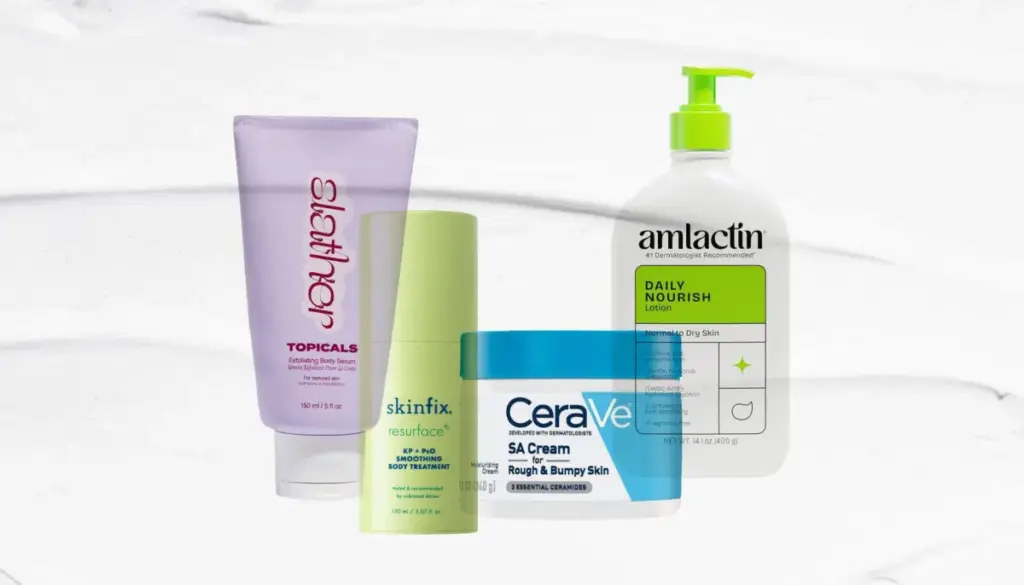
Dermatologists emphasize that managing strawberry skin requires a targeted formulation strategy. The most effective over-the-counter treatments generally feature combinations of the following active ingredients:
| Ingredient Class | Specific Agents | Primary Function in Strawberry Skin Treatment |
|---|---|---|
| Alpha-Hydroxy Acids (AHAs) | Lactic Acid, Glycolic Acid | Dissolves superficial dead skin cells, improves surface texture, and provides mild hydration (especially lactic acid). |
| Beta-Hydroxy Acids (BHAs) | Salicylic Acid | Oil-soluble; penetrates deep inside the hair follicle pore lining to clear out trapped sebum, debris, and plugs. |
| Keratolytic & Hydrating Agents | Urea | Dual-action powerhouse that simultaneously breaks down keratin plugs while deeply binding moisture to the skin. |
| Retinoids | Retinol | Accelerates overall cellular turnover, prevents impurities and keratin from clogging follicles at the microscopic level. |
| Barrier Restorers | Ceramides, Hyaluronic Acid, Glycerin, Vitamin E | Replenish lost moisture, support the lipid barrier, and neutralize irritation caused by active exfoliants. |
Official Statements and Expert Insights
Leading dermatologists and skin health experts agree that consistency, patience, and the right product selection are paramount when treating uneven body texture.
"With keratosis pilaris, dead skin cells form tiny plugs within the hair follicles, creating rough, dry, sandpaper-like bumps that commonly appear on the arms and thighs," explains prominent board-certified dermatologist Dr. Engleman.
Dr. Engleman notes that while physical exfoliation has long been a staple in home bathrooms, over-exfoliating without proper hydration can backfire. She stresses the importance of daily moisturizing:
"Applying a rich cream helps soften the skin, support the barrier, and make the bumps look and feel less prominent."
Echoing this sentiment, Dr. Garshick highlights the multi-factorial nature of the condition, pointing out that shaving, ingrown hairs, and baseline dryness play massive roles in how pronounced the texture appears.
"Dry skin can also make the appearance more noticeable by accentuating roughness," Dr. Garshick notes. She advises consumers to seek out formulations that bridge the gap between active treatment and deep hydration: "It’s a good idea to select creams that combine deep hydration with gentle exfoliating ingredients for a two-in-one treatment."
When discussing specific chemical agents, Dr. Garshick recommends looking toward AHAs like lactic and glycolic acid because they "help dissolve dead skin cells on the surface and improve texture." For individuals struggling with particularly stubborn, deep-seated follicular congestion, she recommends incorporating BHAs like salicylic acid, which "penetrate into pores to help clear buildup."
Regarding the timeline for clinical improvement, experts urge users to manage their expectations. Dr. Engleman points out that structural changes in skin texture do not happen overnight:
"With consistent treatment, patients may begin to see smoother, softer skin within four to six weeks, although more substantial improvement can take several months. Strawberry skin can be persistent, so a long-term maintenance routine is generally necessary."
Future Outlook: The Next Generation of Body Care
As consumer demand shifts toward "skinification of the body"—treating the skin below the neck with the same sophisticated, multi-step care traditionally reserved for the face—the future of strawberry skin management looks exceptionally promising.
1. Tailored Microbiome Support in Body Care
Emerging dermatological research increasingly points to the skin microbiome’s role in maintaining optimal barrier function and reducing localized inflammation. Future generations of anti-keratosis pilaris lotions are expected to incorporate prebiotics, postbiotics, and fermented botanicals to balance the cutaneous ecosystem, minimizing the inflammatory responses that make follicular bumps look angry and red.
2. Time-Release Encapsulation Technology
One of the primary challenges with potent active ingredients like retinol and high-percentage glycolic acid on body skin is the potential for irritation, particularly on sensitive areas like the inner thighs or upper arms. Advanced cosmetic engineering is increasingly utilizing encapsulation technology—delivering active ingredients in microscopic lipid spheres that release slowly over 24 hours. This maximizes efficacy while drastically minimizing surface irritation and flaking.
3. Holistic, Preventive Body Regimens
Ultimately, the future of managing strawberry skin moves away from aggressive, reactive quick fixes toward gentle, sustainable daily maintenance. By integrating barrier-supportive, multi-functional body lotions containing urea, ceramides, and micro-dosed retinoids into daily wellness routines, individuals can prevent keratin plugs from forming in the first place.
As expert consensus underscores, patience and consistency remain the ultimate active ingredients. By understanding the science of cellular turnover and investing in well-formulated, dermatologist-approved treatments, achieving soft, touchably smooth, and even-toned skin from head to toe is an entirely attainable reality.