Executive Overview
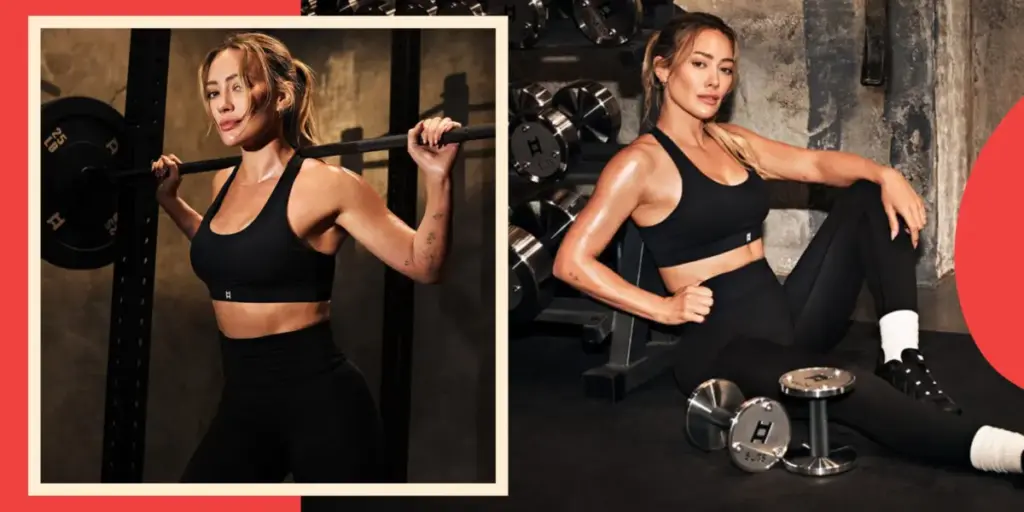
In an era dominated by rapid-fire wellness trends, aesthetic-driven weight loss culture, and restrictive quick fixes, a powerful counter-movement is taking root. At its vanguard is actress, recording artist, and entrepreneur Hilary Duff, who earlier this year partnered with the premier fitness platform Ladder to issue a rallying cry for modern women everywhere: "Stronger, Not Smaller."
This mantra serves as much more than a clever marketing tagline for Ladder’s first-ever celebrity endorsement campaign. It is a profound philosophical shift—a rejection of the historical pressure placed on women to shrink, conform, and measure health through the limiting lens of a bathroom scale. For Duff, who is currently navigating the physical demands of her Lucky Me world tour, embracing this ethos meant trading cardio-centric exhaustion for the transformative power of heavy resistance training.
The campaign struck an immediate, visceral chord. Women across the globe flooded social media platforms with their own personal breakthroughs, triumphs, and transformations, proving that the desire to build functional, tangible strength is universal. In this comprehensive report, we examine the anatomy of the Duff-Ladder partnership, explore the physiological and psychological ripples of the "Stronger, Not Smaller" movement through exclusive insights from elite trainers, and analyze how the fitness industry is fundamentally rewriting the narrative around female empowerment.
Detailed Chronology: From Concept to Global Phenomenon
April: The Birth of a Movement
The partnership was officially unveiled in April, marking a monumental milestone for Ladder as the digital fitness platform launched its inaugural celebrity campaign. Duff, looking visibly empowered and athletic, stepped into the spotlight to champion strength training. To prepare for the grueling physical demands of the Lucky Me tour, Duff originally teamed up with Ladder coach Kelly Matthews, CPT. Under Matthews’ guidance, Duff immersed herself in heavy lifting, structural compound movements, and progressive overload.
As tour logistics evolved and travel demands increased, Duff transitioned to coach Elise Young’s "Team Elevate," a program optimized for travel due to its minimal equipment requirements. Yet, the foundational philosophy remained unchanged: heavy lifting is not just for building muscle; it is a vehicle for holistic empowerment.
The Social Media Shockwave
Within hours of the campaign’s launch, the digital landscape responded. Rather than posting traditional post-workout selfies emphasizing leanness, women began sharing videos of barbell squats, deadlifts, and kettlebell swings accompanied by the hashtag #StrongerNotSmaller. The campaign succeeded because it validated a silent frustration shared by millions of women: the exhaustion of perpetual dieting. Instead of asking how to lose five pounds, the dialogue shifted to: "How much weight can I safely move, and how capable can my body become?"
Months Later: Reflection and Sustained Momentum
Months after the initial rollout, the momentum has not slowed. Duff and the elite roster of Ladder trainers continue to unpack the cultural resonance of the campaign. The movement has transcended a seasonal advertising blitz, morphing into an enduring community standard that redefines how women approach aging, physical capability, and mental resilience.
Supporting Context & Metrics: The Science of Strength Training for Women
To truly understand why the "Stronger, Not Smaller" ethos has resonated so deeply, one must look at the science of resistance training and the historical context of women’s fitness culture.
Breaking Down the Biases
For decades, the fitness industry marketed to women using a specific playbook: pink, two-pound dumbbells, endless hours on the elliptical, and low-calorie diets designed to achieve a frail, linear aesthetic. The persistent myth warned that lifting heavy weights would cause women to "bulk up" instantly—a physiological impossibility for the vast majority of women due to lower baseline testosterone levels compared to men.
In reality, progressive resistance training offers unmatched health benefits:

- Metabolic Health & Body Composition: Lifting weights builds metabolically active lean muscle mass, which increases resting metabolic rate (RMR) and improves insulin sensitivity.
- Bone Density: High-load weight-bearing exercises stimulate osteoblast activity, mitigating the risk of osteoporosis—a condition that disproportionately affects women later in life.
- Injury Prevention & Functional Longevity: Strengthening posterior chain muscles, core stabilizers, and connective tissues protects joints and ensures functional independence across decades.
Hilary Duff’s Personal Transformation
For Duff, the pivot to lifting wasn’t merely about preparing for a high-intensity concert stage; it altered the very fabric of her daily life. Speaking candidly about her routine, Duff noted during the campaign’s launch:
"My training shifted more to strength training, and everything changed for me—how I feel, how I move, how I sleep, how I perform in every area of my life."
This multi-faceted improvement in sleep quality, cognitive performance, somatic awareness, and emotional regulation underscores why strength training is increasingly recognized by medical professionals as a frontline defense against modern stress and burnout.
Official Statements and Expert Perspectives
The true staying power of the "Stronger, Not Smaller" movement lies in the authentic voices driving it. Ladder’s top-tier coaching roster has integrated this philosophy into their daily lives, coaching methodologies, and parenting paradigms.
Lauren Kanski, CPT: Redefining Motherhood and Self-Image
Lauren Kanski, a senior founding coach at Ladder and a member of the Women’s Health advisory board, views the campaign through the deeply personal lens of motherhood. As a mother of two children under the age of two, Kanski understands the physical and mental toll modern life takes on women.
"‘Stronger, Not Smaller’ goes well beyond anything physical for me," Kanski shares exclusively. "As a mom of two under two, the example I set, especially for my daughter, is everything. Growing up, I was focused on shrinking myself to fit in, but when I found strength training, everything changed. On Ladder, I get to instill that mindset shift to thousands of women every day—just real strength training that works, no matter where they’re starting from."
Kanski’s testimony highlights a generational shift. By modeling strength rather than food restriction or aesthetic obsession, mothers are actively inoculating the next generation against toxic body image standards.
Kelly Matthews, CPT: Healing the Past, Protecting the Future
For Kelly Matthews, Duff’s pre-tour trainer and a prominent voice in functional fitness, the campaign serves as a form of restorative justice for her own relationship with fitness.
‘Stronger, Not Smaller’ is the decision I make every day when I choose to lift," says Matthews. "It’s the message I needed to hear 20 years ago, but never got. On Ladder, I get to coach women to lift heavy and build real, lasting strength. Strength training is permission to see what your body is capable of to heal it properly and test its limits. It’s healing a younger version of me and protecting a future one. That’s why I want every woman strength training."
Matthews captures the psychological core of the movement: lifting heavy weights acts as a physical reclamation of space, autonomy, and power. It shifts the primary question from "Do I look okay?" to "What can I achieve?"

Hilary Duff on the Power of Diverse Shapes
Reflecting on the overwhelming public response, Hilary Duff reiterates that true physical strength refuses to be forced into a single, narrow template.
"I loved the reaction to ‘Stronger, Not Smaller,’" Duff says in an exclusive interview with Women’s Health. "I love to move weights. I love to be strong. I love to feel strong, and that looks like many different shapes and sizes. It’s not powerful to want to shrink and be a smaller version of yourself, and spreading that word, I think, is really important."
Future Outlook: The Paradigm Shift in Modern Wellness
As the dust settles on the initial campaign launch, the long-term implications for the wellness and fitness industries are clear. The era of the "diet culture" ad campaign is facing a severe consumer backlash. Modern audiences, equipped with greater access to physiological science and wellness education, are actively demanding authenticity, inclusivity, and empowerment.
What Lies Ahead for Ladder and Community-Driven Fitness
Platforms like Ladder are proving that digital fitness can be more than just a series of isolated workouts streamed to a living room; it can cultivate a cohesive, values-driven community. By anchoring their brand identity to female empowerment and strength acquisition, Ladder has set a new benchmark for corporate responsibility in health tech.
Furthermore, the mainstream normalization of women lifting heavy weights will continue to dismantle institutional barriers in commercial gyms, athletic training facilities, and physical education curricula. As more public figures like Hilary Duff openly prioritize muscle mass, bone density, and functional capability over dangerous calorie deficits, cultural perceptions will continue to evolve.
Never Too Late to Start
The most encouraging takeaway from the "Stronger, Not Smaller" movement is its accessibility. Whether an individual is an elite touring performer like Hilary Duff, a busy mother navigating toddlerhood like Lauren Kanski, or someone stepping into a weight room for the very first time at age 40, 50, or beyond, the rules of muscle adaptation remain the same. The body responds to progressive challenge with resilience.
As Amy Wilkinson, contributing entertainment editor at Women’s Health and a comprehensively trained Pilates instructor, aptly notes: "And who wouldn’t want a little bit of that magic for themselves?!"
The journey toward true strength is lifelong, unyielding, and profoundly liberating. Through campaigns like this, the fitness industry is finally catching up to what women have always known: we were never meant to shrink. We were built to take up space—and to lift heavy while doing it.