Executive Overview
For decades, the high-octane world of Formula 1 was perceived through a singular, hyper-masculine lens: roaring V6 turbo-hybrid engines, sulfurous tire smoke, grease-stained pit lanes, and carbon-fiber aerodynamics. Fashion in the paddock was an afterthought—a functional uniform of team polo shirts, branded baseball caps, and weather-resistant utility jackets worn by engineers, mechanics, and drivers alike.
Today, however, the pit lane has undergone a radical stylistic metamorphosis. It has transformed into one of the most closely watched, fiercely contested fashion runways in global pop culture. Leading this sartorial revolution is a new generation of Formula 1 WAGs (wives and girlfriends), whose curated, high-fashion trackside appearances rival those seen at Paris Fashion Week or the Met Gala.
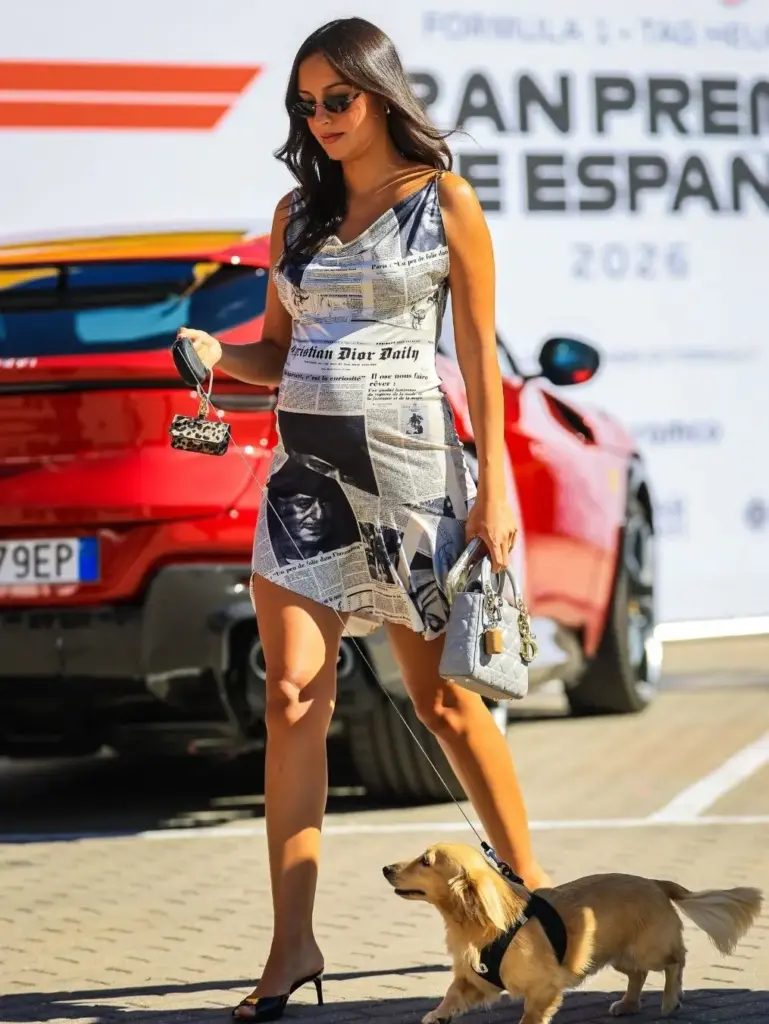
At the vanguard of this movement stands art historian, designer collaborator, and newly minted F1 royalty Alexandra Leclerc. Married to Ferrari icon Charles Leclerc in February—and currently expecting their first child—Alexandra has mastered the delicate art of blending high-octane athletic support with archival luxury and effortless street style. Her recent appearance at the Spanish Grand Prix in Madrid sent shockwaves through the fashion establishment. Striding down the asphalt in John Galliano’s legendary Dior newspaper-print slip dress from the fall 2000 collection, she firmly cemented her status as the undisputed queen of modern paddock aesthetics.
This in-depth report explores the intersection of motorsport and high fashion, tracing Alexandra Leclerc’s recent sartorial triumphs, the pop-culture pedigree of her wardrobe choices, and the broader socioeconomic shift that has turned Grand Prix weekends into essential dates on the global luxury calendar.
Detailed Chronology: A Weekend of Archival Mastery and Sparkling Debuts
To understand the magnitude of Alexandra Leclerc’s paddock influence, one must examine the precise timeline of her recent public appearances—a masterclass in building narrative tension through clothing.
The Monaco Prelude: Celebrating the Rhode Collaboration
The style narrative began in earnest just twenty-four hours before the engines roared to life in Madrid. In her home turf of Monaco, Leclerc celebrated the launch of her highly anticipated collaboration with fashion label Rhode.
Stepping out to host industry insiders, press, and friends, Leclerc bypassed traditional corporate launch attire in favor of a sugary, sparkly pink midi dress. The look was deliberately curated to mirror the shimmering formulations of her namesake beauty and lifestyle line—a collection featuring products intimately named after her personal world, including the beloved "Monaco" and "Gemini" Pocket Blushes. By wearing a garment that visually translated her commercial creative output, Leclerc proved her innate understanding of modern personal branding. The ensemble struck a chord with Gen-Z and millennial consumers alike, bridging the gap between tactile cosmetics and high-end ready-to-wear.
The Madrid Grand Prix: The Dior Newspaper Dress Moment
The following day, the scene shifted to the Spanish Grand Prix in Madrid. As Charles Leclerc prepared to extract maximum performance from his Ferrari machinery, Alexandra delivered a performance of her own in the paddock—one that immediately dominated fashion blogs, Instagram feeds, and X (formerly Twitter) style threads.

Leclerc chose an absolute holy grail of archival fashion: the bias-cut mini-dress in John Galliano’s infamous newspaper print from the Christian Dior Fall 2000 ready-to-wear collection. The dress, a postmodern masterpiece of tabloid-inspired textiles, immediately recalled memories of Carrie Bradshaw’s unforgettable television and film escapades.
To anchor the millennium-era statement piece, Leclerc paired the dress with modern and vintage luxury accessories:
- Footwear: Dolce & Gabbana leather mules that offered a sleek, polished foundation.
- Eyewear: Oval-shaped Miu Miu sunglasses that added an air of effortless, paparazzi-shielding cool.
- Handbag: A pristine white Lady Dior bag—her signature daytime companion.
- The Real Star: Her small dog, Leo, who served as the ultimate living accessory.
- The Personal Touch: A custom charm and carabiner clipped to her bag, sourced directly from her aforementioned Rhode accessories collection.
The look was a masterclass in styling contrasts: archival French couture paired with Italian tailoring, softened by dog-mom practicality and contemporary lifestyle collaborations.
Supporting Context & Metrics: The Anatomy of Paddock Fashion
The elevation of F1 fashion is not happening in a vacuum. It is the result of a deliberate, multi-year convergence of sports marketing, streaming media penetration, and luxury conglomerate positioning.
The Netflix Effect and Demographic Shifts
Historically, Formula 1 was guarded by an old-guard gatekeeping mentality. However, the runaway global success of Netflix’s docuseries Formula 1: Drive to Survive fundamentally altered the sport’s audience demographic. Today, over 40% of F1’s global fan base is female, and a significant percentage of new viewers tune in as much for the interpersonal drama and lifestyle glamour as they do for the technical engineering of the cars.
This demographic shift created an urgent commercial vacuum for elevated lifestyle content. Brands that previously ignored motorsport—ranging from independent Parisian labels to historic Italian luxury houses—began viewing the paddock not as a dusty garage, but as a premier global stage for product placement.
The Evolution of the F1 WAG Aesthetic
In this new ecosystem, modern F1 WAGs act as cultural directors. Unlike traditional sports partners who might blend into the background of a stadium suite, women like Alexandra Leclerc are active participants in the visual culture of the sport.
Leclerc’s style code over the past several months has been defined by a harmonious blend of floaty, feminine aesthetics, independent homegrown European brands, and untouchable luxury heritage pieces:

- The Italian Grand Prix: A polka-dot Marelea halter dress paired with a dramatic, fire-red Ferrari gown that nodded explicitly to her husband’s team colors.
- The Spanish Grand Prix Pre-Show: A pink flocked halter dress from visionary Spanish label Desigual, complemented by a slinky black Silvia Tcherassi co-ord.
By effortlessly moving between blue-chip heritage brands (Dior, Dolce & Gabbana, Miu Mian) and nimble regional designers (Desigual, Marelea, Silvia Tcherassi), Leclerc demonstrates a nuanced geographical styling approach. She honors the host country of each Grand Prix through her wardrobe choices—a diplomatic fashion strategy that has earned her widespread acclaim from European style critics.
The Pop-Culture Pedigree: Decoding the Galliano Dior Legacy
To truly appreciate the cultural weight of Leclerc’s Madrid outfit, one must contextualize the dress within the broader history of late-20th and early-21st-century fashion.
The Dior newspaper print—most famously worn by Sarah Jessica Parker as Carrie Bradshaw in Sex and the City (and later reprised in the cinematic sequel)—was originally introduced by John Galliano during his tenure as creative director at Christian Dior. Galliano’s Fall 2000 "Hobo Chic" collection caused immediate controversy and fascination upon its runway debut, drawing criticism from social commentators for romanticizing homelessness while simultaneously being embraced by fashion avant-gardists as a brilliant satire of modern media consumption.
When costume designer Patricia Field pulled the newspaper dress for Sex and she the City, it crossed over from runway spectacle into the permanent canon of pop-culture artifacts. For Alexandra Leclerc—an art historian by training—choosing this specific dress was no accident. It was an intentional intellectual statement, signaling that she views the paddock not merely as a workplace waiting room, but as a museum-worthy exhibition space for fashion history.
Official Statements and Industry Insights
The intersection of motorsport and high fashion has not gone unnoticed by industry leaders, designers, and cultural analysts.
In a recent roundtable discussion regarding the commercialization of sports lifestyle, luxury retail strategist Dr. Elena Vance noted:
"We are witnessing the death of traditional sports hospitality dressing. Consumers no longer want to see corporate logo fatigue. They want personality, narrative, and historical depth. Figures like Alexandra Leclerc are bridging high-art curation with athletic proximity in a way that generates immense organic engagement for luxury houses. When an archivist-approved piece like the Galliano Dior slip appears in an F1 paddock, it bridges two previously disparate consumer segments: motorsport enthusiasts and archival fashion collectors."
While representatives for Christian Dior declined to comment on private archival loans, insiders close to the styling team confirmed that vintage sourcing has become a priority for high-profile attendees looking to differentiate themselves in increasingly crowded paddock environments.

Furthermore, colleagues within the art history community have praised Leclerc for bringing curatorial discipline to her public wardrobe. Unlike fast-fashion trend-chasing, Leclerc’s selections—spanning vintage Dior, bespoke Rhode collaborations, and localized Spanish design houses—tell a coherent, chronological story of a modern woman navigating global travel, professional partnerships, and personal milestones.
Future Outlook: Where Racing Meets the Runway
As Formula 1 continues its aggressive expansion into new global markets—with expanded calendar slots in North America, the Middle East, and Europe—the economic stakes for trackside visibility will only escalate.
The Commercialization of Paddock Style
We can expect luxury conglomerates (LVMH, Kering, Richemont) to formalize partnerships with top-tier paddock influencers. Just as front-row seats at Milan and Paris Fashion Weeks are meticulously allocated to maximize earned media value (EMV), Grand Prix pit lanes are rapidly adopting similar VIP seating and styling hierarchies. Teams are beginning to realize that the visual output of drivers, partners, and guests generates millions of dollars in secondary media impressions that transcend traditional race-day broadcast metrics.
Alexandra Leclerc’s Expanding Influence
For Alexandra Leclerc, the future points toward an even deeper integration of design, art history, and lifestyle branding. With her Rhode collaboration proving to be a commercial success, and her growing family marking a new chapter in her personal life, her influence as a cultural tastemaker is firmly secured.
Whether she is cheering trackside in a historic Parisian slip dress or championing local artisans in Madrid and Monaco, Leclerc has permanently altered the visual vernacular of Formula 1. The paddock is no longer just a place where cars are tuned for speed; it is a dynamic, living gallery where fashion history is celebrated, reinvented, and projected to millions of viewers worldwide. The checkered flag may signal the end of the race, but for fashion historians and style enthusiasts alike, the paddock runway has only just begun its lap of honor.