Executive Overview
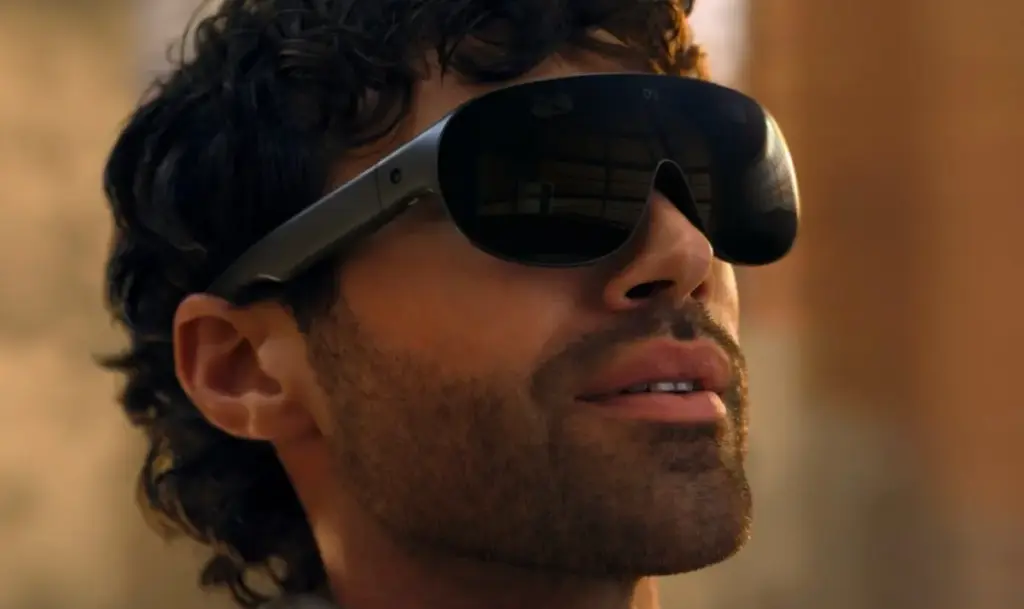
Meta is doubling down on its vision of spatial computing with the upcoming spring debut of its most ambitious hardware yet: the Meta VR Glasses. Priced at a premium $1,300, this new device arrives as a testament to the tech giant’s evolving hardware strategy, pivoting away from early missteps in purely virtual environments toward a sleek, content-rich wearable ecosystem.
Rather than relying solely on proprietary operating systems or isolated virtual worlds, Meta has cultivated an unprecedented roster of launch partners spanning entertainment, prestige streaming, and live sports. Major platforms like Prime Video, YouTube, Peacock, HBO Max, Paramount+, DIRECTV, AMC+, Crunchyroll, Plex, and Tubi will be available out of the box. Furthermore, sports enthusiasts will find a robust lineup featuring the NBA, MLB, ESPN, NBC Sports, TNT Sports, and UFC.
This hardware release is more than just another product drop; it represents a critical milestone in Meta’s ongoing "wearables renaissance." Following the expensive failures of early virtual spaces like Horizon Worlds—which cemented the company’s 2021 rebrand to "Metaverse-first" with a rocky start—Meta has fundamentally recalibrated its approach. By leaning into consumer-facing retail experiences, learning from high-fashion collaborations like its Ray-Ban line via EssilorLuxottica, and eyeing heavy-hitting creative partnerships with visionaries like James Cameron, Meta is positioning the Meta VR Glasses as a direct challenger to Apple’s Vision Pro and ByteDance’s Pico series.
However, commanding a $1,300 price tag requires more than third-party streaming apps. To achieve true market dominance, Meta must navigate fierce competition not just from hardware giants, but from entrenched virtual cultural phenomena like Roblox. This comprehensive report explores the trajectory of Meta’s hardware evolution, the engineering marvels and design compromises behind the upcoming glasses, the competitive landscape, and what the future holds for spatial entertainment.
Detailed Chronology: From "Metaverse-First" Missteps to the L.A. Flagship
To understand the strategic importance of the Meta VR Glasses, one must trace the winding and often turbulent path Meta has charted over the past half-decade.
The 2021 Rebrand and Early Setbacks
In October 2021, CEO Mark Zuckerberg made headlines worldwide by formally changing Facebook Inc.’s corporate name to Meta, signaling an all-in bet on the "metaverse." The early days of this pivot, however, were plagued by friction. The company’s flagship social VR application, Horizon Worlds, became emblematic of the hurdles facing early consumer adoption. Riddled with technical limitations, graphical jank, and high overhead costs, Horizon Worlds wound up as a high-profile, expensive failure that drew public skepticism and financial scrutiny.
Pivoting to the Physical: Pop-Ups to Flagship Retail
Realizing that virtual spaces could not sell themselves without accessible physical touchpoints, Meta executed a strategic pivot. The company recognized that consumers needed to feel and see wearable technology in person before dropping hundreds—or thousands—of dollars on spatial computing hardware.
This realization sparked a major retail expansion. Meta began rolling out pop-up stores dedicated to its Quest headsets and smart glasses, transforming theoretical digital concepts into tangible high street retail products. The momentum culminated late last year when Meta officially broke ground on its massive Los Angeles flagship VR and wearables store, creating a permanent cultural hub designed to showcase the full spectrum of its hardware ecosystem.
The Evolution of Design: Learning from Orion and Pico
The design philosophy powering the upcoming Meta VR Glasses draws heavily from lessons learned during past hardware iterations. Through its ongoing partnership with EssilorLuxottica SA—the parent company of Ray-Ban—Meta mastered the art of crafting sleek, socially acceptable, and genuinely fashionable smart glasses, most notably demonstrated by its advanced Orion line developments. Meta learned that consumers reject bulky, uncomfortable face-computers; form factor is just as vital as processing power.
At the same time, hardware engineering required pragmatic compromises. To keep the glasses themselves lightweight and comfortable for extended viewing sessions, Meta integrated a detached "puck" computing unit—a design philosophy visibly inspired by the competitive landscape, such as ByteDance’s Pico line of VR headsets. By offloading heavy processing elements to a pocket-sized external controller, Meta successfully minimized facial fatigue, setting a new ergonomic standard for heavy-duty media consumption devices.
Supporting Context & Metrics: The App Ecosystem and Market Dynamics
A high-end piece of spatial hardware lives and dies by its software library. Recognizing the software droughts that crippled previous VR iterations, Meta has secured a comprehensive matrix of launch partners to ensure day-one utility.
The Entertainment and Sports Lineup
The value proposition of a $1,300 device rests heavily on its ability to replace traditional entertainment setups. Meta’s launch partners cover the absolute spectrum of modern media consumption:
- SVOD & Premium Streaming: Prime Video, HBO Max, Paramount+, Peacock, AMC+
- Ad-Supported & Free Streaming: YouTube, Tubi, Plex, Crunchyroll
- Live TV & Aggregation: DIRECTV
- Live Sports Networks: ESPN, NBC Sports, TNT Sports
- Professional Leagues & Organizations: NBA, MLB, UFC
This deep content integration allows Meta to go toe-to-toe with the Apple Vision Pro ecosystem, bridging the gap between high-end productivity/media consumption and consumer-friendly accessibility.
The $1,300 Price Tag vs. The Cultural "Metaverse"
While the spec sheet and streaming partnerships justify a high-end price point for enterprise users and early adopters, Meta faces an existential hurdle that transcends hardware specs: cultural relevance.
As market studies have repeatedly demonstrated, the true primary vehicle through which everyday consumers experience the "metaverse"—often without realizing it—is Roblox, a free-to-play video game originally published in 2006. For millions of younger demographics, virtual identity, social spaces, and digital economies are anchored entirely within Roblox and, to a lesser extent, Fortnite.
Consequently, if Meta intends for its $1,300 glasses to become the definitive gold standard for immersive entertainment, pre-installed streaming apps will ultimately serve as mere table stakes. To capture the mass market, Meta will eventually need to transcend traditional media consumption and offer proprietary interactive spaces that rival the organic, user-generated gravity of platforms like Roblox.
Official Statements and Industry Perspectives
Industry analysts and company insiders view the spring launch as a make-or-break moment for Meta’s hardware division. While executive commentary during product briefings has emphasized "long-term investment in wearable products," external stakeholders are watching closely to see how the market reacts to another high-end spatial computing entry.
The James Cameron Factor
Perhaps the most intriguing wildcard in Meta’s long-term content strategy is its high-profile partnership with visionary filmmaker James Cameron and his Lightstorm production banner. Announced late last year, the collaboration aims to combine Meta’s cutting-edge spatial hardware with Hollywood-grade cinematic expertise.
While the initial wave of Meta VR Glasses will launch primarily on the back of traditional streaming apps and live sports, industry insiders anticipate that the partnership with Cameron will eventually supply the tech giant with the exclusive, mind-bending original content required to drive massive, mainstream cultural hype. In a statement regarding the ongoing collaboration, representatives emphasized that spatial computing is not merely an alternative screen, but an entirely new artistic medium requiring storytelling techniques that have yet to be invented.
Future Outlook: A Long-Term Investment in Wearables
As consumers catch their first official glimpses of the hardware via Meta’s preview channels, the conversation naturally shifts to the device’s long-term viability.
At $1,300, the Meta VR Glasses are explicitly not an impulse buy. They represent a significant financial commitment—one aimed at tech enthusiasts, early adopters, cord-cutters, and sports fanatics who want stadium-sized viewing experiences from their living rooms. By decoupling the processing power via a detached puck, leveraging high-fashion design lessons from the EssilorLuxottica partnership, and assembling an exhaustive roster of entertainment apps, Meta has engineered a device optimized for comfort and media consumption.
However, the true test of the Meta VR Glasses will occur months after the unboxing hype fades. Can a device anchored in cinematic streaming and live sports capture the imagination of a generation raised on user-generated sandbox games like Roblox? Can Meta leverage its partnership with James Cameron to produce native spatial narratives that redefine entertainment?
Answers to these questions will dictate whether the Meta VR Glasses are remembered as an expensive niche luxury or the turning point that finally normalizes wearable spatial computing for the mainstream masses. For now, consumers can inspect the hardware previews online and prepare for a spring release that will officially kick off the next major chapter in Meta’s ongoing hardware renaissance.