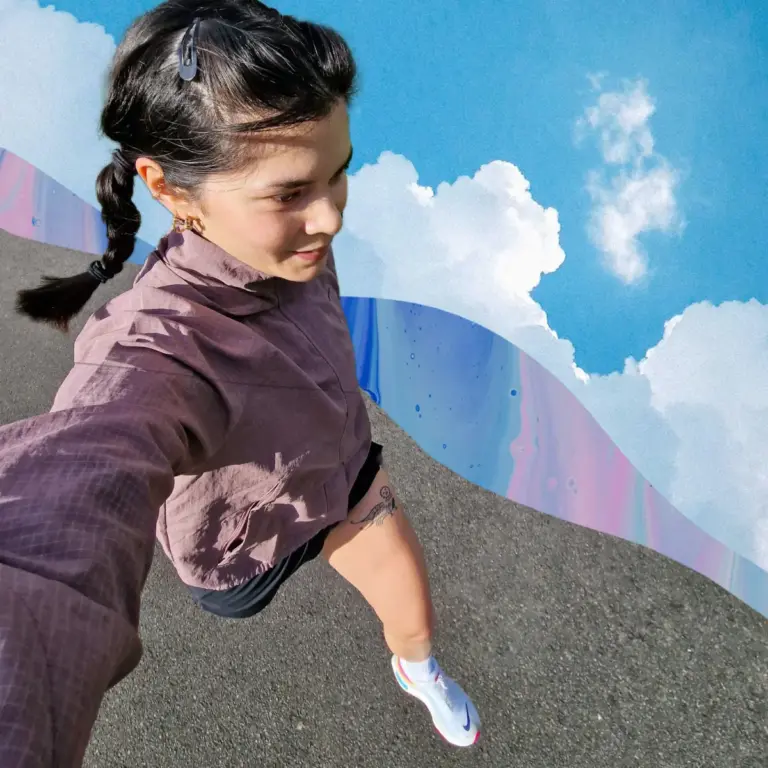
Twenty-five years ago, a crisp and cloudless September morning in Lower Manhattan shifted in a heartbeat from the mundane rhythms of commerce to an unprecedented landscape of national catastrophe. For Lori Coulter, then a 26-year-old entrepreneur attending a professional conference, September 11, 2001, began inside the World Trade Center Marriott. What followed was a harrowing, frame-by-frame descent into survival that would forever alter her psychological baseline and, decades later, inform her approach to corporate leadership as the co-founder and CEO of the direct-to-consumer apparel brand Summersalt.
In the immediate wake of the tragedy, Coulter retreated to her home in St. Louis and immediately committed her memories to paper. Unpolished, searingly raw, and intensely personal, this primary-source document remained largely unread by its author for a decade. It captured not only the staggering macro-level trauma of the deadliest terrorist attack on American soil—including the seismic impact of hijacked commercial airliners, the collapse of the Twin Towers, and the chaotic evacuation of lower Manhattan—but also the micro-level grace of ordinary citizens. Strangers interlocking arms, a teenager attempting to quell a panicked mob, and a Staten Island family welcoming a terrified refugee into their home defined her survival.
Today, looking back through the dual lens of a quarter-century and a seasoned executive, Coulter’s account offers more than a historical artifact. It serves as a profound meditation on human resilience, the architecture of uncertainty, and the unexpected ways trauma can recalibrate an individual’s relationship with risk, leadership, and crisis management.
Detailed Chronology: Inside the World Trade Center Marriott
The First Impact and the Hotel Lobby
On the morning of September 11, Coulter was inside the World Trade Center Marriott attending a conference breakfast. The first indication of disaster was not visual, but auditory and kinetic.
“The sound of chimes — no, it’s the thousands of three-inch-diameter cylinder pendant lights swaying back and forth, making an eerie, echo-like sound… Across the ballroom, tables full of dishes shake. The electricity flickers, and the pendant lights shift four feet… BOOM. BOOM.”
Panic immediately rippled through the room. Business executives scrambled for exits, driven by initial, confused hypotheses ranging from an earthquake to a bomb or an electrical fire. Pushing into the hotel lobby, Coulter encountered the first tendrils of smoke winding down the elevator shafts from the North Tower, located mere feet away.
Resisting the urge to panic, she moved toward the northwest corner of the building. Guided by a Marriott bellman, she stepped out into a surreal landscape. The streets of Lower Manhattan, normally buzzing with vehicular and pedestrian traffic, were abruptly empty, silent, and blanketed in a thick, chalk-white ash.
The Second Plane and the Decision to Flee
Exiting the hotel perimeter and heading west toward Liberty Street, Coulter confronted the grim realities of the attack: warped steel, mangled vehicles, and injured individuals staggering through the dust. Seeking refuge near the Hudson River, she processed the scene through a psychological defense mechanism of tunnel vision, focusing solely on the burning apex of 1 World Trade Center.
At that moment, a well-dressed stranger touched her shoulder, asking repeatedly if she was okay. Coming back to consciousness through his soft, grounded gaze, she affirmed her safety and pressed on.
Moments later, the auditory landscape changed dramatically.
“Above the sounds of the crowd, I hear a loud engine rumbling, as if accelerating. And from the crowd, ‘Oh my God, there’s a second one.’”
United Airlines Flight 175 tore across the skyline and slammed directly into the southeast corner of 2 World Trade Center. Coulter, standing barely a block away, felt the ferocious thermal radiation of the blast. The fiction of an industrial accident evaporated instantly; Manhattan was under coordinated attack.
Evacuation, the Coast Guard Facility, and the Staten Island Ferry
As the crowd surged south into Battery Park City, Coulter encountered a brief tableau of normalcy that underscored the surreal nature of the morning: a mother pushing a stroller, unaware of the impending collapse. But the illusion of safety was short-lived.
With a deafening roar, the South Tower began its catastrophic collapse. A towering, volcanic plume of black soot and pulverized concrete engulfed the southern tip of Manhattan. Driven by pure survival instinct, Coulter vaulted over park fencing and followed a desperate stream of evacuees toward the water.
Urged on by emergency personnel shouting, "Everyone to the water!", she navigated a narrow two-inch ledge along the perimeter of a Coast Guard facility, suspended four feet above the freezing Hudson River. Scaling a barbed-wire barrier with the help of makeshift scaffolding, she gained access to the ferry terminal.
Amid the suffocating, ash-choked air, a 17-year-old boy in a red mesh football jersey stood atop a platform, holding his hands up and repeatedly calling for calm to prevent a fatal crowd crush. When the Staten Island Ferry finally docked, Coulter and four young women she had met on the 56th floor of the World Trade Center locked arms, forming a human chain that ensured safe, orderly passage onto the vessel.
Supporting Context & Metrics: The Human and Economic Toll
The events witnessed by Coulter on September 11, 2001, remain the most lethal act of domestic terrorism in modern global history.
- Loss of Life: A total of 2,977 victims were killed (excluding the 19 hijackers): 2,463 in New York City (including 343 firefighters, 71 law enforcement officers, and private security personnel), 184 at the Pentagon, and 40 in Shanksville, Pennsylvania.
- The Economic Shock: The destruction of the World Trade Center complex wiped out approximately 30% of office space in Lower Manhattan. New York City’s economy lost an estimated $30 billion to $36 billion in economic output over the subsequent two years, while the national airline industry suffered catastrophic losses that required federal intervention.
- Infrastructure Strain: In the immediate aftermath, hundreds of thousands of commuters were evacuated via an unprecedented maritime armada—utilizing ferries, tugboats, and private yachts—in what became the largest waterborne evacuation in history, surpassing the evacuation of Dunkirk.
Official Statements and Institutional Reflection
In the decades following the attacks, federal, state, and municipal institutions have continuously adapted their emergency preparedness frameworks. The creation of the Department of Homeland Security, the establishment of the Office of the Director of National Intelligence, and the complete overhaul of inter-agency intelligence sharing fundamentally altered the American security architecture.
Reflecting on the psychological legacy of that day, public health officials have noted a permanent shift in how collective trauma is monitored and treated. First responders and survivors alike faced unprecedented rates of respiratory illness, post-traumatic stress disorder (PTSD), and associated long-term health complications, leading to the eventual passage of the James Zadroga 9/11 Health and Compensation Act.
Yet, beyond the statistical metrics of recovery, the most enduring commentary on September 11 remains anchored in the spontaneous heroism of ordinary citizens. The actions of individuals like John and Ann—the Staten Island family who took in an ash-covered, traumatized stranger without hesitation—stand as a testament to institutional resilience operating at its most elemental, human level.
Future Outlook: Translating Crisis into Corporate Resilience
For Lori Coulter, the journey from the World Trade Center Marriott to the helm of Summersalt represents a profound evolution in how trauma is metabolized into leadership philosophy.
For years, Coulter struggled to reconcile her hyper-personal memories with the global tragedy broadcast on television screens worldwide. However, the psychological proximity to absolute uncertainty ultimately reframed her tolerance for risk.
“Entrepreneurship asks you to move forward before you have every answer. You make decisions with incomplete information. Sometimes the plan works. Sometimes it does not. Sometimes you have to start over. Surviving September 11 made me less afraid of failure and more willing to believe that… you can rebuild when you have to.”
As modern business leaders navigate an era defined by macroeconomic volatility, geopolitical instability, and rapid technological disruption, Coulter’s trajectory offers a vital blueprint. True resilience is not born from the absence of risk or the illusion of absolute control; rather, it emerges from the willingness to act decisively in the face of incomplete information, anchored by an unshakeable faith in human collaboration.
Twenty-five years later, the eerie sound of the pendant lights swaying like chimes and the haunting plume of smoke over the Hudson River remain vivid. But they are no longer merely symbols of destruction—they are enduring reminders of the capacity to rebuild, adapt, and lead with purpose when the unthinkable occurs.