Executive Overview
In the rapidly evolving landscape of contemporary fashion, few independent labels have captured the cultural zeitgeist quite like Tanner Fletcher. Founded by the dynamic creative duo Tanner Richie and Fletcher Kasell, the cult genderless brand has transitioned from an underground darling into a formidable commercial force. At their recent New York Fashion Week presentation—hosted intimately within their downtown Manhattan showroom—the designers offered attendees more than just a glimpse of their latest apparel; they unveiled a comprehensive vision for a burgeoning lifestyle empire.
The brand’s trajectory has been nothing short of meteoric. Following their recognition as finalists in the prestigious 2023 CFDA/Vogue Fashion Fund program, Tanner Fletcher has steadily expanded its footprint, buoyed by critical acclaim and high-profile celebrity endorsements from global style icons like Ariana Grande and Bad Bunny. However, the true catalyst for the brand’s exponential financial acceleration has been an unexpected yet perfectly timed pivot: the bridal industry.
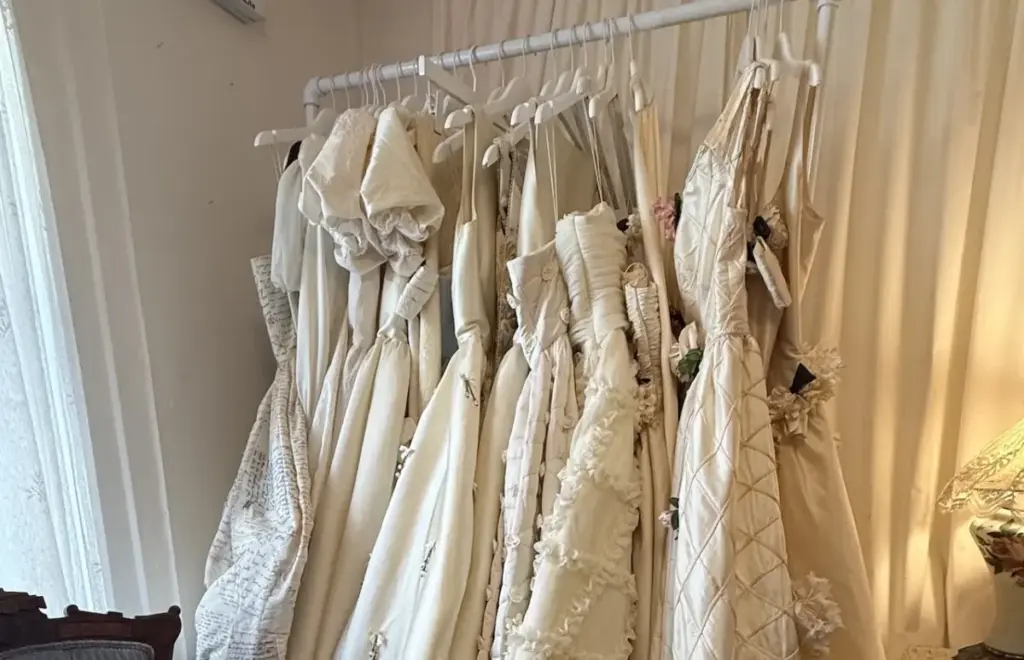
Originally introduced as a one-off capsule in 2024, Tanner Fletcher’s unconventional, gender-neutral approach to wedding attire has completely captured the market’s imagination. Infused with playful design elements—such as oversized structural bows, cheeky tailoring, and vibrant, non-traditional color embellishments—the bridal line has transformed the brand’s economic foundation. Today, wedding attire accounts for a staggering fifty percent of Tanner Fletcher’s total business.
As Richie and Kasell look toward the horizon, their ambitions extend far beyond tailoring and gowns. With plans to scale their lifestyle offerings, expand into new categories like swimwear and homeware, and maintain a fiercely protected direct-to-consumer (DTC) retail model, Tanner Fletcher stands as a masterclass in modern fashion entrepreneurship. Operating entirely without external institutional backing thus far, the brand is actively charting a course toward sustainable, high-margin growth while meticulously preserving the artistic vision that built its foundation.
Detailed Chronology: From Underground Collective to NYFW Powerhouse
The story of Tanner Fletcher is rooted in a shared creative vision between Richie and Kasell, who set out to dismantle the archaic binaries traditionally dividing menswear and womenswear. From its inception, the brand positioned itself at the intersection of nostalgia and modern fluidity, drawing inspiration from vintage aesthetics while continuously subverting them for contemporary consumers.
The Foundation and Early Breakthroughs
In its early years, Tanner Fletcher operated within the tight-knit circles of independent New York design talent, slowly building a cult following through meticulous craftsmanship and an uncompromising aesthetic. The garments—characterized by relaxed silhouettes, lace details, retro knits, and gender-neutral proportions—resonated strongly with a generation of consumers rejecting traditional fashion constraints.
A monumental turning point arrived when the Council of Fashion Designers of America (CFDA) and Vogue recognized the brand’s potential, naming Richie and Kasell finalists in the 2023 CFDA/Vogue Fashion Fund. This achievement catapulted Tanner Fletcher onto the national stage, granting them invaluable mentorship, industry-wide visibility, and the institutional validation needed to court larger retail opportunities. Soon after, the brand’s distinctive pieces began appearing on some of the world’s most visible pop culture icons, including Ariana Grande and Bad Bunny, cementing Tanner Fletcher’s status as a brand capable of bridging avant-garde design with mainstream cultural resonance.
The Bridal Disruption
Despite critical praise for their ready-to-wear collections, the defining moment of the brand’s commercial history occurred in 2024 with the introduction of their inaugural bridal collection. For decades, the wedding apparel market had remained largely stagnant, dominated by traditional heteronormative conventions, risk-averse silhouettes, and rigid gender expectations.
Recognizing a glaring void in the market for individuals seeking expressive, unconventional, and gender-inclusive wedding attire, Richie and Kasell launched a collection that defied every bridal cliché. Incorporating dramatic oversized bows, eccentric tailoring, and colorful embellishments, the line resonated instantly with modern couples who felt alienated by conventional bridal boutiques.
What was initially conceived as a limited, one-off experiment quickly morphed into the lifeblood of the company. Within two years of its debut, the bridal category ballooned to represent half of Tanner Fletcher’s overall business. Today, the challenge is no longer generating interest, but rather keeping pace with astronomical consumer demand.
The New York Fashion Week Presentation
At their recent Monday afternoon presentation during New York Fashion Week, Richie and Kasell chose to forego the traditional chaotic runway format in favor of an intimate downtown Manhattan showroom experience. Surrounded by an eclectic curation of vintage decor—ranging from mid-century candlesticks to antique home goods—attendees were treated to a multi-sensory environment that underscored the brand’s lifestyle ambitions.
The presentation showcased a seamless blend of funky tailoring, expanded swimwear options, and cornerstone pieces from their runaway bridal success. By inviting buyers, press, and celebrity stylists into a curated world rather than a fleeting ten-minute catwalk show, Tanner Fletcher reinforced their identity not merely as clothing designers, but as arbiters of a distinct aesthetic lifestyle.
Supporting Context & Metrics: Navigating Business Models and Market Dynamics
Behind the whimsical aesthetics and viral celebrity moments lies a rigorously calculated business strategy. As independent designers operating in an increasingly volatile global economic climate, Richie and Kasell have made deliberate choices regarding retail distribution, funding, and inventory management.
The Direct-to-Consumer (DTC) Strategy
While many contemporary labels rely heavily on wholesale partnerships to scale quickly, Tanner Fletcher has deliberately charted a different course. Wholesale accounts for approximately 20 percent of their business, distributed through select high-end partners such as Shopbop, Nordstrom, Revolve, and boutique stockists. However, the lion’s share of their operations is anchored in a direct-to-consumer model.
This strategic preference for DTC is driven by several economic and operational advantages:
- Brand Control: Operating directly allows the founders to curate the entire consumer journey, ensuring that the physical presentation, customer service, and digital experience align flawlessly with the brand’s ethos.
- Margin Preservation: With bridal products typically retailing for several thousand dollars per piece, maintaining control over pricing structures safeguards healthy profit margins without the margin-squeezing pressures imposed by traditional department store markups.
- Risk Mitigation: In an era defined by supply chain unpredictability, fluctuating consumer spending, and the financial vulnerability of various wholesale partners, avoiding over-reliance on third-party retailers shields the brand from systemic industry shocks.
The Vintage Synergy and Retail Experience
A unique operational quirk of Tanner Fletcher is its seamless integration of vintage sourcing alongside its primary garment manufacturing. The founders have long been passionate collectors of antique fashion and interior decor, elements they sell directly alongside their original collections.
This dual-revenue approach has created an organic cross-pollination within their retail ecosystem. It is remarkably common for a customer to enter their retail space or digital storefront seeking a non-traditional wedding dress or a statement suit, only to exit with an authenticated vintage candlestick or mid-century home accent. This strategy not only enhances average order values (AOV) but also solidifies the brand’s identity as an authority on curated taste.
Official Statements and Founder Insights
The philosophies driving Tanner Fletcher are articulated most clearly by its co-founders, whose candid reflections on the realities of independent fashion provide a masterclass in pragmatic creativity.
Addressing the accidental genius of their bridal expansion, Fletcher Kasell highlighted the profound lack of imagination historically plaguing the wedding industry:
"It was the perfect niche market for us to find. With weddings, everything has looked the same for decades. There weren’t a lot of good options for people looking for something more interesting."
This sentiment of market disruption extends to how the brand manages its manufacturing constraints. Kasell noted the relentless operational pressure required to keep up with wedding season demand, viewing it as a welcome challenge that validates their core thesis: consumers are desperately seeking alternatives to the status quo.
On the retail front, Tanner Richie detailed the rationale behind prioritizing direct-to-consumer sales over aggressive wholesale expansion:
"Wholesale has remained around 20% of our business, and we love our wholesale partners like Shopbop, Nordstrom, Revolve, some smaller boutiques. But we’re really putting our eggs in the DTC basket. That’s what’s working best for us right now. We have more control of the experience and the price point [most bridal products sell for a few thousand dollars each]. And especially with the climate today, there’s a lot of risk involved in working with wholesale, so you have to really trust your partner."
Perhaps the most revealing commentary involves the brand’s financial independence and future scalability. Having bootstrapped Tanner Richie and Fletcher Kasell to international recognition without outside institutional investment, the founders are pragmatic about the hurdles of scaling without compromising their creative autonomy. Kasell summarized the delicate dance between financial growth and artistic preservation:
"It’s a hard conversation because scalability is dependent on funding. We need the right partner. We have a lot of goals, but goals cost money. The business has great potential for profitability, so it’s just a matter of doing that while maintaining our vision for the brand. The vision is the most important part, and that needs to be protected beyond anything else."
Future Outlook: Building a Lifestyle Empire
As Tanner Fletcher looks toward the future, the roadmap is defined by deliberate expansion into adjacent categories while fiercely guarding the cultural integrity that brought them to this juncture.
Expanding Categories: Beyond Apparel
The recent New York Fashion Week presentation offered clear indicators of where the brand is heading next. Swimwear, introduced as part of their seasonal lineup, is poised for dedicated expansion, offering consumers more touchpoints throughout the calendar year. More importantly, the founders have hinted at ventures into categories "other than fashion."
Given the enthusiastic consumer response to their curated vintage home decor and interior objects, a formal homeware or lifestyle goods division appears to be a natural evolutionary step. By transforming Tanner Fletcher into a lifestyle brand—encompassing apparel, ceremonial wear, swimwear, and home goods—Richie and Kasell are constructing a totalizing aesthetic universe akin to historic luxury houses, yet firmly rooted in modern, gender-fluid sensibilities.
Navigating Investment and Growth
The primary operational hurdle facing Tanner Fletcher moving forward is financial scalability. While bootstrapping has preserved their creative freedom thus far, capturing the full extent of the global bridal and lifestyle market will inevitably require strategic capital injection.
For venture capitalists and private equity firms eyeing the independent fashion space, Tanner Fletcher presents an enticing proposition: a proven, highly profitable niche (bridal), an engaged and loyal consumer base, high average order values, and cultural credibility validated by A-list celebrity endorsements. However, any prospective financial partner must navigate Richie and Kasell’s unwavering commitment to brand protection. For these designers, capital is merely a tool to amplify their vision, never a mechanism to dilute it.
Conclusion
Tanner Fletcher’s journey from a nascent genderless clothing line to a dominant bridal disruptor and emerging lifestyle brand is a testament to the power of authentic design meeting undeniable market demand. By identifying a complacent wedding industry and injecting it with humor, high-fashion tailoring, and absolute inclusivity, Richie and Kasell have secured their place as industry innovators. As they weigh future funding opportunities and prepare to scale their operations across new product categories, Tanner Fletcher remains a shining example of how independent modern labels can achieve commercial triumph without sacrificing their soul.