Executive Overview
HBO’s prestige sci-fi-noir drama Lanterns has consistently subverted traditional superhero tropes since its debut, leaning heavily into cosmic mystery, psychological tension, and gritty terrestrial stakes. However, the fifth episode of the series shatters expectations entirely, dismantling one of its primary antagonist factions and forcing its central protagonists—Hal Jordan and John Stewart—to confront the crushing weight of their choices.
In a narrative masterstroke that blurs the lines between justice and vengeance, Episode 5 delivers a barrage of high-stakes developments: the dramatic downfall of Rushville’s deeply entrenched power players, the visceral execution of the Manhunter Zoe, and a staggering climax that sees John Stewart reject the very power source that defines the DC Universe’s cosmic peacekeeping force.
As the dust settles on Rushville, audiences are left grappling with profound moral questions. Was Zoe’s death a necessary sacrifice for the greater good, or a cold-blooded assassination born of deception? Why did John Stewart, having secured the ultimate prize, deliberately strip off the Green Lantern ring and walk away? This deep-dive investigative breakdown examines the monumental events of Lanterns Episode 5, analyzing the character motivations, behind-the-scenes insights from the cast, and the far-reaching implications this episode holds for the broader DC television and film landscape.
Detailed Chronology: The Fall of Rushville and Zoe’s Demise
The narrative arc of Lanterns Episode 5 operates like a tightly wound clockwork mechanism, moving inexorably toward a blood-soaked and emotionally complex climax. From the opening moments, the fragile alliances holding Rushville together begin to fray under the relentless pressure applied by veteran cosmic cop Hal Jordan (Kyle Chandler) and pragmatic newcomer John Stewart (Aaron Pierre).
The Decoy and the Betrayal
For weeks, William Macon (Garret Dillahunt) and his shadowy inner circle have operated with impunity, shielding their clandestine operations behind a veneer of small-town normalcy. However, Episode 5 forces Macon and his crew into reactive defense mode as the cosmic net tightens. In a tragic display of loyalty and self-preservation, Macon attempts to act as a physical decoy to buy time for his wife, Zoe (Poorna Jagannathan). Macon’s noble, albeit doomed, effort ultimately ends in his own demise—a grim punctuation mark on his crusade. Yet, his sacrifice is rendered bitterly ironic by the actions of the woman he sought to protect.
Zoe, operating with the cold calculus of an immortal machine intelligence wrapped in human skin, has spent episodes manipulating those around her. Earlier in the episode, she strikes a tactical contract with Kerry (played by Kelly Macdonald), echoing the very same transactional nature she brings to her dynamic with John Stewart. Having previously seduced John—twice, despite her marriage to Macon—Zoe leverages the promise of life-saving, miraculous technology to broker a temporary alliance, believing herself to be the undisputed master of every room she enters.
The Sniper’s Bullet and the Heart of the Matter
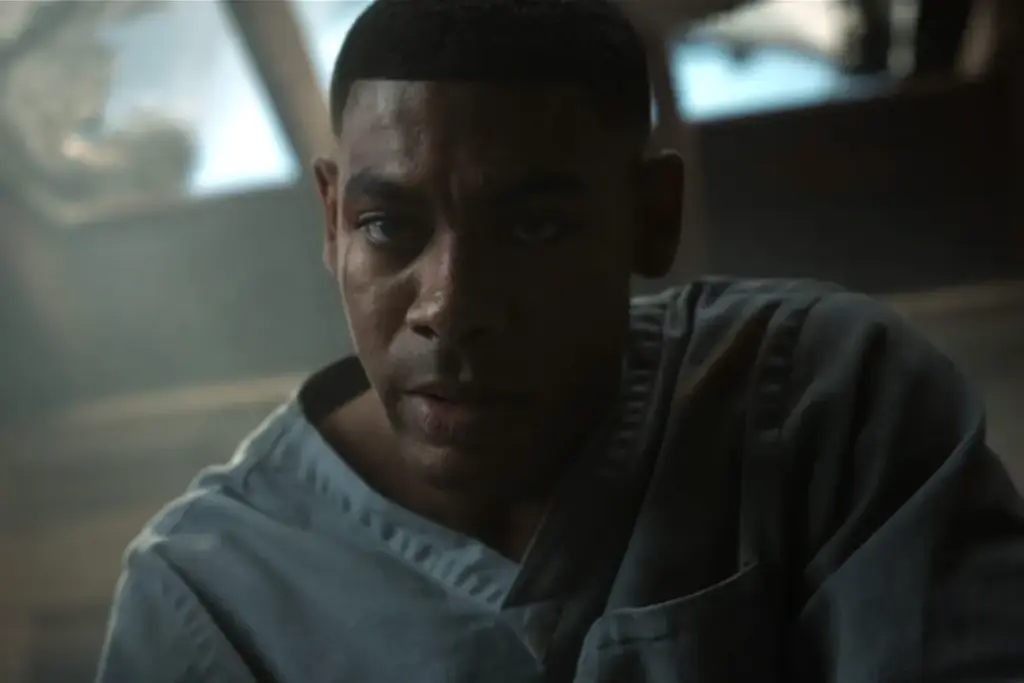
John Stewart, however, is not a man easily cornered by psychological warfare. While Zoe believes she has successfully co-opted John onto her "side," the former Marine and tactical operative is playing a much deeper, more dangerous game. In a breathtaking sequence, John uses Hal Jordan as living bait, luring Zoe into a false sense of security before springing the ultimate trap.
Positioned behind a sniper scope, John watches Zoe realize, for perhaps the first time in her existence, that she has been thoroughly outmaneuvered. Before she can deploy her usual arsenal of manipulation, John’s expert marksmanship brings her down. But a bullet to the chest is not enough to satisfy the demands of cosmic justice. In a brutal, visceral validation of his mission, John closes in and physically cuts Zoe’s crystalline heart out of her body—a grisly trophy intended to be presented directly to the Guardians as proof of the threat’s neutralization.
Official Statements & Cast Insights: Humanizing the Machine
To understand the weight of Zoe’s death, one must look beyond the physical violence and examine the psychological architecture built by actress Poorna Jagannathan. In an exclusive interview conducted last month, Jagannathan reflected on the complex duality of her character and why she embraced the nuanced villainy written into the script.
Poorna Jagannathan on the Tragedy of Zoe
"I think it humanizes Manhunters," Jagannathan explained, discussing how audiences might feel a surprising pang of sympathy as they watch the character’s final moments unfold. "She is technically ‘the villain,’ but then you get a glimpse of who she is and why she is who she is: a victim of the Guardians, and a victim of the programming that she comes from."
Jagannathan praised the writers for steering clear of simplistic, black-and-white morality. "I thought that the role was written with a lot of compassion… I do think at the end, her survival is tantamount to—she puts that above everything else—hence destruction ensues wherever she goes. Because she’s always under threat and she will always survive, and has always survived until now."
When asked about Zoe’s final psychological state—specifically the sly, almost imperceptible smile she flashes John through his sniper scope right before her execution—Jagannathan offered a fascinating window into the character’s ego.
"She’s always been the smartest person in any situation," Jagannathan noted. "She made that contract with Kerry, and she made that same contract with John: ‘I can help you. I can heal you. I can save you. Do you want to heal?’ And he says, ‘Yes.’ So she’s made that contract, and no one has ever broken that contract because life is so precious to everyone, right? When you give someone back their life, you’re so indebted. So to meet someone who has outmaneuvered her, it’s quite a moment."
Garret Dillahunt’s Dark Humor
Offering a starkly different reaction to the carnage, Garret Dillahunt leaned into the dark irony of his character’s fate and his on-screen wife’s demise. When DECIDER brought up the lethal conclusion of Zoe’s storyline, Dillahunt deadpanned with characteristic wit:
"Shouldn’t have cheated on your husband."
Supporting Context & Metrics: The Weight of the Ring
The climax of Episode 5 does not stop at Zoe’s execution; it pivots immediately into an existential crisis regarding the Green Lantern Corps itself.
Following the elimination of the Manhunter threat, John Stewart recovers not only the crystallized heart of his victim but also the coveted Green Lantern ring stripped from Hal Jordan. Armed with these two items, John rendezvous with the Guardian (portrayed by Laura Linney) in the heart of Rushville. While the Guardian expects a triumphant debriefing—operating under the assumption that the mission was a straightforward win for the Corps—John delivers a shattering psychological blow.
Instead of feeling the surge of divine authority, cosmic pride, or unyielding power traditionally associated with the ring, John experienced absolute emptiness upon slipping it onto his finger.
The Breakdown of Hal Jordan
John’s indictment of the Corps and his fallen mentor is scathing. As he hands over the evidence, he lays bare the rot at the core of Hal Jordan’s obsession:
"Hal betrayed everything to keep this ring. His code, the oath, even himself, and it broke him. Probably doesn’t even remember why he wanted the damn thing."
With those words, John quietly slips the ring off his finger, dropping it away with the finality of a man discarding a toxic infection:
"And neither do I."
This pivotal metric of character motivation reframes the entire narrative of Lanterns. The ring is no longer a symbol of heroic ascension; in the gritty, grounded lens of HBO’s storytelling, it is revealed as an emotional vacuum that hollows out its hosts, demanding absolute compliance while stripping away their fundamental humanity.
Future Outlook: Implications for the DC Universe
The ramifications of John Stewart’s rejection of the ring echo far beyond the borders of Rushville. For years, continuity-minded fans of DC’s multimedia projects have attempted to map out the placement of the Green Lanterns across various cinematic and television properties set in the 2020s.
Solving the Continuity Puzzle
Keen-eyed observers will immediately recognize how this ending neatly resolves a long-standing continuity question regarding the absence of John Stewart as Earth’s primary active Green Lantern in contemporary DC projects like Peacemaker and James Gunn’s cinematic universe. In those properties, the mantle of Earth’s resident ring-slinger falls to Guy Gardner (played by Nathan Fillion).
If John Stewart actively chose to walk away from the power, rejecting the Guardians’ mandate after witnessing the psychological degradation it inflicted on Hal Jordan, his absence from the frontline of cosmic defense suddenly makes perfect sense. He is not missing, incapacitated, or dead—he is exercising conscious free will, choosing his own moral compass over the cold, authoritarian bureaucracy of Oa.
What Lies Ahead for Hal and John?
As Lanterns heads into the second half of its season, the psychological fallout for both Kyle Chandler’s Hal Jordan and Aaron Pierre’s John Stewart will undoubtedly dictate the narrative trajectory. Hal is broken, stripped of his power, and emotionally dismantled by his compromises. John, meanwhile, has proven that he possesses the tactical brilliance to outwit immortal intelligence, yet he remains deeply skeptical of the cosmic powers that seek to draft him into their endless wars.
Will the Guardians accept John’s refusal, or will they dispatch further enforcers to retrieve the ring? Can Hal Jordan find redemption outside the Corps, or is he doomed to wander as a relic of a failed mission? And as the secrets of Rushville continue to unravel, what other cosmic horrors lurk beneath the tranquil surface of small-town America?
One thing is certain: Lanterns has permanently altered the landscape of DC television, proving that true heroism often begins the moment you take the ring off.