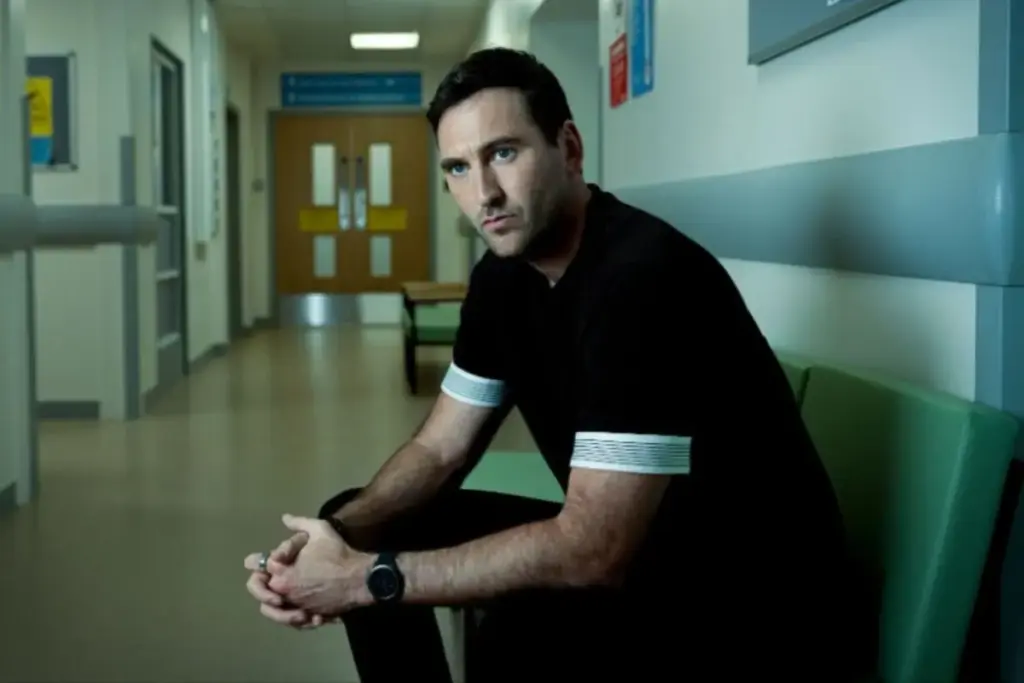
In a bold and socially impactful narrative shift, Coronation Street has turned its dramatic lens toward a critically underrepresented medical issue: male breast cancer. At the center of this pioneering storyline is actor Jacob Roberts, whose character, Kit Green, is diagnosed with stage three of the disease.
The plotline unfolds after the Green family discovers they may carry a hereditary BRCA gene mutation following the tragic death of Kit’s estranged aunt, Celeste. Far beyond a standard medical drama arc, this narrative delves deeply into the complex interplay between physical deterioration, the psychological burdens of traditional masculinity, and the ripple effects of a life-altering diagnosis on family dynamics.
For Roberts, bringing this storyline to life has required extensive preparation, close collaboration with advocacy groups, and a striking physical transformation. Speaking at the National Television Awards, the actor emphasized the vital need to dismantle the perception that breast cancer is exclusively a women’s health issue.
By partnering with prominent organizations such as Macmillan Cancer Support and Breast Cancer Now, Coronation Street aims to bridge a dangerous knowledge gap. Because male breast cancer accounts for less than one per cent of all UK breast cancer cases, public awareness remains critically low. Consequently, men frequently miss or misinterpret early warning symptoms, resulting in delayed diagnoses and disproportionately higher mortality rates. Through Kit Green’s journey, the soap opera is not only crafting compelling television, but it is also potentially saving lives by bringing a hidden crisis into the national spotlight.
Detailed Chronology: The Unfolding of Kit Green’s Diagnosis
The Catalyst: Familial Risk and the Shadow of Hereditary Genetics
The narrative groundwork for Kit Green’s harrowing journey begins away from the cobblestones of Weatherfield, triggered by the death of his estranged aunt, Celeste. In the wake of her passing, the Green family is forced to confront a grim medical reality: the potential presence of a familial BRCA gene mutation.
Mutations in the BRCA1 and BRCA2 genes are widely recognized for significantly increasing the risk of breast and ovarian cancers. While public discourse has historically focused on women carrying these defective genes, men who inherit them face elevated risks of developing not only prostate and pancreatic cancers, but also male breast cancer.
For Kit, initial encounters with the news are met with profound skepticism and ignorance. Mirroring widespread societal misconceptions, the character initially assumes that breast cancer is an impossibility for a man. This mirrors Roberts’s own initial understanding before diving into the role. The storyline meticulously documents this initial phase of shock, moving from denial to the sobering realization that genetic predisposition respects neither gender nor preconceived notions of health.
The Medical Reality: Confronting Stage Three Disease
As the narrative progresses, Kit’s screening results confirm a diagnosis of stage three male breast cancer. A stage three diagnosis indicates that the cancer has advanced locally, potentially spreading to nearby lymph nodes or tissues, and demanding aggressive, multi-modal medical intervention.
The storyline moves past a simple diagnosis reveal to examine the grueling day-to-day reality of intensive cancer treatment. Roberts noted that the character’s physical deterioration becomes a central element of the narrative. Kit is forced to watch his body weaken, robbing him of his physical independence and stamina.
The progression of the storyline details the exhaustion of medical appointments, the visceral shock of physical changes, and the heavy burden placed on personal relationships as Kit attempts to navigate his new reality. Rather than glossing over the medical realities for dramatic convenience, Coronation Street’s production team has leaned heavily on medical advisors and cancer charities to ensure accuracy in depicting the grueling nature of stage three cancer therapies.
The Psychological and Emotional Toll: Redefining Masculinity
Perhaps the most poignant aspect of Kit’s journey is the psychological battle he wages against his own ego and societal expectations of manhood. Speaking candidly about his character’s internal struggle, Jacob Roberts highlighted how the disease directly attacks Kit’s sense of masculinity.
"I think it affects his masculinity, and I think he struggles with that. He’s just deteriorating and he can’t do the things he wants to do. And having a bit of an ego about himself, you’ll see that gradually change."
For a character accustomed to projecting strength, control, and self-reliance, the vulnerability required to confront a life-threatening illness is shattering. Kit’s initial instinct is to push people away, masking his fear behind frustration and a stubborn refusal to accept help.
The narrative explores how male socialization often discourages men from acknowledging bodily changes, expressing vulnerability, or seeking timely medical help. Kit’s emotional arc requires him to strip away his protective armor, confronting the reality of his mortality and learning to lean on a support system he would typically reject.
Supporting Context & Metrics: The Hidden Crisis of Male Breast Cancer
Statistical Overview and the Awareness Gap
To understand the cultural importance of Coronation Street’s storyline, one must examine the stark epidemiological data surrounding male breast cancer. According to medical data in the United Kingdom, male breast cancer is exceptionally rare, accounting for less than one per cent of all diagnosed breast cancer cases annually.
Because of this statistical rarity, the illness is virtually absent from mainstream health messaging, educational campaigns, and public consciousness. This invisibility creates a dangerous environment. When symptoms do appear—such as a painless lump behind the nipple, nipple retraction, skin dimpling, or discharge—men frequently dismiss them, attributing the changes to harmless chest muscle issues or gynecomastia (benign enlargement of breast tissue).
The consequences of this awareness gap are severe:
- Delayed Presentations: Men typically present to their general practitioners at a much later stage of the disease compared to women, often because they do not recognize the early warning signs.
- Advanced Staging at Diagnosis: By the time a diagnosis is confirmed, the cancer has often progressed to a more advanced stage, limiting treatment options and complicating prognoses.
- Higher Mortality Rates: Due to late-stage detection and a lack of gender-specific clinical trials, survival rates for men lag behind those of women facing the same disease.
Actor Preparation and Physical Transformation
Commitment to authenticity has been a hallmark of this storyline from its inception. Jacob Roberts undertook exhaustive research, consulting extensively with medical professionals, breast cancer charities, and actual male survivors of the disease.
"Speaking to the charities and male survivors has been really insightful, lots of men don’t know they can get this and, for Kit, it’s that utter disbelief of how can this be? Not only for his age, but how can I have this as a bloke and who else in the family could be affected."
Beyond mental and emotional preparation, Roberts made a dramatic physical commitment to the role by shaving his head. While producers did not mandate the hair loss for the character’s specific treatment phase at that exact moment, Roberts felt it was a necessary step to honor the reality of the narrative.
"I was kind of a bit nervous about it, but they never told me to shave it," Roberts recalled. "And I thought for the story, I think we need to… yeah, you know. It’s nothing, you know? It’s just hair at the end of the day. Let’s tell the story right."
This level of dedication ensures that the visual storytelling matches the emotional gravity of the script, offering viewers an uncompromising look at the realities of cancer treatment.
Official Statements and Institutional Partnerships
Collaboration with Macmillan Cancer Support and Breast Cancer Now
Recognizing the immense responsibility of broadcasting a medical storyline to millions of daily viewers, ITV and the Coronation Street production team established close partnerships with two of the UK’s leading cancer charities: Macmillan Cancer Support and Breast Cancer Now.
These organizations worked alongside scriptwriters, directors, and actors to ensure that every facet of Kit’s journey—from the initial genetic revelations and diagnostic procedures to the emotional and physical aftermath—adheres to clinical realities while treating sensitive themes with empathy.
In addition to ensuring narrative accuracy, these partnerships serve an immediate public service function. Every broadcast touching upon Kit’s diagnosis is accompanied by signposting to dedicated support helplines, ensuring that viewers who may be experiencing similar symptoms or emotional distress have direct access to professional guidance.
Key Contact Information for Viewer Support
For individuals seeking information, reassurance, or medical guidance regarding breast cancer symptoms in both men and women, institutional support is readily available:
- Macmillan Cancer Support Helpline: Call 0808 808 00 00 to speak with trained cancer nurses and support specialists.
- Breast Cancer Now Nurses: Call 0808 800 6000 for expert, confidential advice concerning breast health, genetic risks, and cancer diagnostics.
Future Outlook: The Legacy of Kit Green’s Storyline
Shifting Cultural Perceptions of Health and Gender
As Coronation Street continues to broadcast Kit Green’s battle with stage three breast cancer, the long-term impact of the storyline is expected to extend far beyond fictional entertainment. Soap operas hold a unique position in British culture; they routinely serve as catalysts for real-world health inquiries, often referred to in medical communications as the "soap effect." When beloved characters face specific medical conditions, real-world screening appointments spike, and previously overlooked symptoms are brought to light in doctors’ surgeries across the country.
By tackling male breast cancer head-on, Coronation Street is challenging the deeply ingrained cultural myth that breast cancer is exclusively a women’s health issue. The storyline forces a necessary conversation about male vulnerability, bodily autonomy, and the urgent need for inclusive health education.
Transforming Awareness Into Action
The ultimate success of this narrative arc will be measured not only by television ratings or critical acclaim, but by its ability to save lives. If Kit Green’s disbelief and subsequent struggle encourage even a small demographic of male viewers to check their bodies, question their family medical histories, or consult a doctor about unexplained chest changes, the storyline will have achieved its highest purpose.
As Jacob Roberts noted during his discussions at the National Television Awards, the overarching goal is to make the conversation around breast cancer "more accessible for men as well." By dragging a hidden, stigmatized illness out of the shadows and into the living rooms of millions, Coronation Street is proving that serialized drama can be a powerful instrument of public health education and social change.