The traditional boundaries of the fashion industry are dissolving. For decades, the seasonal rhythm of the global style economy was dictated by a rigid, predictable cycle: a designer conceives a collection, editors and buyers gather in sequestered white tents for runway shows, and months later, the garments trickle down to retail floors. Today, however, that model is undergoing a radical decentralization.
Fashion houses are no longer content to let their creations live and die within the fleeting fifteen-minute span of a runway presentation. Instead, they are transforming urban landscapes, historic Venetian palazzos, Southern California community fields, and multi-room art galleries into immersive cultural exhibitions. By merging haute couture with contemporary art, historical archives, grassroots music movements, and architectural installations, brands are reframing clothing as a tangible medium of storytelling and historical preservation.
This paradigm shift is explored through four distinct cultural touchpoints reshaping the international style landscape:
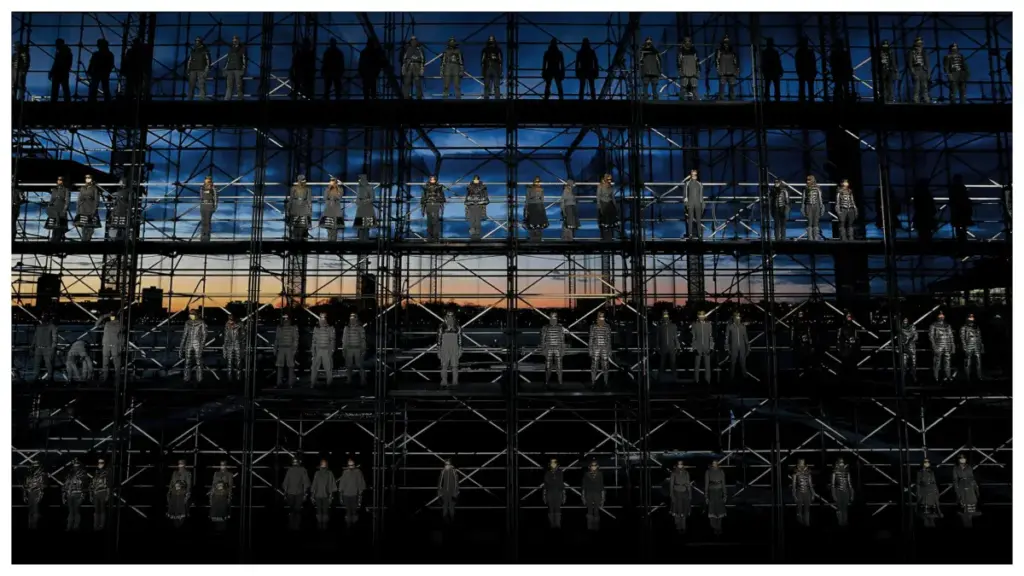
Moncler’s urban takeover during New York Fashion Week, which turns public spaces into open-air retrospectives of the brand’s most cinematic pop-culture moments.
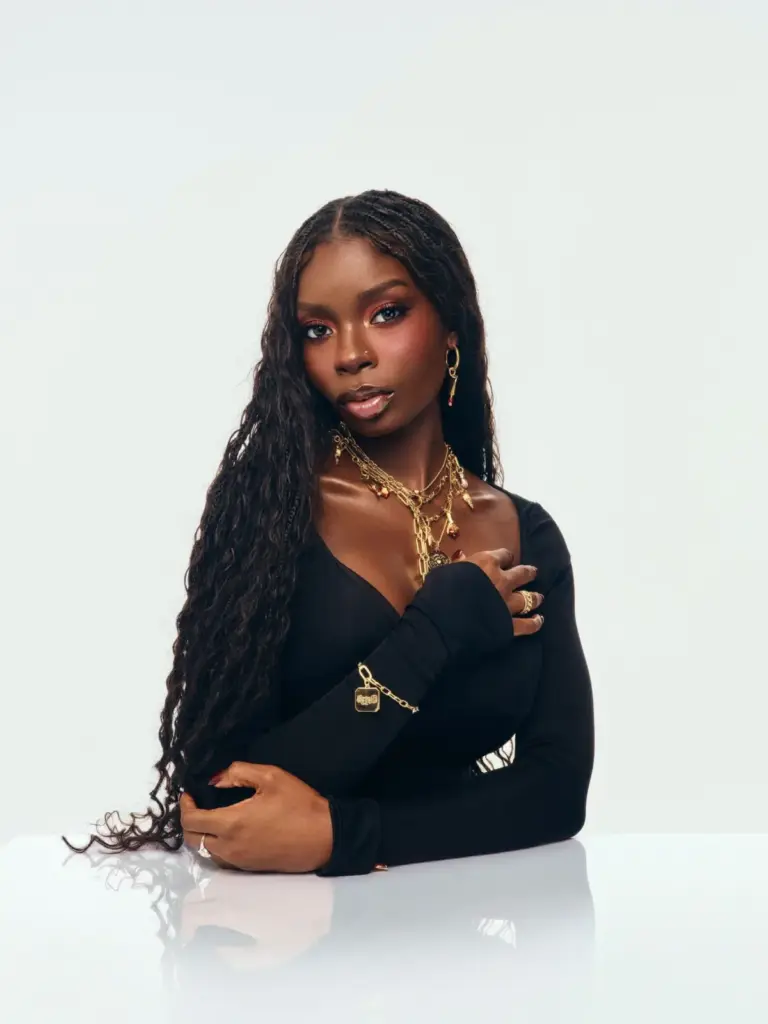
Szilveszter Makó’s "Bauhaus Ballet," an immersive, multi-sensory exploration of memory, Hungarian folklore, and artistic heritage presented alongside Capital One and The Cultivist.
Alaïa’s participation in "Homo Faber 2026," a celebration of artisanal mastery and material innovation staged against the historic backdrop of Venice’s Fondazione Giorgio Cini under the creative direction of Es Devlin.
Loewe’s patronage of Olivia Rodrigo’s "Grrrl Germs" exhibition, a deep dive into the legacy of the 1990s riot grrrl counterculture housed at Daisy Chain Fields in Irvine, California.
Together, these initiatives signal a broader transformation: fashion is positioning itself not merely as a consumer product, but as an indispensable pillar of contemporary art, sociology, and collective memory.
Detailed Chronology: From Concept to Cultural Manifestation
The trajectory of fashion’s expansion into the realm of large-scale public art and immersive curation has accelerated dramatically over the past several years. To understand how the industry arrived at this current juncture, it is helpful to trace the chronological milestones driving these multidisciplinary projects.
September 9–13: "New York in Moncler"
Kicking off the international fashion calendar, Moncler’s urban intervention expands the footprint of New York Fashion Week beyond traditional insider-only venues. Rather than confining its narrative to a singular runway show, the brand has elected to blanket the city in large-scale photographic installations. This open-air exhibition functions as a living archive, tracing Moncler’s most iconic cultural intersections—from the theatrical, high-concept choral fashion shows at the Hammerstein Ballroom to pop-culture milestones like Sarah Jessica Parker’s viral puffer gown designed by Pierpaolo Piccioli for And Just Like That…. By embedding these images into the daily fabric of the city, Moncler collapses the distance between high fashion and the public sphere.
The Ongoing Evolution of Szilveszter Makó’s "Bauhaus Ballet"
Concurrently, contemporary visual culture is being challenged by Hungarian photographer Szilveszter Makó. Presented in partnership with The Cultivist and Capital One, Makó’s "Bauhaus Ballet" marks a departure from traditional photographic exhibitions by manifesting as an entirely immersive environment. Spread across six meticulously designed rooms, the exhibition draws heavily on the artist’s personal history, childhood memories, Hungarian folklore, and the foundational canons of art and fashion history. Visitors step into a disorienting yet deeply nostalgic world where bare brick walls, inherited cutlery, and domestic heirlooms blur the boundaries between the domestic and the avant-garde.
Venice, 2026: Alaïa at "Homo Faber"
Looking toward the intersection of high craft and heritage preservation, the house of Alaïa is preparing to make a monumental statement in Venice. As a central participant in "Homo Faber 2026: An Island of Light"—conceived by visionary British artist and designer Es Devlin—Alaïa will showcase the pinnacle of its artisanal prowess at the Fondazione Giorgio Cini. Running for a full month, the exhibition places a sculptural knitted gown center stage. Featuring a dramatic flared skirt and individually cut, hand-sewn silk feathers, the garment serves as a physical testament to the painstaking labor of the human hand. The exhibition as a whole examines the symbiotic relationship between light, raw materials, and master craftsmanship, offering a counter-narrative to the frictionless efficiency of modern mass production.
Through November 2026: Loewe and "Grrrl Germs" in Irvine, California
Bridging the worlds of music, feminist history, and luxury patronage, the "Grrrl Germs" exhibition opened at Olivia Rodrigo’s Daisy Chain Fields in Irvine, California, with major support from Loewe. Running through November 2026, the exhibition explores the indelible, disruptive legacy of the 1990s riot grrrl movement. Curated by Astria Suparak, the retrospective moves far beyond standard museum curation by assembling an archive of handmade zines, photocopied flyers, stitched banners, self-produced records, and dedicated listening spaces. A collaborative, crowdsourced map charts the movement’s deep-seated connections to visual art, political activism, independent publishing, and community organizing. Through Loewe’s support, the exhibition highlights how the handmade—whether a DIY punk zine or a luxury leather good—acts as a vital vehicle for self-expression and the transmission of knowledge across generations.
Supporting Context & Metrics: The Economics and Psychology of Experiential Fashion
The migration of fashion houses into museums, public parks, and historic palazzos is not merely an aesthetic whim; it is a calculated response to shifting consumer psychology and market metrics. In an era dominated by digital fatigue and algorithmic saturation, audiences—particularly Gen Z and millennial consumers—increasingly value tactile, memorable experiences over passive digital consumption.
The Rise of the Experiential Economy
According to recent cultural economy studies, luxury brands allocating marketing spend toward experiential activations see significantly higher consumer engagement and brand loyalty compared to traditional print or digital banner campaigns. When Moncler transforms New York City into an open-air gallery, or when Loewe underwrites a punk-feminist archive in Southern California, they are creating "shareable moments" that organically generate millions of digital impressions while fostering deep emotional resonance.
Exhibition / Project
Cultural Medium
Primary Partner / Curator
Geographic Location
Duration / Dates
New York in Moncler
Public Photography / Fashion Archive
Moncler
New York City, NY
September 9–13
Bauhaus Ballet
Immersive Multi-Room Installation
Szilveszter Makó, The Cultivist, Capital One
Select Gallery Space
Ongoing
Homo Faber 2026
Haute Couture Sculpture / Craft Exhibition
Es Devlin / Fondazione Giorgio Cini
Venice, Italy
1-Month Duration (2026)
Grrrl Germs
Feminist Archive / Countercultural History
Astria Suparak / Supported by Loewe
Daisy Chain Fields, Irvine, CA
Through November 2026
The Valuation of the "Handmade"
Simultaneously, projects like Alaïa’s contribution to Homo Faber and the zine-heavy archival curation of Grrrl Germs tap into a cultural counter-movement against hyper-automation and artificial intelligence. In a world increasingly saturated by machine-generated images and fast-fashion overproduction, the consumer appetite for visible human labor has surged. Alaïa’s hand-sewn silk feathers and the dog-eared, photocopied zines of the riot grrrl era share a common ideological thread: they celebrate the imperfections, patience, and intimacy of things made by human hands.
Official Statements and Industry Perspectives
The convergence of high fashion, contemporary art, and institutional curation has elicited profound commentary from the creative minds driving these initiatives.
Curator Astria Suparak, reflecting on the genesis and ethos of the Grrrl Germs exhibition, emphasized the urgency of preserving countercultural histories:
"The riot grrrl movement was never just about a sound; it was about building autonomous infrastructure. From the zines we copied in libraries to the banners we stitched on living room floors, the movement proved that young women and marginalized voices could create their own media, their own communities, and their own archives without waiting for permission from institutional gatekeepers."
Industry analysts observing Moncler’s urban intervention noted the democratization of brand narratives. By pulling historical garments and legendary runway moments out of climate-controlled archives and placing them on city streets, luxury houses are acknowledging that their cultural footprint belongs as much to the public imagination as it does to corporate history.
Similarly, reflections surrounding Es Devlin’s curation of Homo Faber underscore the architectural and philosophical weight placed on craftsmanship today. Devlin’s vision treats space as an instrument, where light and material converse to elevate garments from functional textiles into sculptural monuments of human ingenuity.
Future Outlook: Where Fashion and Curation Collide
As we look toward the horizon of the late 2020s, it is clear that the traditional runway show will no longer serve as the alpha and omega of fashion storytelling. The initiatives spearheaded by Moncler, Szilveszter Makó, Alaïa, and Loewe point toward a future where fashion houses operate concurrently as publishing houses, art galleries, historical archives, and civic patrons.
1. The Blurring of Sectors
We can anticipate an acceleration of cross-disciplinary partnerships. Fashion brands will increasingly collaborate with contemporary artists, architects, and sociologists not just for seasonal capsule collections, but to curate long-term institutional exhibitions that interrogate social movements, ecological challenges, and technological shifts.
2. Decentralized Cultural Footprints
Just as Moncler bypassed the traditional runway framework to occupy the streets of New York, future fashion capitals will likely see brands abandoning centralized tents in favor of site-specific, decentralized urban interventions. These activations allow brands to engage local communities directly, transforming passive consumers into active participants in cultural dialogues.
3. The Preservation of Craft as Luxury
In an automated world, the ultimate luxury will be provenance. As demonstrated by Alaïa’s meticulous hand-sewn silk feathers and the artisanal focus of Homo Faber, the future of haute couture lies in its ability to visibly manifest human time, labor, and emotional investment.
Ultimately, these four distinct cultural projects prove that fashion has shed its historical reputation as a superficial, transient enterprise. By anchoring themselves in art history, community organizing, architectural marvels, and urban public spaces, fashion houses are securing their legacy not just in wardrobes, but in the permanent cultural consciousness of our time.