Executive Overview
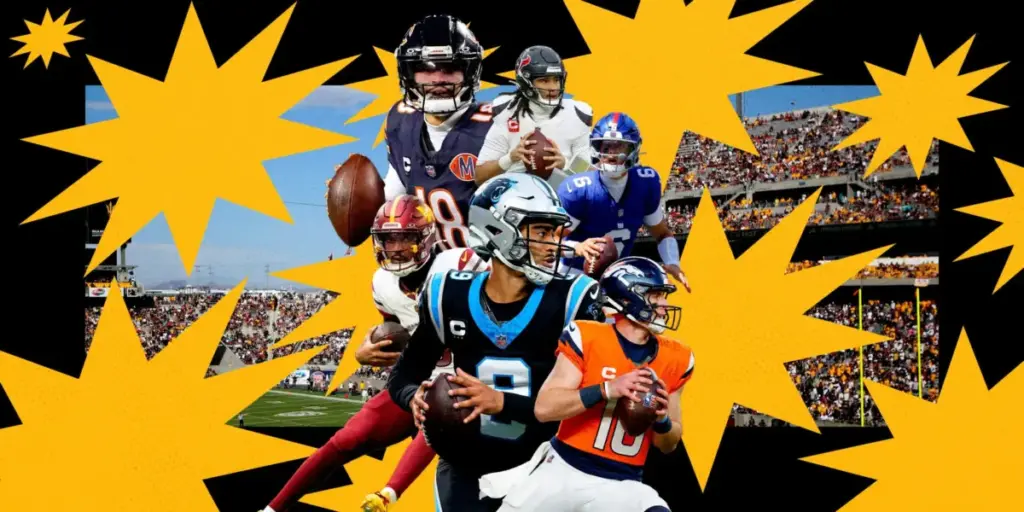
As the landscape of professional football evolves, a seismic shift has taken place across the National Football League. When Drake Maye propelled the New England Patriots to an appearance in Super Bowl LX, it served as an undeniable bellwether: the next generation of quarterbacks has officially arrived. Today’s young signal-callers are no longer defined solely by traditional pocket presence or prototypical measurements. Instead, they represent a hybrid breed of athletes combining bazooka arms, elite open-field mobility, and lightning-fast cognitive processing.
This hyper-athletic evolution demands a grueling physical and mental workload. To survive—and thrive—in the modern NFL, these players rely on deeply sophisticated training methodologies.
"Now you’re seeing that generation of kids that grew up using well-detailed scientific programming that’s built around becoming more and more efficient at a specific skill group," explains Tom Gormely, DPT, head of sports science at Gormely Performance Systems, who trains elite signal-callers like San Francisco 49ers quarterback Brock Purdy.

This new wave of quarterback has leveraged cutting-edge sports science to optimize their bodies and minds. Beyond their on-field exploits, their regimens offer a blueprint for everyday athletes looking to level up their own physical power, cognitive speed, and mental resilience.
Detailed Chronology: The Rise of the 2026 Quarterback Class
The journey of the NFL’s current generation of star quarterbacks is characterized by rapid ascension, severe adversity, and unprecedented tactical adaptation. Over the past three seasons, the league has witnessed a complete changing of the guard.
2024–2025: Breakthroughs and Brutal Injuries
The current vanguard burst onto the national consciousness during the 2024 season. Jayden Daniels of the Washington Commanders stunned observers by completing an astounding 69 percent of his passes as a rookie. However, the physical reality of the NFL caught up quickly; Daniels faced an injury-riddled 2025 campaign that saw him miss 10 games, largely due to a gruesome elbow dislocation. Despite the setback, he managed to toss eight touchdowns and maintained a pristine ball-security profile, boasting just 14 total turnovers through his first 24 career games.

Meanwhile, Caleb Williams endured a difficult baptism by fire, piloting the Chicago Bears to a dismal 5–12 record during his rookie year. Rather than folding, Williams mounted a historic turnaround, leading Chicago to the divisional round of the playoffs on the back of six fourth-quarter comebacks.
The Playoff Crucible of 2025–2026
The postseason picture heading into Super Bowl LX highlighted the depth and caliber of this young quarterback cohort.
- C.J. Stroud continued his remarkable consistency, steering the Houston Texans to their third consecutive playoff berth. After a sluggish 0-3 start to the regular season, Stroud reeled off six straight wins, capped by a dominant 30-6 playoff blowout over the Pittsburgh Steelers before falling to New England in the divisional round.
- Bo Nix stamped his arrival in Denver, going toe-to-toe with Buffalo Bills superstar Josh Allen in a thrilling playoff duel and coming away victorious. Though a broken ankle sidelined him for the AFC Championship Game, Nix cemented his status as a premier dual-threat talent.
- Bryce Young finally quieted his critics, navigating the Carolina Panthers back to the postseason after two wildly inconsistent years. Young set career highs across the board with 3,011 passing yards, 23 touchdowns, and a 63.6 percent completion rate.
- Jaxson Dart made an immediate splash with the New York Giants. In just 12 starts, Dart racked up 2,272 yards and 24 total touchdowns (15 passing, 9 rushing), instantly endearing himself to New York faithful with a fearless, bruising rushing style.
Supporting Context & Metrics: Decoding the Training Regimens
The staggering physical demands of playing quarterback in the modern NFL require specialized training that goes far beyond traditional weight room lifting. Elite performance coaches have unlocked specific physiological adaptations that translate directly to on-field dominance.

Jayden Daniels and the Science of Grip Strength
To combat ball security issues and recover from structural joint trauma, Daniels turned his focus to foundational stability. According to Taylor Kelly, quarterback coach at 3DQB, Daniels spent his rehabilitation period obsessively refining his footwork and hand-strength fundamentals.
A primary driver of Daniels’ elite ball security is exceptional grip strength. Ryan Porter, founder and head coach of Cali Power, utilizes a punishing, highly effective isolation drill to build forearm and hand endurance:
- The Plate Hold: Grab a 25-pound weight plate by its outer edge and hold it down at your side for one full minute. Rest for one minute, and complete seven total rounds per side.
- "You’ll drop the weight several times," Porter notes. "Rarely do you get the full minute. But that’s the goal."
Caleb Williams and T-Spine Mobility
Caleb Williams possesses a rare physical superpower: the ability to deliver accurate passes from virtually any platform, even when his feet are entirely unset. Danny Hernandez, who has trained Williams since his amateur days, calls him "the freakiest thrower I’ve ever met."

According to Tom Gormely, the mechanical secret behind Williams’ off-platform wizardry is exceptional mobility in his thoracic spine (T-spine), hips, and ankles. To develop this fluidity, Williams incorporates cross-training aquatic workouts into his weekly schedule.
- The Pool Workout: Swimming introduces natural resistance, rhythm, and temporal lag, forcing the nervous system to adapt to dynamic coordination. Hit the pool 1 to 2 times a week for 15 to 30 minutes, alternating between freestyle crawl, breaststroke, and kickboard laps on both your front and back.
C.J. Stroud: Explosive Rotational Power
To generate the torque necessary for deep-field passes without relying entirely on a crow-hop, Stroud relies on explosive rotational power. Adam Dedeaux, co-founder of 3DQB, implements rotational medicine ball slams to forge this kinetic energy.
- Rotational Med-Ball Slams: Hold a medicine ball at your chest, elevate it overhead and to your right side, then slam it down violently toward your outside left foot using maximum force. Catch the rebound and reverse sides. Perform 2 to 3 sets of 4 to 6 repetitions per side.
Bo Nix: Total-Body Kinetic Linkage
Praised by QB Country founder David Morris as possessing arm talent reminiscent of Patrick Mahomes, Bo Nix utilizes functional multi-planar movements to bridge the gap between weight room strength and gridiron athleticism.

- The Hitch Slam: Stand sideways about five yards away from a solid concrete wall in an athletic stance, holding a 10-pound medicine ball at chest level. Explosively shuffle your feet laterally so that your trailing foot lands where your lead foot started, hurling the ball into the wall at the exact moment of weight transfer. Complete 3 sets of 3 reps per side.
Official Statements and Expert Insights
The mental makeup required to command an NFL huddle at a high level is just as important as physical gifts. League veterans and elite private coaches emphasize that psychological poise separates franchise cornerstones from roster hopefuls.
"The number one thing with QB play is that stoic, mentally tough, not-shaken-by-anything type of demeanor," says Las Vegas Raiders star defensive end Maxx Crosby, summarizing the psychological armor required to face modern pass rushes. "Caleb [Williams] has that."
This mental fortress must be paired with hyper-advanced cognitive processing speeds. Quarterbacks are forced to read complex disguised coverages in fractions of a second. To sharpen this mental processor, trainers employ specialized visual and cognitive drills.

For Bryce Young, whose spatial anticipation has drawn rave reviews from coaching staff, the development of field awareness is an ongoing pursuit. Adam Dedeaux notes: "His vision, his feel for where the ball needs to be, his anticipation is as good as anything that any QB does."
To train this cognitive muscle, Danny Hernandez challenges quarterbacks to track chaotic environments. Players are asked to mentally catalog and recount specific details from high-intensity practice sessions—such as the exact position of a teammate’s hands or peripheral movements—training the brain to ingest, categorize, and discard visual stimuli at blistering speeds.
Similarly, Jaxson Dart is subjected to reactive processing tests under the watchful eye of Taylor Kelly. Using targeted visual cues, Kelly forces Dart to react to randomized color triggers in a fraction of a second, cementing the neural pathways required to make split-second decisions under duress.

Future Outlook: The Blueprint for Modern Athletic Longevity
As the NFL prepares for the upcoming seasons, the blueprint established by Maye, Daniels, Williams, Stroud, Nix, Young, and Dart has permanently altered how athletic departments and private training facilities develop talent. The era of the stationary, rigid pocket passer has officially given way to an age of multidimensional athletes whose physical durability is matched only by their cognitive velocity.
For everyday fitness enthusiasts and aspiring athletes, the training principles utilized by these young superstars offer a clear roadmap. By prioritizing grip endurance, spinal mobility, rotational power, and cognitive awareness drills, anyone can adopt the training philosophy of a modern NFL quarterback. As sports science continues to advance, the boundaries of human performance on the gridiron will only continue to expand, ensuring that the game’s premier position remains in the hands of the fittest, smartest athletes the sport has ever seen.