Executive Overview
The beauty industry is undergoing a profound structural metamorphosis. For decades, legacy cosmetics conglomerates operated under a rigid mandate of vertical integration, building and maintaining proprietary e-commerce platforms, custom logistics networks, and isolated digital architectures. Today, that philosophy is experiencing a definitive collapse.
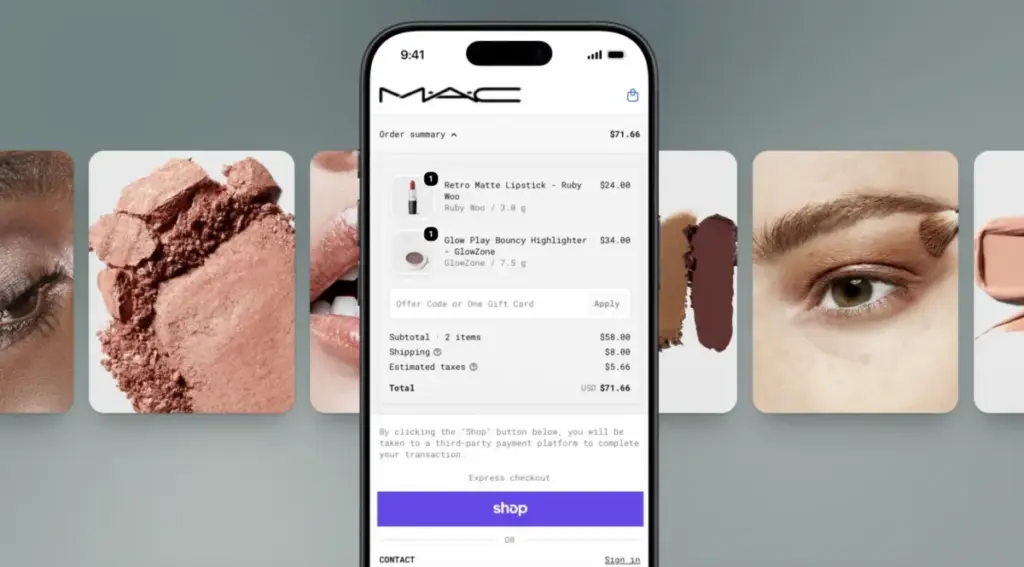
In a strategic shift signaling a wider industry trend, The Estée Lauder Companies (ELC) is systematically outsourcing its digital infrastructure, migrating its powerhouse portfolio of prestige brands onto Shopify. This high-stakes technological pivot—which recently brought MAC Cosmetics online via Shopify and integrated the platform directly into five physical MAC retail stores—underscores a stark realization among global beauty executives: legacy conglomerates can no longer afford to outspend and out-innovate dedicated software-as-a-service (SaaS) giants on backend checkout mechanics.
Instead of treating software development as an internal core competency, ELC is embracing an ecosystem-driven approach. This transition forms a cornerstone of the conglomerate’s "Beauty Reimagined" strategic framework, an aggressive corporate turnaround designed to restore agility, shrink operational overhead, and meet modern consumers wherever they choose to transact.
At the same time, the wider beauty landscape is experiencing a sweeping digital reconfiguration. Sephora’s expansion into TikTok Shop, OPI’s parent company filing to go public, and Amazon’s continued capture of direct-to-consumer (DTC) traffic via "Buy with Prime" point to a unified market reality: heritage beauty brands must forge strategic alliances with platform giants or risk marginalization in an era defined by social commerce, hyper-acceleration, and nascent agentic AI shopping.
Detailed Chronology: The Evolution of ELC’s Shopify Integration
The partnership between The Estée Lauder Companies and Shopify is not merely a routine software update; it is a multi-year, multi-brand overhaul of one of the most sophisticated beauty supply chains in existence. The phased migration roadmap reveals a methodical effort to modernize ELC’s digital footprint without disrupting global retail operations.
Phase 1: The Initial Proof of Concept
The collaborative framework was officially unveiled in October, when ELC selected Shopify to power select divisions within its extensive portfolio. To test the infrastructural stability and scalability of the Shopify enterprise environment, the beauty conglomerate began by migrating the e-commerce infrastructure for Tom Ford and Lab Series.
Unlike smaller indie brands operating on single-product storefronts, ELC’s digital properties require complex localization, multi-currency processing, localized tax compliance, and seamless enterprise resource planning (ERP) integrations. The successful migration of Tom Ford and Lab Series served as a proof of concept, demonstrating that Shopify’s enterprise tier could handle the rigorous demands of luxury retail.
Phase 2: Scaling to Mass-Market Giants
Buoyed by early successes, ELC accelerated its migration timeline. In August, the company officially launched MAC Cosmetics’ revamped e-commerce platform on Shopify. Representing one of the largest and most culturally influential makeup operations globally, MAC’s transition required a delicate handling of high-traffic spikes, extensive inventory databases, and complex loyalty frameworks.
Significantly, the partnership extended beyond digital screens into physical retail environments. ELC deployed Shopify at checkout across five freestanding MAC brick-and-mortar stores. This omnichannel deployment bridges the historical divide between digital and physical shopping, creating a unified consumer ledger and setting the stage for a broader rollout. According to corporate projections, ELC plans to migrate the vast majority of its remaining e-commerce websites and an expanded footprint of physical stores to Shopify by the end of fiscal year 2027.
Supporting Context & Metrics: Financial Turnaround and Channel Realignment
ELC’s pivot to Shopify arrives at a critical juncture for the conglomerate. Following years of post-pandemic volatility, supply chain bottlenecks, and sluggish performance in key Asian travel-retail markets, the company initiated a sweeping corporate overhaul under its "Beauty Reimagined" plan. The objective: prioritize agility, shed unproductive overhead, and aggressively reallocate capital toward higher-growth sales channels.
Financial Health and Revenue Milestones
The structural adjustments are already yielding measurable results. In ELC’s most recent fiscal earnings report, the company posted a robust 5% sales growth year-over-year, bringing total revenue for fiscal year 2026 to $15 billion. Standout performers within the portfolio continue to drive momentum; notable pillars like Jo Malone London and Tom Ford have officially ascended to billion-dollar brand status.
This financial recovery is mirrored across the broader prestige beauty sector. Victoria Beckham Holdings recently reported profitability for the first time, posting a 15% revenue increase to £129.8 million ($175 million). Significantly, company disclosures revealed that the former Spice Girl’s dedicated beauty line was singularly responsible for two-thirds of the brand’s overall revenue, underscoring the extraordinary profitability of cosmetics extensions for high-fashion houses. Meanwhile, broader market confidence remains buoyant, evidenced by OPI’s parent company officially filing to go public.
Channel Diversification: Moving Beyond Department Stores
As ELC rationalizes its digital infrastructure, it is simultaneously reshaping its physical and virtual distribution channels. In March, the conglomerate made headlines by launching MAC products inside U.S. Sephora stores—a strategic concession that placed a historically DTC-focused brand directly inside its primary retail competitor’s ecosystem. This was followed in May by the announced reduction of ELC’s traditional department store footprint.
By scaling back investments in declining brick-and-mortar department store counters, ELC is redirecting resources toward digital ecosystems where modern consumers actually discover and purchase beauty products.
Official Statements and Industry Insights: The Philosophy of Outsourcing
The decision to decommission a proprietary software system that served ELC for nearly two decades was not taken lightly. However, the sheer velocity of modern digital innovation rendered internal development obsolete.
The Cost of Proprietary Tech
"Our platform, while it served really well for us over the last 15, 20 years, it became very hard to keep up with all the innovation that was going about," explained Omer Iqbal, senior vice president of omnichannel and consumer technology at The Estée Lauder Companies. "It was costly. It took a lot of time in terms of resources."
Rather than pouring capital into maintaining custom-built codebases for basic transactional features, ELC made the calculated decision to cede control of the checkout tunnel to dedicated technology providers.
"We have to decide on what our core competency is going to be. Are we going to be an organization that’s competing with the Salesforces, the Shopifys on checkout? No, we’re going to leverage them." — Omer Iqbal, SVP of Omnichannel and Consumer Technology, ELC
This sentiment is echoed by Shopify’s enterprise team, who emphasize that migrating a titan like MAC involves far more than updating a website template. "It’s not just about a website," noted Sandy Jeong, director of enterprise solutions engineering at Shopify. "You’re really talking about all the nuts and bolts that go behind that: promotions and loyalty and checkout rules and fulfillment and payments and tax."
Crucially, the partnership offers ELC immediate access to established consumer behavioral patterns. According to Iqbal, roughly 60% of ELC’s consumer base is already enrolled in Shop Pay—Shopify’s proprietary acceleration framework that stores credit card and shipping credentials for frictionless, one-click checkout across thousands of web properties. By adopting the platform, ELC instantly reduces transactional friction, lowering cart abandonment rates.
The Macro Shift: Beauty Embraces the Tech Giants
ELC’s retreat from proprietary software mirrors a broader industry-wide surrender of backend exclusivity. Major beauty conglomerates and independent players alike are increasingly partnering with tech giants rather than attempting to out-engineer them.
- Amazon’s Buy with Prime: Brands within the Orveon stable—including Laura Mercier and Bare Minerals—have integrated Amazon’s "Buy with Prime" feature directly into their independent DTC websites, leveraging Amazon’s logistics infrastructure to secure consumer trust and rapid delivery.
- TikTok Shop Integration: Acknowledging the unstoppable rise of social commerce, industry heavyweights Sephora and Ulta Beauty have formally announced plans to join TikTok Shop. With livestream shopping and hyper-engaged creator communities driving unprecedented conversion rates, traditional beauty retailers can no longer afford to ignore social media platforms as transactional endpoints.
Rather than viewing these platforms as threats, forward-thinking beauty executives are weaponizing them to focus on what they do best: product formulation, brand storytelling, and emotional consumer engagement. "We’re building our own consumer experiences, but we don’t want to compete with the Shopifys and the Salesforces of the world on having a better checkout," Iqbal emphasized. "I don’t think we can win at that, but we can certainly use our data to win at better consumer experiences."
Future Outlook: Agentic AI and the Next Frontier of Commerce
Looking ahead, the partnership between ELC and Shopify is designed to position both entities at the bleeding edge of the next paradigm shift in digital retail: agentic shopping.
The Rise of AI-Driven Purchasing
While public sentiment surrounding general artificial intelligence has experienced ebbs and flows, transactional AI usage is surging. According to internal data shared by Shopify, the company is recording a 14% higher average order value for shoppers arriving via AI-driven channels compared to traditional search traffic.
To capture this high-intent consumer segment, brands must fundamentally restructure how their digital catalogs are organized. Traditional website scraping by third-party AI bots is inefficient, error-prone, and incapable of transmitting real-time inventory and pricing accuracy.
"Part of the infrastructure that’s really critical there is product data, and having that clean," explained Shopify’s Sandy Jeong. "Because what you don’t want to rely on is an agent just scraping your website or crawling the internet for information on your brand. So Shopify has given brands a very structured way through our catalog to send your product data directly to the agents through APIs."
Collaborative Roadmapping
By locking in early with enterprise-grade tech platforms, legacy brands are no longer passive consumers of software updates; they are active co-creators of future retail technology. ELC is leveraging its immense global scale to secure preferred-client status with Shopify, ensuring that the software giant’s technological roadmap aligns with the specific regional and operational needs of the beauty conglomerate.
"We want to drive some of [Shopify’s] roadmap," Iqbal noted. "Right now, we’re a preferred client of theirs. We’re trying to push them into markets that are important to us."
As ELC continues its aggressive platform migration through 2027, the success of this union will serve as a definitive litmus test for the prestige beauty industry. In an economic climate where consumer loyalty is fragile and technological disruption is constant, the path to sustainable growth no longer lies in building everything yourself. Instead, true enterprise agility belongs to those smart enough to focus on their core genius while outsourcing the plumbing to the masters of scale.