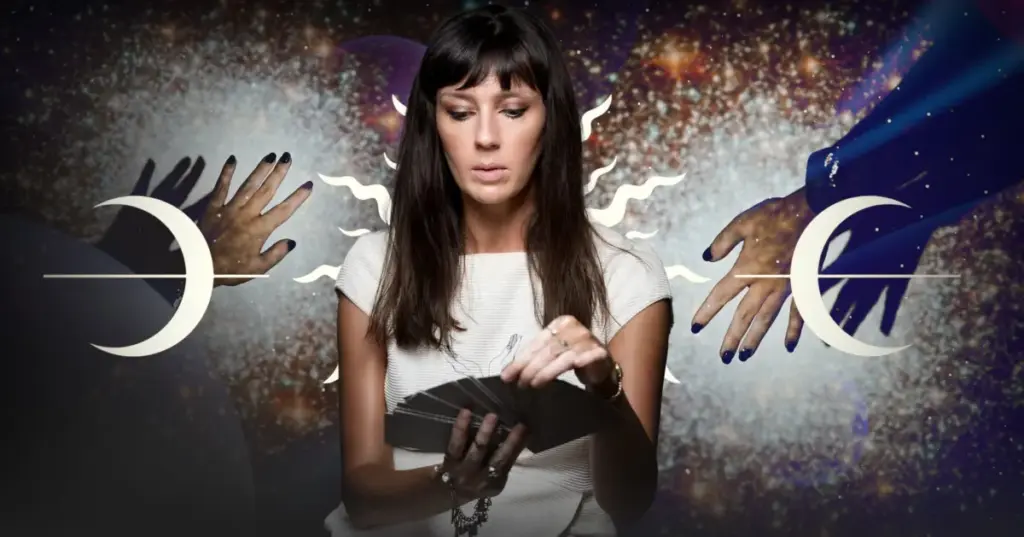
For over three decades, renowned tarot reader, astrologer, and psychic developer Kerry King has listened to the extraordinary accounts of individuals from all corners of the globe. Yet, despite popular culture’s obsession with Hollywood-style hauntings—such as poltergeists rattling chains or clairvoyants dramatically predicting catastrophic global events—King’s extensive experience points to a very different reality. True psychic and intuitive experiences, she argues, are far more fleeting, fragmented, and fundamentally mundane than common media tropes suggest.
Rather than grand cinematic visions, everyday intuition frequently manifests as a sudden flash of insight, an unprompted memory of an old friend moments before their phone call, a startlingly relevant nocturnal dream, or a sudden, inexplicable gut feeling that alters a commuter’s route home. Sometimes these moments fade into obscurity without a trace; other times, they linger, leaving the observer with a profound sense of anomalous wonder.
This investigative feature delves deep into King’s philosophy—culminating in her upcoming practical guide, This Book Will Make You Psychic—to explore whether intuitive capabilities are hardwired into human biology. Are these subtle perceptions remnants of an innate evolutionary toolkit that we gradually suppress as we transition into adulthood? By analyzing psychological markers, physiological responses, and structured observational experiments, this report examines the three primary indicators that suggest an individual may possess latent psychic tendencies. Furthermore, it provides empirical, scientifically grounded methodologies for tracking, testing, and developing these elusive cognitive signals.
Detailed Chronology: The Evolution of Perceptual Awareness
To understand how modern society views psychic phenomena, one must examine the historical and developmental trajectory of human intuition. Throughout early childhood, human beings display high levels of uninhibited pattern recognition, imaginative processing, and emotional sensitivity. Children frequently report invisible companions, precognitive hunches, and vivid dream states without the rigid skepticism imposed by societal conditioning.
As individuals mature into adulthood, the demands of structured education, rationalist frameworks, and economic survival necessitate the suppression of these subtle sensory inputs. The analytical conscious mind—governed by the prefrontal cortex—takes absolute precedence, systematically filtering out irregular data streams that fail to fit established models of physical reality.
However, for a significant segment of the population, these intuitive channels never fully close. Over the past thirty years, clinical interest in anomalous cognition, synchronicity, and subconscious pattern processing has grown steadily. Researchers in cognitive psychology and parapsychology have increasingly focused on how the human brain processes information below the threshold of conscious awareness.
The timeline of recognizing these abilities typically follows a three-phase progression:
The Spontaneous Event Phase: An individual experiences an inexplicable coincidence, vivid premonition, or sudden gut feeling, often dismissing it as a random anomaly.
The Pattern Recognition Phase: Over months or years, these occurrences accumulate, prompting the individual to seek structural explanations or validation.
The Active Development Phase: Utilizing journaling, meditation, or structured psychic exercises, the individual begins to intentionally document and test their intuitive hits against objective reality, separating genuine insight from confirmation bias.
Supporting Context & Metrics: The Three Signs You May Be Latent Psychic
According to King, identifying whether one possesses hidden intuitive or psychic abilities does not require dramatic séances or supernatural confirmation. Instead, it relies on recognizing specific, recurring cognitive signatures in daily life. Here are the three primary indicators detailed in her forthcoming work, along with actionable frameworks for analysis.
1. Claircognizance: The Art of “Just Knowing”
The most pervasive yet frequently dismissed intuitive marker is known in esoteric circles as claircognizance—clear knowing. This phenomenon occurs when an individual instantly extracts accurate information from an environment or person without any logical, sequential chain of evidence.
Manifestations: An individual might cross paths with a stranger and instantly receive an unprompted, highly accurate impression of their character. They may step into an unfamiliar room and instinctively sense that a conflict or significant event has recently occurred, despite absolute silence from occupants. They can spot deceptive behavior instantly or develop an unshakeable conviction regarding the outcome of a decision before evaluating any supporting data.
The Scientific Caution: The human brain is a master pattern-matching machine, constantly drawing rapid conclusions from micro-expressions, body language, and environmental cues. Not every random thought constitutes a genuine psychic transmission.
The Empirical Test: To separate true intuitive insight from speculative bias, King recommends a strict seven-day documentation protocol. Utilizing a dedicated notebook or mobile application, practitioners must record strong, unexplained impressions before verifying their accuracy. Specificity is paramount. At the end of the week, the researcher reviews the data against objective outcomes. This paper trail bypasses the slippery nature of human memory, which often tricks the conscious mind into believing it “knew it all along” only after an event has transpired.
2. High-Definition Dream States and Precognitive Visions
Dreams remain one of the final great frontiers of neurological research. While mainstream science views dreams primarily as the brain’s mechanism for memory consolidation and emotional processing, anomalous dream experiences frequently bypass standard mental filters.
Manifestations: Most nocturnal imagery dissolves upon waking or registers as nonsensical static. However, certain dreams carry a distinct, high-definition resonance. An individual may dream vividly of a distant acquaintance and receive a message from them later that day. Others dream of unfamiliar landscapes they later encounter months down the line, or experience scenarios that appear to mirror future events precisely.
The Empirical Test: Establishing a rigorous dream diary is essential. By placing a notebook directly beside the bed, the dreamer must record fragments—colors, emotional tonalities, names, or abstract symbols—immediately upon waking, prior to engaging with daily stressors. Over several weeks, reviewing these logs allows the conscious mind to identify recurring symbols and test whether any elements correspond with subsequent real-world developments. Accepting these interpretations without self-judgment is vital for bridging the gap between raw subconscious data and meaningful narrative construction.
3. The Persistence of Synchronicities and Meaningful Coincidences
Synchronicities—meaningful coincidences that defy simple probabilistic explanations—represent the third major indicator of heightened intuitive receptivity.
Manifestations: Individuals experiencing synchronicities often find themselves thinking of an obscure acquaintance from their past, only to encounter their name or physical presence hours later. Others notice persistent numerical sequences (such as repeating digital clock digits, widely popularized as "angel numbers"), recurring lyrical themes, or dense clusters of déjà vu within compressed timeframes.
The Empirical Test: To cultivate this sensitivity, King suggests an environmental immersion exercise. Practitioners select a day of leisure and visit a location rich in history—such as an antique museum, historic estate, ancient woodland, or ecclesiastical site—carrying a notebook and camera. Before entering, the visitor asks a singular open-ended question: "What do I need to notice today?"
Walking without a forced agenda, the observer notes where they feel drawn to linger, recording sudden thoughts, physical sensations, or emotional shifts. Photographing reflective surfaces (such as glass, mirrors, and windows) often captures unexpected visual metaphors. Reviewing these notes and images later in a neutral environment trains the subconscious mind to become more receptive to subtle informational streams.
Official Statements and Expert Perspectives
While institutional science remains deeply skeptical of paranormal claims, contemporary researchers in parapsychology and cognitive neuroscience increasingly acknowledge that human beings possess sensory processing capacities that operate beneath the level of conscious awareness.
In discussions surrounding the mechanics of intuition, behavioral psychologists emphasize that gut feelings are often the result of rapid heuristic processing—where the brain evaluates complex environmental variables in milliseconds. However, anomalous cognition researchers argue that this model fails to fully account for precognitive dreams and telepathic coincidences reported across diverse cultures and historical epochs.
Kerry King emphasizes that the primary barrier to exploring these phenomena is not a lack of innate ability, but rather the cultural pressure to suppress non-rational data.
"Over 30 years of reading tarot cards for people all over the world and pursuing my own psychic development, I’ve learned that psychic experiences are usually much more fleeting, fragmented, and mundane than you’d think," King states. "Rarely do we actually see ghosts with clanking chains wandering around our homes, or have visions of terrible events right before they happen."
"Rather, they’re the sudden image that pops into your head, or the name you think of just before they phone you, the dream that turns out to be strangely relevant, or the gut feeling that makes you take a different route home. Reading this and wondering whether you’re secretly psychic? Personally, I think we all are, that it’s in our factory settings, very visible in childhood, but then fades into adulthood."
King cautions against unchecked mysticism, noting that discernment is just as vital as openness: "Do be careful not to give every passing thought a mystical meaning. Sometimes a coincidence is just a coincidence. Sometimes a dream is just your brain emptying the spam folder. But occasionally, something happens that makes you stop. And that’s the moment I want you to pay attention to."
Future Outlook: The Integration of Intuition in Modern Life
As society navigates an increasingly complex, data-saturated digital age, the value of intuitive processing is undergoing a quiet renaissance. While artificial intelligence and algorithmic data analysis dominate corporate and personal decision-making, the human capacity for synthetic, holistic pattern recognition remains entirely unique.
The future of psychic and intuitive development lies not in abandoning scientific rigor, but in applying empirical methodology to subjective experience. By maintaining structured journals, conducting controlled observational experiments, and acknowledging the subtle signals of the subconscious mind, individuals can bridge the gap between skepticism and self-discovery.
Whether approached through the lens of advanced cognitive psychology, esoteric tarot traditions, or creative exploration, the cultivation of intuition offers a profound tool for self-awareness. As King’s work demonstrates, unlocking the unseen does not require abandoning reality; it simply requires paying closer attention to the quiet moments when reality speaks back.