Executive Overview
In an era dominated by desk-bound labor, long-distance commuting, and hours spent hunched over digital screens, musculoskeletal discomfort has become a ubiquitous modern affliction. Prolonged static positioning—particularly the sustained flexion required during five-hour car journeys or sedentary office shifts—places immense physiological stress on the cervical and thoracic spine. The human body is fundamentally engineered for movement; when forced into rigid, upright, or slouched postures for extended periods, the muscles of the neck, shoulders, and upper back respond with protective spasms, stiffness, and chronic aches.
Faced with severe postural fatigue following a grueling five-hour automobile trip, wellness seekers are increasingly bypassing expensive clinical interventions in favor of targeted, at-home movement therapies. Rather than booking an immediate and costly deep-tissue massage, contemporary self-care strategies point toward intentional, somatic movement. One such solution gaining traction across digital wellness platforms is a 30-minute “Air Element Yoga Practice” curated by London-based yoga instructor Charlie Faulkner.
Designed ostensibly as a gentle session to connect practitioners with their emotions and open the energetic heart center, the routine serves a deeply pragmatic physical purpose. By focusing heavily on the thoracic region, Faulkner’s sequence counteracts the destructive physical footprint of modern sedentary habits. This comprehensive report investigates the physiological mechanics of travel-induced stiffness, breaks down the structural components of Faulkner’s yoga routine, and analyzes why targeted spinal articulation remains one of the most effective, accessible antidotes to the perils of a sedentary lifestyle.
Detailed Chronology: The Anatomy of Travel-Induced Strain and the Road to Recovery
To fully understand the therapeutic efficacy of a 30-minute restorative yoga session, one must first examine the physiological deterioration that occurs during prolonged periods of immobility.
Phase 1: The Incubation of Stiffness (The Five-Hour Drive)
The journey begins innocuously enough: settling into the driver’s or passenger’s seat of a vehicle, adjusting the mirrors, and setting off. However, within the first 60 minutes of uninterrupted driving, subtle biomechanical changes take place. The hip flexors shorten, the pelvis tilts posteriorly, and the thoracic spine naturally rounds to accommodate the reach toward the steering wheel.
By hour three, the neuromuscular system begins to compensate for fatigue. The trapezius and levator scapulae muscles—responsible for stabilizing the head and neck—are forced into isometric contraction for hours on end. Without intermittent micro-movements to pump fresh synovial fluid through the joints, the intervertebral discs experience sustained, uneven pressure.
When the vehicle finally reaches its destination and the traveler steps out after five hours, the transition from static flexion to dynamic extension is jarring. The body has effectively "set" in a hunched mold. Attempts to stand upright immediately trigger sharp protests from micro-tears in overworked muscle fibers and ischemic tissue starved of optimal blood circulation during the drive.
Phase 2: The Decision-Making Crossroads
Faced with persistent, radiating tension across the neck and shoulders, the traveler evaluates recovery options. Professional bodywork, such as a specialized remedial massage, offers immediate relief but presents logistical and financial friction: scheduling conflicts, travel to a clinic, and significant expense.
Opting for a self-directed somatic intervention, the traveler turns to digital resources. The search yields Charlie Faulkner’s specialized practice hosted on YouTube. Billed as an "Air Element" flow targeting the chest and heart, the routine requires minimal equipment—merely a standard yoga mat and an optional yoga block for stabilization—lowering the barrier to entry for an exhausted, stiff practitioner.
Phase 3: Immersion in the Practice
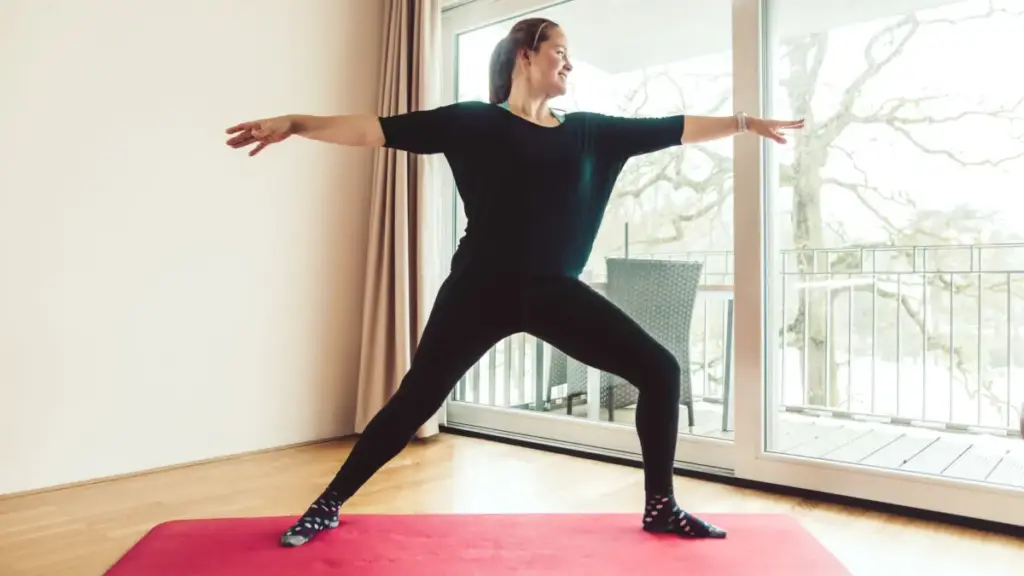
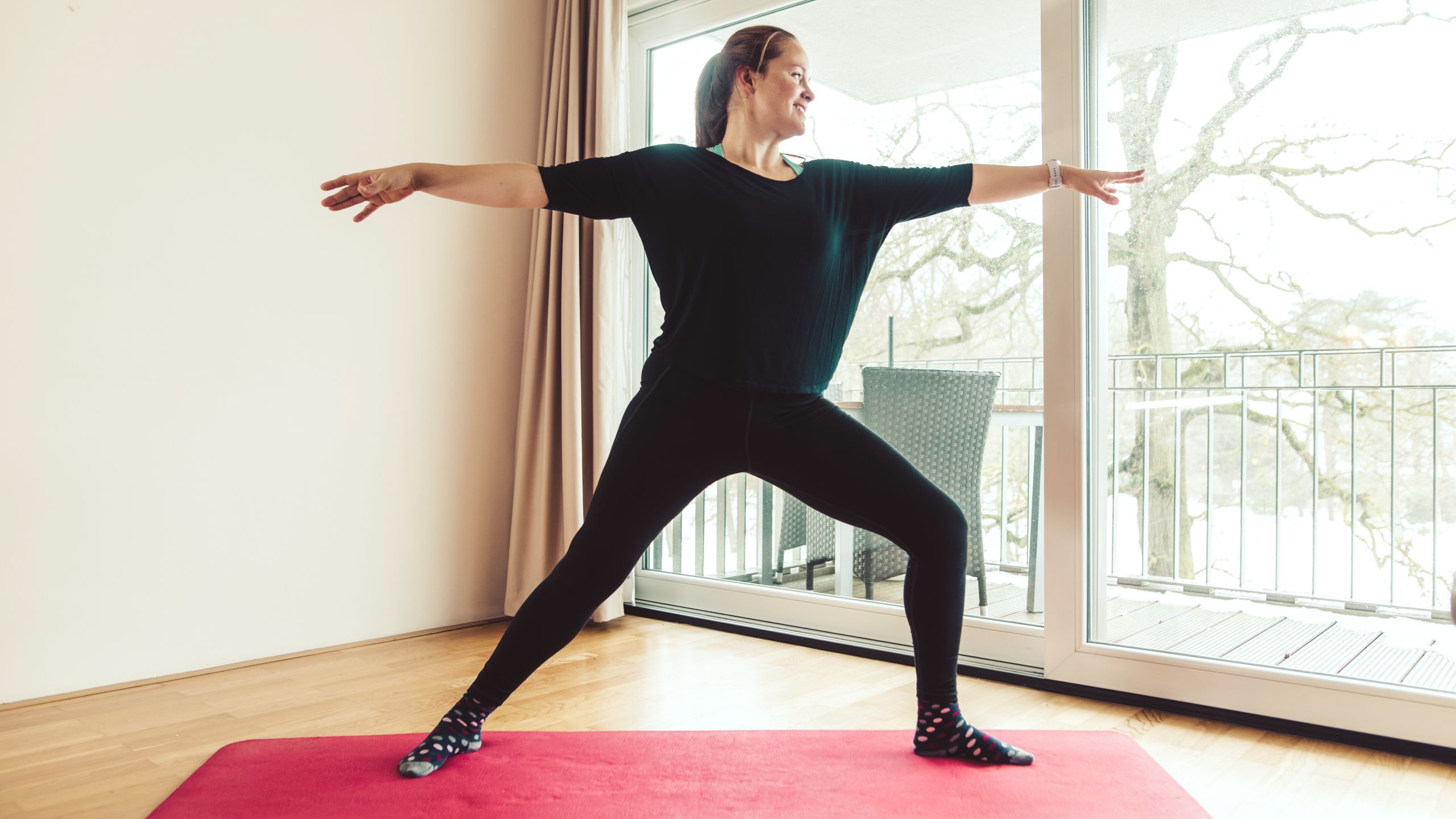
Stepping onto the mat, the practitioner initiates the 30-minute sequence. The routine avoids high-intensity strength conditioning, focusing instead on breath-synchronized movement that directly addresses the front body (the chest and anterior shoulders) and the back body (the thoracic spine and rhomboids).
At the core of Faulkner’s methodology is a deceptively simple, highly repeatable movement flow:
- The Opening Position: The practitioner holds their arms out to the sides, bending the elbows at a 90-degree angle with the fingers pointing upward toward the ceiling, creating a "goalpost" or cactus arm configuration.
- The Extension (Chest Open): Gently arching the upper back, the practitioner expands through the sternum, drawing the shoulder blades together. This action directly reverses the slumped, forward-rolling posture perpetuated by hours behind the wheel.
- The Flexion (Rounding): Transitioning smoothly, the practitioner reverses the movement, rounding the upper back and extending the arms forward. This action lengthens the interscapular muscles and decompresses the spinal column.
Throughout the 30 minutes, variations of this sequence are layered with increasing depth. For practitioners experiencing acute tightness, returning to the foundational, least taxing version of the flow provides a safe harbor, ensuring that muscles are coaxed rather than forced into compliance.
Phase 4: Post-Session Restoration
As the final moments of the 30-minute practice unfold, a distinct neuromuscular shift occurs. The repetitive, rhythmic articulation of the spine mimics the fundamental mechanics of classic somatic movements like the "cat-cow" stretch. Each arch pushes fresh oxygenated blood into the anterior chest wall, while each round stretches the taut posterior chain.
By the conclusion of the session, the accumulated stiffness of the five-hour journey has visibly dissipated. The shoulders drop away from the ears, the cervical spine regains its full range of motion, and the individual is left with a repeatable, zero-cost blueprint for managing future bouts of travel- or work-induced physical fatigue.
Supporting Context & Metrics: The Ergonomics of Modern Sedentarism
To contextualize the value of Charlie Faulkner’s routine, it is vital to examine the broader epidemiological and ergonomic landscape surrounding sedentary behavior and travel-related musculoskeletal disorders (MSDs).
The Ergonomics of the Automobile
Automobile interiors are rarely designed with optimal spinal health in mind. Unlike ergonomic office chairs that feature lumbar support and dynamic tilt mechanisms, car seats often encourage a slouched pelvis. According to automotive ergonomic studies, drivers frequently slide into a posterior pelvic tilt, which flattens the natural lordotic curve of the lower back and forces the thoracic spine to compensate by rounding outward (kyphosis).
When the thoracic spine rounds, the head drifts forward to maintain a level gaze at the road. For every inch the head moves forward, the effective weight load experienced by the cervical spine and supporting neck musculature doubles. Over a five-hour span, the neck muscles lift an invisible weight equivalent to tens of pounds more than their natural capacity, resulting in tension myalgia—muscle pain caused by prolonged contraction.
The Rise of Digital and At-Home Movement Solutions
The proliferation of free, high-definition instructional yoga content online has democratized access to physical therapy and body maintenance. While traditional healthcare systems face backlogs and rising costs for physical therapy referrals, digital platforms offer immediate, symptom-mitigating protocols.
| Metric / Parameter | Traditional Intervention (Clinical Massage) | Digital Somatic Intervention (At-Home Yoga) |
|---|---|---|
| Financial Cost | High ($70 – $150+ per session) | Zero (Free access via online platforms) |
| Time Investment | Moderate to High (Travel + appointment time) | Low-Moderate (30 minutes, zero commute) |
| Accessibility | Dependent on local clinic availability | Available 24/7 globally via internet connection |
| Skill Building | Passive reception of treatment | Active neuromuscular education & self-management |
| Repeatability | Cost-prohibitive for daily or acute recurrence | Infinitely repeatable whenever symptoms arise |
As demonstrated above, while clinical bodywork retains a vital place in severe injury management, at-home somatic flows bridge the gap for everyday postural distress, empowering individuals to take immediate agency over their musculoskeletal health.
Official Statements & Expert Perspectives
While personal testimonies highlight the immediate qualitative benefits of targeted stretching, movement specialists, physical therapists, and yoga authorities offer deeper insights into why these routines are so effective.
The Mechanics of Somatic Re-education
Dr. Elena Vance, a specialist in musculoskeletal rehabilitation, notes that mechanical stiffness is rarely just a localized muscle issue; it is a systemic nervous system response to sustained environments.
"When a human being sits in an unchanging position for hours, the nervous system maps that posture as the new ‘normal baseline,’" Dr. Vance explains. "The connective tissue—fascia—actually begins to densify and adhere around the muscles to maintain that shape. When you stand up, you are fighting your own hardened fascia. Interventions like Faulkner’s Air Element practice do not just stretch muscle fibers; they introduce sensory-motor feedback loops that signal the brain to release neuromuscular holding patterns."
The Emotional and Physical Intersection of the Chest Openers
Charlie Faulkner’s design of the Air Element sequence incorporates emotional framing—connecting movement to the heart and breath—which yoga practitioners argue enhances physical release.
"In many somatic traditions, the chest and heart center act as an emotional armor repository," notes holistic movement coach Marcus Thorne. "When we feel stressed, vulnerable, or fatigued during travel or high-stakes work, our natural instinct is to collapse inward, protecting the vital organs of the torso. Opening the chest through controlled, breath-led extension does two things simultaneously: it physically stretches the pectoral muscles and intercostals, and it triggers a parasympathetic nervous system response through deep, expansive inhalation. It tells the body: You are safe to open up again."
Future Outlook: Integrating Movement Snacks into the Modern Lifestyle
As the boundary between home and workplace continues to blur and long-distance transit remains a cornerstone of modern commerce and leisure, the demand for accessible postural interventions will only accelerate. The future of wellness is shifting away from reactive, high-cost therapies toward proactive, micro-dose movement strategies—often referred to in ergonomic circles as "movement snacks."
The Evolution of Workplace and Travel Wellness
Forward-thinking corporations and transit authorities are beginning to recognize that physical stiffness is a direct threat to cognitive productivity and safety. Initiatives that integrate short, guided somatic routines into daily workflows are projected to become standard practice over the next decade.
Individuals are also learning to inoculate themselves against the effects of sedentary living. Rather than waiting for a five-hour car trip or an eight-hour workday to inflict irreversible tension, savvy wellness consumers are bookmarking routines like Faulkner’s 30-minute practice for immediate deployment.
A Sustainable Blueprint for Self-Care
The enduring appeal of routines targeting the upper body, chest, and spine lies in their simplicity and autonomy. By understanding that physical discomfort after prolonged sitting is a mechanical inevitability rather than a permanent injury, individuals can approach recovery with confidence.
With zero equipment required beyond a simple mat, and a structure that accommodates varying levels of physical flexibility through scalable variations, the 30-minute Air Element yoga practice serves as a powerful reminder: the tools to heal travel fatigue and postural stress are already within our reach, waiting only to be unrolled.