Executive Overview
Nestled within the undulating emerald countryside of Staffordshire, the cathedral city of Lichfield is quietly undergoing a profound cultural and demographic transformation. For decades, this picturesque West Midlands settlement carried an unshakeable reputation as a sleepy market town—affectionately, if dismissively, written off by younger generations as "an old town for old people." Today, however, that narrative has been utterly rewritten. Driven by a potent combination of post-pandemic lifestyle realignments, exceptional culinary prestige, outstanding grammar school provisions, and remarkably rapid rail links to the capital, Lichfield has emerged as one of the most sought-after relocation hotspots in the United Kingdom.
Just a swift one-hour and twelve-minute train journey from London Euston, the city offers weary urbanites a rare equilibrium: the tranquil sanctuary of rural living paired with the sophisticated amenities usually reserved for major metropolitan hubs. Far from being merely a commuter dormitory, Lichfield boasts a thriving independent economy, two Michelin-starred establishments, a vibrant café culture, and a community spirit that seamlessly bridges its historic heritage with modern progressive energy. As housing markets in traditional commuter belts become increasingly prohibitive, Lichfield’s relatively accessible property values—averaging £360,606—mean this once-overlooked gem is firmly taking center stage in the British property market.
Detailed Chronology & Evolution: From Ancient Settlement to Modern Haven
Roots in Antiquity and Architectural Heritage
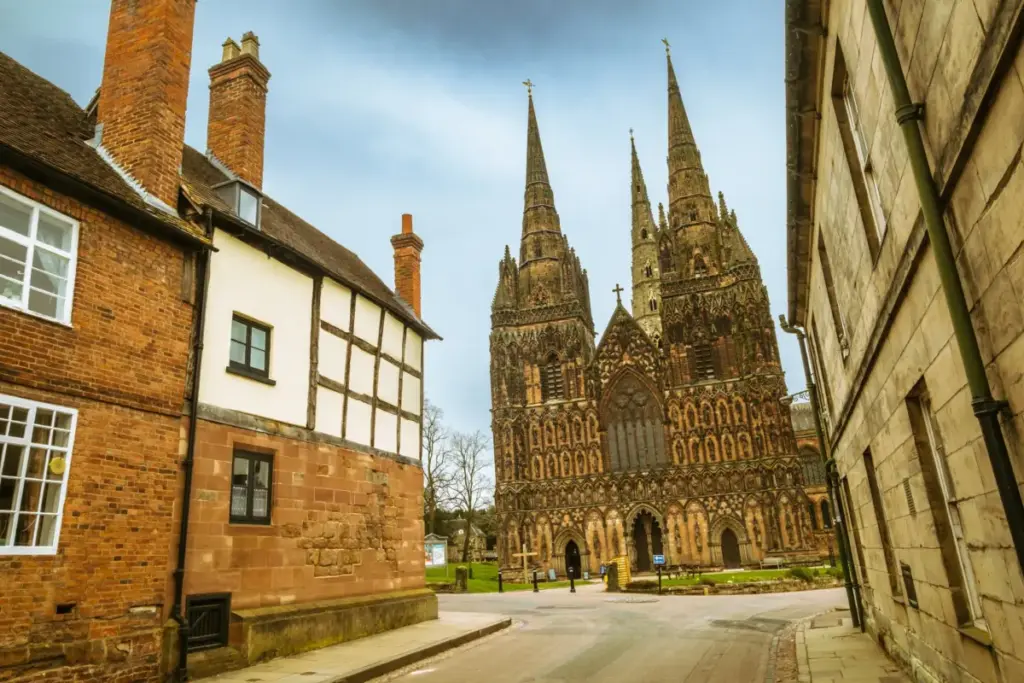
Lichfield’s identity has long been anchored in its rich, visible history, which stretches back well over a millennium. The city’s architectural crown jewel is indisputably its medieval cathedral, dating back to 659 AD. Famously unique as the only medieval English cathedral with three spires, the structure is affectionately known locally as the "Ladies of the Vale." Over centuries, the settlement evolved from a humble ecclesiastical outpost into a prosperous coaching hub, welcoming literary giants such as Samuel Johnson—born in the city in 1709—and cementing an aesthetic characterized by Georgian architecture and quaint, winding cobbled streets.
The Mid-20th Century Stagnation
Through the latter half of the 20th century, Lichfield largely settled into a predictable rhythm. While its architectural beauty and safety made it an attractive destination for retirees seeking a peaceful refuge, the city struggled to retain its younger demographics. Economic opportunities frequently pulled ambitious graduates and young professionals toward nearby industrial powerhouses like Birmingham, or further afield to London. The local high street reflected this demographic skew, dominated by traditional service providers and conservative retail models that did little to capture the imagination of a generation raised on metropolitan dynamism.
The Contemporary Renaissance
The seeds of Lichfield’s modern renaissance were planted over the past decade, catalyzed by a wave of ambitious independent culinary entrepreneurs, progressive urban planners, and a shifting national appetite for high-quality regional living. The arrival of high-end dining concepts—culminating in Michelin recognition—shattered the city’s culinary ceiling. Simultaneously, the conversion of historic community spaces, such as the transformation of St Mary’s Church in the Market Square into a vibrant cultural library and community hub, signaled a cultural awakening. Today, Lichfield is no longer defined by its past demographic stereotype; it is celebrated as a dynamic, forward-thinking micro-city where heritage and contemporary lifestyle exist in harmonious synergy.

Supporting Context & Metrics: Property, Commutability, and Lifestyle
The Economics of Relocation: Housing Market Analysis
For prospective buyers fleeing the stratospheric costs of the South East, Lichfield offers a compelling financial proposition without compromising on quality of life. According to comprehensive market data from Rightmove and local regional estate agencies such as Hunters, the overall average property price in Lichfield over the past year sat at £360,606.
To contextualize this figure, one need only look at immediate neighboring hotspots. In Sutton Coldfield, located just down the road toward Birmingham, average home prices soar to £416,897. Meanwhile, the chasm between Lichfield and the capital remains staggering: the typical London home commands a formidable £663,348.
Breaking down Lichfield’s housing stock by property type reveals a diverse market capable of accommodating various life stages:
- Detached Properties: Averaging £553,304, offering substantial family space and gardens.
- Semi-Detached Properties: Averaging £317,876, representing the classic choice for growing families.
- Flats and Apartments: Averaging £195,959, ideal for first-time buyers, young professionals, and downsizers.
Furthermore, industry experts note that property transactions in Lichfield often benefit from faster purchase timelines compared to congested southern markets, reducing the notoriously stressful friction of the British home-buying process.
Connectivity and Commutability
The modern exodus from London and Birmingham is heavily underpinned by exceptional transport infrastructure. Lichfield boasts two distinct railway stations—Lichfield City and Lichfield Trent Valley—providing direct, seamless access to major economic centers. Commuters can step onto a train and arrive at London Euston in just 72 minutes. Additionally, the city’s strategic proximity to larger regional hubs including Birmingham (approximately 16 miles south), Nottingham, and Stoke-on-Trent ensures residents enjoy access to extensive employment networks while retreating to a tranquil sanctuary at the end of the working day.

Culinary Excellence and Local Culture: A Foodie Destination
It would be remiss to discuss Lichfield’s modern resurgence without examining its astonishing gastronomic footprint. For a city of its relatively modest scale, the density and quality of its dining establishments are nothing short of extraordinary.
Michelin-Star Prestige and Fine Dining
At the pinnacle of the city’s dining scene are two Michelin-starred restaurants that draw epicures from across the Midlands and beyond. UPSTAIRS by Tom Shepherd, helmed by a West Midlands native, has achieved critical acclaim for its inventive, hyper-seasonal seven-course tasting menus featuring exquisite pairings like beef tartare, red cabbage gazpacho, and locally sourced trout. Adding to the narrative of localized charm, the restaurant takes its name quite literally: it is situated on the first floor, directly above the chef’s father’s jewellery shop.
Complementing this is The Boat, an establishment renowned for its luxurious seafood offerings, plating up fresh oysters, caviar, premium crab, and delicate Orkney scallops.
The Independent Café and Casual Scene
For everyday dining and artisan coffee, Lichfield has cultivated a fiercely loyal, territorial local culture. Bore Street Bakery has achieved near-mythical status among residents; its artisanal pastries routinely sell out by mid-morning, and its signature pink-and-black merchandise has become a badge of honor for locals eager to signal allegiance in the city’s unofficial "coffee wars." Not far behind is Melbourne, another independent café commanding an equally dedicated legion of fans.
For casual dining with a twist, Patty Freaks has captured public imagination by winning awards for eccentric creations like the "Cinnabull"—a smashed beef patty served inside a cinnamon knot baked daily at Bore Street Bakery. Alongside its gourmet burgers, the venue houses a free retro gaming arcade, a Pokémon card retail space, and a community-minded initiative offering £1 children’s meals during school holidays.

Meanwhile, Jungle St Kitchen provides an immersive world street food and bubble tea experience, fusing Spanish, Mexican, Indian, Greek, South American, and Vietnamese cuisines under a highly popular Bring Your Own Bottle (BYOB) policy with zero corkage fees.
Green Spaces and Community Life
Beyond gastronomy, Lichfield’s natural landscape serves as the literal and figurative lungs of the city. Beacon Park, spanning 70 pristine acres, holds a prestigious Green Flag Award for its immaculate maintenance. It offers residents a nine-hole golf course, modern padel courts, and children’s play areas.
Annually, the park transforms into the epicenter of community celebration during the Lichfield Proms. On the first Saturday of September, families and friendship groups converge on the lawns with deckchairs, hampers, and prosecco to sing along to patriotic anthems and sea shanties under the Staffordshire sky.
Future Outlook: Sustaining Momentum in a Competitive Landscape
As Lichfield enters the latter half of the 2020s, local stakeholders, urban planners, and estate analysts face the enviable challenge of managing success. The city’s unique blend of high-speed rail connectivity, top-tier grammar school education access, and a burgeoning culinary identity ensures that demand for housing will remain robust.
Yet, community leaders remain acutely aware of the delicate balance required to preserve the very charm that draws newcomers in the first place. Protecting independent retailers from commercial homogenisation, ensuring infrastructure scales responsibly alongside population growth, and maintaining housing accessibility for younger local families will be critical priorities in the coming years.

For now, however, the verdict from both long-term residents and recent arrivals is resoundingly unified. As expressed by local commentators across digital forums and community networks, Lichfield is no longer a sleepy town flying under the radar. It is a thriving, beautiful, and culturally rich micro-city that successfully ticks every box for modern British living—proving definitively that you can embrace the tranquility of the countryside without ever truly losing touch with the pulse of the nation.