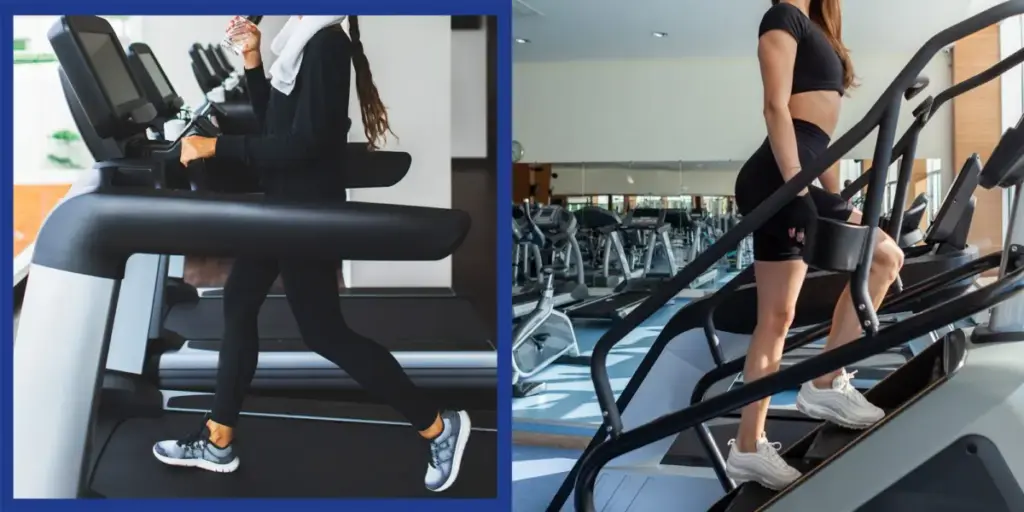
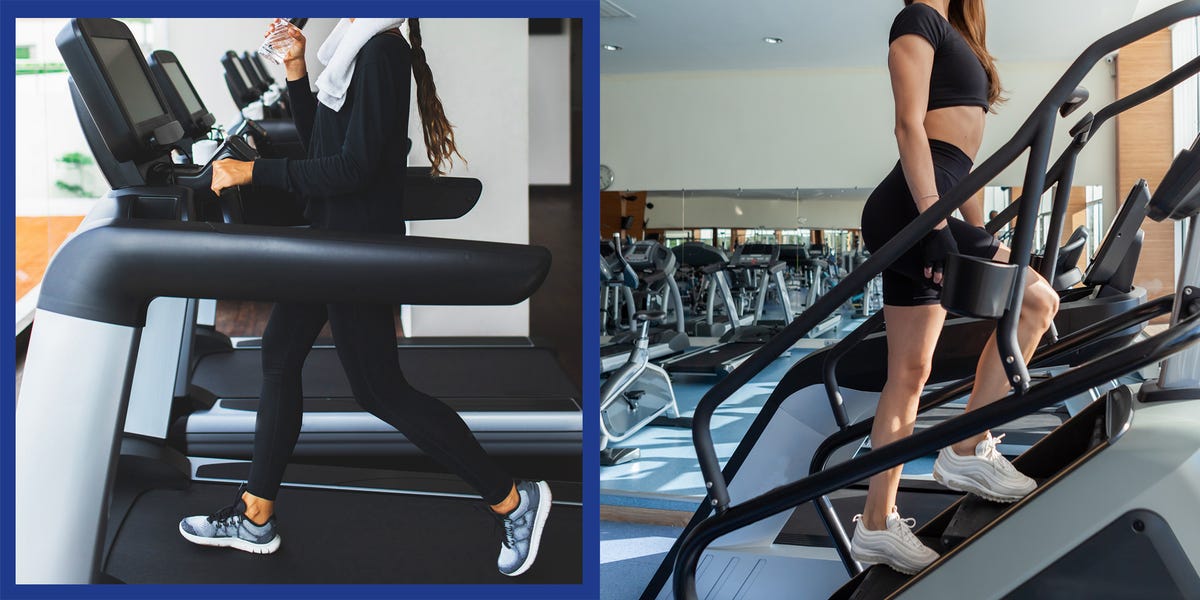
Every trip to the gym presents a familiar, high-stakes dilemma: how to maximize results in the shortest amount of time. Whether your primary objective is torching calories, developing muscular definition, or building cardiovascular endurance, efficiency is the name of the modern fitness game. When gym-goers narrow down their choices for high-impact indoor cardio, two reigning champions almost always emerge: walking on an incline and stair climbing.
At first glance, these two modalities appear to share a nearly identical DNA. Both simulate the natural, grueling act of moving upward against gravity. Both promise a heavy sweat, sculpted lower-body aesthetics, and a pounding heart rate. However, beneath the surface of these seemingly interchangeable workouts lies a world of biomechanical differences, distinct physiological demands, and vastly different perks.
To determine which machine truly deserves prime real estate in your weekly routine, we turned to top exercise physiologists and strength coaches. By breaking down how your muscles, joints, and cardiovascular systems react to each machine, this deep dive explores the nuances of calorie burn, strength development, and injury prevention—ultimately providing you with the blueprint to optimize your next workout.
Detailed Chronology & Expert Insights: Understanding the Biomechanics
To truly appreciate what happens to your body when you step onto a cardio machine, we must examine the biomechanics—how your muscles, bones, tendons, and ligaments work in harmony to produce movement. According to leading fitness experts, the physical demands of an incline treadmill versus a stair stepper diverge almost immediately.
Meet the Experts
Alexander Rothstein, EdD: Exercise physiologist and program coordinator of Exercise Science at the New York Institute of Technology.
Catherine Jarrett, PhD, RDN: Registered dietitian and exercise physiologist at Washington State University.
Albert Matheny, RD, CSCS: Registered dietitian, strength coach, and co-founder of SoHo Strength Lab.
Your Body on Incline Treadmill Walking
Traditional, flat-ground treadmill walking is often viewed as a reliable baseline—accessible, steady-state movement. However, the moment you introduce an incline, the physics of the exercise change dramatically.
"Traditional walking on a treadmill is an easy task, but once you add that incline, you now have to work against gravity to propel yourself upwards," explains Dr. Alexander Rothstein. "That’s considered a much harder task compared to just walking."
When you elevate a treadmill deck (ranging from a modest 3% slope to grueling 12% or 15% inclines), your center of gravity shifts. To maintain your balance and keep moving forward, your posture naturally adjusts. As Dr. Rothstein notes, exercisers instinctively lean forward from the ankles, and sometimes from the hips and back, to compensate for the upward slant.
This postural shift fundamentally alters muscle recruitment. Incline walking places a heavy demand on the posterior chain—specifically activating your calves, glutes, and hamstrings—with recruitment scaling upward as you quicken your pace.
Your Body on the Stair Stepper
Stepping onto a stair climber shifts the physical vector entirely from a forward diagonal to a purely vertical plane.
"You’ll find that you’re engaging similar muscle groups with the stair stepper," says Dr. Catherine Jarrett.
However, the execution is vastly different. On a stair stepper, you are required to lift your knees significantly higher than you would during a typical stride on a treadmill. This demands a much larger hip-flexion motion.
"The same component of having to press down into the ground is still happening," Dr. Rothstein points out. "You definitely still use your calves, but not as much." Instead, the repetitive, weighted motion of driving your body upward against a continuous flight of descending stairs places an immense amount of work onto your quadriceps, glutes, and hamstrings.
Supporting Context & Metrics: Calories, Cardio, and Strength
When gym-goers debate these two machines, the conversation inevitably turns to three metrics: calorie burn, cardiovascular adaptation, and strength gains. Let’s look at what the science and the numbers reveal.
1. Which One Burns More Calories?
The short answer is: It depends heavily on you.
Before looking at averages, fitness experts emphasize that a multitude of personal variables dictate calorie expenditure on any cardio machine. These include workout intensity, speed, incline settings, baseline aerobic fitness, and body weight.
"Intensity is a big one, along with your speed, incline, and body weight," Dr. Jarrett explains. "If you weigh more, there’s more gravity acting on your body, and you’ll burn more calories."
Furthermore, your baseline conditioning matters. Highly conditioned individuals often burn slightly fewer calories during the exact same workout than a beginner because their bodies have adapted to become metabolically and aerobically efficient. To achieve the same calorie burn, a fit individual must dial up the intensity, speed, or incline.
The Numbers Breakdown:
Generally speaking, a 150-pound individual burns roughly 200 to 300 calories in a 30-minute session on either a stair climber or an incline treadmill, provided the pace is challenging.
According to the American Council on Exercise (ACE) fitness calculator, a 150-pound person typically burns about 272 calories climbing stairs continuously for 30 minutes.
By comparison, that same person walking at a "very brisk" flat pace of 4 miles per hour burns roughly 170 calories (though adding a steep incline significantly bridges this gap).
The Verdict on Calorie Burn: While both machines are elite calorie torchers, the stair stepper usually edges out the treadmill when compared minute-for-minute at standard intensities. "More people struggle with the stair stepper because, if it was moving at the same speed as a treadmill, the act of having to lift your leg the full distance is technically harder," Dr. Rothstein notes.
2. Which One is a Better Cardio Workout?
Cardiovascular endurance is a measure of how efficiently your heart, lungs, and circulatory system deliver oxygen to working muscles. Both machines excel here, but the cardiovascular stress they induce differs in character.
Intensity Control: On an incline treadmill, you dictate the parameters. You can manipulate both speed and incline to keep your heart rate in a steady-state zone or scale it up into interval training. On a stair stepper, even the lowest settings force an immediate, vertical lift, making it notoriously difficult to keep your heart rate low.
VO2 Max and Oxygen Demand: The stair stepper tends to challenge exercisers rapidly, spiking heart rates and pushing individuals into a higher VO2 max zone much faster than flat or incline walking. "If you had to match them one-to-one, the stair stepper has a higher demand" on the cardiovascular system, says Dr. Rothstein.
Ultimately, however, cardiovascular success comes down to consistency. As Dr. Jarrett wisely notes: "The type of exercise you’ll get the most out of is the one you’ll continue to do. When it comes to cardiovascular health, it’s about what you’ll do consistently."
3. Which One is a Better Strength Workout?
If your goal is building lower-body muscle tone while getting your cardio in, strength coach Albert Matheny, RD, CSCS, co-founder of SoHo Strength Lab, points to the stair stepper as a powerhouse for muscular recruitment.
"You’re recruiting more of your quads and glutes when you’re lifting your whole body up vertically," Matheny explains. While you can certainly manipulate a treadmill’s incline to force higher knee drives, the continuous vertical lifting inherent to the stair stepper yields superior muscle recruitment for the anterior chain (quads) and glutes.
Joint Health and Injury Considerations
Before crowning the stair stepper the definitive winner for strength, you must weigh the impact on your joints.
Incline Walking and Joint Preservation: Research highlights the unique therapeutic benefits of incline walking. Studies published in journals like Gait & Posture and Sports Medicine and Health Science have demonstrated that walking on a treadmill set to an elevation of at least 10% actually puts less stress on the knee joint while effectively strengthening leg muscles. Furthermore, clinical trials found that incline walking successfully lowered knee pain and increased functional strength in older adults.
The Stair Stepper: While widely considered a low-impact workout because your feet never leave the pedals (eliminating the pounding shock of running), the constant eccentric loading on the knees going up steps can sometimes exacerbate existing patellofemoral issues.
Ultimately, because both machines are fundamentally low-impact compared to running, you cannot go wrong with either—provided your body tolerates the movement pattern.
Future Outlook: The Rise of Cross-Training and Strategic Programming
As fitness science evolves away from single-modality routines toward holistic wellness, experts are increasingly advocating for cross-training. Rather than viewing the gym floor as an "either-or" battleground between the treadmill and the stair stepper, modern programming encourages athletes to utilize both tools in tandem.
If you are pressed for time and hunting for maximum results, rotating between the two equipment pieces during a single session—such as spending 15 minutes on an incline treadmill followed by 15 minutes on the stair stepper—delivers the best of both worlds.
"Having both in your toolkit is helpful," Dr. Rothstein summarizes. "It’s almost like cross-training."
By pairing the joint-friendly, posterior-chain-dominant burn of an incline treadmill with the quad-heavy, cardiovascular intensity of a stair stepper, you bulletproof your body, prevent workout monotony, and continuously challenge your physiological limits.
Expert Tips for Maximizing Each Machine
No matter which machine you decide to anchor your routine with, implementing proper form is essential to prevent injury and extract maximum efficiency:
On the Incline Treadmill:
Ditch the Death Grip: Avoid leaning heavily on the handrails or console. Doing so offloads your body weight, drastically reducing your calorie burn and engaging your core improperly. If you need to hold on for balance, use a light fingertip touch.
Lean from the Ankles: When the incline goes up, hinge slightly forward from your ankles—not your waist—to match the natural angle of the hill.
Pace Wisely: You do not need to sprint at a 15% incline. A brisk, controlled walk (3.0 to 3.5 mph) at a steep incline is far more effective and safer than running uphill with poor form.
On the Stair Stepper:
Stand Tall: Keep your torso upright. Leaming forward and resting your upper-body weight on the side rails defeats the muscular recruitment benefits of the movement.
Full Range of Motion: Avoid taking shallow, choppy half-steps. Press firmly through your entire foot and allow your leg to fully extend on every upward drive.
Control the Descent: Do not let your feet stomp down uncontrollably; maintain a smooth, rhythmic cadence to protect your knees and ankles from undue stress.