Executive Overview
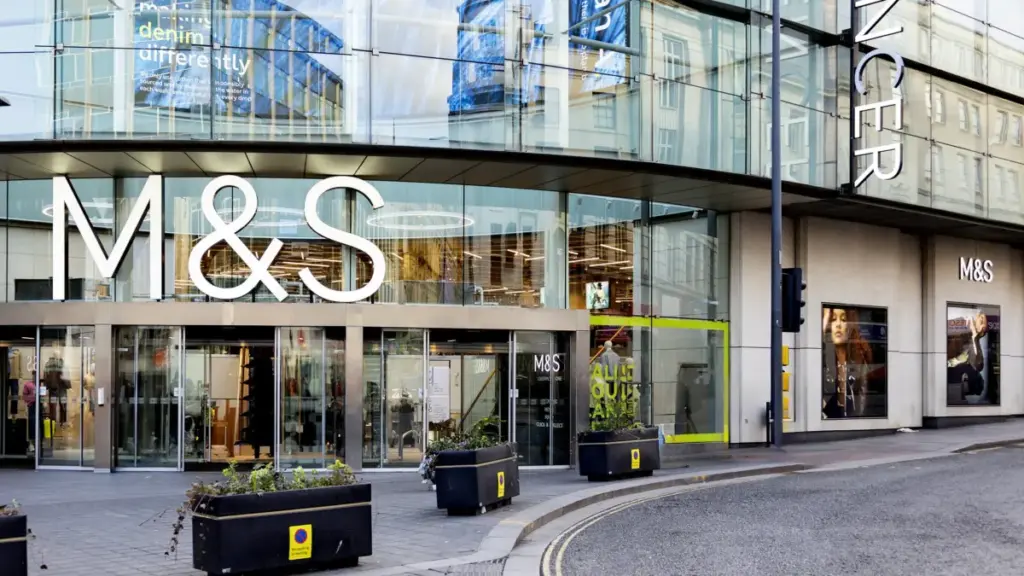
In an era where celebrity misdemeanors are routinely amplified across 24-hour news cycles and social media feeds, few confessions arrive with quite the disarming, self-deprecating candor of Declan Donnelly’s latest revelation. The 50-year-old television presenter, best known as one-half of the beloved broadcasting duo Ant and Dec, recently confessed to inadvertently "breaking the law" after walking out of a Marks & Spencer (M&S) motorway service station with an entire basket of unpaid goods.
The incident, which occurred following a holiday in Cornwall with his wife, Ali Astall, highlights a surprisingly common psychological phenomenon: the cognitive dissonance of completing the digital steps of a transaction—such as scanning items and loyalty cards—while omitting the final, essential financial exchange. What began as a routine pit stop at the Bridgwater Services in Somerset rapidly transformed into a high-anxiety ordeal for one of Britain’s most recognizable media personalities.
Rather than resulting in a high-speed motorway pursuit by local constabulary, the episode ended amicably through a combination of swift administrative intervention, corporate pragmatism, and philanthropic retribution. This in-depth report examines the chronology of the inadvertent heist, the mechanics of modern self-service technology that facilitated the error, the comedic fallout broadcast on the duo’s podcast Hanging Out With Ant And Dec, and the broader cultural implications of retail friction in automated environments.
Detailed Chronology: From Cornwall to the Bridgwater Services
The events unfolded in late August or early September 2026, as Declan Donnelly and his wife, Ali Astall, navigated the final leg of their lengthy driving journey home from a coastal holiday in Cornwall. Long-distance driving across the United Kingdom frequently necessitates strategic stops along the motorway network, with drivers weighing up the quality of amenities, fuel pricing, and culinary offerings.
According to Donnelly’s account shared on his podcast, he and his wife share a specific preference for service stations that house an M&S Simply Food outlet. Citing the retailer’s reputation for superior sandwich selections and elevated travel snacks, the couple pulled off the M5 at Bridgwater Services in Somerset.
The Assembly of the "Heist"
Upon entering the store, the couple curated a selection of travel provisions designed to sustain them through the remainder of their journey. The haul included:

- Standard lunch sandwiches (specifically an egg and maple bacon option)
- Artisanal crisps
- A "little sweet treat" for the road
- A sharing portion of bang bang chicken
With their provisions secured in a basket, Donnelly approached the self-service checkout area—a zone designed for speed and convenience, yet heavily reliant on consumer attentiveness.
The Self-Service Oversight
The mechanics of Donnelly’s error lay in the partial execution of the self-checkout protocol. Demonstrating civic mindfulness and consumer routine, Donnelly methodically scanned each item in the basket. Recognizing the need to transport the goods, he proactively scanned a "bag for life," packing the items securely. Furthermore, with the practiced muscle memory of a modern loyalty scheme participant, he successfully scanned his M&S Sparks card.
At this juncture, in Donnelly’s mind, the transaction was complete. The digital ledger had recorded the items; the loyalty account had been credited. Crucially, however, the financial payment authorization phase—inserting a contactless card or device to clear the monetary balance—was bypassed entirely.
Convinced he had successfully settled his bill, Donnelly scooped up his bag of provisions, exited the store, and returned to his vehicle, completely oblivious to the fact that he had legally committed an act of shoplifting.
The Realization: Mid-Sandwich Epiphany
The cognitive disconnect persisted until Donnelly and his wife were back on the motorway, miles into their ongoing journey. Having opened his packaging, Donnelly began eating an egg and maple bacon sandwich.
It was mid-bite, surrounded by the empirical evidence of his lunch, that the procedural anomaly struck him. He turned to his wife, Ali, and delivered a stark realization:

"I haven’t paid for this."
When questioned by his bewildered wife, Donnelly retraced his steps mentally, confirming his error: "I haven’t paid for it. I bleeped me Sparks card and I just left."
The realization triggered an immediate wave of panic. As one half of an iconic television duo whose faces adorn British living rooms on a weekly basis, the prospect of being flagged as a shoplifter carried immediate reputational and social anxieties. Donnelly attempted to rectify the situation in real-time by telephoning the service station directly, but was unable to establish contact through the switchboard.
Fearing the worst—and convinced that his distinct public profile would make identification inevitable—he escalated the matter to his management team. As his co-host, Ant McPartlin, later remarked on the podcast: "You’re one of the most recognisable men in Britain, you can’t get away with this behaviour."
Corporate Resolution and the Philanthropic Penalty
Upon receiving frantic instructions from Donnelly, members of his office team contacted Bridgwater Services. They explained the bizarre scenario: a national treasure had inadvertently stolen a lunch, consumed a portion of it on the highway, and was now seeking to retroactively settle his debt.
Store management demonstrated considerable pragmatism. Recognizing that there was no operational mechanism to retroactively process a transaction for consumed goods through their automated tills, and determining that police involvement over a few stray sandwiches and some bang bang chicken was entirely disproportionate, staff waived formal punitive measures.

Instead, they offered a surprisingly wholesome compromise: they thanked the presenter for his honesty and suggested he make an equivalent financial contribution to the retailer’s designated charity partner.
Donnelly readily complied, ultimately paying a sum exceeding the retail value of the items he had taken.
"I made a donation to charity to cover the sandwiches," Donnelly explained on the podcast. "So I am slightly out of pocket, because it was more than my sandwich."
Supporting Context & Metrics: The Psychology of Self-Checkout Errors
While Donnelly’s status as an A-list celebrity turned his mistake into front-page entertainment, retail industry analysts note that accidental shoplifting at self-service checkouts is a surprisingly widespread phenomenon.
Key Factors Contributing to Self-Checkout Omissions:
- Cognitive Overload: Shoppers navigating long journeys often experience travel fatigue, reducing their cognitive capacity to track multi-step transactional processes.
- The "Completion Illusion": Completing auxiliary actions—such as scanning a loyalty card, bagging items, or printing a receipt—creates a psychological sense of finality, tricking the brain into believing the transaction is finished before payment is authorized.
- Frictionless Design Flaws: Modern self-service kiosks frequently omit hard physical barriers at the point of exit, relying instead on honor systems or delayed gate-release mechanisms that can easily be bypassed when crowds are flowing smoothly.
Retail experts estimate that millions of pounds in inventory are lost annually not to malicious intent, but to "absent-minded" scanning errors, unread screen prompts (such as "Please wait for assistance" or "Insert Card"), and misplaced trust in digital receipts.
Future Outlook: Podcast Fallout and Cultural Legacy
The incident served as prime comedic fodder for Hanging Out With Ant And Dec, reinforcing the easy chemistry and self-deprecating humor that has kept the duo at the summit of British television for over three decades.

While Ant McPartlin joked that Donnelly’s criminal escapade had likely torpedoed any potential corporate sponsorship deals between the podcast and Marks & Spencer—quipping, "They were going to be a sponsor of this podcast… Not anymore"—the reaction from the public and the retailer has been overwhelmingly warm.
For M&S, the viral nature of the anecdote provided organic, positive PR, underscoring customer loyalty and charitable giving without requiring corporate intervention. For Donnelly, the episode closes the book on what he wryly termed his briefest career as a high-street felon—leaving him richer in charitable karma, slightly lighter in the wallet, and undoubtedly more attentive the next time he approaches a motorway service station checkout.