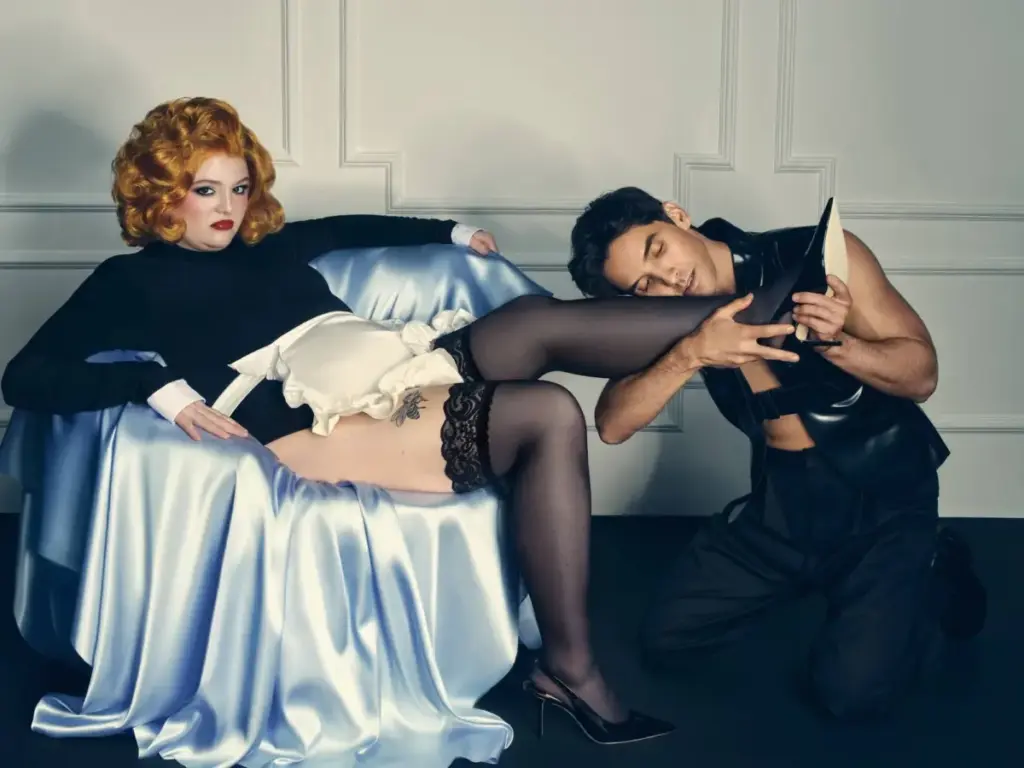
As the critically acclaimed, Emmy-winning HBO comedy series Hacks draws its curtain, the cultural landscape of television bids farewell to one of its most eccentric and enduring dynamics: Jimmy and Kayla. Brought to life by co-creator Paul W. Downs and breakout comedic force Meg Stalter, the beleaguered manager-assistant duo have left an indelible mark on 21st-century comedy.
In a joint cover interview reflecting on the end of the series, Downs and Stalter opened up about the profound grief of the show’s conclusion, the evolution of their electrifying on-screen chemistry, and how their partnership transcended the traditional boundaries of the television sitcom. From breaking ground as the first comedy duo to execute an on-screen cocaine boof to navigating the modern, digital-first comedy ecosystem, Downs and Stalter have cemented their legacy. This retrospective explores their journey, the shifting paradigms of modern comedy, and what the future holds as two of television’s brightest stars close the chapter on a defining era.
Detailed Chronology
The Precipice of the Finale
Weeks before the series finale of Hacks aired, the atmosphere surrounding the cast and crew was thick with melancholy and disbelief. For Downs, the end of the journey triggered a wave of genuine anxiety and creative mourning.
"I’m not kidding, I have OCD, anxiety, craziness now that the show’s ending," Downs shared, noting that public appearances and interviews alongside Stalter served as a vital anchor during the transition. Stalter echoed these sentiments with her signature theatrical petulance: "I feel sick and I feel like everything is a lie because nothing can last forever."
This deep personal bond translated directly onto the screen, where their characters evolved from a standard Hollywood boss-and-assistant pairing into unlikely business partners and emotional foils to lead characters Ava (Hannah Einbinder) and Deborah Vance (Jean Smart).
From Audition Room to Cultural Touchstone
When Stalter first auditioned for the role of Kayla, she entered the ecosystem as a darling of the underground alt-comedy and digital circuit—famous for viral sketches like "Hi Gay" and her unique brand of surreal, hyper-online observational humor. Downs, meanwhile, came fresh off the historic success of Comedy Central’s Broad City, bringing his mastery of grounding high-chaos comedy in reality.
Initially, neither actor anticipated how central the Jimmy-and-Kayla dynamic would become to the overarching narrative of Hacks. According to Downs, once Stalter stepped onto the set, the collaborative alchemy was instantaneous. The writers’ room quickly realized that giving the duo room to riff and improvise was the secret weapon of the series. The result was a dynamic defined by Stalter’s ineffable quirkiness and Downs’ singular, deadpan delivery—a modern comedic marriage reminiscent of classic silver-screen pairings like Lucy and Ricky.
Supporting Context & Metrics
A New Era of Digital and Alt-Comedy
The success of Hacks mirrors a broader revolution in the comedy landscape over the past half-decade. Speaking on how the industry has shifted, Stalter and Downs highlighted the democratization of comedy through social media and digital platforms in the wake of the COVID-19 pandemic.
In an era prior to ubiquitous smartphone clips and algorithmic discovery, breakout talent relied heavily on traditional festival circuits and live stand-up showcases to secure representation. Hacks actively disrupted this traditional pipeline by populating its ensemble with forward-thinking alt-comedians and digital creators, including season four additions like Robby Hoffman and Jake Shane, alongside stand-up fixtures Caitlin Reilly and Hannah Pilks.
"Alt comedians can find their audiences, because there’s so many people that maybe would like that stuff, but they don’t necessarily go to stand-up clubs," Stalter noted. Downs added that the ultimate joy of running the show has been providing a primetime springboard for artists who traditionally might never have crossed over onto mainstream television.
Politically Engaged Stardom
Unlike past generations of comedians who often drifted into apolitical complacency as their wealth and fame grew, the core ensemble of Hacks—particularly Stalter and Einbinder—have embraced a fiercely progressive, values-driven public persona. Whether wearing "ICE Out" pins on red carpets, utilizing award show acceptance speeches to advocate for Palestinian liberation, or speaking out against domestic immigration enforcement, these performers view their platforms as an obligation rather than a luxury.
Downs noted that this ethos was baked into the conceptual DNA of Hacks back in 2015, when creators Downs, Lucia Aniello, and Jen Statsky were brainstorming the tragic trajectory of Deborah Vance. Vance represented a generation of comedians who built progressive footholds in media only to lose touch, sell out, or age out of cultural relevance. The narrative engine of Hacks became an exploration of unlearning those compromises—a theme that resonates deeply with the real-world actors who refuse to separate their art from their civic conscience.
Official Statements
The deep mutual respect between the two performers was on full display throughout their retrospective conversations, punctuated by playful banter regarding their exclusive status as a comedic duo.
-
On Their Irreplaceable Partnership:
When asked if they could ever envision working in another duo format, Stalter joked, "I would probably un-like all of Downs’ Instagram posts if he ever worked with some funny fat girl besides her… If he’s in a comedy duo [with someone else], I am committing vehicular manslaughter. I am absolutely not even just saying [it] — I am doing damage to the world." Downs reciprocated the sentiment, noting that he actively turns down projects that would separate their on-screen pairing: "Someone just pitched me an Eddie Murphy-Paul Downs vehicle and I said no. I said I need it to be Meg." -
On Character Evolution:
Reflecting on Kayla’s unexpected depth, Stalter pointed out that the character’s inherent good heart and underlying intelligence saved her from sliding into flat caricature. "She just thinks differently. Just like Patrick [Star]," Stalter quipped, drawing a comparison to the famous SpongeBob SquarePants character. Downs expanded on this structural approach: "We plot it a little bit more like a drama in that the characters… really change. We always wanted it to be something where these characters evolve because I think, sure, some people feel that people don’t change, but I do think people evolve." -
On Remaining Grounded:
Stalter offered a poignant reminder of the necessity of keeping one’s feet planted in everyday reality despite Hollywood excess: "I don’t know how you could be funny if you’re not connected to real people that have a real life… Celebrities are on a different planet, and you have to acknowledge that… if you don’t stay connected to people, I don’t know how you could be funny if you lose touch with reality that much and get lost."
Future Outlook
As Hacks exits the stage with an armful of Emmy awards and a permanent place in television history, the professional futures of Paul W. Downs and Meg Stalter point toward continued artistic exploration. While the television landscape searches for its next defining comedy, the blueprint left by Hacks—balancing razor-sharp writers’ room precision with uninhibited, collaborative improvisation—has set a new gold standard for the medium.
For now, fans must find solace in the five seasons of television that redefined modern satire, complex female-and-ensemble dynamics, and workplace relationships. Whether or not Hollywood manages to convince Downs and Stalter into a cinematic When Harry Met Sally or Romy and Michelle reboot remains to be seen. What is certain, however, is that the cultural footprint left by Jimmy, Kayla, and the masterminds behind them will continue to reverberate across the comedy landscape for generations to come.