Executive Overview
The eternal, albeit exhausted, cultural standoff between Millennials and Gen Z over the supremacy of the side part versus the middle part has officially been upstaged. For years, digital discourse has endlessly dissected how Millennials cling to their deep side-swept partitions as markers of emotional depth, while Gen Z fiercely defends the egalitarian symmetry of the middle part. But the parameters of this generation-defining aesthetic war have just shifted dramatically.
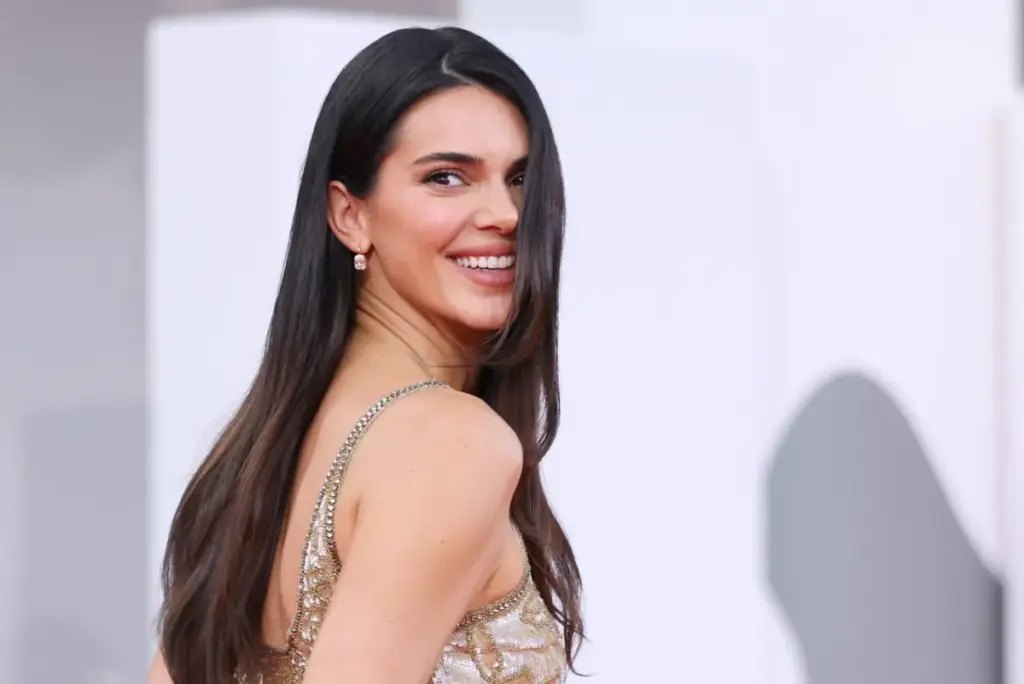
Enter Kendall Jenner. Stepping onto the high-stakes red carpet at the Venice Film Festival, the supermodel bypassed the tired binary debate entirely. Instead, she silently posed a much bolder, culturally disruptive question: Should we bring back the zigzag part?
What followed was an immediate ripple effect across the global beauty and fashion landscape. The jagged, lightning-bolt parting—a style deeply synonymous with the chaotic, hyper-stylized energy of the early 2000s—is suddenly back in heavy rotation. Long dismissed as a relic of pop star music videos, mall culture, and messy bathroom-mirror experiments, the zigzag part is undergoing a sophisticated, high-fashion rehabilitation.
This in-depth feature explores the resurgence of the millennium-era hair trend, tracing its historical roots from Y2K pop culture icons to its modern, polished reinvention on elite red carpets. We analyze expert commentary from leading hairstylists, evaluate consumer data trends, and examine why today’s beauty consumers are seeking out playful, low-commitment nostalgia over hyper-minimalist perfection.
Detailed Chronology: From Y2K Bathroom Mirrors to the Venice Red Carpet
To understand the weight of Kendall Jenner’s recent hair statement, one must first look backward. The trajectory of the zigzag part is a fascinating study in micro-trends, amateur styling struggles, and celebrity-driven pop culture.

The Early 2000s: The Era of the Tail Comb and Tears
If you came of age as a Millennial in the early 2000s, the zigzag part is likely tied to visceral, emotionally charged memories. Standing in front of a bathroom mirror, armed with a cheap plastic tail comb and an excessive amount of hair gel, teenagers around the world attempted to carve crisp, jagged lines through their strands.
Success was rare. More often than not, the attempt resulted in frustration, uneven clumps of hair, and near tears. Despite the technical difficulty, jagged partitions were absolute royalty in the hierarchy of Y2K hair trends. They were championed by the era’s biggest icons—from Christina Aguilera during her Stripped era to Julianne Hough, pop princesses, and Disney Channel stars. The look was rebellious, geometric, and unapologetically loud, perfectly matching the metallic fashion, low-rise jeans, and frosted lip gloss of the decade.
The Long Hiatus: The Rise of Minimalist Uniformity
As the 2010s ushered in the age of Instagram aesthetics, balayage, and sleek, minimalist styling, the zigzag part quietly vanished. It was deemed too fussy, too literal in its adherence to a bygone decade, and altogether incompatible with the clean-girl aesthetics and effortless beach waves that dominated the beauty zeitgeist. For over a decade, hair parts became strictly linear—divided neatly down the center or swept cleanly to one side. The hair world favored streamlined predictability.
The Modern Re-emergence and High-Fashion Revival
While Jenner’s Venice Film Festival appearance brought the trend back into mainstream conversation, the groundwork for its return was laid slowly over the preceding few years. Trend-setter Bella Hadid—widely recognized as an architectural anchor for the Y2K revival—tested the waters by sporting subtle zigzags in editorial spreads and personal Instagram posts.
However, Jenner’s red-carpet execution marked the tipping point. Paired with a stunning gold floral dress and an otherwise understated, glossy blowout, Jenner’s hair allowed the jagged lines to command total attention. It transformed what was once a juvenile novelty into a striking, high-fashion statement piece.

Supporting Context & Metrics: The Psychology of Hair Nostalgia
The revival of the zigzag part is not happening in a vacuum. It is part of a broader macroeconomic and sociological shift toward comfort-driven nostalgia in beauty and fashion.
Why Nostalgia Dominates Modern Beauty
According to cultural forecasters, periods of economic uncertainty and rapid technological advancement consistently trigger a yearning for simpler aesthetic eras. For Millennials and older Gen Z consumers, the early 2000s represent a time of analog comfort, vibrant pop culture, and uninhibited self-expression.
Unlike major chemical treatments, cuts, or permanent color transformations, styling trends like the zigzag part offer an immediate psychological boost with zero long-term consequence. It is a form of low-stakes experimentation. As trend cycles accelerate faster than ever due to TikTok and Instagram, consumers are actively looking for micro-trends that allow them to reinvent their look for a single weekend or evening.
Consumer Search and Market Data
Retail data from major beauty platforms indicates a sharp spike in searches for parting tools, fine-tooth tail combs, and texturizing finishing sprays following major red-carpet appearances featuring nostalgic hair elements. Brands catering to textured parting and structural styling have reported heightened engagement across social media channels, proving that consumers are eager to translate runway statements into at-home reality.
Official Statements & Expert Analysis
To understand how to successfully transition a notoriously difficult Y2K trend into a modern, wearable look, industry experts weigh in on the mechanics of the new zigzag part.

Leo Izquierdo, co-founder of IGK Hair Care, offers a reassuring perspective for those intimidated by memories of their childhood styling failures.
"Zigzag parts have that early-2000s nostalgia, but now feel much more polished and intentional," Izquierdo explains. "For fall, I think we’ll see people playing with their part more in general, and the zigzag is a fun way to do that without committing to a new cut or color."
Unlike the hyper-crisp, rigid lines of twenty years ago, the modern iteration leans into a softer, more organic approach. Izquierdo notes that the updated style should not feel overly precise or stiff.
The Step-by-Step Guide: How to Achieve the Modern Zigzag Part
For beauty enthusiasts looking to recreate Kendall Jenner’s Venice Film Festival look at home, Izquierdo outlines a straightforward, foolproof method:
- Start with Dry Hair: Ensure your hair is completely dry and free of heavy tangles before attempting the partition.
- Deploy the Right Tool: Grab the pointed end of a professional-grade parting tail comb.
- Trace the Line: Begin at the front hairline, moving the comb diagonally from side to side as you steadily work your way backward toward the crown.
- Embrace Imperfection: Keep the sections slightly imperfect. The modern version should look organic rather than strictly geometric.
- Set and Finish: Separate the hair on either side with your fingers. Finish with a light holding or styling spray to control flyaways without compromising natural movement or rendering the part rigid.
Future Outlook: Where Hair Trends Go From Here
As we look toward the upcoming beauty seasons, the revival of the zigzag part signals a broader departure from rigid aesthetic rules. For too long, consumers have been told that their choice of hair part dictates their entire generational identity or personality profile.

The return of playful, decorative parting encourages a return to fun. It tells beauty enthusiasts that hair styling does not always have to be about sleek perfection or severe minimalism; it can be artistic, whimsical, and deeply experimental.
Whether the zigzag part becomes an enduring daily staple or remains a favorite trick for red carpets and weekend outings, one thing is certain: the era of boring hair debates is officially over. The mirror is calling—are you ready to pick up the tail comb?