Fifteen years after Harry Potter and the Deathly Hallows – Part 2 concluded one of the most commercially successful cinematic runs in history, the Wizarding World is officially returning to the screen. HBO and Warner Bros. Discovery are gearing up for the premiere of their massively anticipated, decade-long television reboot of J.K. Rowling’s literary masterwork.
Slated for an eight-episode first season hitting streaming queues this Christmas, the project promises a faithful, deeply immersive, and unprecedentedly expansive adaptation of the original seven novels. Unlike the feature films, which condensed dense tomes into two-hour cinematic blocks, this multi-season television format allows for a granular exploration of Hogwarts School of Witchcraft and Wizardry.
With a star-studded adult ensemble—including John Lithgow as Albus Dumbledore, Paapa Essiedu as Severus Snape, and Nick Frost as Rubeus Hagrid—alongside an all-new Golden Trio spearheaded by newcomer Dominic McLaughlin as Harry Potter, the series is positioned as the definitive modern fantasy event. However, navigating the legacy of the franchise requires balancing immense fan nostalgia, groundbreaking production values, and the persistent industry-wide discourse surrounding author J.K. Rowling.
Detailed Chronology: From Development to Debut
The path to HBO’s live-action Harry Potter series has spanned years of quiet development, corporate restructuring, and high-profile casting announcements.
Inception and Green Light (2021–2024)
January 2021: Industry trade publications first revealed that HBO Max was in nascent exploratory meetings to bring the Wizarding World to the small screen as a live-action series.
April 12, 2023: Warner Bros. Discovery officially greenlit the project during a corporate press event. Executives confirmed a "decade-long" commitment, with each season dedicated to adapting a single book from the franchise.
February 23, 2024: WBD CEO David Zaslav announced a targeted premiere window of 2026 during a quarterly earnings call, though subsequent corporate shifting briefly pushed the timeline before locking in the current release schedule.
Behind-the-Scenes Assembly (2024–2025)
Writing and Directing: Francesca Gardiner (Succession, His Dark Materials) was tapped as writer, showrunner, and executive producer, working alongside director and executive producer Mark Mylod (Game of Thrones, Succession).
Global Casting Searches: In late 2024, open casting calls launched across the UK and Ireland for children aged 9 to 11 to fill the roles of Harry, Hermione, and Ron.
May 2025: HBO officially unveiled the new leading trio: Dominic McLaughlin as Harry Potter, Arabella Stanton as Hermione Granger, and Alastair Stout as Ron Weasley.
Summer 2025: Principal photography commenced on July 14, 2025, returning to the historic soundstages at Warner Bros. Studios Leavesden where the original films were shot.
Teasers, Trailers, and First-Look Reveals (2026)
January 2026: Legendary composer Hans Zimmer and his Bleeding Fingers music collective were announced as the series’ musical architects.
March 25, 2026: HBO released the first official teaser trailer, showcasing the Dursleys, Muggle life, and key aesthetic transitions.
September 2, 2026: An extended teaser trailer debuted, treating fans to early looks at the Sorting Ceremony, Wizard’s Chess, and the "troll in the dungeon" set pieces.
Supporting Context & Metrics: Breaking Down the Reboot
Narrative Scope and Adaptational Fidelity
The primary critique of the original Harry Potter film franchise has always been structural omission: key subplots, minor characters, and entire historical layers of the wizarding world had to be cut for runtime constraints. The television format fundamentally changes this equation.
According to young actor Lox Pratt (who portrays Draco Malfoy), the television series ventures far beyond the conventional narrative boundaries of the novels:
"You get to see so much more than the books… You get to see all the teachers in their little rooms. You get to see Draco at home… In the films, Draco is sort of 2D; he is the sneery villain. I feel like there’s so much more—you need to understand why."
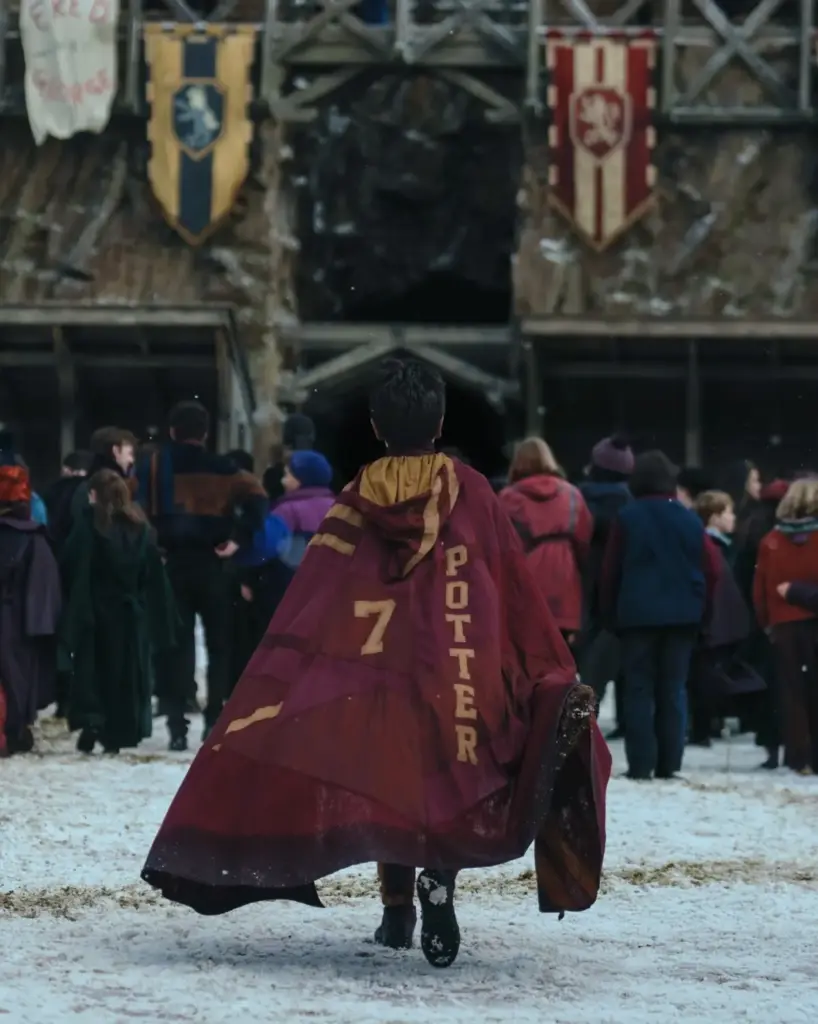
This commitment to expansive storytelling manifests in narrative decisions such as introducing Lucius Malfoy in Season 1 rather than Season 2, aligning character ages more closely with their canonical text descriptions (such as Snape starting his tenure around age 31), and expanding the prominence of athletic milestones like Quidditch matches against Hufflepuff.
Production and Musical Pedigree
The sheer scale of the production is underscored by its creative crew:
Costume Design: Academy Award-winner Holly Waddington leads the sartorial vision.
Score: Hans Zimmer, Anže Rozman, and Kara Talve are tasked with bridging the monumental legacy of John Williams’ original themes with a fresh sonic identity.
Cast Integration: Warwick Davis makes franchise history by reprising his role as Professor Filius Flitwick, serving as the sole bridge between the film saga and the new television canon.
Official Statements and Industry Reactions
The Passing of the Torch
The transition from the original cinematic icons to the new generation has been met with mutual respect. Daniel Radcliffe revealed that he wrote a personal welcome letter to new lead Dominic McLaughlin:
"I just wanted to write to him to say, ‘I hope you have the best time, and an even better time than I did… I just look at them and say, ‘Oh, it’s crazy I was doing that at that age.’ But it’s also incredibly sweet."
McLaughlin, recounting the moment his father handed him the letter on a train, noted the surreal nature of discovering "Dan R." at the bottom of the correspondence. Rupert Grint similarly reached out to Alastair Stout to pass on the mantle of Ron Weasley, praising the production’s fresh, independent identity.
Navigating the Authorial Controversy
J.K. Rowling’s involvement as an executive producer remains a focal point of industry and fan discourse, stemming from her widely condemned anti-transgender statements. While HBO executives, including Casey Bloys, have emphasized that the studio’s primary priority remains the on-screen message of "love, acceptance, and inclusivity," members of the cast have addressed the tension directly.
John Lithgow, cast as Albus Dumbledore, spoke candidly at the Rotterdam Film Festival regarding his decision to take the role:
"J.K. Rowling has created this amazing canon for young people… It’s so much about acceptance. It’s about good versus evil… So I find it ironic and somewhat inexplicable that Rowling has expressed such views… If you read through the Harry Potter canon, you see absolutely no trace of transphobic sensibility. She has written this great meditation on kindness and empathy…"
Nick Frost, who portrays Rubeus Hagrid, echoed a similar sentiment to The Observer, stating succinctly: "She’s allowed her opinion, and I’m allowed mine; they just don’t align in any way, shape, or form."
Future Outlook: A Decade at Hogwarts
With the first eight-episode season locked in for a Christmas 2026 debut, Warner Bros. Discovery is wasting no time mapping out the long-term future of the property. Writing for Season 2—covering Harry Potter and the Chamber of Secrets—began ahead of the series premiere, with studio heads intent on minimizing the production gaps typical of high-end fantasy television.
As HBO embarks on its stated ten-year journey through the Wizarding World, the ultimate test for the network will be proving that a televised retelling can not only honor the cultural footprint of the cinematic originals but carve out a vital, distinct, and enduring magic of its own.




.jpg)