Executive Overview
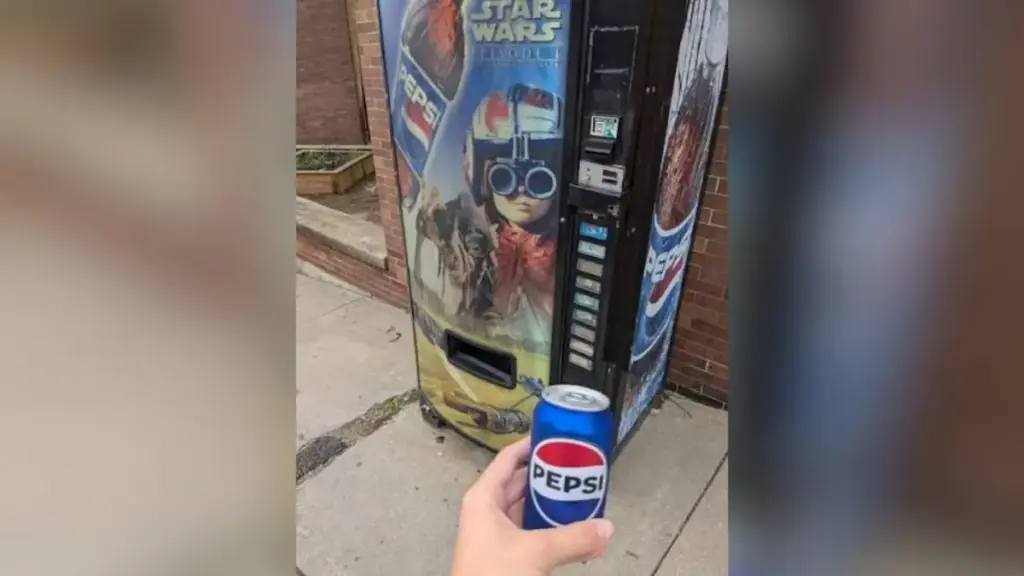
In the quiet, tight-knit neighborhood of Mount Washington in Pittsburgh, Pennsylvania, a localized uproar has spiraled into a viral internet phenomenon. At the heart of the controversy is a piece of late-20th-century pop culture iconography: a weathered, non-operational Star Wars: Episode I – The Phantom Menace Pepsi-Cola vending machine that has stood as a silent, aluminum sentinel outside Fire Station 27 since 1999.
For more than a quarter of a century, this vintage appliance was more than just a place to buy a sugary beverage long after its coin slot had gone dead; it was an unofficial neighborhood landmark, a touchstone of nostalgic millennial culture, and an internet-famous pilgrimage site for cinephiles and soda memorabilia collectors alike.
However, tranquility shattered in late August 2026 when residents awoke to a shocking discovery: the authentic, battle-scarred monolith was gone. In its place stood a crude, hastily hand-painted facsimile—a poorly proportioned decoy that insulted the aesthetic sensibilities of the local community. Outrage was immediate, vocal, and absolute.
What followed was a dizzying, multi-day investigative puzzle involving social media clout-chasing, viral TikTok stunts, anonymous tipsters, municipal confusion, questions regarding corporate philanthropy, and a masked confession. The saga of the missing Mount Washington Pepsi machine offers a stark, modern parable about the collision between genuine community heritage and the algorithmic hunger of the creator economy.
This report provides a comprehensive examination of the incident, tracing the timeline of the disappearance, analyzing the financial and historical context of the machine, weighing the actions of the involved parties through a journalistic lens, and outlining what the future holds for Pittsburgh’s strangest missing-persons—or rather, missing-appliances—case.
Detailed Chronology
1999–2022: The Birth and Maturation of a Landmark
To understand the gravity of the theft, one must understand the provenance of the machine itself. In the summer of 1999, Star Wars: Episode I – The Phantom Menace dominated the global cultural consciousness. As part of an unprecedented cross-promotional blitz, PepsiCo unleashed a massive wave of movie-themed marketing, which included a limited run of distinctive, character-adorned vending machines.
One such machine found a permanent home outside Pittsburgh Bureau of Fire’s Station 27 on Mount Washington. Over the decades, as the paint faded, the buttons jammed, and the internal refrigeration units hummed their final songs, the machine transitioned from a commercial utility into public art. It became a beloved quirk of the neighborhood—a glowing, neon-adjacent monument to an era of blockbuster filmmaking that predated the modern streaming age.
2022: The Corporate Intervention
For years, the machine sat unmaintained, a rusted relic of a galaxy far, far away. That changed briefly in 2022, when PepsiCo—seemingly alerted to the machine’s cult status on social media—stepped in with a localized PR and philanthropic effort. The corporation donated $10,000 to Fire Station 27 and temporarily restored the machine to working order, restocking it with beverages for the local firefighters and visiting fans alike.
Yet, corporate attention is notoriously fickle. Once the initial wave of digital engagement subsided, Pepsi moved on. The machine once again fell out of active commercial service, left to weather the harsh western Pennsylvania winters and blazing summers. Despite its decrepit state, its cultural value only appreciated, turning it into a holy grail for internet subcultures dedicated to liminal spaces and 90s nostalgia.
Late August 2026: The Switch and the Outrage
The tranquility was broken in the final week of August 2026. Locals passing Fire Station 27 noticed something was fundamentally wrong. The vibrant, officially licensed decals of Anakin Skywalker, Queen Amidala, and Darth Maul had been replaced by a smeared, amateurish painting on a generic metal chassis.
Local community groups erupted in anger. Reddit threads dedicated to Pittsburgh quickly filled with condemnations, and local news outlets began sniffing around for answers. Residents felt violated; the machine was woven into the daily fabric of Mount Washington life. Replacing it with a low-effort replica felt like a prank played at the expense of an entire neighborhood.
The Confession and the Mask
As public pressure mounted and local journalists—notably spearheaded by investigative reporting from Axios Pittsburgh—began digging into the disappearance, the perpetrator revealed himself.
Braeden Days, a TikTok content creator boasting a following of nearly one million users, stepped forward to claim responsibility. In a series of social media posts, Days brazenly admitted to orchestrating the entire heist, removing the original multi-ton machine and substituting his hand-painted decoy as part of what he framed as an elaborate, high-stakes internet stunt.
Days later, in an effort to control the rapidly deteriorating public relations fallout, Days published a follow-up video. In a bizarre visual choice emblematic of the modern influencer era, he appeared alongside the real, captured vending machine while wearing a Jar Jar Binks mask. In the video, Days claimed his actions were ultimately benevolent: he intended to professionally restore the battered machine and return it to its rightful post outside Station 27.
However, the stunt quickly muddied the waters. During his theatrical defense, Days publicly questioned the whereabouts of the $10,000 donation Pepsi had made to the firehouse back in 2022, insinuating possible financial impropriety—a claim that demonstrated a profound misunderstanding of the original corporate grant structure.
Supporting Context & Metrics
To fully comprehend the absurdity and impact of the Mount Washington Pepsi machine saga, it is helpful to examine the quantifiable elements driving this modern fable:
- 27 Years of Residency: The machine stood outside Fire Station 27 for approximately 27 years, bearing witness to generations of Mount Washington residents growing up, moving away, and returning.
- 1 Million Followers: The digital footprint of the primary suspect, Braeden Days, highlights the modern disparity between hyper-local physical reality and algorithmic virtual reach. A neighborhood’s 27-year landmark was upended overnight to satisfy metrics on a smartphone screen.
- $10,000 Philanthropic Footprint: The sum donated by PepsiCo in 2022. While internet commentators and stunt creators attempted to tie these funds directly to the ongoing physical maintenance of the appliance, municipal and firehouse accounting confirmed the money was a general donation intended to support the operational capabilities of the station’s brave firefighters, not a dedicated trust fund for a plastic-and-metal soda dispenser.
- Zero Official Municipal Permits: Investigations by local journalists revealed that neither the city nor the fire bureau had authorized the removal, replacement, or "restoration" of the machine, landing the stunt squarely in a legal gray area regarding property theft and public tampering.
Official Statements and Stakeholder Perspectives
The fallout from the stunt has drawn commentary from various corners of the Pittsburgh community, highlighting a stark philosophical divide between traditional neighborhood pride and the transactional ethics of internet content creation.
The Local Resident Perspective
For the residents of Mount Washington, the theft was not viewed as a harmless prank, but as an act of cultural vandalism. Speaking anonymously to local forums, community members expressed deep exhaustion with influencers treating physical neighborhoods as personal content farms.
"You don’t just walk up to a fixture that has stood outside our firehouse for decades and treat it like a prop for your TikTok channel," said one lifelong Mount Washington resident. "We don’t care that you’re going to paint it. You stole our property without asking, put up garbage in its place, and expected us to applaud your creativity."
The Fire Department and Municipal Silence
The Pittsburgh Bureau of Fire and local officials found themselves thrust into an awkward bureaucratic limbo. While the fire station is public property, the vending machine existed in a unique space of informal community adoption. Officials emphasized that tampering with property surrounding an active emergency services facility poses logistical and safety concerns, regardless of how whimsical the underlying motive might be.
The Creator’s Defense
In his digital defense, Braeden Days doubled down on his narrative of benevolent stewardship.
"We aren’t destroying history; we’re saving it," Days argued in his masked video address. "The machine was rotting away. Nobody else was going to fix the rust, so we took matters into our own hands. We’re giving it the upgrade it deserves."
Critics, however, note a profound logical disconnect in Days’ timeline. He did not announce a restoration project prior to the theft; he executed a clandestine removal, installed a deceptive fake to mask the crime, and only confessed and promised repairs after the community noticed the theft and investigative reporters began closing in.
Future Outlook: What’s Next for the Galaxy’s Most Famous Soda Dispenser?
As of early September 2026, the saga remains in a state of unresolved theatrical suspense. Braeden Days has claimed that he is currently in the process of restoring the vintage Phantom Menace machine and asserts that he has secured informal permission from its rightful owners to do so.
Yet, deep skepticism remains the dominant public sentiment in Pittsburgh. Can an artifact stolen under the cover of night for social media engagement truly be "saved" by the very person who purloined it? And will the residents of Mount Washington ever look at the machine the same way once it returns—if it returns at all?
The Broader Cultural Lesson
The Great Pittsburgh Droid Caper serves as a cautionary tale for the mid-2020s cultural landscape. It exposes the friction generated when the timeless, physical appreciation of local heritage collides with the relentless, attention-starved mechanics of the creator economy.
True community stewardship is built on patience, respect, and dialogue—qualities entirely absent when a multi-ton piece of pop culture history is hauled away in the dark to juice engagement metrics. Whether the machine is ultimately restored to pristine condition or returned battered and bruised, the event has permanently altered the lore of Fire Station 27.
For now, Mount Washington waits. The makeshift decoy has been cleared, the spot on the sidewalk sits empty, and a neighborhood looks toward the horizon, wondering if a long-ago galaxy’s forgotten relic will ever find its way back home.