In the ever-evolving landscape of physical fitness, modern exercise science continually pivots away from isolated, machine-based movements in favor of functional, multi-joint patterns that mirror the physical demands of daily life. Among the most pressing yet overlooked physical challenges adults face as they age is a declining sense of balance—a physiological shift that compromises functional independence, increases fall risks, and degrades core structural integrity. While traditional core routines often focus exclusively on superficial muscles like the rectus abdominis (the coveted "six-pack"), true stability requires a sophisticated interplay of deep postural stabilizers, pelvic alignment, and dynamic limb control.
Enter the weighted overhead march, a deceptively simple yet profoundly challenging compound exercise rapidly gaining traction among physical therapists, personal trainers, and longevity specialists. This comprehensive movement targets the deep core musculature responsible for anchoring the spine and pelvis, all while challenging unilateral balance and building remarkable muscular endurance in the upper body.
Endorsed by leading mobility experts such as Dr. Andrea Osborne, a physical therapist and founder of Work Life Wellness, the weighted overhead march bridges the gap between rehabilitation and advanced athletic conditioning. Whether you are a new mother working to reclaim postpartum core integrity, an active adult seeking to bulletproof your joints against age-related decline, or a fitness enthusiast looking to patch hidden stability leaks, this exercise offers an adaptable, highly scalable path forward.
This deep-dive investigation explores the biomechanics of the weighted overhead march, outlines precise execution protocols, highlights scalable modifications for all fitness levels, and contextualizes the movement within the broader paradigm of functional longevity and injury prevention.
Detailed Chronology & Biomechanical Breakdown
To fully appreciate the efficacy of the weighted overhead march, one must examine the physiological cascade that occurs within the human body from the moment a weight is hoisted overhead to the deliberate, controlled articulation of a single-leg step.
Phase 1: The Overhead Load and Spinal Alignment
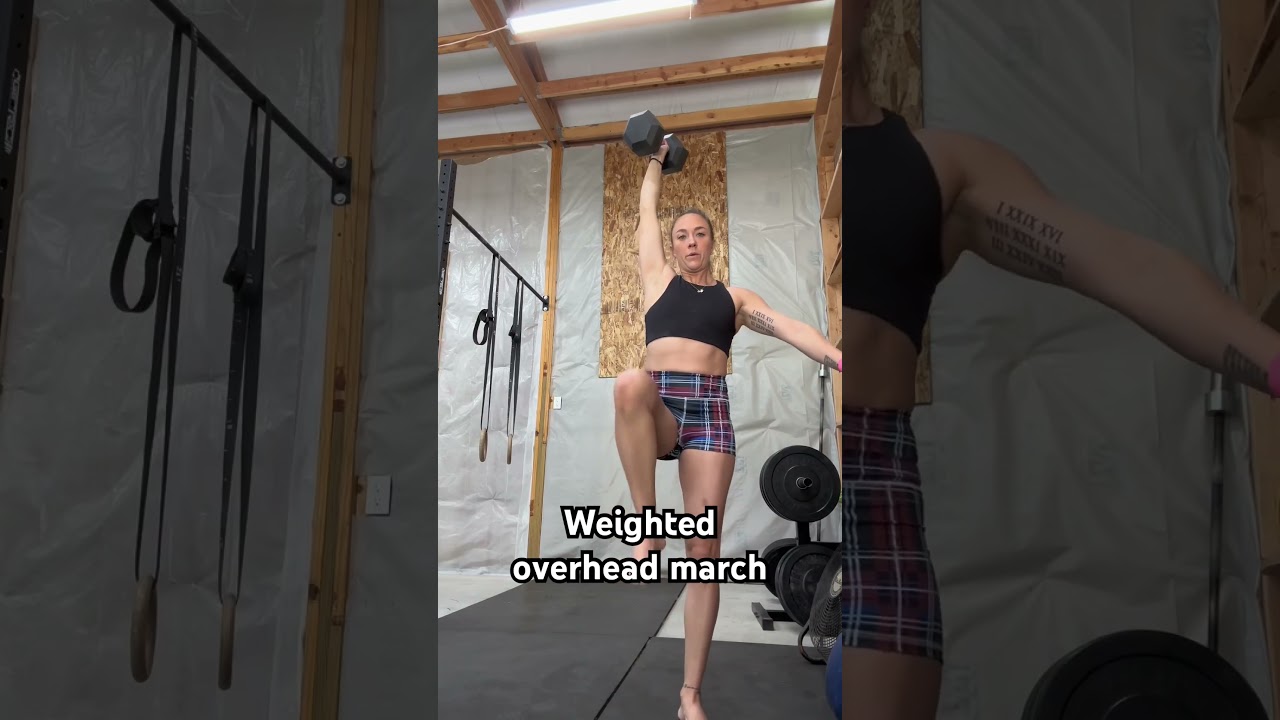
The movement begins with a moderate weight—typically a dumbbell or kettlebell—held securely in one hand and pressed directly overhead. This action instantly alters the body’s center of mass. Gravity attempts to pull the weighted arm outward and downward, creating a lateral bending moment on the spine.
To counteract this, the contralateral (opposite-side) core muscles, particularly the internal and external obliques, quadratus lumborum, and transverse abdominis, must engage intensely. Dr. Andrea Osborne notes, "The core is engaged to keep you stable for both marching and maintaining an overhead position." This vertical loading forces the thoracic spine into extension, combating the pervasive "desk posture" slump that plagues modern desk-bound populations. Furthermore, the shoulder complex (including the rotator cuff, deltoids, and scapular stabilizers) must work overtime to lock the arm into a stable overhead shelf, building immense upper-body isometric endurance.
Phase 2: The Unilateral Weight Shift
As you lift one foot off the ground to initiate the march, the base of support shrinks dramatically. For a split second, the entire bodyweight—plus the external load of the overhead weight—must be managed by a single lower extremity.
This transition demands precise neuromuscular coordination. The hip abductors of the stance leg, primarily the gluteus medius, must fire rapidly to prevent the pelvis from dropping on the unsupported side (a phenomenon known as a Trendelenburg gait). Simultaneously, the deep core acts as a rigid cylinder, preventing the torso from twisting, tilting, or arching excessively under the asymmetric load.
Phase 3: The Controlled March and Lower-Limb Articulation
As the moving leg drives upward into a high-knee position, the hip flexors (psoas and iliopsoas) contract dynamically. This is not merely a leg lift; it is an exercise in active mobility. The ankle complex stabilizes against the ground, while the foot operates as a dynamic spring.
Lowering the foot back to the floor requires eccentric control—decelerating the descent without compromising posture. Repeating this process on alternating sides creates a dynamic, moving plank that challenges balance, vestibular processing, and cardiorespiratory endurance all at once.
Supporting Context & Metrics: The Crisis of Balance and Core Decay
To understand why exercises like the weighted overhead march are vital, one must analyze the broader public health context surrounding balance, stability, and functional aging.
The Silent Epidemic of Balance Decline
According to public health data, accidental falls are a leading cause of fatal and non-fatal injuries among older adults. However, the degradation of balance does not begin in a person’s seventies or eighties; it often starts decades earlier, quietly accelerated by sedentary lifestyles, prolonged sitting, and a lack of varied movement patterns.
When humans sit for hours daily, the hip flexors shorten, the gluteal muscles undergo "amnesic" deactivation, and the deep core stabilizers fall dormant. Traditional linear exercises—such as standard treadmill walking or seated weight machines—do little to challenge the frontal and transverse planes of motion, leaving individuals dangerously ill-equipped to handle unexpected slips, trips, or uneven terrain.
The Core: More Than Meets the Eye
The core is frequently misunderstood as merely the abdominal wall. In functional anatomy, the core is conceptualized as an integrated cylinder:
The Roof: The respiratory diaphragm.
The Floor: The pelvic floor muscles.
The Walls: The transverse abdominis, internal/external obliques, multifidus, and erector spinae.
The weighted overhead march directly stimulates this cylindrical architecture. By introducing an unstable, asymmetrical load far away from the base of support (overhead), the nervous system is forced to recruit deep stabilizing fibers that are entirely bypassed during stable, seated, or bodyweight-only movements.
Prescribing the Movement: Metrics for Success
For individuals looking to integrate this exercise into a sustainable weekly routine, the baseline prescription established by mobility specialists balances volume with neural recovery:
Volume: 3 sets of 10 repetitions per side.
Frequency: 3 to 4 times per week initially, scaling upward as neuromuscular adaptations take root.
Load Selection: A moderately heavy weight that challenges the shoulder and core without forcing structural compensation (e.g., excessive lower-back arching or lateral lean).
Official Statements & Expert Insights
Dr. Andrea Osborne brings a wealth of clinical and practical experience to the conversation surrounding functional training. Operating out of an orthopedic clinic while simultaneously running her online wellness platform, Work Life Wellness, Osborne works with a remarkably diverse demographic—spanning from teenagers navigating rapid skeletal growth to vibrant adults in their mid-eighties.
Her core philosophy centers on proactive injury prevention and democratizing access to strength and mobility training. In discussions regarding the weighted overhead march, Osborne emphasizes that mastery of the movement is a journey, not an overnight milestone.
"This may be difficult if your balance is a bit shaky, so feel free to rest your other hand on a surface," Osborne advises beginners. "As you get stronger, use just your fingertips for balancing until you are ready to be hands-free."
This patient-centric approach ensures that individuals who might otherwise feel intimidated by overhead lifting or unilateral balance work can safely bridge the gap from frailty to functional resilience.
Furthermore, Osborne highlights the psychological and physical crossover benefits of the exercise. For postpartum mothers attempting to safely rebuild core integrity after pregnancy—during which the abdominal wall and pelvic floor undergo profound stretching and trauma—the weighted overhead march offers a controlled, progressive method to re-establish deep cylinder tension without hazardous intra-abdominal pressure spikes.
How to Execute, Modify, and Progress the Movement
Mastery of the weighted overhead march requires strict adherence to form, alongside an understanding of how to regress or progress the movement based on individual capabilities.
Step-by-Step Execution Guide
The Setup: Stand tall with your feet hip-width apart. Hold a dumbbell or kettlebell in your right hand at shoulder height. Press the weight overhead, locking your elbow out fully while keeping your bicep close to your ear. Keep your wrist neutral and your ribs tucked down (avoid arching your lower back).
The Assist (If Needed): If your balance is compromised, lightly touch a wall or sturdy piece of furniture with your left hand for stability.
The March: Engage your core, fix your gaze on a non-moving point ahead of you (your focal point), and slowly lift your left knee upward until your thigh is parallel to the floor.
The Pause: Pause for one second at the top of the march, ensuring your torso remains completely upright and the overhead weight does not sway.
The Descent: Lower your left foot slowly back to the floor with control. Complete all repetitions on one side before switching the weight to the left hand and marching with the right leg.
How to Modify and Progress
Fitness is not one-size-fits-all. Depending on your current injury status, strength baseline, and balance confidence, you can manipulate the variables of this exercise using the following continuum:
1. Making It Easier (Regressions)
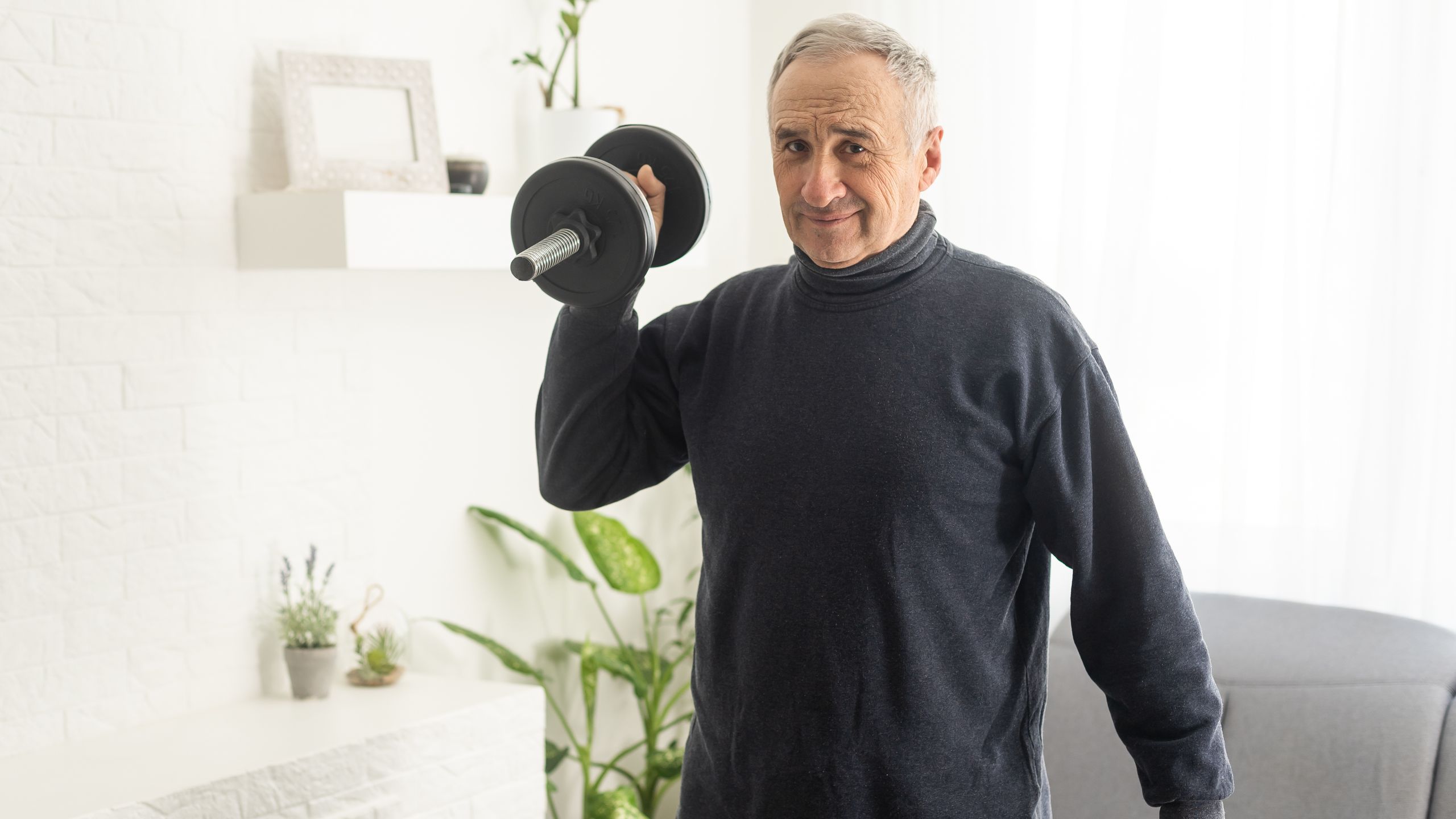
Bodyweight Standing March: Remove the external weight entirely. Perform a standing march with your arms relaxed by your sides. This allows you to focus purely on single-leg stability and hip articulation.
Fingertip Wall Support: Keep the weight overhead (or use a very light weight of 2–3 pounds), but maintain contact with a wall using the fingertips of your non-working hand. Gradually reduce pressure until you are balancing unassisted.
Bodyweight Overhead March: Perform the march without a weight, but extend one or both arms overhead to introduce mild vertical postural loading without the added resistance of iron.
2. Making It Harder (Progressions)
Increase the Load: Graduate to a heavier dumbbell or kettlebell as your shoulder stability and core strength improve.
Extend Time Under Tension: Introduce a deliberate 3-to-5-second isometric hold at the top of every single march repetition.
Close Your Eyes (Advanced Balance Challenge): For seasoned athletes and fitness practitioners, executing the bodyweight or light-load version of this march with eyes closed eliminates visual input, forcing the vestibular system and proprioceptors to work at maximum capacity.
Future Outlook: The Role of Functional Stability in Lifelong Longevity
As the global demographic shifts toward an increasingly aging population, the conversation surrounding healthspan—the number of years a person lives free from chronic disease and debilitating physical limitation—has largely eclipsed mere lifespan metrics.
Exercises like the weighted overhead march represent the vanguard of preventative physical culture. By training the body to manage asymmetrical loads, maintain upright spinal alignment against gravity, and execute seamless unilateral transitions, practitioners are actively inoculating themselves against the fragility cascade.
Moving forward, fitness professionals anticipate a wider integration of multi-planar, stability-centric movements into mainstream clinical rehabilitation and corporate wellness programs. When individuals learn to master their center of mass in a controlled gym environment, they build the physical confidence and neurological pathways required to navigate an unpredictable physical world with grace, power, and enduring autonomy.
Always consult with a qualified medical professional or physical therapist before introducing new high-stability or overhead movements, particularly if you are managing pre-existing orthopedic injuries, neurological limitations, or postpartum recovery milestones.