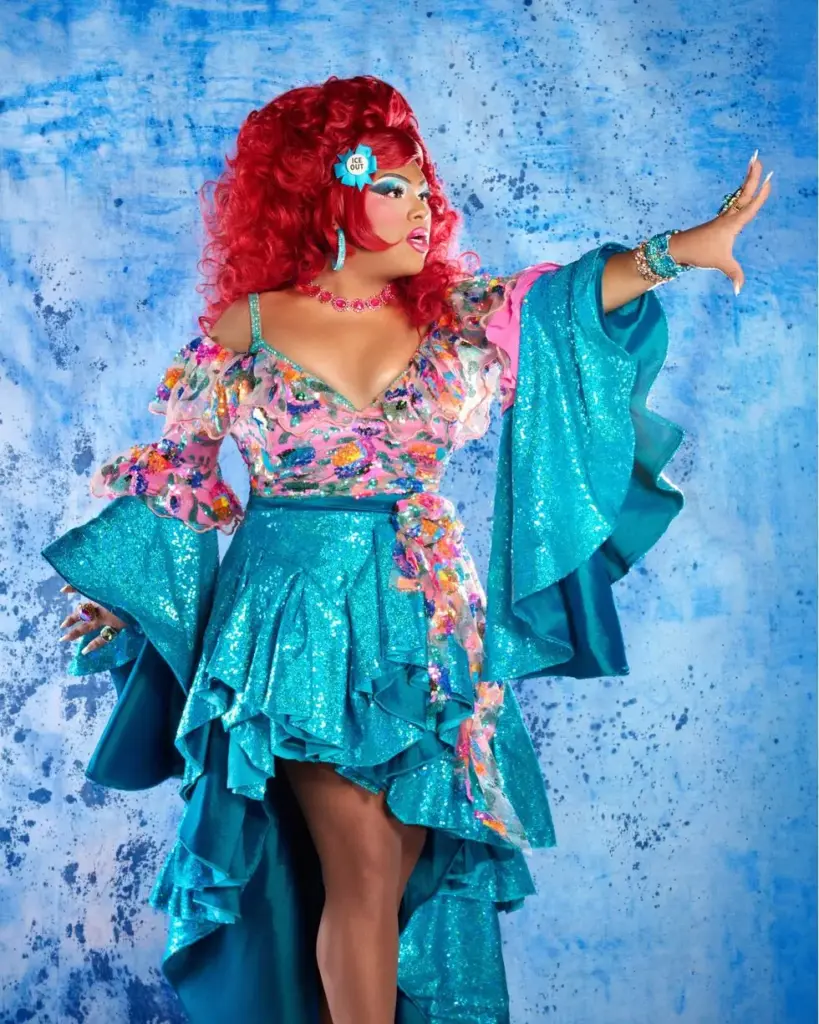
For its monumental Pride 2026 issue, PAPER magazine has orchestrated a cultural summit unlike any other, bringing together an eclectic, cross-generational family table of provocateurs, icons, and disruptors. At the head of this table sits John Waters—the legendary "Pope of Trash"—whose career spanning over six decades has fundamentally redefined artistic sensibilities for straight and gay audiences alike. Waters, ever the contrarian, refuses to be neatly filed under the banner of a "gay filmmaker," preferring instead a radical middle ground that mocks the rigid orthodoxies of both the political left and right.
Surrounding Waters is a carefully curated roster of modern cultural architects. From comedy royalty like Margaret Cho to drag royalty like Symone and Lushious Massacr, and fresh multimedia voices including Chrishell Stause, Madison Bailey, Grant Knoche, Mad Tsai, Alicia Creti, and Eli, this group reflects the multifaceted, intersectional nature of contemporary queer identity. Together, they unpack the heavy baggage of history, confront the commercialization of Pride, and interrogate what it means to live unapologetically in an increasingly polarized world. This feature is not merely a celebration of sexuality; it is a masterclass in singularity, defiance, and the enduring power of refusing to fit in.
Detailed Chronology: From the Fringes to the Cultural Forefront
The narrative of modern queer culture cannot be written without acknowledging its transition from dangerous underground resistance to a mainstream, institutionalized global phenomenon. To understand where the community stands in 2026, one must trace the winding path from the riots of the 1960s to the modern corporate-sponsored Pride month.
The Underground and the Revolution
Decades before Pride became a month-long corporate marketing calendar, figures like John Waters navigated a vastly different landscape. Remembering his early days participating in early gay liberation meetings and anti-war protests, Waters notes that the energy of the 1960s was raw, volatile, and deeply unconventional.
- "Riots were a really good place to get laid," Waters wryly observes, recalling his time on the periphery of radical movements.
- Backed by muses like Divine, Waters’ early cinematic ventures into the Baltimore underground were greeted not by polite applause, but by police intervention, explicit hostility, and genuine danger from rough crowds at Washington drag balls.
As icons like Lushious Massacr and Margaret Cho point out, the pioneers of the movement—figures like Marsha P. Johnson and Sylvia Rivera—did not fight for sanitized corporate representation; they fought for the survival of the discarded, the criminal, and the radically different.
The Commercialization and the Backlash
As society shifted, so did the optics of queerness. By 2026, Pride has evolved into a month-long global event. Yet, this institutionalization has birthed its own internal friction. Veterans and newcomers alike express a collective fatigue regarding the commercial packaging of identity. Waters notes the sheer irony of modern scale, remarking on the redundancy of celebrating gay pride in places like Provincetown where straight people have effectively become the minority.
Simultaneously, a fierce generational debate has emerged surrounding visibility. While older creators like Waters navigated a world where "gay cinema" was a fringe category fighting for basic legitimacy, today’s young artists—such as pop disruptor Grant Knoche and trans pop-princess Eli—grapple with hyper-visibility, algorithmic scrutiny, and the crushing weight of public expectations. Despite these differences, the chronological thread remains unbroken: the necessity of self-preservation and creative autonomy in the face of systemic pushback.
Supporting Context & Metrics: The Anatomy of Modern Queerness
The PAPER 2026 Pride roundtable provides a fascinating cross-section of demographic diversity, mental health insights, and the shifting paradigms of identity construction within the entertainment industry.
The Rise of the "B" and the "T" in Modern Discourse
A recurring theme across the interviews is the friction caused by rigid labeling within the LGBTQ+ community itself.
- Bisexual Visibility: Grant Knoche discusses the unique isolation of coming out as bisexual, noting how societal pressures constantly attempt to force multi-dimensional attractions into binary boxes. Growing up in a strict religious household, Knoche spent years trying to pray away his identity before realizing that love defies categorization.
- Trans Revolution: Waters and Margaret Cho both champion the modern transgender rights movement as the true new sexual revolution. Waters admits that while the rapid cultural acceptance among modern youth sometimes makes his generation nervous, he embraces anything that challenges complacency. Cho echoes this sentiment, fiercely condemning the legal and social attacks on trans rights orchestrated by compromised judicial systems.
Media Representation and the Reality TV Crucible
Figures like Chrishell Stause and Madison Bailey offer stark insights into the realities of public queer visibility in the digital age. Stause, having navigated the hyper-public realms of soap operas and real estate reality television, details the exhaustion of having one’s coming-out story sensationalized and picked apart by internet clickbait.
- The Toll of Scrutiny: Symone, hailed as a successor to RuPaul’s empire and fresh off the global success of Stop! That! Train!, admits that despite her immense external success and fashion dominance, moving through the world 100% authentically remains an ongoing psychological battle managed with the help of therapy.
- Neurodivergence and Artistry: Emerging artists like Alicia Creti and Mad Tsai emphasize the intersection of neurodivergence, isolation, and artistic expression. Creti notes that embracing her neurodivergence and unmasking her true self was the catalyst that finally allowed her to find her musical voice and step out of the shadow of heteronormative pressures.
Official Statements & Perspectives
The heart of PAPER‘s cover story lies in the unfiltered, razor-sharp commentary of its participants. Here is how the collective minds of the 2026 Pride class view their roles in the cultural ecosystem:
- John Waters on Artistic Identity:
"When people say that they’re gay filmmakers, I don’t care who they fuck if the film’s good. They could be a filmmaker who’s gay, but if it’s only that their identity is as a gay filmmaker, who cares who they fuck! I’ve seen some terrible gay movies."
- Lushious Massacr on Power and Queerness:
"We need to give power to those who have never had it. In the name of fairness and balance I think it’s time to switch it up and give it to someone who’s actually kind and cares for others… Queerness is everything. Queerness is the future."
- Margaret Cho on Community Solidarity:
"The way some parts of our community want to separate from other parts… like the ‘normal’ gays who think that the ‘T’ aren’t an essential part of who we are and long for ‘acceptance’ from conservatives. They really bother me. We are nothing without the trans community."
- Chrishell Stause on Boundaries and Resilience:
"If you are surrounded by people intent on misunderstanding you, you need to stop trying to explain yourself and leave… I had a year where I lost everything that I cared about to death and divorce. Ever since that year, nothing seems insurmountable."
- Symone on Defying Industry Norms:
"When I first started doing drag back home, pageantry was a huge thing… Something in my spirit told me that wasn’t my path. Thank the universe I listened."
Future Outlook: The Next Era of Art and Activism
As the cultural landscape looks toward the remainder of the decade, the consensus among PAPER‘s 2026 cover stars is clear: assimilation is dead, and radical authenticity is the only way forward.
The traditional gatekeepers of media, criticism, and artistic expression are being rapidly decentralized. Young creators are no longer waiting for permission from traditional Hollywood studios or conservative publishing houses. Artists like Mad Tsai, Eli, and Grant Knoche are building direct-to-consumer digital empires, cultivating hyper-engaged communities that celebrate regional culture, AAPI heritage, and neurodivergent creativity on their own terms.
John Waters continues to scout and recruit the next wave of young weirdos, proving that his "Pope of Trash" lineage is in capable hands. Whether it is through Lushious Massacr’s high-low drag investigations, Symone’s cinematic expansions, or Chrishell Stause’s advocacy for vulnerable families, the modern queer movement is shedding its desire for mainstream respectability politics.
Ultimately, the takeaway from PAPER‘s landmark Pride feature is a rallying cry for the unconventional. As Waters aptly demonstrates through a lifetime of cinematic subversion, the goal was never to be understood by everyone—it was to ensure that the right people understood you precisely. In an era dominated by algorithmic conformity, that lesson is more vital than ever.