Executive Overview
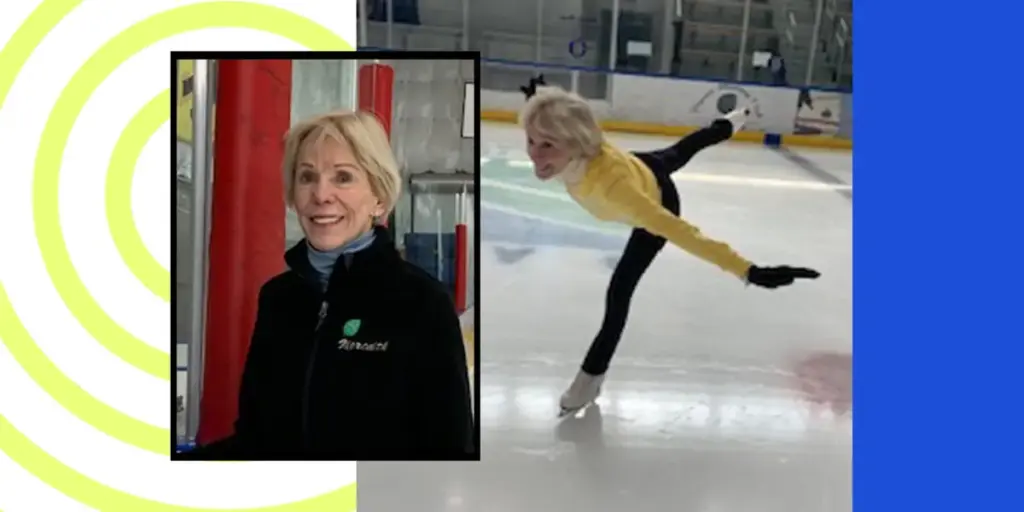
In an era where aging is frequently framed as a period of inevitable physical decline, stories emerge that fundamentally challenge cultural assumptions about the limitations of the human body. Consider the reaction when an 86-year-old athlete enters a standard ice rink, dons a performance leotard, and executes jumps, spins, and precise edge work. Eyebrows raise, questions follow, and disbelief quickly turns into awe.
Yet, for one extraordinary octogenarian, this scene is not a novelty performance; it is a rigorous, disciplined athletic routine. Returning to competitive figure skating at the age of 78 after a 55-year hiatus, this athlete has transformed a childhood passion into an ongoing masterclass in longevity, resilience, and physiological adaptation.

This deep-dive investigative report examines the remarkable journey of an 86-year-old skater who trains five days a week, balancing intensive on-ice technical mastery with targeted cardiovascular and plyometric conditioning. Beyond the inspirational narrative lies a compelling medical and athletic profile: a journey interrupted by myasthenia gravis—a debilitating autoimmune disease—and subsequently revived by medical remission, progressive neuromuscular retraining, and an unyielding refusal to let chronological age dictate physical capability.
Detailed Chronology: From International Competitor to Sidelined Youth
The athletic foundation of this story was forged in early youth. Growing up with an innate drive for physical challenge, the subject of this profile excelled across multiple disciplines, running track and riding horses with equal enthusiasm. However, it was figure skating that ultimately captured her absolute devotion.

Throughout her teens and early twenties, she competed on an international stage, traveling the world, mastering complex choreography, and experiencing the distinct psychological freedom that comes from moving effortlessly across frozen water. Skating was not merely a hobby; it was an identity, a primary source of confidence, and an expression of physical artistry.
The Turning Point: Diagnosis at 24
The trajectory of this promising athletic career was abruptly altered shortly after her 24th birthday. Following the onset of progressive, unexplained physical fatigue and profound muscular weakness, medical evaluations led to a definitive diagnosis: myasthenia gravis.

Myasthenia gravis is a chronic autoimmune neuromuscular disease characterized by varying degrees of weakness of the skeletal muscles of the body. The condition is caused by a breakdown in the normal communication between nerves and muscles. Antibodies block, alter, or destroy the receptors for acetylcholine at the neuromuscular junction, preventing the muscle from contracting.
For a competitive figure skater, the implications were devastating. The condition immediately stripped away her explosive power:

- Loss of Explosive Jumps: The fast-twitch muscle fibers required for elevation and rotation failed to receive proper neural signals.
- Impaired Spin Mechanics: Core stability and sustained arm positioning—essential for maintaining rotational axis—became impossible.
- Profound Exhaustion: General systemic fatigue made even basic daily tasks arduous, let alone the high-output demands of competitive training.
Faced with a condition that had no known cure, medical professionals advised strict management protocols. Treatment involved targeted pharmacological interventions, extensive periods of physical rest, and the complete elimination of high-intensity athletic endeavors. With deep sorrow, she hung up her skates, stepping away from the ice for more than half a century.
The Wilderness Decades and Unexpected Remission
Though forced to leave competitive skating behind, her fundamental drive to remain active never wavered. Over the subsequent decades, she adapted her physical routines to align with her body’s fluctuating capacities. She maintained her baseline fitness through consistent walking, jogging, and cross-country skiing. Furthermore, she periodically engaged personal trainers throughout her adult life to preserve functional strength, core stability, and balance as she aged.

The pivotal turning point arrived when she was 78 years old. Following a relocation to a new town, she established care with a new physician specializing in her condition. During a routine evaluation, the doctor delivered news she had long abandoned hope of hearing: her myasthenia gravis had entered remission. The autoimmune activity had subsided, and the disease was no longer actively suppressing her neuromuscular function.
The emotional response was immediate and overwhelming. "I was shocked, but so happy and relieved," she recalls. "Almost immediately, I knew I wanted to return to the ice. Figure skating had always been where I felt the most free and confident, and I couldn’t wait to experience that feeling again."

Supporting Context & Metrics: Rebuilding the Athlete at 78 and Beyond
Returning to an elite-level artistic sport after 55 years away requires a methodical, science-backed approach to physical rehabilitation and skill acquisition. At age 78, jumping back onto the ice without a strategy would have invited catastrophic injury.
Phase One: The Fundamentals of Neuromuscular Recall
To bridge the five-decade gap safely, she engaged a specialized local coach. The initial training blocks intentionally avoided advanced acrobatics, focusing instead on foundational mechanics:

- Ice Balance and Proprioception: Re-educating the vestibular system to maintain equilibrium on a frictionless, unstable surface.
- Edge Work Mastery: Refining the subtle micro-adjustments required to use the steel blade to carve precise arcs, generate glide momentum, and control trajectory.
- Muscle Memory Activation: Leveraging long-dormant motor pathways. Remarkably, despite a 55-year layoff, fundamental techniques buried deep within procedural memory began to resurface organically through repetition.
Within a month of dedicated practice, the progress defied conventional expectations. She began incorporating basic jumps and spins back into her repertoire. While acknowledging that these maneuvers lacked the pristine execution of her youth—stating candidly, "Were the jumps beautiful? Absolutely not. Were my spins perfect? Not even close"—she embraced the raw joy of athletic progression.
The Modern Training Protocol (Age 86)
Today, at 86 years of age, her training schedule resembles that of a dedicated collegiate or master-level athlete. She commits to a structured regimen five days a week, integrating on-ice technical work with off-ice cardiovascular endurance and targeted strength training.

1. Pre-Ice Warm-Up and Plyometrics
Before lacing up her skates, she prepares her musculoskeletal system to absorb impact and generate power:
- Mobility Work: Hip circles, ankle rolls, and dynamic leg swings to maximize synovial fluid distribution and joint range of motion.
- Plyometric Drills: Squat jumps and bunny hops to awaken fast-twitch muscle fibers and stimulate bone mineral density.
- Perimeter Conditioning: Jogging laps around the outside perimeter of the rink to elevate core body temperature and increase systemic blood flow.
2. On-Ice Technical Execution
Once on the ice, training sessions are divided between foundational edge work and complex movement patterns. When executing advanced elements like jumps and spins, she adheres to a strict philosophy of structural integrity: rather than forcing a flawed rotation, she slows the movement down, deconstructs her posture, and returns to foundational mechanics until the movement feels completely secure.

3. Cardiovascular and Strength Conditioning Off-Ice
To support her on-ice performance, her off-ice routine is equally rigorous:
- Treadmill Interval Training: Running three to four days a week, utilizing high-intensity interval training (HIIT) structures (e.g., alternating one minute of running with two minutes of walking for four to five rounds) to optimize cardiovascular endurance.
- Lower Extremity Stabilization: Performing daily functional strength exercises, including calf raises and walking forward and backward on her tiptoes while wearing ankle weights. These targeted movements fortify the ankles, calves, and tendons, ensuring optimal stability and injury prevention when stepping onto the ice.
Official Insights & The Three Pillars of Athletic Success
When analyzing how an octogenarian can sustain such an aggressive training load free from chronic pain or debilitating injury, sports medicine professionals point to three foundational pillars that govern her athletic philosophy.

+-------------------------------------------------------------------------+
|                  THE THREE PILLARS OF 86-YEAR-OLD ATHLETIC SUCCESS        |
+-------------------------------------------------------------------------+
|  PILLAR 1: Coaching Partnerships Based on Potential, Not Limitation     |
|  - Refuses age-based downward adjustments of capability                 |
|  - Focuses on safe progression, technical growth, and mutual trust     |
+-------------------------------------------------------------------------+
|  PILLAR 2: Radical Autonomic Body Awareness                             |
|  - Daily assessment of physical readiness and systemic fatigue          |
|  - Prioritizes consistency and grace over rigid daily performance      |
+-------------------------------------------------------------------------+
|  PILLAR 3: Deconstructing Chronological Age Bias                        |
|  - Rejects cultural narratives regarding late-life physical decline     |
|  - Celebrates functional possibility rather than mourning past metrics|
+-------------------------------------------------------------------------+
Pillar 1: Partnering with Coaches Who See Potential, Not Limits
Re-entering a high-skill sport in late life requires an elite support team. She sought out coaches who refused to let age dictate the ceiling of her athletic development. Rather than finding instructors who lowered expectations or focused exclusively on restrictive medical boundaries, she found mentors who balanced rigorous technical challenge with uncompromising safety protocols.
Over her post-remission career, she has collaborated with three specialized coaches who celebrated her milestones, pushed her boundaries during optimal training windows, and cultivated an environment where skill acquisition took precedence over chronological limitations.

Pillar 2: Cultivating Radical Body Awareness
At 86, physical longevity relies heavily on intuitive self-regulation. This athlete treats her body as an advanced instrumentation panel. Every training session begins with a rigorous internal audit:
- Is my baseline stability high today? If yes, she introduces complex variables like rotational jumps and multi-rotation spins.
- Does my musculoskeletal system feel fatigued? If yes, she dials back the intensity, focusing exclusively on low-impact edge work and foundational glide patterns.
Crucially, she practices emotional and physical detachment from previous performance metrics. By accepting that daily output fluctuates naturally, she avoids the trap of overtraining and ensures sustainable, long-term athletic engagement.

Pillar 3: Deconstructing the Stigma of Age
Perhaps the most disruptive element of her narrative is her active rejection of age-related fatalism. In a society obsessed with youth-centric athletic standards, she views aging not as an expiration date, but as an accumulation of patience, consistency, and wisdom.
While she acknowledges physiological differences—noting that her jumps do not reach the vertical heights of her youth and her rotational speed has naturally decreased—she refuses to let these variance metrics become a source of frustration. Instead, she champions a philosophy of celebratory possibility:

"If there’s one thing I hope people take away from my story, it’s that growing older doesn’t mean giving up on the things that bring you joy. Age doesn’t have to be the reason you stop doing what you love—or the reason you don’t start again."
Future Outlook: Redefining Master-Level Athletics
The implications of this case study extend far beyond the boards of a local ice rink. As global demographics shift and life expectancies increase, the medical and sports science communities are increasingly focused on how to maintain functional independence, neuromuscular health, and psychological well-being late into life.

This 86-year-old figure skater serves as a living laboratory for successful aging. Her trajectory demonstrates several vital principles for future geriatric sports medicine:
- Remission Management and Re-engagement: Severe autoimmune conditions like myasthenia gravis, when successfully managed or brought into clinical remission, do not automatically close the door on high-output athletic pursuits, provided medical clearance and graded re-introduction protocols are followed.
- Neuromuscular Plasticity: The human brain and nervous system retain a profound capacity to reactivate dormant procedural motor programs—such as complex skating mechanics—even after multi-decade interruptions.
- The Protective Power of Plyometrics and Strength: Targeted off-ice conditioning, including balance training, plyometrics, and ankle stabilization, directly mitigates fall risks—the leading cause of morbidity in older adults—while preserving bone mineral density and muscle mass.
Looking Ahead
As she continues to train multiple days a week, preparing for upcoming master showcase opportunities and relentlessly refining her edge work, her sights remain firmly set on the present moment. She is not chasing youth; she is maximizing the vibrant, capable reality of her present body.

For anyone hesitant to pursue a passion later in life—whether returning to a long-abandoned craft or lacing up skates for the very first time—her story stands as an irrefutable testament to human resilience. The ice is waiting, and the numbers on the calendar carry only as much weight as we choose to give them.