Executive Overview
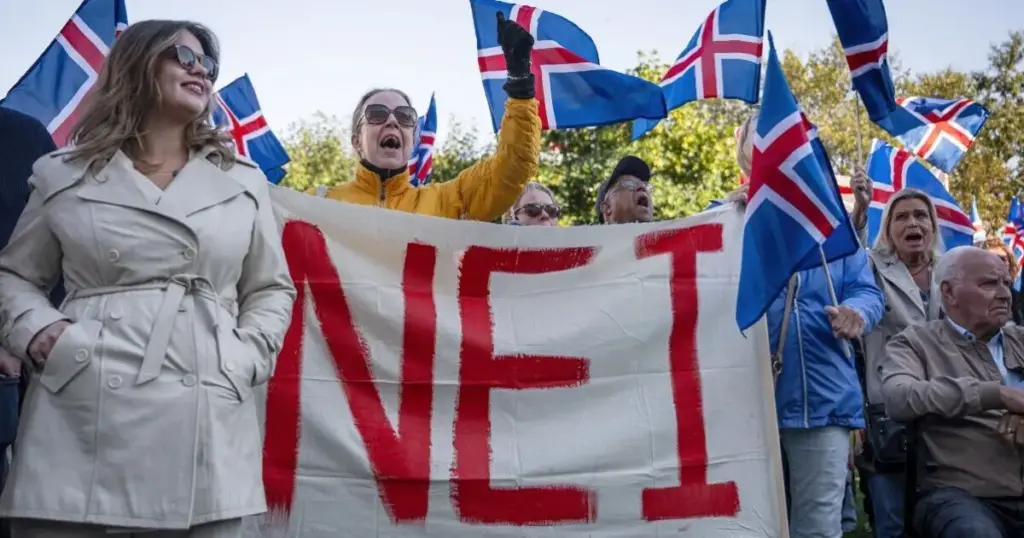
In a decisive democratic exercise that will send ripples of disappointment through the corridors of power in Brussels, voters in Iceland have firmly rejected a proposal to restart accession talks with the European Union. According to final results released by the national broadcaster RÚV on Sunday, August 30, 2026, the "No" campaign secured a solid victory, capturing 52.5% of the vote against 47.5% for the "Yes" camp.
More than a decade after previous integration efforts ground to a halt under a eurosceptic administration in 2015, the referendum presented the island nation’s approximately 265,000 eligible voters with a straightforward yet deeply polarising question: Should Iceland resume formal negotiations to become a member of the European Union?
The unexpected acceleration of this referendum—originally slated for 2025 by the left-leaning coalition government elected in late 2024—was heavily influenced by shifting geopolitical currents. Chief among these was a series of controversial remarks by United States President Donald Trump, who repeatedly and mistakenly referenced Iceland while voicing strategic ambitions over neighbouring Greenland. These comments stoked anxieties regarding regional security and prompted a faction of the Icelandic electorate to look toward European solidarity as an additional shield.
Nevertheless, opponents of EU accession successfully galvanised public opinion by focusing on core issues of national sovereignty, the protection of Iceland’s lucrative fishing industry, and the distinct economic advantages the country already enjoys through its membership in the European Economic Area (EEA) and the Schengen Area. The decisive outcome brings a definitive end—at least for the foreseeable future—to the protracted debate over Iceland’s place within the European project, drawing swift celebration from anti-EU figures across Europe, including prominent British Brexiteers.
Detailed Chronology: From 2015 Freeze to the 2026 Referendum
To understand the weight of the August 2026 referendum, one must examine the modern history of Iceland’s complex relationship with the European Union.
The 2008 Financial Crash and the Initial Bid
Iceland’s flirtation with full EU membership peaked in the immediate aftermath of the devastating 2008 global financial crisis, which completely collapsed the nation’s oversized banking sector and severely devalued the Icelandic króna. In 2009, a pro-integration social-democratic government formally applied for EU membership, hoping that adopting the euro would provide long-term macroeconomic stability.
However, as the domestic economy slowly stabilised and public skepticism mounted regarding the potential loss of control over rich national fisheries, political momentum began to wane. By 2013, a newly elected center-right coalition officially suspended accession negotiations, and in 2015, Reykjavík formally withdrew its application altogether. For nearly a decade, the issue remained largely dormant on the backburner of Icelandic politics.
The 2024 Political Shift and the Trump Factor
The landscape shifted dramatically following the general election in late 2024, which brought a left-leaning coalition government to power. Responsive to shifting public sentiment and rising global tensions, the administration signaled its intention to revisit the European question, initially scheduling a public referendum for 2025.

The timeline was dramatically compressed, however, due to unpredictable international developments. United States President Donald Trump’s public musings and rhetorical fixation on Greenland—during which he mistakenly and repeatedly confused the self-governing Danish territory with Iceland in speeches—created acute geopolitical jitters in the North Atlantic. Pro-EU factions seized upon these remarks, arguing that formal integration into the European Union would provide Iceland with a vital geopolitical safety net and enhanced collective security alongside continental neighbors.
The Final Ballot and Outcome
Despite these external pressures, the debate crystallised into a fierce domestic contest. When polling stations closed on Saturday, August 29, 2026, and votes were tallied across the constituencies, it became clear that geopolitical fears were not enough to override deep-seated domestic reservations. By Sunday morning, with all but one constituency reporting, RÚV confirmed that the "No" vote had established an unassailable lead of 52.5% to 47.5%, leaving the remaining ballots in the southwest unable to reverse the trajectory. Former President Ólafur Ragnar Grímsson neatly summarised the national mood: "The nation has spoken: A clear no to the proposed EU journey."
Supporting Context & Metrics: Economic Realities and Geopolitical Calculations
The debate over EU accession in Iceland was never merely academic; it was deeply rooted in tangible economic metrics and stark geopolitical calculations.
The Economic Dilemma: EEA Benefits vs. Euro Stability
At the heart of the "No" campaign’s argument was a simple rhetorical question: Why buy the cow when you get the milk for free? As a member of the European Economic Area (EEA) and the Schengen free-travel zone, Iceland already enjoys frictionless access to the EU’s single market of nearly 450 million consumers, alongside the freedom of movement for its citizens.
Opponents of accession argued that full EU membership would require unacceptable compromises on national sovereignty—most notably concerning control over Iceland’s fiercely guarded fishing grounds, which form the bedrock of its primary export economy. Furthermore, critics pointed out that joining the bloc would mean subordinating Iceland’s economic interests to the gargantuan European Parliament, where a nation of under 400,000 people would hold virtually negligible legislative clout. Instead, eurosceptic voices advocated for an independent trade policy, pointing to existing bilateral successes, such as Iceland’s pioneering free trade agreement with China.
Conversely, proponents of restarting talks argued that full integration offered critical macroeconomic remedies. Supporters contended that EU membership and the eventual adoption of the euro would help tame chronic domestic inflation and tame stubbornly high interest rates, shielding citizens from the notoriously high volatility of the Icelandic króna. Moreover, pro-integrationists highlighted the growing necessity of transnational cooperation to tackle borderless challenges, chief among them being global climate change and Arctic environmental stewardship.
Geopolitical Pressures in the North Atlantic
The unique geographic position of Iceland—sitting strategically between North America and mainland Europe—lent the referendum significant international dimensions. While Iceland is a founding member of NATO and hosts crucial transatlantic defense infrastructure, the erratic nature of modern U.S. foreign policy under Donald Trump injected genuine anxiety into the national discourse.
Pro-accession campaigners attempted to leverage these fears, asserting that deeper integration with Brussels would cement institutional alliances beyond traditional security frameworks. Yet, the majority of Icelandic voters ultimately decided that their national security needs were adequately met through existing NATO frameworks, refusing to let external diplomatic eccentricities dictate a fundamental alteration of their constitutional and economic independence.

Official Statements and International Reactions
The referendum’s outcome drew immediate, high-profile reactions both domestically within Iceland and across the wider European political landscape.
Domestic Perspectives
Speaking to media outlets at a polling station in Hafnarfjörður, Iceland’s Foreign Minister Þórdís Kolbrún Reykfjörð Gylfadóttir acknowledged the deeply divided nature of the electorate while emphasizing the democratic legitimacy of the process. The government, having fulfilled its promise to let the people decide, now faces the task of managing foreign policy relations without the distraction of an impending accession process.
Former President Ólafur Ragnar Grímsson offered an authoritative retrospective on the vote, telling national media:
"The nation has spoken: A clear no to the proposed EU journey. This reflects a persistent, historical understanding among Icelanders that our prosperity is best preserved when we retain absolute control over our natural resources and our laws."
The View from Westminster and European Capitals
In Brussels, European Commission officials maintained a measured public silence immediately following the announcement, though diplomatic insiders acknowledged that the result is a stinging setback for enlargement ambitions in the Nordic region.
Across the North Sea in the United Kingdom, however, the result was met with unadulterated jubilation from prominent Brexiteers and anti-EU politicians who viewed Iceland’s choice as a powerful validation of national self-determination.
Reform UK leader Nigel Farage took to social media to congratulate the Icelandic public, praising them for resolutely safeguarding their sovereign independence.
Richard Tice, Reform UK MP, offered a characteristically blunt assessment directed at political opponents of Brexit:

"Common sense from voters in Iceland. Thanks but no thanks to joining the EU. Take note, Remoaners."
Conservative MP Andrew Rosindell echoed these sentiments in a widely shared post on X (formerly Twitter):
"Good news this morning from Iceland as the people of that proud independent nation reject EU membership. The right decision!"
Future Outlook
With the referendum results formally ratified by public consensus, the perennial question of Iceland’s EU membership has been decisively put to rest for a second time in modern history.
For the government in Reykjavík, attention must now pivot back to pressing domestic priorities: stabilising the national currency, navigating persistent inflationary pressures, and managing sustainable resource extraction within the framework of its existing EEA agreements. Diplomatically, Iceland will continue to navigate its crucial role as a vital NATO ally in the North Atlantic while maintaining its pragmatic, independent approach to international trade.
For the European Union, the result serves as a sobering reminder of the limits of its gravitational pull, even among wealthy European nations facing complex security environments. As Brussels continues to grapple with enlargement strategies in Eastern Europe and the Western Balkans, the resolute "No" from the volcanic shores of Iceland demonstrates that the allure of federal integration still struggles to compete with the fierce, independent spirit of national sovereignty.