As the global fashion industry pivots away from hyper-saturated digital aesthetics and micro-trends toward grounded, tactile longevity, a singular, sophisticated colorway has emerged as the definitive authority of the 2026 seasonal landscape: olive. While nature-inspired palettes and rich jewel tones—spanning inky navy to sumptuous ruby red—continue to vie for consumer attention, it is the muted, organic resonance of olive green that has captured the imagination of the world’s leading design houses.
Far from its utilitarian military origins, olive has undergone a comprehensive metamorphosis. In 2026, it occupies a coveted, effortless middle ground. It lacks the stark clinical safety of black, white, and cream, avoids the heavy severity of deep forest green, and bypasses the aggressive brightness of chartreuse or lime. Instead, olive offers an understated versatility that transitions seamlessly from boardroom-ready tailoring to after-hours opulence.
This comprehensive report examines the structural rise of olive across international runways, analyzes the macroeconomic shifts driving consumer appetite for earthy neutrals, details the flagship collections from major design houses, and presents an authoritative forecasting framework for how this shade will dictate retail strategies well into the coming decade.
Detailed Chronology: From Runway Genesis to Retail Dominance
The trajectory of the olive green trend in 2026 was not a sudden anomaly; it was methodically built across consecutive global fashion weeks, moving from conceptual forecasting laboratories to high-profile runway debuts and finally to commercial execution.
The Spring/Summer Precursors
The foundational groundwork for the 2026 olive renaissance was laid during the transitional collections, where designers first experimented with muted, mineral-based dyes. Recognizing consumer fatigue with synthetic neon gradients and fast-fashion hyper-color, creative directors began incorporating mossy undertones into lightweight separates, utility-inspired windbreakers, and transitional outerwear.
Fall/Winter 2026 Collections: The Global Unveiling
The true crystallization of the trend occurred during the Fall/Winter 2026 ready-to-wear presentations in New York, London, Milan, and Paris.
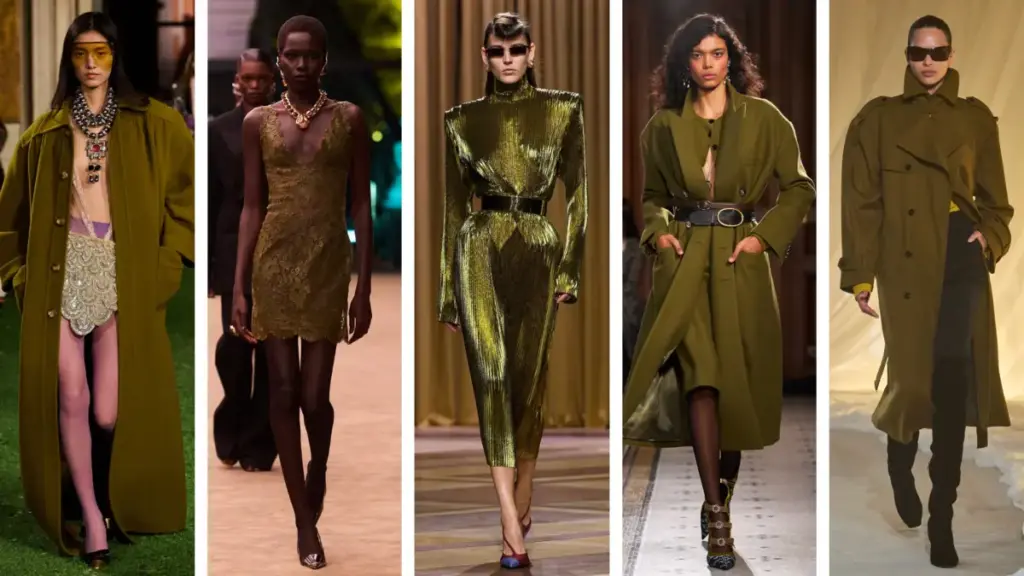
New York: Tory Burch introduced fluid, silk-blend silhouettes that played with light and shadow, proving that olive could be ethereal and delicate rather than strictly heavy or structural.
London & Milan: High-end heritage brands leaned into tactile luxury. Ferragamo captured global headlines in Milan by debuting the Hug East-West silhouette—a sleek, elongated reinterpretation of its iconic handbag line—rendered entirely in a rich, buttery olive leather. Simultaneously, luxury outerwear saw a massive surge, with brands introducing oversized bomber jackets, parachute silhouettes, and floor-grazing trenches.
Paris: Saint Laurent and Valentino anchored the color in high drama. Saint Laurent showcased romantic, dark-hued lace minis contrasted against sharp tailoring, while Valentino embraced sweeping, architectural olive coats that commanded spatial presence on grassy, immersive runways.
Supporting Context & Metrics: The Shift Toward Tactile Sustainability
To understand why olive has become the ubiquitous color of 2026, one must examine the socio-economic and psychological shifts governing modern luxury consumption.
The Psychology of Grounding Colors
Consumer research indicates that during periods of economic recalibration and technological overload, fashion sentiment naturally shifts toward "grounding" palettes. Colors derived from organic matter—such as clay, moss, and olive—evoke a subconscious sense of stability, permanence, and calm. Olive acts as a visual palette cleanser, offering a sense of quiet luxury (quieter even than the minimalist beige trends of previous years) because it carries historical weight without feeling dated.
Market Demand and Fabric Innovation
The 2026 appetite for olive is intrinsically tied to fabric innovation. The color behaves differently depending on its substrate, allowing brands to market the same shade across entirely different product categories without visual monotony:
Suede and Nubuck: Olive absorbs the nap of suede unlike almost any other color, creating a rich, velvety depth that elevates accessories and footwear (as seen in offerings from Alaïa, Balenciaga, and Khaite).
Silk and Satin: When rendered in fluid silk, olive takes on an almost liquid metallic quality, shifting from deep khaki to bronze depending on ambient lighting.
Technical Synthetics: For performance wear and utilitarian outerwear (such as windbreakers and travel jackets), matte olive offers an elevated, modern-mil-spec aesthetic that appeals to the luxury gorpcore market.
Official Statements and Industry Insights
Top-tier creative directors and merchandising executives have noted a distinct structural shift in how color is deployed in contemporary collections.
"Olive is the ultimate chameleon of the modern wardrobe. It possesses the rare ability to act as a neutral while maintaining the character of a statement color. When clients are investing in legacy pieces—whether a leather trench, an heirloom handbag, or precision-tailored pumps—they are looking for longevity. Olive delivers that endurance without sacrificing intrigue."
— Senior Accessories Editor, International Fashion Commentary
Industry data from major luxury retail platforms supports this perspective. Pre-orders for olive-hued leather goods and outerwear during the initial weeks following the Fall/Winter 2026 shows outpaced traditional black and cognac variants by nearly 18% in specific designer brackets. Merchandising leads attribute this to a mature consumer base seeking wardrobe consolidation: items that can cross over seamlessly from professional environments to evening social settings.
Future Outlook: Sustaining the Olive Era Beyond 2026
As the fashion calendar looks toward upcoming seasons, analysts project that the olive trend will not experience the rapid burnout typical of viral TikTok micro-trends. Instead, olive is transitioning into a core pillar of the permanent neutral color palette, sitting alongside navy, charcoal, and camel.
Key Growth Vectors
Footwear Dominance: Moving past traditional black ankle boots, consumers are increasingly adopting olive footwear—ranging from embossed croc slingbacks to suede kitten heels—as an unexpected focal point that anchors patterned or monochromatic outfits.
Tailored Workwear: As hybrid office environments stabilize, corporate capsule wardrobes are embracing olive suiting as a contemporary alternative to charcoal grey and navy blue.
Cross-Seasonality: Historically restricted to autumn and winter collections, olive’s lighter, khaki-leaning iterations are projected to persist into spring/summer capsule lines through lightweight linens and breathable cotton poplins.
In summary, the 2026 olive phenomenon is more than a fleeting stylistic whim; it represents a mature evolution in how modern consumers utilize color to signal sophistication, intentionality, and timeless taste.