Executive Overview
The contemporary digital dating landscape is saturated with platforms promising meaningful connection, yet many users find themselves trapped in an endless loop of superficial evaluation. For nearly a decade, the standard protocol of online dating has relied on a binary gesture: swipe left for rejection, swipe right for attraction. This photo-first, volume-driven methodology has catalyzed widespread user fatigue. Into this crowded market steps Hily—an acronym for "Hey I Like You"—a platform striving to pivot the paradigm from raw chemistry to verified compatibility.
Boasting a robust 4.4 out of 5.0 rating on the App Store and maintaining a primary demographic anchor between the ages of 18 and 30, Hily attempts to re-engineer how adults discover prospective partners. To evaluate these claims under real-world conditions, a rigorous two-week testing protocol was deployed within the hyper-competitive, fast-paced dating ecosystem of New York City.
This review delivers an exhaustive examination of Hily’s architecture, feature set, pricing tiers, and practical efficacy. While the platform introduces innovative user experience (UX) choices—such as vertical swiping mechanics, a 50-question compatibility matrix, and curated daily discovery modules—it also presents distinct operational limitations, including a comparatively smaller U.S. user base and selective paywalls. Ultimately, Hily emerges as a compelling alternative for daters seeking intentionality, though navigating its ecosystem requires a strategic approach.

Detailed Chronology: A Two-Week Field Test in New York City
To understand how Hily functions outside of marketing prospectuses, a structured 14-day evaluation was conducted. The process mapped the evolution of a user profile from initial onboarding to active matching and communication.
Phase 1: Onboarding and Profile Optimization (Days 1–3)
The initial setup demanded more than the standard upload of three photographs and a brief biographical sentence. Hily’s onboarding sequence nudges users toward comprehensive self-expression through interest badges, lifestyle markers, and explicit dating goal indicators (e.g., long-term relationship, casual dating, or friendship).
During the first 72 hours, significant emphasis was placed on curating interest badges. Because Hily’s underlying algorithmic engine relies heavily on these data points to populate the Discover feed, dedicating time to accurately tag hobbies, values, and lifestyle preferences directly influenced the quality of incoming suggestions. Furthermore, profile verification—which mandates a live selfie matched against uploaded images—was completed immediately, establishing baseline trust and bypassing the anonymity hurdles common on legacy apps.

Phase 2: Engagement Mechanics and the Discover Loop (Days 4–7)
Moving past the setup phase introduced Hily’s core navigational mechanics. Most notably, the app utilizes an up/down swipe motion rather than the conventional left/right flick.
- Swipe Up: Indicates interest (a "like").
- Swipe Down: Indicates a pass.
While physically minor, this vertical motion introduces a critical psychological speed bump. It forces the user’s eye downward to ingest the biography, interest badges, and dating goals before a decision is registered.
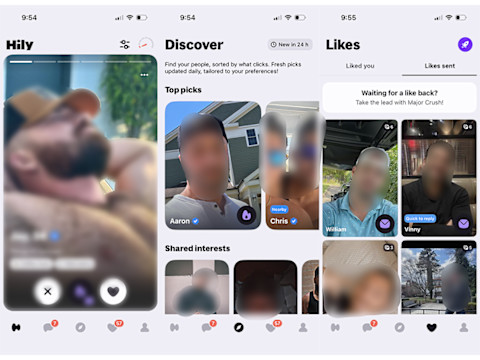
Concurrently, the daily "Discover" page became a central operational hub. Refreshed every 24 hours, Discover segments profiles into three distinct categories: Top Picks, profiles sharing mutual interests, and profiles exhibiting matching relationship intents. For a dater operating in New York City—an environment notorious for infinite-scroll burnout—these hard stopping points offered a welcome sense of psychological closure. Rather than evaluating hundreds of profiles in an unstructured void, the user browses a curated batch of roughly 15 to 20 candidates daily.

Phase 3: The Compatibility Matrix and Communication Protocols (Days 8–11)
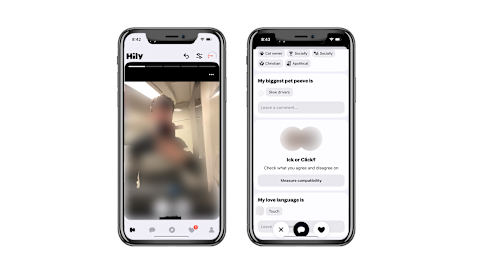
Midway through the test period, attention shifted to Hily’s analytical features: the compatibility quiz. Comprising 50 granular questions, the quiz evaluates psychological alignment, lifestyle habits, and core values.
A critical operational lesson emerged during this phase: complete the entire 50-question inventory before drawing conclusions. Initially, after answering only 15 questions, a profile pairing yielded a seemingly flawless 100% compatibility score. However, as the remaining 35 questions were answered, the algorithmic score recalibrated downward to 69%. This dynamic illustrates that Hily’s compatibility engine requires a complete dataset to deliver accurate reflections of interpersonal alignment.
Once matches were established, communication tools facilitated outreach. Rather than forcing users to invent an opening line from a blank text box, Hily surfaces shared interests directly inside the chat window and supplies curated conversation starters, icebreaker prompts, and compliment tools.

Phase 4: Monetization Stress-Testing and Final Evaluation (Days 12–14)
The final phase tested Hily’s monetization structure, comparing the free tier against premium capabilities. By participating in daily in-app features—such as the daily Roulette spin—a complimentary three-day trial of Hily Premium was unlocked. This trial provided a clear baseline for evaluating whether paid upgrades justify their cost, culminating in a comprehensive audit of the platform’s pros, cons, and competitive standing.
Supporting Context & Metrics: Feature Breakdown and Cost Analysis
To provide a granular understanding of the platform, Hily can be analyzed through its architectural components, financial models, and functional metrics.
Core Feature Architecture
- The Likes Page: A dual-tracking ledger that organizes incoming likes and sent likes into separate queues. This eliminates the guesswork of traditional apps by clearly displaying who has already expressed interest. However, incoming likes are capped at roughly 20 visible profiles; remaining likes are blurred unless unlocked via "Unblur" tokens, which can be earned through daily engagement or purchased.
- Mega Crushes: Hily’s equivalent of a "Super Like," designed to signal elevated interest to a specific user.
- Verified Profiles: A mandatory or voluntary selfie-matching protocol that guarantees profile authenticity, effectively suppressing bot accounts and catfishing.
Financial Tiers and Subscription Costs
Hily maintains a generous free-tier ecosystem, allowing users to browse Discover feeds, manage incoming likes, and initiate conversations without financial commitment. For power users seeking advanced visibility, the platform structures its premium offerings across multiple billing increments:
- Weekly Subscriptions: Ranging typically between $7.00 and $10.00 per week, serving as a low-risk entry point for short-term testing.
- Monthly/Quarterly Subscriptions: Scaled pricing models that reduce the monthly expenditure for long-term users.
- In-App Currency: Tokens used for unlocking blurred likes, sending Mega Crushes, or boosting profile visibility within local search queues.
Comparative Matrix: Hily vs. Industry Competitors
| Feature / Metric | Hily | Bumble | Tinder | Hinge |
|---|---|---|---|---|
| Primary Match Mechanism | Vertical Swipe (Up/Down) | Left/Right Swipe | Left/Right Swipe | Prompt-Based Card Interaction |
| Core Differentiator | Compatibility Quizzes & Intent Badges | Women Make First Move (Historically) | High Volume, Rapid Swiping | Detailed Profile Prompts & Comments |
| User Base Size (U.S.) | Moderate (Growing) | Very Large | Massive | Large |
| Pacing & Psychology | Curated daily limits, structured pausing | Fast-paced, historically time-restricted chats | Infinite scroll, ultra-fast matching | Conversation-focused via prompt likes |
Official Statements and Design Philosophy
Hily’s corporate positioning centers heavily on intentionality and emotional safety in modern romance. According to product development briefs and platform governance frameworks, the app was engineered to combat "decision fatigue" caused by superficial dating apps.
App developers emphasize that integrating psychological matching with verified user identities directly addresses modern anxieties surrounding online dating, such as ghosting, misrepresentation, and endless non-committal swiping. By forcing users to engage with structured compatibility metrics—such as the 50-question survey and explicit relationship goal tags—Hily attempts to filter out misaligned expectations before digital conversations even begin.
Future Outlook
As the online dating market matures, consumer sentiment is shifting decisively away from gamified, high-volume swipe apps toward platforms that promise emotional efficiency and genuine compatibility. Hily is positioned to capture this demographic shift, particularly among younger cohorts (Gen Z and younger millennials) who prioritize transparency, mental health, and shared values in their interpersonal relationships.
However, the platform faces substantial hurdles in scaling its market share against entrenched legacy giants like Match Group properties (Tinder, Hinge) and Bumble. To maintain its upward trajectory, Hily must continue expanding its active user base in major metropolitan areas outside its current strongholds, thereby reducing the need for users to expand geographic radius filters in dense urban centers.
Furthermore, refining its monetization model—specifically balancing the utility of the compatibility quiz against paywalls—will determine whether casual browsers convert into long-term, loyal subscribers. For now, Hily remains a structurally innovative option for daters willing to look beyond standard photographs and invest time in measured, compatibility-driven matchmaking.