Executive Overview
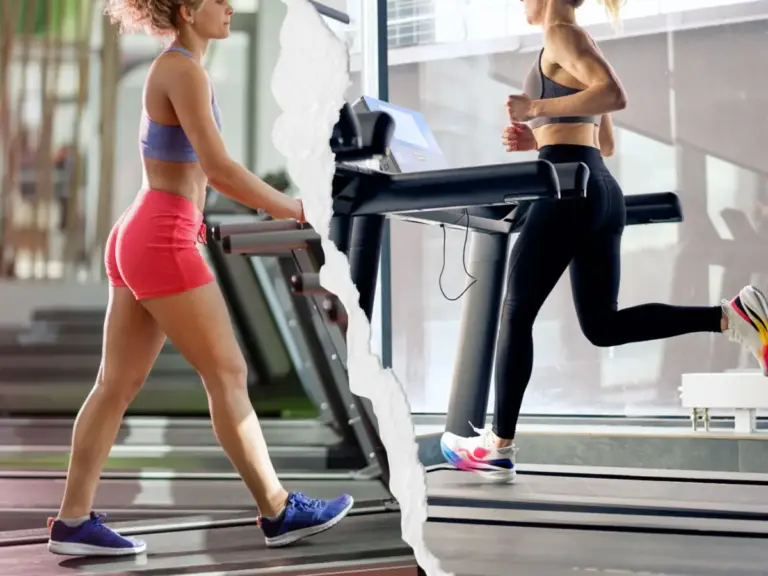
Human locomotion is fundamentally unilateral. Whether we are walking down a crowded city street, ascending a flight of stairs, or leaping over a puddle on a rainy morning, we rarely move with both feet planted symmetrically on the floor. Instead, we operate in a continuous cycle of single-leg stances, driving our bodies forward through alternating phases of balance, propulsion, and deceleration.
Despite this biological reality, modern resistance training has long been dominated by bilateral movements. Traditional back squats and conventional deadlifts remain the undisputed kings of the weightroom, yet they often mask underlying strength disparities between the left and right sides of the lower body. To build true, real-world athleticism and functional resilience, trainees must incorporate unilateral movements—exercises that isolate and challenge one side of the body at a time.

At the pinnacle of unilateral lower-body training sits the Bulgarian split squat, formally known as the rear-foot-elevated split squat. Renowned for its ability to target the quadriceps, hamstrings, and glutes while simultaneously testing core stability and ankle mobility, this exercise is an essential addition to any serious strength program. However, its immense benefits are matched by its technical complexity.
According to Men’s Health fitness director Ebenezer Samuel, C.S.C.S., minor setup errors can completely undermine the movement, shifting emphasis away from the targeted musculature and increasing the risk of joint discomfort. This comprehensive guide breaks down the science, the critical form cues, programming strategies, and advanced variations required to safely and effectively master the Bulgarian split squat.

Detailed Chronology: Evolution of Unilateral Training and the Rise of the Bulgarian Split Squat
To understand the modern prominence of the Bulgarian split squat, one must look at the evolution of athletic conditioning over the past century.
The Bilateral Era and Its Limitations
For decades, strength and conditioning protocols were built around the "big three" powerlifting movements: the squat, the bench press, and the deadlift. While these closed-chain bilateral exercises remain peerless for absolute force production and overall muscular hypertrophy, sports scientists and physical therapists increasingly recognized their blind spots in the late 20th century.

Athletes rarely encounter a pure bilateral resistance profile on a playing field. Running, cutting, jumping, and changing direction all occur unilaterally. Relying exclusively on bilateral squats allowed dominant limbs to compensate for weaker counterparts, masking imbalances that frequently manifested as non-contact injuries, particularly in the knees, hips, and lower back.
The Introduction of Bulgarian Methods
The exercise colloquially known as the Bulgarian split squat gained widespread traction in North American strength circles due to the influence of legendary weightlifting coach Angel Spassov. In the late 1980s and 1990s, Spassov introduced Eastern European training philosophies to U.S. coaches, highlighting how Bulgarian weightlifters utilized rear-foot-elevated split squats to develop extraordinary single-leg explosive power without subjecting the spine to the immense compressive loads of heavy barbell back squats.

What began as a specialized secret among elite weightlifters and track-and-field athletes gradually permeated commercial gyms. Over the last two decades, as functional fitness, calisthenics, and athletic performance training entered the mainstream, the Bulgarian split squat evolved from an obscure torture device into a staple of modern physical culture. Today, backed by digital coaching platforms and expert form breakdowns from fitness authorities, trainees worldwide are learning how to execute the movement with precision.
Supporting Context & Metrics: Anatomy, Biomechanics, and Equipment
Why Unilateral Training Matters
When performing a standard bilateral squat, the central nervous system distributes the load across both limbs. If your right quad or left glute is slightly weaker, your body naturally shifts a fraction of the load to the stronger side.

Unilateral training strips away this safety net. By elevating the rear foot, you place roughly 70 to 85 percent of your total body weight (plus any external load) onto the front working leg. This forces the nervous system to heavily recruit stabilizer muscles—including the gluteus medius, adductors, and core musculature—to maintain a neutral spine and prevent the front knee from caving inward (valgus collapse).
Muscular Recruitment Profile
The Bulgarian split squat is a multi-joint compound movement that engages virtually every major lower-body muscle group:

- Quadriceps: The vastus lateralis, vastus medialis, and rectus femoris work overtime to control the descent (eccentric phase) and drive the body upward (concentric phase).
- Gluteus Maximus: Serving as the primary driver out of the bottom position, the glutes provide explosive hip extension.
- Hamstrings: Functioning as dynamic stabilizers, the hamstrings assist in knee flexion and hip stability throughout the range of motion.
- Core and Spinal Erectors: The obliques, transverse abdominis, and lower back muscles must brace constantly to keep the torso upright against rotational forces.
Essential Equipment
Executing a Bulgarian split squat requires minimal gear, making it exceptionally versatile for both commercial facilities and home gyms:
- A Raised Platform: A standard weight bench (typically 16 to 20 inches high) is ideal for commercial settings. At home, a sturdy ottoman, couch cushion, or adjustable fitness bench will suffice.
- External Resistance (Optional): While bodyweight variations offer incredible stimulus for beginners, advanced trainees can leverage dumbbells, kettlebells, or barbells to drive continuous muscular adaptation.
Official Form Cues and Expert Insights
Because the Bulgarian split squat requires precise positioning, minor deviations can drastically alter its effectiveness. Ebenezer Samuel outlines three golden rules for mastering the movement’s mechanics.

1. Start At The Bottom
"The biggest mistake I see with the Bulgarian split squat is the setup, and if you setup wrong, you’ll never get the Bulgarian split squat right. If your leg is too close to the bench, you wind up with a bad front knee position that’s going to contribute to knee pain. If it’s too far, you won’t get the proper stretch on your back leg and you’ll miss half the beauty of the Bulgarian. So find your position on the ground first, then stand up."
— Ebenezer Samuel, C.S.C.S.
To establish the correct stance:

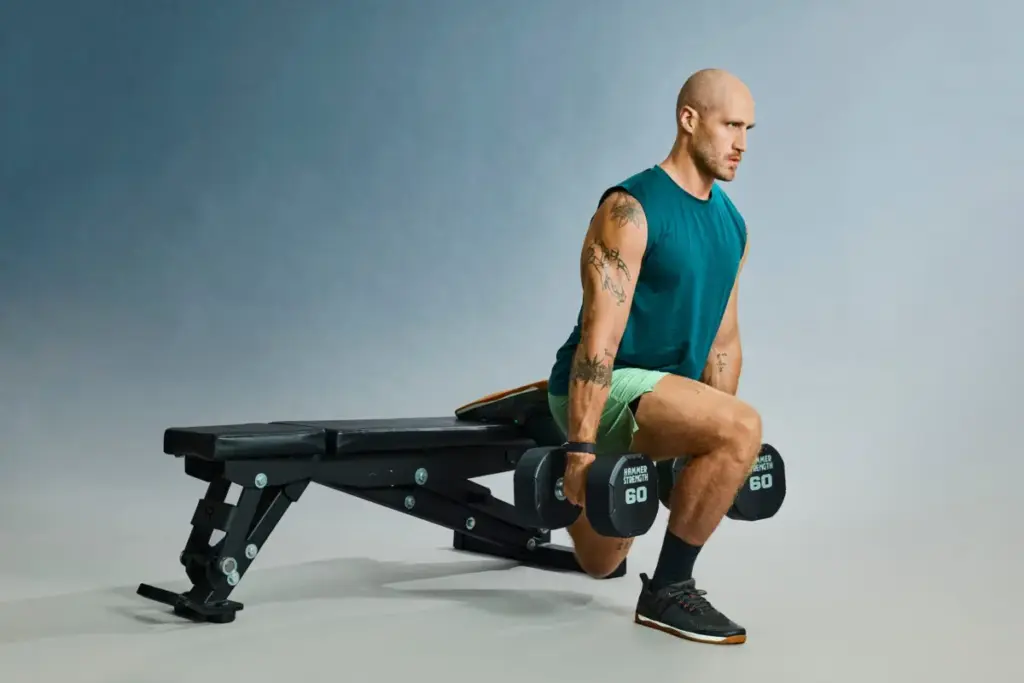
- Kneel on the floor facing away from the bench, placing the top of your back foot flat on the bench.
- Extend your front leg outward on the floor until you are in a comfortable lunge position.
- Stand straight up from that exact spot. This guarantees optimal spacing for a safe, biomechanically efficient knee angle and a deep stretch in the rear hip flexors.
2. The Back Knee Never Touches
"The Bulgarian split squat is best used as an exercise that demonstrates controlled movement, not explosion, so think about owning the eccentric (lowering phase)—and work to own the bottom of each rep, too. To own that bottom position, don’t let your back knee hit the ground. Once that back knee touches the ground, this basically becomes a loaded couch stretch."
Allowing the rear knee to crash into the floor introduces momentum, removes tension from the working muscles, and turns the exercise into a passive stretch. Instead, control the descent slowly, hover approximately one inch above the floor, and pause for a split second at the bottom. This eliminates any reliance on a stretch-shortening reflex or "bounce," forcing pure muscular recruitment to initiate the ascent.

3. Keep Your Glutes Active
"You have to pay attention to plenty of factors in the Bulgarian split squat, and the movement pattern itself will take some getting used to, but don’t let any of that be an excuse to not keep your glutes active, as they should be on any squat or deadlift motion."
A common error during single-leg movements is letting the glutes relax, which allows the front knee to drift inward—a dangerous position that places undue shear stress on the knee joint. Actively squeezing the glutes throughout the movement stabilizes the pelvis, protects the knee, and ensures that the gluteus maximus can maximally drive the body out of the bottom position.

Programming Strategies: How to Implement the Exercise
Integrating the Bulgarian split squat into your training regimen depends heavily on your training age, experience level, and primary goals.
For Bodyweight Beginners and Finishers
If you are new to the movement or looking to push local muscular endurance to its absolute limit, start with unweighted bodyweight sets. Because there is no external load taxing the central nervous system, these can be programmed as a high-rep leg-day finisher to flush the quads and glutes with blood.

- Volume: 3 sets of 15 to 20 reps per leg.
For Intermediate and Advanced Strength Builders
When adding external resistance—such as dumbbells held in a suitcase grip at your sides or kettlebells racked at your shoulders—the exercise demands significant systemic energy. Consequently, it should be placed early in your workout while your nervous system is fresh, ideally sandwiched between heavy bilateral compounds (like back squats) and isolated machine work (like leg extensions).
- Volume: 3 sets of 8 to 10 reps per leg with moderate-to-heavy loads.
Advanced Variations to Accelerate Gains
Once you have mastered the standard Bulgarian split squat, you can introduce advanced variations to target strength curves, stability, and neuromuscular coordination from new angles.
1. Pulse Pause Bulgarian Split Squat
- Execution: Lower yourself into the bottom position of the squat, pulse upward a few inches, sink back down to the bottom, and then drive all the way to the top.
- Benefit: Extends time under tension (TUT) and eliminates momentum, punishing the quads and glutes with prolonged isometric and concentric stress.
2. Pass-Through Clean Bulgarian Split Squat
- Execution: Hold a single dumbbell or kettlebell by the handle, and as you descend into the split squat, pass the weight underneath your working front leg to the opposite hand on the way up.
- Benefit: Combines lower-body strength with core anti-rotation, hand-eye coordination, and dynamic weight transfer.
3. Dead Stop Bulgarian Split Squat
- Execution: Position a safety pins or a low box beneath your back knee. Lower down until your back knee rests completely on the support, pause for a full second to kill all momentum, and then explode upward.
- Benefit: Trains concentric explosive power from a dead stop, mirroring the biomechanical demands of getting up from the ground or driving out of a bottom position in athletic pursuits.
4. Mixed-Load Bulgarian Split Squat
- Execution: Hold a heavy dumbbell in only one hand (the suitcase position) while keeping the other hand empty or holding a lighter weight.
- Benefit: Creates an asymmetrical load that forces the core, obliques, and hip stabilizers to fight lateral flexion, dramatically enhancing unilateral core stability.
Future Outlook
As exercise science continues to evolve, the emphasis on functional, injury-resilient movement patterns will only grow stronger. The days of neglecting unilateral work in favor of pure bilateral volume are rapidly fading.
The Bulgarian split squat represents the gold standard of this modern fitness paradigm. By bridging the gap between raw muscle hypertrophy, joint health, and real-world athletic transfer, it proves that true strength is not just about how much weight you can move, but how well you can control your body through space—one leg at a time.