Executive Overview
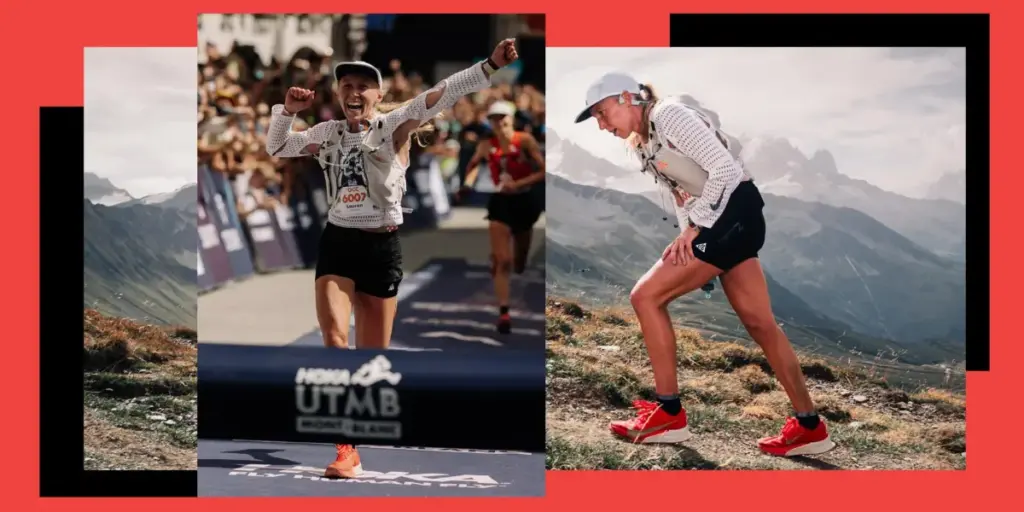
The women’s OCC—the prestigious Orsières–Champex–Chamonix ultra-trail race spanning 60 grueling kilometers through the heart of the Swiss and French Alps—delivered one of the most thrilling and dramatic finishes in the history of the event. Held during the celebrated Hoka Ultra-Trail du Mont-Blanc (UTMB) festival, the 2024 edition culminated in a heart-pounding tactical masterclass executed by 27-year-old American runner Lauren Gregory.
Entering the race with limited ultra-distance experience and a background deeply rooted in track and shorter cross-country events, Gregory pulled off a breathtaking late-race surge. Trailing in third place with a mere three kilometers remaining, she systematically hunted down her rivals. First, she overtook Spain’s formidable Sara Alonso. Then, with just one kilometer standing between her and the iconic finish line in downtown Chamonix, Gregory blew past race leader Naomi Lang of Great Britain.
Gregory crossed the finish line in an astonishing time of 6 hours, 8 minutes, and 7 seconds, claiming the crown by a razor-thin margin. Lang finished mere seconds behind, while Alonso secured third just over a minute adrift of the winner. The race was more than a mere athletic victory; it was a watershed moment for elite trail running, highlighting the rising dominance of women’s ultra-endurance racing, the blurring lines between track speed and mountain grit, and the arrival of a generational talent on the global stage.
Detailed Chronology: Anatomy of a Late-Race Masterclass
The Unknown Frontier: Stepping Up to 60K
To fully appreciate the gravity of Gregory’s victory, one must understand the sheer brutality of the OCC course. Spanning over 37 miles (60 kilometers) across rugged alpine terrain, the race forces competitors to conquer a staggering 11,482 feet (over 3,500 meters) of vertical elevation gain. For athletes accustomed to rolling hills or flat tracks, the verticality alone is a formidable adversary.
Just 24 hours before the starting gun in Orsières, Switzerland, Gregory sat down at a hotel in Chamonix—just minutes away from the finish line she would soon conquer—to reflect on the impending challenge. Despite coming off notable victories at the Golden Trail World Series and the Speedgoat 50K as a Nike ACG athlete, Gregory maintained a remarkably grounded perspective.
"I’m hoping to learn where my upper limits are and where my strengths and weaknesses are in this longer distance—because 60K is pretty far for me," Gregory told Women’s Health on the eve of the race. "This is still definitely going to feel like a bit of a reach, but not too much, which is why I’m here."
With no prior experience on this specific course and facing a stacked international field of seasoned mountain specialists, Gregory adopted an exploratory mindset. She loaded up on carbohydrates—consuming plenty of the pasta readily available throughout Chamonix—and focused on absorbing the experience rather than projecting a podium finish. "This is my first time here," she remarked beforehand. "I don’t know how it’ll all shake out and a lot of the course will be new to me, so that’ll be fun. I’m really just out here to just get the experience."
The Climb and the Crunch: The Final Three Kilometers
As the race unfolded across the punishing Swiss-French border, the early pacesetters dictated a ferocious tempo. Naomi Lang established herself at the front of the pack, utilizing her deep technical descent skills to keep pressure on the field, while Sara Alonso traded blows near the podium positions.
Gregory, meanwhile, was executing a carefully paced masterclass. Drawing on her background as a standout collegiate and professional runner whose primary accolades had come on the track and in shorter off-road formats (such as 5Ks and 10Ks), she carefully managed her energy reserves through the lung-busting climbs and treacherous, rock-strewn downhills.
As the race entered its final stages and descended back toward the vibrant, spectator-packed streets of Chamonix, the race dynamic shifted dramatically. With only three kilometers remaining—a distance that feels like a sprint after nearly six hours of sustained physical trauma—Gregory found her opening. Sitting comfortably yet aggressively in third place, she initiated her move, passing Alonso to claim second.
The crowd lining the barriers sensed history in the making. With just one kilometer left on the clock, Gregory bridged the gap to the exhausted leader, Naomi Lang. Digging deep into reserves forged through years of high-intensity track training, Gregory unleashed a final, decisive kick, sweeping past Lang in the dying moments of the race to claim one of the most improbable and electrifying victories in UTMB history.
Supporting Context & Metrics: Speed Meets Endurance
The 5K to 60K Mentality Shift
To the uninitiated, transitioning from elite track racing to a 60-kilometer mountain ultra-marathon sounds like moving from a sprint to a marathon. However, Gregory argues that the psychological architecture required for both disciplines is remarkably similar.
While her athletic pedigree primarily consisted of shorter, explosive efforts on rubber tracks rather than technical trails, that very background proved to be her secret weapon in the frantic final kilometers. When asked how a 5K compares to a 60K, Gregory offered a pragmatic, hardened perspective on pain management.
"The last quarter of everything hurts," Gregory explained. "A 60K is low-level hurt for a few hours, whereas in a 5K it’s high-level hurt for three laps or so."

This philosophical framing gave her a distinct psychological edge over competitors who viewed the final miles of an ultra as uncharted, terrifying territory. Having experienced the acute, suffocating agony of the final laps of a 5K countless times, Gregory recognized the familiar, unwelcome visitor of late-race fatigue.
"You know the last quarter of everything’s going to suck, so I’m prepared mentally for something like that," she noted. "It doesn’t feel as foreign because I know it in other distances too. Even though this is an unknown distance, I can always make it through the last quarter."
The Evolution of Women’s Ultra-Running
The 2024 women’s OCC was universally hailed as the marquee race of the festival, drawing immense praise from pundits, fans, and athletes alike for its competitive depth. The immediate aftermath of the race captured the spirit of modern ultra-running: sportsmanship, mutual respect, and pure joy.
As Gregory crossed the line to take the tape, she was immediately embraced by runner-up Naomi Lang. The two exhausted athletes shared a heartfelt hug amidst the roaring Chamonix crowds, celebrating an epic battle that pushed both to their absolute physiological limits. Moments later, Sara Alonso crossed the finish line in third, instantly captivating the audience’s attention before treating the ecstatic crowd to an impromptu performance of "the worm" dance.
This high-profile showcase comes at a time when participation and viewership in women’s trail and ultra-running are exploding exponentially. Events like UTMB are no longer male-dominated spectacles where the women’s race plays second fiddle; instead, the women’s fields regularly deliver the most tactically astute, fiercely contested, and narratively gripping races of the entire week.
Reflecting on the state of the sport, Gregory emphasized the parity and brilliance of her peers. "It’s really cool that to me, the depth and the overall quality of the women’s race is on par to the men’s, and in some fields, the women’s race is stronger than the men’s," Gregory stated. "Running is all one event. We are all here together. We’re all equally doing the same distance and have the same quality of competition. It’s all worth watching."
Official Statements & Reactions
The shockwaves of Gregory’s victory reverberated immediately throughout the international trail running community. Industry analysts, coaches, and fellow elites took to social media and post-race press conferences to dissect how a relative newcomer to the 60K distance managed to dismantle one of the most competitive fields assembled in Europe.
Key Takeaways from the Elite Field
- Tactical Patience: Race analysts noted that Gregory’s refusal to panic during the early-race climbs preserved her quadriceps and cardiovascular system for the fast, punishing descent into Chamonix.
- The Track-to-Trail Pipeline: Gregory’s triumph adds to a growing body of evidence that cross-country and track runners possess a devastating closing speed that can neutralize the technical advantages of lifelong mountain runners if the race remains close in the final kilometers.
- Cross-Atlantic Dominance: Securing a win at a premier European Major (UTMB series event) further cements the rising caliber of North American trail athletes on the global stage, proving that elite American talent can travel across the Atlantic and conquer European terrain.
Future Outlook: Recovery and What Lies Ahead
Having poured every ounce of physical and mental energy into conquering the Swiss and French Alps, Gregory’s immediate post-race agenda looked remarkably different from her usual disciplined training regimen back home in Boulder, Colorado.
When asked about her plans for celebrating the monumental victory, Gregory skipped the standard post-race recovery protocols in favor of immediate indulgence and psychological decompression. Her first order of business? Securing a massive burger at Chamonix’s legendary local institution, Poco Loco.
Beyond local fast food, Gregory planned to completely sever ties with her running shoes for a brief period. Rather than returning directly to Boulder—where the omnipresence of running culture and training partners would inevitably tempt her back onto the trails too soon—she mapped out a restorative escape to Italy.
"I’m taking a trip to Italy to relax on the beach," Gregory shared with a smile. "If I went right back home to Boulder, I’d be too tempted to immediately start running again with friends."
Instead, the newly crowned OCC champion embraced a radical shift in pace: "I’ll be getting out of my normal rhythm—drinking coffee, maybe having a beer in the middle of the day—getting to do what I would never do when training."
What’s Next for the Champion?
As the dust settles on the 2024 Hoka UTMB festival, the sports world is left wondering what Lauren Gregory’s ceiling truly is. By proving she can successfully scale up her distance from sub-ultra formats to a fiercely contested 60K alpine race—and win against the best in the world on her first attempt—Gregory has officially announced herself as a dual-threat powerhouse.
Whether she chooses to double down on the ultra-distance circuit, explore even longer 100K formats, or balance her mountain exploits with continued success in shorter trail and track events, one thing is certain: the trail running world has a new star. And next time Lauren Gregory enters the final kilometer of a race within striking distance of the lead, her competitors will know firsthand just how dangerous that final quarter can be.