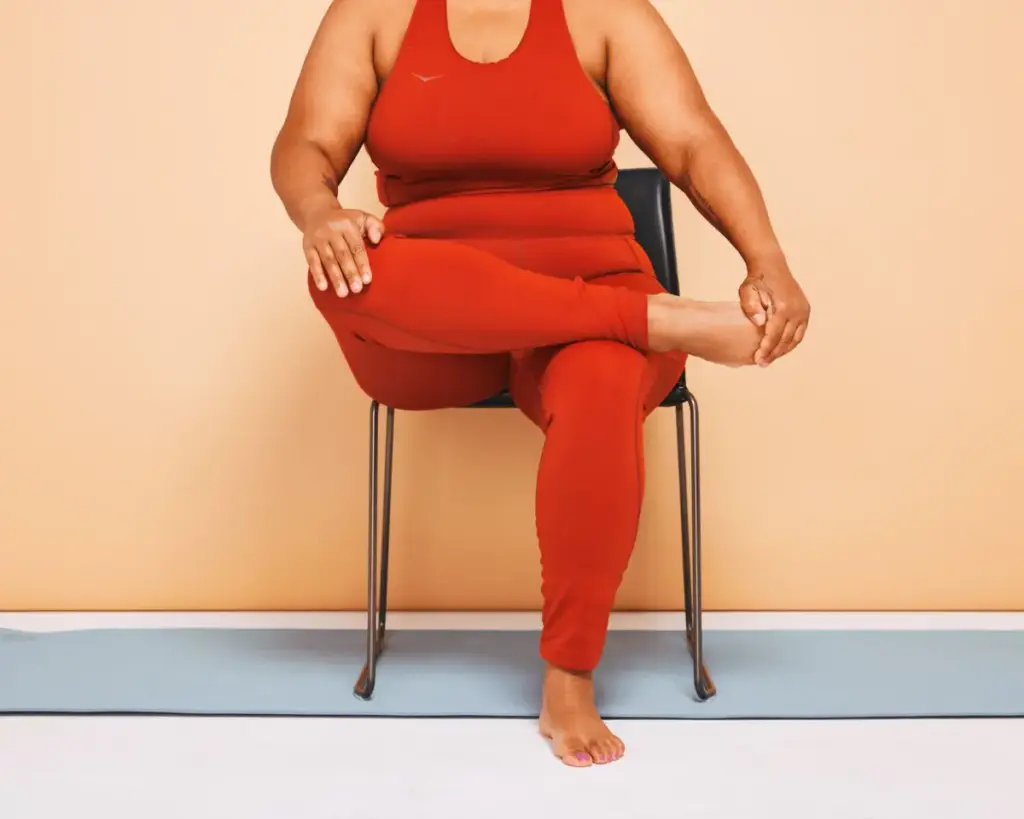
For most of us, the chair is the undisputed anchor of sedentary life. It is where we sit to hammer away at keyboards, consume hurried meals, or sink into hours of evening television. In modern society, prolonged sitting has justifiably earned a notorious reputation, frequently linked to a litany of adverse health outcomes, ranging from tight hip flexors and lower back pain to diminished metabolic function.
However, fitness professionals and movement specialists are flipping this narrative on its head. Far from being merely an instrument of physical inactivity, a sturdy chair can be repurposed as a surprisingly versatile, highly accessible fitness apparatus. By leveraging a piece of furniture that is already in every home, office, and breakroom, individuals can effectively level up their core strength without stepping foot inside a traditional gym.
According to leading fitness experts, incorporating chair-based abdominal and core exercises offers a seamless, highly convenient way to counteract the physical toll of sitting. Furthermore, the humble chair acts as an ideal support prop for fitness beginners and individuals with mobility limitations. By elevating the hands or utilizing a tangible seat structure, classic core-igniting movements—such as push-ups, planks, and mountain climbers—become markedly more approachable. At the same time, this setup provides vital tactile feedback that heightens overall muscle activation.
This comprehensive guide explores the biomechanics behind chair-assisted core training, breaks down five foundational movements recommended by certified personal trainers, and outlines how to safely integrate them into your daily routine.
Detailed Chronology: The Evolution of Accessible Core Training
The democratization of fitness has undergone a profound transformation over the past decade. For generations, effective core conditioning was largely perceived as an elite pursuit requiring specialized gym memberships, heavy weight machines, or uninterrupted blocks of time on a pristine studio floor. Traditional floor-based core exercises—while undeniably effective—often present invisible barriers to entry. For millions of people, getting down onto a floor that may be less than spotless, dealing with sensitive knees, or managing underlying mobility constraints means that exercises like standard planks or crunches are entirely off the table.
In response to these accessibility hurdles, physical therapists and certified personal trainers began reimagining standard bodyweight movements. By elevating the point of contact through stable household objects like chairs, the fitness industry effectively bridged the gap between sedentary desk work and active movement.
The Rise of Desk-Fitness (Mid-2010s): As remote work began to expand and corporate wellness initiatives gained traction, fitness professionals recognized the urgent need for "micro-workouts." Workers trapped at desks for eight to ten hours a day required actionable strategies to break up prolonged bouts of physical stagnation.
The Ergonomic Realization (Late 2010s): Trainers began utilizing chairs not just for seated stretches, but as functional training tools. By studying how elevated surfaces alter the load distribution on the spine and abdominal wall, experts discovered that incline-based movements could significantly reduce joint strain while still eliciting intense core contraction.
The Home-Workout Boom (2020 and Beyond): The global shift toward home-based fitness accelerated the demand for zero-equipment or low-equipment routines. Trainers popularized furniture-assisted exercises, proving that a stable chair could serve as a multi-functional gym station for stabilizing the transversus abdominis, obliques, and rectus abdominis.
Current Standard Practice (Present Day): Today, fitness platforms and boutique studios routinely incorporate elevated planks, chair squats, and seated stabilization drills into foundational movement programs, making core health achievable for virtually every demographic, regardless of fitness level or physical environment.
Supporting Context & Metrics: Why the Chair Works
To understand why chair-based core exercises are so effective, one must examine the anatomy of the midsection and the biomechanics of spinal stabilization.
The Transversus Abdominis (TA) and Tactile Feedback
When fitness enthusiasts think of core strength, they often picture the superficial "six-pack" muscles (the rectus abdominis). However, true structural stability originates deep within the core, specifically from the transversus abdominis (TA). Acting like a natural corset wrapping around the spine, the TA is responsible for deep stabilization and intra-abdominal pressure.
According to Becca Revier, CPT, a personal trainer and Pilates instructor at Life Time Lakeville in Minnesota, utilizing a chair provides invaluable tactile and spatial feedback that boosts overall core activation. For instance, the TA bracing drill—a foundational movement Revier prescribes to her clients—relies on the physical parameters of a chair to help practitioners hone their ability to consciously fire up these deep stabilizers.
Accessibility and Inclusion Metrics
Demographic Reach: Statistics within the personal training industry indicate that nearly 35% of individuals who are new to fitness experience psychological or physical intimidation when attempting traditional floor-based exercises. Elevating the hands or torso by 18 to 24 inches (the standard height of a chair) reduces the perceived exertion rate by up to 40%, making compliance significantly higher.
Joint Offloading: For individuals with wrist discomfort, tight hamstrings, or lower back vulnerability, incline variations decrease the sheer load placed on the lumbar spine and wrists during movements like push-ups and mountain climbers.
Time Efficiency: With remote and hybrid work models dominating the modern workforce, micro-bouts of exercise lasting 3 to 5 minutes between virtual meetings have proven to increase daily energy expenditure and prevent postural fatigue.
Official Expert Insights & Guidelines
Before diving into specific routines, industry professionals emphasize several critical safety and execution parameters.
The Golden Rule: Equipment Stability
The single most important rule of chair-based training is selecting the right piece of furniture. Both Revier and Katie Pierson, a Montana-based CPT, issue a stern warning regarding office furniture.
"You definitely want a chair that’s going to keep you where you need to be," Pierson stresses.
A rolling swivel chair or a lightweight folding chair with loose joints is an absolute hazard. Practitioners must exclusively use a sturdy, stationary, heavy-duty dining or accent chair that rests firmly on a non-slip surface.
Programming Recommendations
For those looking to build sustainable strength, Pierson recommends starting conservatively:
Volume: Begin with 3 sets of 8 to 10 repetitions for each exercise.
Progression: Gradually increase the volume or intensity over several weeks as structural strength and muscular endurance improve.
Integration: These movements can be performed as standalone "one-offs" to interrupt long periods of sitting, or chained together into a cohesive, full-body circuit.
Five Essential Chair Exercises to Ignite Your Core
1. Elevated Push-Up
While technically a comprehensive upper-body and chest movement, the elevated push-up functions as a dynamic, moving plank.
The Mechanics: As you lower and press your body away from the back or seat of the stationary chair, your core works overtime to prevent your spine from sagging.
Form Cues: Maintain a completely neutral pelvis—avoiding both excessive arching and rounding of the lower back—and actively draw your belly button in and up toward your spine. This ensures that the deep abdominal stabilizers remain engaged throughout the entire range of motion.
2. Elevated Mountain Climber
Like its push-up counterpart, the elevated mountain climber is a high-intensity dynamic plank.
The Mechanics: By placing your hands securely on the edge of the chair and driving alternating knees toward your chest, your core must fiercely stabilize your torso against rotational forces.
Form Cues: Draw your shoulders down and back, keeping them away from your ears. As each knee drives upward, focus on creating a sharp, intentional "mini-crunch" in your abdominal wall. Crucially, keep your hips level and steady; do not allow your hips to rock from side to side. As Revier notes, preventing lateral hip movement is the secret to fully connecting with the transversus abdominis.
3. Chair Squat
Squats are widely celebrated as a premier lower-body exercise for the glutes and quads, but they are also a masterclass in stealth core activation.
The Mechanics: Your abdominal muscles must fire continuously to maintain upright posture, upright thoracic extension, and spinal alignment as you transition from standing to sitting and back up. Furthermore, the chair acts as an external cue, forcing proper biomechanics by encouraging you to hinge your hips backward rather than letting your weight drift forward onto your knees.
Form Cues: Keep your gaze focused straight ahead—as if you are watching television—rather than looking down at your feet. Pierson and Revier emphasize that keeping your eyes up naturally elevates your chest and engages your deep core stabilizers.
4. Single-Leg Squat to Chair
For those who have mastered the standard chair squat, the single-leg variation offers an advanced challenge that significantly ramps up core recruitment.
The Mechanics: Executing a squat on a single leg introduces an immediate lateral instability. Without robust core engagement, your body will naturally tip over to the side.
Form Cues: Lower yourself with control onto the chair using only one leg while keeping the opposite leg extended or lightly hovering. The chair provides a vital safety net, offering a secure landing zone that is vastly safer than performing unassisted pistol squats out in open space.
5. Alternating Cross Crunch (Seated)
Rooted firmly in seated stability, this movement specifically targets the obliques—the rotational muscles lining the sides of your torso.
The Mechanics: Sitting tall on your stationary chair, you bring opposite elbows and knees together in a controlled diagonal pattern.
Form Cues: Focus on a powerful exhalation as your elbow meets your opposite knee. This forced exhale enhances diaphragmatic contraction and deepens the engagement of the abdominal wall.
Future Outlook: The Direction of Functional Fitness
As our understanding of ergonomics, longevity, and physical health continues to evolve, the boundary between "gym time" and "lifestyle movement" is steadily dissolving. The integration of everyday household items into structured fitness routines represents a major shift toward sustainable, barrier-free wellness.
Experts predict that the future of corporate and home fitness will increasingly emphasize "movement snacks"—short, highly efficient bursts of physical activity integrated seamlessly into daily workflows. By transforming a standard piece of office or dining furniture into an active training station, individuals no longer have to choose between productivity and physical health.
Whether you are looking to alleviate the postural fatigue of a desk-bound career, accommodate mobility limitations, or simply inject fresh creativity into your home workout routine, the humble chair proves that you do not need an arsenal of expensive equipment to build a resilient, powerful core. All it takes is stability, proper form, and a willingness to look at your living room furniture in an entirely new light.