Executive Overview
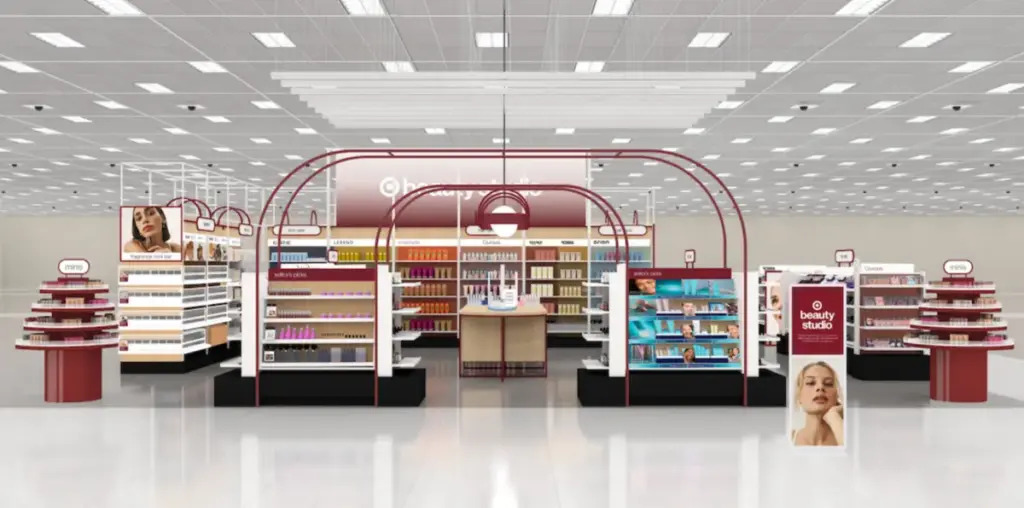
In a strategic maneuver designed to revitalize its long-term financial growth and capture a larger share of the lucrative prestige and indie cosmetics market, retail giant Target is making a major play in the personal care space. On September 10, the big-box titan officially rolled out its ambitious Target Beauty Studio concept across more than 600 brick-and-mortar storefronts nationwide, alongside a simultaneous digital debut on Target.com.
The launch represents far more than a mere reorganization of aisles; it is a calculated structural pivot. The dedicated department houses an impressive inventory of over 1,600 individual products sourced from 90 distinct brands. Crucially, more than two-thirds of these participating labels are making their debut on Target’s shelves, with several brands crossing the threshold into physical retail for the very first time.
Spanning skin care, makeup, hair care, fragrance, bath and body, and nail care, the Beauty Studio aims to bridge the gap between everyday mass-market convenience and the experiential, discovery-driven environment typically associated with specialty beauty retailers like Sephora or Ulta. By blending curated assortments, miniature trial-sized products, dedicated "beauty adviser" staff, and immersive in-store testing opportunities, Target is effectively redefining what consumers can expect from a big-box beauty department.
For emerging, digital-first, and independent beauty brands, this rollout serves as a transformative watershed moment. Founders who spent years scaling businesses on Amazon, direct-to-consumer (DTC) websites, or select prestige department stores are finding that Target’s new immersive format offers a viable, high-volume pathway into mass brick-and-mortar retail—without sacrificing their brand identity.
Detailed Chronology: From Concept to Rollout
The genesis of the Target Beauty Studio did not happen overnight; it is the culmination of years of relationship-building, behind-the-scenes negotiations, and a broader corporate strategy aimed at reinventing Target’s product categories to reignite consumer enthusiasm.
The Buildup and Early Talks (2022–2024)
Conversations between Target’s merchandising buyers and various indie brand founders began in earnest nearly two years prior to the September launch. For many brands, entering a massive national retailer like Target required a careful alignment of operational readiness, supply chain maturity, and brand equity.
- Remilia Hair: Founder and CEO Eliran Luzone launched the brand in 2018, steadily growing the hair serum, shampoo, and conditioner line into a seven-figure business primarily through Amazon. Discussions with Target buyers commenced close to two years ago, but momentum stalled until the blueprints for the Beauty Studio concept were finalized. For Luzone, the wait was strategic; he needed an environment focused on education rather than simple shelf-stacking.
- Borghese: Dawn Hilarczyk, Chief Operating Officer of the 70-year-old heritage Italian skin-care brand, began discussions with Target approximately a year ago, though securing a partnership had been a primary career goal since she joined the company two and a half years prior. Already established in prestige accounts such as Macy’s, Neiman Marcus, Bloomingdale’s, Ulta, and Amazon, Borghese saw Target as the ideal vehicle to execute its foundational mission of delivering accessible luxury.
- Clearstem: Co-founders Danielle Gronich and Kayleigh Christina built their anti-acne and anti-aging skin-care line organically after a quiet launch in 2017 with a single serum. Target buyers—who were already personal users of the products—approached the founders earlier in the year. Prior to this, Gronich and Christina had deliberately delayed a mass retail launch, waiting for a partner that truly understood their mission of education-first skin transformation.
Final Preparations and Employee Training (Summer 2025)
As the launch date approached in the summer of 2025, participating brands were tasked with heavy operational lifting. Unlike traditional retail models where products are simply shipped to distribution centers and placed on shelves, the Beauty Studio model demanded deep collaboration on staff education.
Multiple founders reported supplying Target with comprehensive training materials, including instructional videos and deep-dive documentation detailing product mechanisms, ingredients, and usage routines. These resources were designed to empower Target’s newly designated "beauty advisers"—store associates trained to guide shoppers through the vast inventory, offer personalized recommendations, and facilitate experiential product testing.
The Official Launch (September 2025)
The Target Beauty Studio officially went live on September 10, accompanied by an extensive digital rollout on Target.com. The launch is supported by targeted promotions through the Target Circle loyalty program, culminating in specialized in-store celebratory events on September 26.
Supporting Context & Metrics: A Snapshot of the Participating Brands
The roster of brands participating in the Target Beauty Studio spans a fascinating spectrum of business maturity, ranging from decades-old legacy houses to fresh-faced startups that have barely celebrated their first anniversaries.
The Brand Lineup Breakdown
The full assortment is accessible via Target’s online portal, showcasing a diverse geographic and categorical mix:
- Skin Care: Eqqualberry, First Aid Beauty, Clearstem, and Borghese.
- Hair Care: Joico, Nioxin, and Remilia Hair.
- Global and Niche Innovations: Sarelly (a Mexican beauty brand) and Manacurist (a French eco-conscious nail-care brand).
- Body & Specialized Care: Fur (body hair and skin-irritation care) and By the Beach Suncare.
Key Financial Metrics and Growth Projections
| Brand Name | Founding Year | Previous Sales Channel(s) | Projected Growth / Recent Revenue Milestones |
|---|---|---|---|
| Remilia Hair | 2018 | Amazon (DTC) | Reached 7-figure revenue on Amazon; first brick-and-mortar retail partnership. |
| Clearstem | 2017 | DTC / E-commerce | Reached $50 million in sales last year; first physical retail partnership. |
| Borghese | 1950s (70+ years) | Department Stores, Ulta, Amazon | Up 38% last year; expects 60% revenue growth this year and potentially double next year due to Target. |
| By the Beach Suncare | October 2024 | DTC / New Launch | Expects $4M in sales in its first year; over 250,000 units sold. |
| Fur | ~2015 (10 years) | Self-funded DTC | Generates $10 million to $20 million in annual sales; female-run, independent. |
Official Statements & Industry Perspectives
The reception from retail executives and brand founders highlights a shared belief that mass retail is undergoing a psychological shift. Consumers no longer want transactional, sterile shopping environments; they demand curation, education, and discovery.
Target Leadership
Amanda Nusz, Senior Vice President of Merchandising, Essentials and Beauty for Target, emphasized the psychological duality of the modern beauty consumer in an official corporate press release:
"When guests shop for beauty, they want to pick up their standbys while also exploring what’s new and trending, and Target Beauty Studio is designed with that mix in mind. It’s an inspiring destination to discover what’s new, now and next in beauty — and a powerful example of how our merchandising authority comes to life through an elevated guest experience."
Founder Perspectives: Why Target?
For independent founders, breaking into mass retail carries inherent risks—chief among them being loss of brand control and the danger of poor sell-through. However, the unique structural design of the Beauty Studio alleviated those concerns.
- Eliran Luzone (Remilia Hair): Emphasized that the initiative avoids passive merchandising. "We’re not just putting products on shelves; it’s a completely new environment where it’s really focused on beauty discovery and education and its own sales associates." Reflecting on his brand’s journey from Amazon to physical retail, Luzone added, "For a brand like ours, I felt like it was extremely valuable."
- Kayleigh Christina (Clearstem): Noted that the decision to finally enter physical retail hinged on finding a buyer team that resonated with the brand’s core ethos. "We had always put off a retail launch because we wanted to wait for the right partner. We wanted to work with a team and buyers that had experienced transformation with Clearstem and really understood how much we can change people’s lives and skin through our products and education."
- Dawn Hilarczyk (Borghese): Stressed that a standard "products-on-shelves" arrangement held no appeal for a 70-year-old luxury house. "We could have done that at any mass retailer and/or any major retailer, but Target offered more." Hilarczyk noted the cultural ubiquity of the retailer: "You can go to Target and get whatever you need personally, and, at the same time, get a great beauty product. For Borghese, that’s how we were founded. We need to be accessible luxury skin care to everyone, and we want to be where the customer is. And she’s shopping at Target."
- Jessica Singer and Andrew Glass (By the Beach Suncare): Praised the courage of a massive corporate entity willing to gamble on a brand that had been on the market for less than a year. "It’s so incredible to have such a big retailer have the guts to want to really showcase something that’s new and emerging," Singer said. Glass added that the creative freedom to design custom fixtures and incorporate physical product testing was non-negotiable: "It was really important for us for the customer to be able to experience the product, especially since we are so new, before buying."
- Lillian Tung (Fur): Highlighted the importance of operational pacing for self-funded, independent enterprises. Having spent a decade building a category around body hair care, ingrown treatments, and intimate skin health, Tung and co-founder Laura Schubert waited until market demand and internal infrastructure could fully support national scale. "You can’t get into things that you can’t support. If we didn’t feel like body-hair care and in-grown care have enough of a demand, we’re not going to put ourselves out there. On top of that, Target Beauty Studio is the right mix… It’s definitely catering to a more targeted customer, so it made sense for us at this point."
Future Outlook: What the Beauty Studio Means for the Retail Landscape
As the retail sector continues to navigate shifting consumer spending habits, inflationary pressures, and intense competition from digital-native brands and direct-to-consumer models, Target’s Beauty Studio offers a compelling blueprint for the future of big-box merchandising.
1. The Blurring Lines Between Mass and Prestige
Historically, beauty retail was rigidly segmented: drugstores and mass-market big-box stores carried affordable, functional staples, while department stores and specialty chains (like Sephora and Ulta) held the monopoly on prestige, indie, and experiential beauty. By introducing rotating "editors’ picks," "most loved" curations, specialized trial-sized minis, and dedicated beauty advisors, Target is systematically eroding these traditional boundaries. Consumers can now access high-end, efficacious indie formulations—such as Clearstem’s anti-acne serums or Fur’s specialized body treatments—under the same roof where they purchase household groceries and apparel.
2. A Lifeline for DTC Brands Facing Customer Acquisition Cost (CAC) Pressures
The direct-to-consumer digital landscape has grown increasingly hostile for emerging brands, plagued by skyrocketing digital advertising costs on platforms like Meta and Google, alongside privacy changes that have decimated tracking efficiencies. Retail partnerships like the Target Beauty Studio provide a vital alternative channel. By plugging into Target’s massive foot traffic and established loyalty program (Target Circle), indie brands can achieve immediate brand awareness and sales volume that would take years to replicate purely through digital channels.
3. The Centrality of Experiential Retail
If there is one overarching lesson from the rollout of the Target Beauty Studio, it is that physical retail cannot survive on inventory alone; it must offer an experience. By investing in staff education, interactive testing stations, and thoughtfully designed physical fixtures that allow brands to tell their unique stories, Target is proving that physical stores possess an inherent advantage over e-commerce—provided retailers are willing to innovate.
Conclusion
As the initial wave of sales data rolls in following the September launch, industry observers will be watching closely to see whether the Target Beauty Studio successfully drives the long-term financial growth the retailer is banking on. For the 90 brands participating in the rollout—many of which are experiencing the neon lights of physical retail for the very first time—the experiment has already altered their corporate trajectories. In an era where retail partnerships can make or break an independent company, Target has positioned itself not just as a store, but as an incubator for the future of beauty.