Executive Overview
The global accessories market is undergoing a seismic structural shift, driven by a nostalgic yet fiercely modern revival of legacy leather goods houses. At the epicenter of this renaissance stands Coach, a brand that has successfully orchestrated one of the most remarkable brand transformations in contemporary fashion history. As the retail sector pivots from the high-octane, sun-drenched aesthetics of summer toward the moody, tactile palette of autumn, consumer attention has decisively zeroed in on two specific silhouettes: the Coach Brooklyn Shoulder Bag and the Coach Tabby Shoulder Bag.
Once viewed primarily as a nostalgic touchstone of millennial childhoods, Coach has redefined its market positioning through astute trend forecasting, material innovation, and an acute understanding of modern utility. The Brooklyn and Tabby lines have transcended traditional seasonal accessories to become full-scale cultural artifacts, spotted on the shoulders of Gen-Z trendsetters, working professionals, and global style icons alike.

This comprehensive report investigates the factors driving the unprecedented demand for these two pieces, examining their architectural design, functional versatility, and strategic positioning as the definitive "It-Bags" for the autumn season. Through a detailed analysis of market metrics, consumer behavior, and the broader resurgence of early-2000s heritage brands, we explore why Coach’s current retail moment is far more than a fleeting flash in the pan.
Detailed Chronology: The Evolution of Coach’s Modern Era
To understand the current ubiquity of the Brooklyn and Tabby bags, one must examine the calculated trajectory that brought Coach to this pivotal juncture. The brand’s journey from a traditional mall-staple leather goods manufacturer to a high-fashion darling did not happen overnight.

Phase 1: The Rebranding Blueprint (2018–2020)
As consumer preferences shifted rapidly toward direct-to-consumer digital brands and hyper-trendy micro-labels, legacy heritage houses faced an existential crisis. Coach, under the creative direction of Stuart Vevers, began laying the groundwork for a complete aesthetic overhaul. The strategy focused on leaning into American heritage while injecting a youthful, subversive counter-culture edge. Archival silhouettes were pulled, dusted off, and re-engineered with modern proportions, higher-grade leathers, and modernized hardware.
Phase 2: The Birth and Iteration of the Tabby (2019–2022)
The introduction of the Tabby bag marked the turning point of this renaissance. Inspired by an archival 1970s Coach design, the Tabby was initially launched as a structured, compact shoulder bag featuring the iconic "C" hardware logo wrapped in matching leather. By continually releasing limited-edition colorways, varied textures (such as plush quilting and metallic finishes), and scaling sizes from the delicate Pillow Tabby to the versatile Tabby 26, the brand cultivated a relentless cycle of desire. Social media algorithms quickly caught on, turning the bag into an organic status symbol across TikTok and Instagram.

Phase 3: The Minimalist Shift and the Rise of the Brooklyn (2023–Present)
While the Tabby captured the market’s appetite for structured, statement-making hardware, consumer fatigue with logomania eventually paved the way for a quieter, more understated luxury aesthetic. Enter the Brooklyn Shoulder Bag. Capitalizing on the resurgence of the relaxed hobo silhouette and the growing demand for spacious, functional everyday carryalls, the Brooklyn arrived with minimal hardware and maximal slouch. Its rapid adoption by urban commuters and minimalists alike cemented Coach’s ability to cater to dual ends of the contemporary fashion spectrum: structured statement pieces and effortless everyday essentials.
The Anatomy of Desire: A Deep Dive into the Star Silhouettes
As consumers transition their wardrobes to accommodate falling temperatures, rich textures, and layered tailoring, the physical demands placed upon handbags change drastically. Bulky coats, scarves, and shorter daylight hours require bags that offer both structural resilience and effortless ergonomic comfort. The Brooklyn and Tabby bags meet these demands through distinct yet complementary design philosophies.

The Brooklyn Shoulder Bag: The Ultimate Everyday Carryall
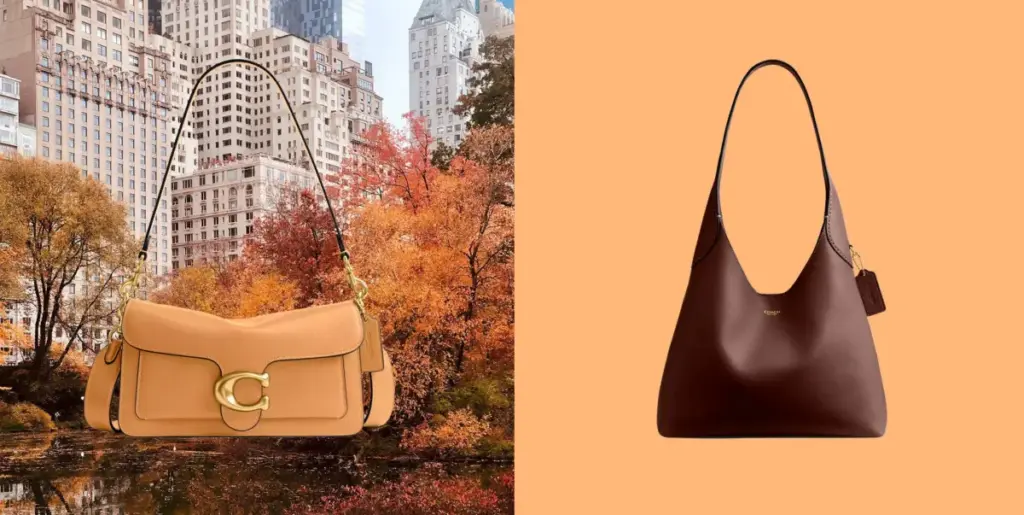
Priced accessibly at $295, the Coach Brooklyn Shoulder Bag 28 has quickly become the gold standard for consumers seeking a versatile, large-capacity bag that does not sacrifice architectural elegance.
- Architectural Silhouette: The Brooklyn features a structured hobo shape that bridges the gap between classic bohemian slouch and modern minimalist polish. It acts, quite fittingly, as the sophisticated older sister to the unstructured boho bags that dominated previous decades.
- Ergonomic Excellence: One of the primary pain points of autumn and winter fashion is the interaction between outerwear and bag straps. Thick wool coats, trench coats, and puffer jackets often render standard shoulder straps uncomfortably tight or prone to slipping. The Brooklyn addresses this with a generously proportioned, integrated handle designed to sit comfortably over the shoulder, even when layered in heavy seasonal garments.
- The New Neutral: While available in multiple versatile shades, the chocolate brown colorway has emerged as the definitive standout for autumn. Moving away from stark black or traditional tan, this rich espresso hue acts as a new seasonal neutral, pairing seamlessly with earth tones, deep burgundies, burnt oranges, and classic denim.
- Multi-Functional Utility: Consumer reports indicate that the Brooklyn is frequently deployed as a triple-threat accessory: functioning seamlessly as a professional work bag, a reliable personal item for air travel, and a chic weekend carryall capable of housing daily essentials with room to spare.
The Tabby Shoulder Bag: The Quintessential It-Girl Accessory
Retailing at $475, the Coach Tabby Shoulder Bag 26 represents a more elevated investment piece, designed to anchor an outfit with its distinctive hardware and crisp silhouette.

- Compact Yet Capable: Despite its sleek, polished exterior, the Tabby is deceptively spacious. Engineered to transition effortlessly from day-to-night styling, it accommodates standard on-the-go essentials—such as smartphones, cardholders, and keys—alongside larger personal items like cosmetics, passports, and portable chargers.
- The Two-in-One Transformation: Flexibility is a cornerstone of modern accessory design. The Tabby features a removable, thick crossbody strap in addition to its short shoulder strap, allowing the wearer to seamlessly shift modes. This structural adaptability makes it exceptionally popular among frequent travelers and urban commuters who require added physical security during transit.
- The Leafy Fall Palette: For the autumn season, lighter pecan and deep dimensional colorways are dominating street style. These warm, saturated tones provide a deliberate pop of color without overwhelming neutral or monochromatic cold-weather wardrobes, perfectly mirroring the changing natural landscape.
Supporting Context & Market Metrics
The viral dominance of Coach’s handbag lineup is supported by broader shifts within the luxury and accessible-luxury retail ecosystems. According to recent retail analytics reports, consumer spending habits have bifurcated: shoppers are either investing heavily in ultra-high-end tier-one luxury houses or seeking exceptional craftsmanship and heritage storytelling within the accessible luxury bracket ($200–$600 price point).
Coach has mastered the latter. By maintaining price points that remain attainable for young professionals while upholding stringent leather quality standards—utilizing glove-tanned leathers and rich suedes—the brand has captured significant market share from both fast-fashion alternatives and stagnant heritage competitors.

Furthermore, digital engagement metrics underscore the brand’s cultural penetration. Hashtags associated with the #CoachTabby and #CoachBrooklyn have accumulated hundreds of millions of views across TikTok and Instagram. Unboxing videos, "what’s in my bag" content, and style-styling tutorials have turned passive shoppers into active brand advocates. The democratization of fashion critique via social media has proven that consumers no longer evaluate a bag solely by its exclusivity or exorbitant price tag, but by its real-world utility, cost-per-wear value, and aesthetic resonance.
Future Outlook: Sustaining the Momentum
As the retail calendar looks past the autumn equinox toward the crucial Q4 holiday shopping period, industry analysts are closely monitoring whether Coach can maintain its explosive momentum.

Several strategic initiatives suggest the brand is well-positioned for sustained growth:
- Material Expansion: Expect continued experimentation with seasonal textures, including shearling-trimmed variants, brushed suedes, and embossed exotic skins designed specifically for the holiday gifting market.
- Collaborative Partnerships: Building upon past successful partnerships with contemporary designers and cultural figures, Coach is likely to leverage limited-edition capsule collections to drive artificial scarcity and maintain consumer excitement.
- Global Market Penetration: While domestic markets in North America have driven the initial wave of the Brooklyn and Tabby renaissance, emerging markets in Asia-Pacific and Europe present massive untapped opportunities for localized handbag campaigns.
Conclusion
The resurgence of Coach is a masterclass in modern brand stewardship. By honoring its rich archival history while fearlessly adapting to the functional and aesthetic demands of today’s consumer, the house has rewritten the playbook for legacy brands. Whether opting for the effortless, chocolate-brown slouch of the Brooklyn or the structured, multi-functional elegance of the Tabby, fashion enthusiasts are finding that investing in Coach this autumn is not just a nod to nostalgia—it is a thoroughly modern fashion statement.