Executive Overview
For many, achieving long, flowing, and healthy locks is the ultimate aesthetic goal. Yet, despite investing heavily in expensive shampoos, targeted serums, and frequent trims, countless individuals find themselves staring into the mirror, wondering why their hair seems permanently stuck at the exact same length. The frustration is universal, but the causes are deeply specific. Understanding why hair fails to grow—or appears to—requires peeling back the layers of biology, chemistry, and lifestyle factors that dictate our daily follicular health.
In recent years, the beauty and wellness industries have experienced a massive surge in consumer interest surrounding hair health, often referred to as the "skinification" of hair. Trichology—the scientific study of the health of hair and scalp—has moved from the medical fringes into mainstream wellness conversations. Experts now recognize that hair growth is not merely a cosmetic concern; it is a vital external barometer of internal wellness, stress levels, nutritional status, and genetic predisposition.
This comprehensive investigative report delves into the primary culprits behind stunted hair growth. Drawing on expert trichological insights, physiological science, and practical care methodologies, we explore the structural realities of the hair growth cycle, the dangers of mechanical and chemical damage, internal health roadblocks, and actionable strategies to reset your routine. By addressing the root causes (pun intended), you can transform your hair care regimen from a cycle of trial and error into a science-backed pathway toward achieving your optimal hair length and vitality.
Detailed Chronology: Understanding the Hair Growth Cycle
To understand why your hair might not be growing, you first need to understand how it is supposed to grow. Hair growth is not a continuous, endless loop; rather, it is a highly regulated, cyclical biological process managed at the follicular level. Every single hair on your scalp operates independently on a distinct timeline known as the hair growth cycle.
[Anagen Phase: 2-7 Years] ---> [Catagen Phase: 2-3 Weeks] ---> [Telogen Phase: 3 Months] ---> [Exogen Phase: Shedding]1. The Anagen Phase (The Growth Stage)
This is the active phase where the cells in the root of the hair divide rapidly, adding length to the hair shaft. At any given time, approximately 85% to 90% of the hair on a healthy human scalp is in the anagen phase. This stage can last anywhere from two to seven years, largely dictated by genetics. This genetic timeline is the primary reason why some people can grow their hair down to their waist, while others struggle to get it past their shoulders. If your anagen phase is genetically abbreviated, your hair will reach its maximum terminal length much sooner.
2. The Catagen Phase (The Transition Stage)
Lasting roughly two to three weeks, the catagen phase is a transitional period where the hair follicle shrinks and detaches from its blood supply. Growth stops entirely, and the hair becomes what is known as a "club hair." Only about 1% to 2% of your scalp’s hair is in this phase at any given moment.
3. The Telogen Phase (The Resting Stage)
Accounting for roughly 10% to 15% of your scalp hair, the telogen phase is a three-month resting period. While the old hair sits dormant in the follicle, a brand-new hair begins to form underneath it.
4. The Exogen Phase (The Shedding Stage)
An extension of the telogen phase, the exogen stage is when the old hair officially sheds from the scalp, making way for the new hair to push through the surface. Losing 50 to 100 hairs a day during this phase is entirely normal.
Where the Breakdown Occurs
When people complain that their hair "won’t grow," they are almost always experiencing one of two phenomena:
- Premature Telogen Effluvium: Stressors push a disproportionate number of hairs out of the anagen phase and into the resting phase prematurely, leading to excessive shedding and a perceived lack of length.
- Breakage Masking Growth: The hair is growing from the root at the standard biological rate of roughly half an inch per month, but it is breaking off at the ends at an equal or faster rate. Consequently, the net length remains unchanged, creating the illusion of zero growth.
Supporting Context & Metrics: The Science of Stunted Strands
To accurately diagnose a lack of hair growth, one must look closely at the quantitative metrics of hair biology and the external factors that compromise it.
The Mathematics of Growth
On average, human scalp hair grows at a rate of:
- 0.5 inches (1.25 centimeters) per month
- 6 inches (15 centimeters) per year
If you have maintained the exact same hair length for two years despite consistent root growth, your strands are likely experiencing severe structural failure along the shaft.
Key Factors Impeding Hair Progress
1. Mechanical and Thermal Damage
Modern styling habits are among the leading causes of hidden length retention failure.
- Heat Styling: Flat irons, curling wands, and high-heat blow-dryers break down hydrogen and disulfide bonds within the hair cortex. Repeated thermal abuse melts the protective cuticle layer, leaving the inner cortex exposed, porous, and prone to snapping.
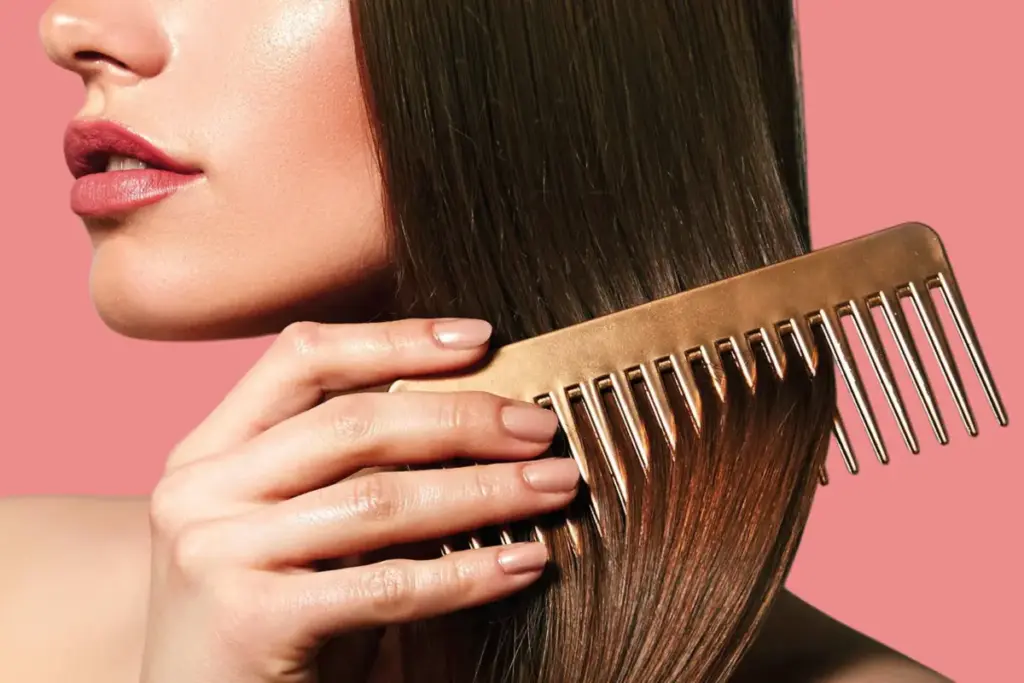
- Aggressive Detangling: Brushing wet hair—which is in its most fragile, elastic state—without a wide-tooth comb or detangling spray stretches the hair fiber beyond its elastic limit, causing microscopic tears that culminate in sudden breakage.
2. Nutritional Deficiencies
Hair is a non-essential tissue, meaning the body will redirect vital nutrients toward critical internal organs (like the heart, lungs, and brain) before nourishing the hair follicles. Key nutritional deficiencies that stunt growth include:
- Iron (Ferritin): Low iron stores impair oxygen delivery to hair follicles, suffocating cellular activity.
- Protein (Keratin): Hair is composed of 90% protein. Inadequate dietary protein forces follicles into a resting state.
- Vitamin D & B-Complex (Biotin, B12): Crucial for cellular regeneration and energy production within the follicle matrix.
3. Scalp Neglect
Many people treat the scalp as an afterthought, focusing entirely on the hair strands. However, the scalp is living skin that requires proper cleansing, exfoliation, and microbial balance.
- Product Buildup: Dry shampoos, silicones, and heavy styling creams accumulate on the scalp, clogging hair follicles and suffocating the microcapillaries responsible for delivering nutrients to the root.
- Microinflammation: Conditions like seborrheic dermatitis, dandruff, and excess sebum oxidation create an inflammatory micro-environment that disrupts the natural growth cycle.
Expert Insights and Official Perspectives
Trichologists and dermatologists emphasize that diagnosing hair growth issues requires a holistic, individualized evaluation. We spoke with leading scalp and hair specialists to unpack their professional viewpoints on why modern hair care routines often backfire.
"The biggest misconception consumers have is that they need a miracle product to make their hair grow faster. Biologically, you cannot force your follicles to speed past their genetic limits. Instead, the focus must shift entirely to length retention and creating an optimal scalp ecosystem."
— Dr. Christina Korouchtsidou, Consultant Trichologist
Experts point out that the booming market for hair growth supplements, while beneficial for those with clinically diagnosed deficiencies, often creates false hope. Popping a biotin gummy will do nothing to solve length retention issues caused by daily heat styling or chemical over-processing.
Furthermore, dermatological consensus highlights the rising incidence of traction alopecia—hair loss caused by chronic pulling. Tight hairstyles such as high ponytails, slicked-back buns, and braided extensions place continuous mechanical tension on the follicle. Over time, this constant pull causes irreversible scarring (cicatricial alopecia) of the follicle, destroying its ability to produce hair entirely.
According to clinical studies published in the Journal of Dermatology, addressing chronic systemic stress is equally critical. High cortisol levels elevate systemic inflammation, prematurely thrusting growing anagen follicles into the resting telogen phase, resulting in diffuse thinning weeks or months after a stressful life event.
Future Outlook: The Next Frontier in Hair Health
As science and technology continue to converge, the future of hair growth and length retention is shifting away from generalized cosmetic quick fixes toward hyper-personalized, regenerative care.
1. Advanced Scalp Microbiome Therapeutics
Just as skincare revolutionized our understanding of the skin barrier, the next decade of hair care will focus heavily on scalp microbiome balancing. Future products will feature targeted postbiotics and prebiotics designed to cultivate a healthy ecosystem of scalp bacteria, minimizing inflammation and optimizing the follicular environment for natural growth.
2. Regenerative Medicine: PRP and Exosomes
Platelet-Rich Plasma (PRP) therapy and exosome treatments are already gaining traction in clinical settings. By injecting concentrated growth factors directly into the scalp, these therapies stimulate dormant follicles, prolong the anagen phase, and increase microcirculation. As these treatments become more accessible, they will offer powerful pharmaceutical-grade solutions for those experiencing genetic or stress-induced growth stagnation.
3. Custom Biometric Hair Testing
Gone are the days of guessing which shampoo to buy based on a generic "dry vs. oily" label. The future points toward at-home biometric hair and scalp testing kits. Consumers will be able to test their specific mineral levels, genetic predispositions for anagen duration, and scalp microbiome composition to receive tailor-made, pharmaceutically active formulations.
Conclusion
Ultimately, unlocking your hair’s full potential requires patience, self-education, and a shift in mindset. True hair growth is not about finding a magic elixir that accelerates cellular division; it is about protecting the fragile strands you already have, nourishing your body from the inside out, and treating your scalp with the same rigorous care you afford the skin on your face. By eliminating destructive mechanical habits, prioritizing internal wellness, and aligning your routine with expert trichological science, you can finally break the cycle of stagnation and achieve the healthy, resilient hair you deserve.