Executive Overview
In the rugged, remote terrain of the Albanian Alps, a peaceful trail run nearly turned into a tragic ordeal for Australian tourist Amy Lecons. Just three days after arriving in the picturesque mountain village of Valbonë, Lecons was struck by a European nose-horned viper (Vipera ammodytes)—widely considered Europe’s most venomous and dangerous snake.
Left stranded miles from civilization with venom coursing through her left Achilles tendon, Lecons faced a terrifying cascade of compounding emergencies. Not only was she in an isolated wilderness without a mini first-aid kit or satellite communication device, but her initial call to local emergency services abruptly ended when the dispatcher hung up due to a severe language barrier.
With time running out and panic threatening to accelerate her heart rate and pump the lethal venom faster through her bloodstream, Lecons turned to a digital lifeline: WhatsApp. Thousands of miles away in Australia, her father, Dr. Robert Lecons, received his daughter’s panicked message. Acting with clinical precision and immense geographical distance separating them, Dr. Lecons coordinated a multi-continental rescue operation. He instructed Amy on critical physiological management, guided her to use the location-pinpointing application What3Words, contacted local Albanian emergency services, alerted the owner of a hostel in Shkodër, and even engaged Australian authorities to coordinate with Interpol.
This gripping narrative explores the intersection of modern global connectivity, wilderness medicine, and the inherent risks of international adventure travel. It highlights the harrowing real-time decisions made by a father and daughter separated by time zones, examines the structural vulnerabilities of rural emergency dispatch systems, and underscores the profound life-or-death lessons learned from an encounter with one of Europe’s most feared reptiles.
Detailed Chronology: From Trailside Serenity to a Fight for Survival
The Setting: Valbonë, Albania
On June 21, Amy Lecons was three days into her idyllic mountain holiday in Valbonë, a breathtaking glacial valley situated within the Accursed Mountains (Bjeshkët e Namuna) of northern Albania. Known for its soaring limestone peaks, dense deciduous forests, and challenging hiking trails, the region attracts thousands of outdoor enthusiasts each year.
Lecons, an experienced traveler who had previously encountered snakes during her travels in Greece and her native Australia, felt entirely at ease in the alpine environment. Her confidence, however, ultimately contributed to a lapse in standard wilderness safety protocols.
"Usually I would take a mini first aid kit, but for whatever reason, I didn’t have these on me on this day," Lecons recalled in an interview with the Truth Times.
The Strike
The incident occurred roughly halfway through a planned 90-minute trail run. Descending a winding, rocky mountain path, Lecons rounded a sharp corner, letting her guard down for a fraction of a second. Without warning, a European nose-horned viper struck, sinking its fangs into her left Achilles tendon.
"I instantly knew that I had been bitten by a snake as I felt a sharp pain in my left Achilles," Lecons said.
Recognizing the critical importance of identifying the animal for medical professionals, Lecons managed to remain remarkably composed for long enough to record a short video of the reptile. Her quick thinking later confirmed the species: the European nose-horned viper, distinguishable by its characteristic soft, horn-like appendage on the snout and a distinct zigzag pattern running down its back.
The Language Barrier and Panic
With venom already entering her circulatory system, Lecons dialed local emergency services, hoping for an immediate evacuation dispatch. However, the interaction deteriorated almost instantly. According to Lecons, the call lasted less than a minute before the emergency responder abruptly hung up. Because Lecons could not speak Albanian and the dispatcher reportedly struggled with English, the vital communication channel severed, leaving the tourist isolated and utterly helpless on a remote mountainside.
Overwhelmed by the terrifying realization of her vulnerability, Lecons experienced a surge of panic. Knowing that elevated heart rates accelerate the systemic spread of hemotoxic and neurotoxic snake venom, she desperately needed a calm voice to anchor her.
The Cross-Continental WhatsApp Lifeline
With local services unavailable and her physical condition worsening, Lecons turned to her smartphone. She opened WhatsApp and messaged her father, Dr. Robert Lecons, a practicing physician in Australia.

Despite the extreme distance and time zone differences, Dr. Lecons immediately shifted into crisis-management mode. Recognizing that every second counted, he issued a series of critical medical directives:
- Heart Rate Control: He commanded Amy to stop moving immediately, sit down, and focus on slow, regulated breathing to minimize the spread of the venom.
- Precise Geolocation: He instructed her to open the What3Words app to generate a three-word geographic code, pinpointing her exact location within a three-meter square—a crucial tool for rescuers navigating unmarked wilderness trails.
- Multi-Channel Escalation: While communicating with Amy, Dr. Lecons simultaneously initiated a complex rescue web. He contacted local Albanian emergency services, reached out to the owner of the Traveler Hostel in Shkodër to mobilize ground-level assistance, and engaged Australian emergency networks, which subsequently coordinated efforts through Interpol.
"I didn’t realize until weeks later that it was him who was responsible for getting Valbonë Summer Clinic in contact with me as Australian emergency services were also getting through to Interpol around the same time," Lecons reflected.
The Agonizing Wait and Rescue
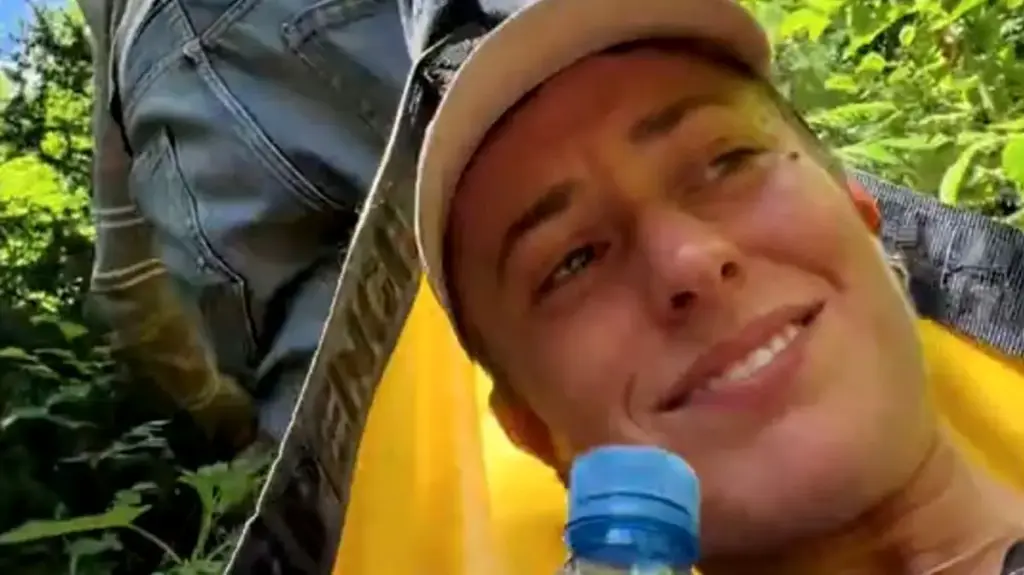
While waiting for assistance, Lecons documented her harrowing experience on TikTok, recording snippets of her reality while periodically shouting out for help into the empty mountain air.
Due to the extreme remoteness of the Valbonë trail, ground responders faced significant logistical hurdles. An ambulance was dispatched, but it took approximately one hour just to reach the trail entrance nearest her What3Words coordinates. Once medical personnel reached her location on foot, Lecons was loaded onto a stretcher and transported for another hour along winding mountain roads to the nearest medical facility, the Valbonë Summer Clinic, before being transferred onward to a hospital in Bajram Curri.
Supporting Context & Metrics: The European Nose-Horned Viper
To fully appreciate the severity of Amy Lecons’ ordeal, it is essential to examine the biological profile of the snake involved and the epidemiological realities of snakebites in Southeastern Europe.
| Metric / Feature | Detail |
|---|---|
| Species Name | European Nose-Horned Viper (Vipera ammodytes) |
| Geographic Range | Southern Europe, the Balkans (including Albania, Greece, and parts of Italy), and parts of the Middle East |
| Venom Composition | Hemotoxic and neurotoxic; contains cytotoxins, myotoxins, and anticoagulants |
| Clinical Effects | Localized swelling, severe pain, necrosis, systemic hemorrhage, dizziness, and cardiovascular collapse if untreated |
| Lethality | Considered the most dangerous venomous snake in Europe; fatal if antivenom administration is severely delayed |
| Habitat | Dry, rocky, sparsely vegetated hillsides, dry stone walls, and alpine trails |
Behavioral and Ecological Factors
The European nose-horned viper is easily identified by the distinct horny scale protruding from the tip of its snout. While generally docile unless provoked, stepped on, or cornered, vipers frequently bask on warm rocks along hiking paths during morning and late afternoon hours. Because their camouflage mimics forest floors and rocky debris, hikers frequently fail to spot them until it is too late.
In Lecons’ case, the strike to the Achilles tendon—a highly vascular area near the foot—facilitated the rapid uptake of venom into the lymphatic and circulatory systems, making her father’s insistence on heart-rate suppression a potentially life-saving intervention.
Official Statements and Reflections
Reflecting on her ordeal after spending two days recovering in the Bajram Curri hospital, Lecons expressed profound gratitude for the medical professionals who ultimately saved her life, despite the initial communication hurdles she faced with the broader emergency infrastructure.
"Upon reflection, I have realised that I should be better prepared with a satellite communication device," Lecons admitted. "In New Zealand, we are taught that this can mean life or death, and I was ignorant to think this wasn’t necessary on the trails in Europe as well."
Despite the language barrier that plagued her initial emergency call, Lecons praised the bedside manner and clinical competence of the Albanian nurses and doctors who treated her. She described their attentive care as "the epitome of Albanian hospitality," emphasizing that once medical personnel reached her, professionalism transcended language differences.
Medical experts have echoed her sentiments regarding preparedness, noting that international travelers frequently underestimate the infrastructural challenges of seeking medical help in developing or remote rural regions of Europe. While Western Europe maintains highly integrated, English-supported emergency networks (such as the EU-wide 112 system), remote alpine regions in the Balkans often rely on localized dispatchers who may lack fluency in foreign languages, making offline technological aids indispensable.
Future Outlook: Lessons in Wilderness Safety and Global Connectivity
Amy Lecons’ viral ordeal serves as a cautionary tale and an educational blueprint for modern adventure travelers. As ecotourism and trail running continue to surge in popularity across remote regions of the Balkans, several critical takeaways emerge for the global travel community:
- The Necessity of Satellite Communicators: Standard cellular networks are notoriously unreliable in mountainous terrain. Devices such as Garmin InReach or Apple’s satellite SOS feature bypass local cellular tower limitations, allowing adventurers to transmit precise GPS coordinates directly to emergency satellites regardless of local language barriers.
- First-Aid Preparedness: Carrying a compact wilderness first-aid kit—specifically including elastic pressure-immobilization bandages (where appropriate for certain neurotoxic venoms or general wound dressing) and antiseptic wipes—remains a non-negotiable requirement for back-country running and hiking.
- Cross-Border Emergency Protocols: Lecons’ survival underscores the incredible value of global communication platforms like WhatsApp and location-sharing utilities like What3Words. However, relying on family members thousands of miles away as an intermediary introduces unacceptable latency in life-or-death scenarios. Future travelers are urged to research local emergency numbers, download offline translation applications, and register with their respective embassies when traveling off the beaten path.
Ultimately, Lecons’ story is a testament to human resilience, paternal devotion, and the unexpected miracles rendered possible by twenty-first-century technology. What began as a terrifying brush with death in the heart of Albania concluded with a renewed appreciation for global connectivity, rigorous outdoor preparedness, and the life-saving power of staying calm under pressure.