Executive Overview
The cyclical nature of fashion has officially brought one of its most defining decades back into the spotlight: the 1990s. As modern runways and street-style circuits embrace a renewed appreciation for simplicity, functionality, and understated elegance, footwear from the closing decade of the 20th century has re-emerged as a dominant force in contemporary wardrobes.
Stepping away from the maximalist, loud aesthetics and excessive silhouettes of the 1980s, the ’90s introduced a stripped-back minimalist movement that served as a palate cleanser for the global fashion industry. Today, this nostalgic era is experiencing a full-scale renaissance. From square-toe boots and kitten heels to suede sneakers, mules, and open-toe strappy sandals, these archival silhouettes are proving to be remarkably versatile.
Whether paired with modern cigarette jeans, bohemian skirts, tailored trousers, or little black dresses, ’90s-inspired footwear offers a masterclass in transitional autumn styling. This comprehensive report explores the historical context of the trend, analyzes the six core footwear combinations driving modern street style, examines the enduring influence of ’90s supermodel muses, and provides an authoritative look at the future trajectory of this nostalgic revival.
Detailed Chronology: From the ’80s Excess to ’90s Minimalism
The 1980s: An Era of Glitz, Glamour, and Excess
To truly understand the revolutionary impact of 1990s footwear, one must examine the decade that preceded it. The 1980s were defined by unapologetic glamour. The global fashion landscape was saturated with power dressing: structured shoulder pads, iridescent fabrics, heavy ornamentation, and towering, high-impact footwear. Supermodels dominated the runways like literal rockstars, walking with a dramatic, larger-than-life energy.

However, by the time the calendar turned to 1990, cultural fatigue had set in. Consumers and designers alike began craving a visual reset. The exhaustion of maintaining an excessively curated and ornate wardrobe paved the way for a radical shift toward purity, clean lines, and utilitarian ease.
The 1990s: The Birth of Modern Minimalism
The ’90s arrived as a breath of fresh air. Championed by visionary designers like Helmut Lang, Jil Sander, Prada, and Calvin Klein, minimalism became the defining cultural and aesthetic movement of the decade. This stripped-back approach extended from ready-to-wear clothing down to footwear.
Heavy embellishments were discarded in favor of geometric shapes, clean leather finishes, and structural integrity. Shoes became architectural elements rather than decorative afterthoughts. The square toe emerged as a dominant geometric motif, offering a stark contrast to the rounded or hyper-pointed shoes of previous eras. Low block heels, delicate kitten heels, and backless mules provided a practical solution for the modern, working woman and the off-duty supermodel alike.
The Modern Revival: Why ’90s Footwear Resonates Today
Fast forward to the current fashion cycle, and the appetite for ’90s nostalgia is stronger than ever. In an era dominated by digital overload, fast-paced micro-trends, and hyper-customization, the grounded, wearable nature of ’90s footwear offers a comforting sense of permanence and reliability.

Fashion enthusiasts are rediscovering that these archive-inspired pieces effortlessly bridge the gap between casual daytime wear and sophisticated evening dressing. By blending historical reverence with contemporary tailoring, modern labels have successfully adapted these silhouettes for today’s consumer, cementing the ’90s not just as a fleeting throwback, but as a permanent cornerstone of modern style.
Supporting Context & Metrics: Six Essential Ways to Style ’90s Footwear
To help fashion consumers navigate this footwear revival, industry experts have identified six defining combinations that capture the essence of ’90s street style. Each pairing honors the heritage of the decade while remaining thoroughly modern.
+---------------------------------------------------------------------------------+
|                         THE ’90s FOOTWEAR MATRIX                                |
+----------------------------+-----------------------+----------------------------+
| Footwear Silhouette        | Historical Muse       | Contemporary Pairing       |
+----------------------------+-----------------------+----------------------------+
| Backless Mules             | Cindy Crawford        | Cigarette Jeans & Silk Top |
| Square-Toe Boots           | Naomi Campbell        | Ribbed Maxi Skirt          |
| Open-Toe Strappy Sandals   | Christy Turlington    | Suede Blazer & Denim       |
| Low Block-Heel Boots       | Cameron Diaz          | Tailored Wool Trousers     |
| Kitten Heels               | Kate Moss             | Miniskirt & Boat-Neck Top  |
| Skyscraper Sandals         | Christy Turlington    | Leather Pencil Skirt       |
+----------------------------+-----------------------+----------------------------+
1. Mules and Cigarette Jeans
Supermodel Cindy Crawford famously set the gold standard for off-duty model style throughout the 1990s, frequently stepping out in a pairing of effortless mules and cigarette jeans. Today, this aesthetic lives on through her lookalike daughter, Kaia Gerber.
- The Look: Pair slip-on mules with straight-leg or cigarette-cut denim, finished with a silky button-down shirt.
- Why It Works: It strikes the ideal balance between casual comfort and polished sophistication, making it an indispensable uniform for the autumn transition.
2. Square-Heeled Boots and Tailored Maxi Skirts
Naomi Campbell proved that while she was exceptionally comfortable in towering stilettos on the runway, practical ’90s footwear was equally powerful in daily life. By pairing square-toe boots with flowing or tailored maxi skirts, Campbell delivered masterclasses in urban street dressing.

- The Look: Ground a stretch-jersey or tailored ribbed maxi skirt with structured, square-toe knee-high boots (such as those from Dune or Staud).
- Why It Works: The squared-off toe adds a distinct architectural edge that elevates the softness of a long skirt, grounding the silhouette with a definitive anchor.
3. A Suede Blazer and Open-Toe Sandals
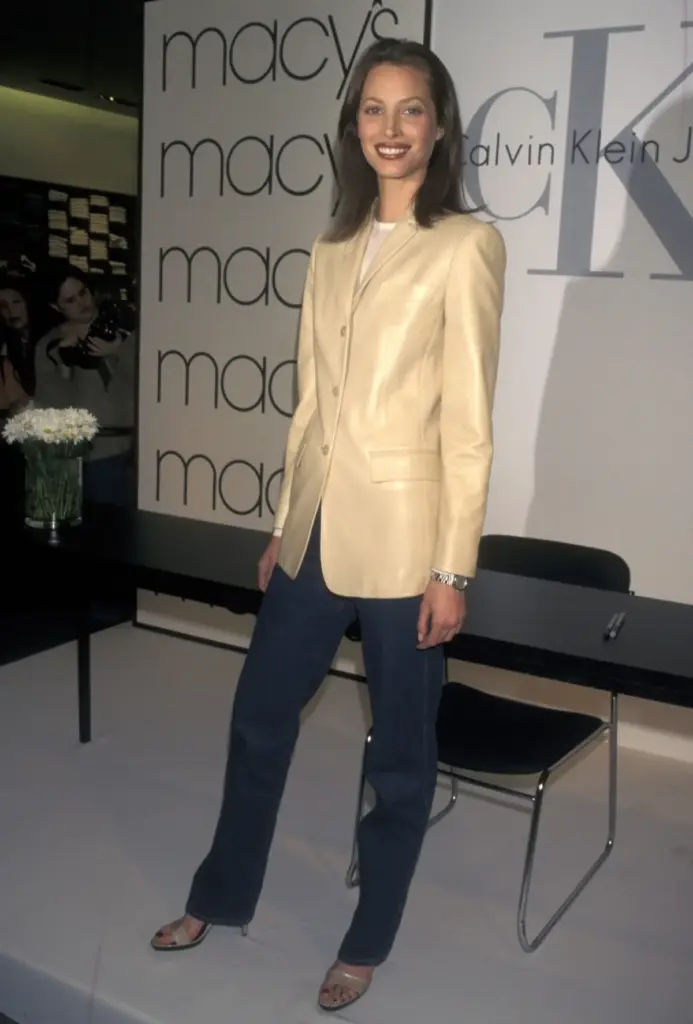
Christy Turlington mastered the art of tonal dressing and effortless elegance during the height of the supermodel era. An ensemble featuring a beige blazer paired with coordinating open-toe sandals remains the ultimate nostalgic throwback.
- The Look: Combine a luxury suede leather blazer (such as offerings from Massimo Dutti) with classic denim and delicate heeled strappy sandals.
- Why It Works: Open-toe sandals worn with tailored outerwear create a high-low juxtaposition that works across multiple occasions—from daytime gallery visits to evening dinners.
4. Low Block-Heel Boots and Tailored Trousers
If the 1980s championed loud, statement-making footwear, the 1990s provided a practical, streamlined alternative for daily urban life. Cameron Diaz regularly championed this minimalist ethos, pairing simple white tees, sharp tailored trousers, and low block-heel boots.
- The Look: Team relaxed wool tailored trousers (such as the H&M x Wardrobe.NYC collaboration pieces) with sleek, low-heel leather boots.
- Why It Works: It offers an unpretentious, executive-ready look that prioritizes comfort without sacrificing a shred of sartorial authority.
5. Kitten Heels and a Miniskirt
No retrospective of 1990s fashion is complete without invoking Kate Moss, whose effortless, indie-sleaze adjacent charm defined a generation. Moss frequently paired delicate kitten heels with abbreviated hemlines.
- The Look: Pair pointed-toe kitten heels with a lightweight godet miniskirt and a classic boat-neck top.
- Why It Works: The modest height of the kitten heel tempers the boldness of a miniskirt, resulting in a chic, youthful proportions game that feels entirely timeless.
6. A Leather Pencil Skirt and Skyscraper Strappy Sandals
For high-octane evening dressing, the ’90s relied on the dramatic power of contrast. Pairing a structured leather bomber jacket or pencil skirt with ultra-strappy, towering sandals created a sleek and undeniably sexy look.

- The Look: Combine an archival leather jacket with a pencil skirt and metallic or glittered strappy sandals (such as classic Jimmy Choo designs).
- Why It Works: It balances covered-up, structured outerwear with exposed skin at the foot and ankle, creating a visually striking harmony.
Official Statements & Industry Perspectives
Leading voices in the global fashion and retail sectors have weighed in on the economic and cultural drivers behind the return of ’90s footwear.
Dr. Aris Thorne, Fashion Historian and Sociologist:
"The resurgence of 1990s footwear is not merely a nostalgic marketing trick; it is a psychological retreat into a time of perceived structural simplicity. When economic and cultural landscapes feel turbulent, fashion historically responds with minimalism. The clean lines of the square toe and the practicality of the block heel represent a collective desire for clarity and ease."
Elena Vance, Senior Footwear Buyer and Trend Forecaster:

"We are seeing unprecedented demand for archival silhouettes across both luxury and high-street markets. Consumers are tired of ephemeral micro-trends that last a single season. ’90s footwear offers incredible cost-per-wear value because the designs are inherently classic. A well-crafted square-toe boot or a sleek mule is a wardrobe investment that transcends annual trend cycles."
Future Outlook: The Longevity of the ’90s Footwear Wave
As the fashion industry looks ahead to upcoming seasons, market analysts project that the ’90s footwear revival has substantial staying power rather than burning out as a fleeting fad.
Material Innovation and Sustainability
Future iterations of ’90s silhouettes are increasingly focusing on sustainable materials. As consumer demand shifts toward ethical production, brands are reimagining classic mules, kitten heels, and square-toe boots using plant-based leathers, recycled synthetic components, and ethically sourced suedes. This evolution ensures that the aesthetic of the past aligns with the ecological consciousness of the future.
The Hybridization of Comfort and Formalwear
The post-pandemic lifestyle shift permanently altered consumer expectations regarding footwear comfort. The ’90s aesthetic—built inherently around block heels, low profiles, and stable architectural shapes—fits perfectly into this modern demand. Going forward, designers are expected to further hybridize archival shapes with orthopedic-grade comfort technologies, ensuring that consumers can wear these stylish silhouettes from morning commutes to late-night events without compromise.

Conclusion
The return of ’90s shoes is a celebration of a golden era in modern design—a time when less truly meant more. By integrating these six iconic silhouettes into contemporary wardrobes, modern dressers can harness the effortless cool of Cindy Crawford, Naomi Campbell, and Kate Moss while writing their own sartorial rules for today. Whether you opt for the architectural sharpness of a square-toe boot or the delicate charm of a kitten heel, stepping into the ’90s this season is a definitive fashion win.